Top Earring Backs for Droopy Ears: A Beginner Guide
Discover the best earring backs for droopy ears. Learn how to lift heavy studs and hoops with silicone, screw, and locking backs in this beginner guide.

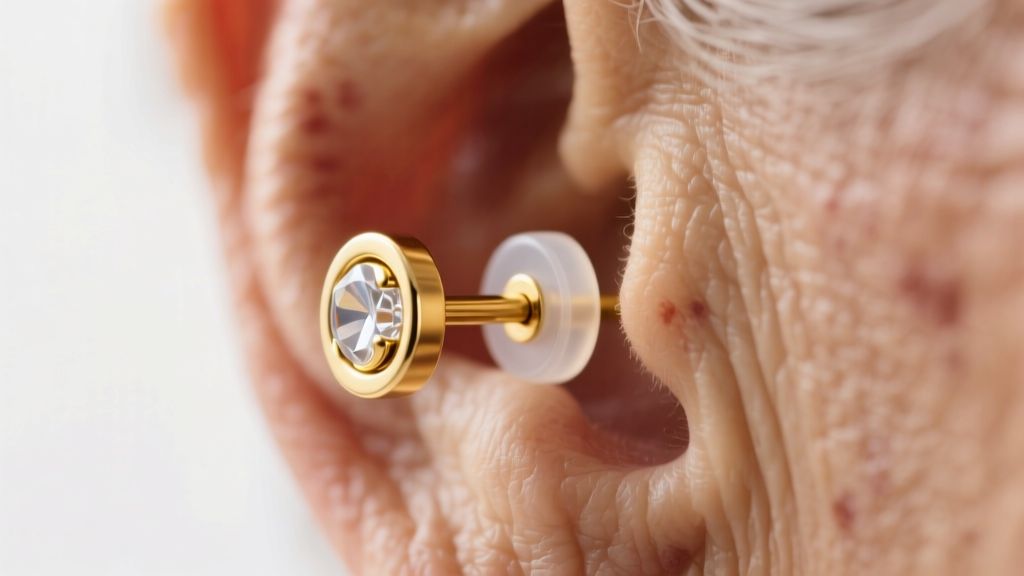
The Frustration of the Forward-Facing Earring
There is a unique kind of jewelry heartbreak that occurs when you put on a beautiful, heavy pair of diamond studs or vintage gold hoops, only to look in the mirror and see them pointing stubbornly at the floor. If your earlobes have stretched over time, or if you simply love statement pieces that exceed standard weight limits, finding the right earring backs for droopy ears is not just a matter of aesthetics—it is a matter of structural engineering. As a beginner navigating the world of jewelry modifications, it is crucial to understand that standard butterfly friction backs are entirely inadequate for compromised or heavily loaded piercings. They lack the surface area to distribute weight, leading to the dreaded 'forward droop' or, worse, complete loss of the earring.
In this comprehensive beginner-friendly explainer, we will break down the anatomy of a stretched lobe, explore the specific material grades required for supportive backings, and provide a definitive guide to the best earring backs for droopy ears available today. Whether you are dealing with age-related collagen loss or the aftermath of heavy gauge stretching, this guide will help you restore your earrings to their proper, forward-facing glory.
The Physics and Anatomy of Earlobe Droop
To solve the problem, we must first understand the mechanics of the earlobe. The earlobe is primarily composed of areolar connective tissue and fat pads; it contains no cartilage. According to dermatological research on skin aging, the natural degradation of collagen and elastin fibers over time reduces the skin's tensile strength and elasticity (Mayo Clinic). When a heavy earring is inserted, the piercing hole acts as a fulcrum. If the earring post is thin (typically a standard 20-gauge, or 0.81mm) and the backing has a small surface area, the weight of the decorative front pulls the top of the piercing hole downward while the backing pushes into the back of the lobe, creating a severe angle.
The solution requires two mechanical interventions: increasing the surface area of the backing to distribute the load across a wider radius of the lobe, and utilizing materials with high friction coefficients to grip the post securely without relying solely on the tension of the compromised skin.
The 4 Best Earring Backs for Droopy Ears (Compared)
Not all backings are created equal. Below is a structural comparison of the most effective earring backs for droopy ears, categorized by material, mechanism, and ideal use case.
| Backing Type | Material Grade | Surface Area | Best For | Potential Failure Mode |
|---|---|---|---|---|
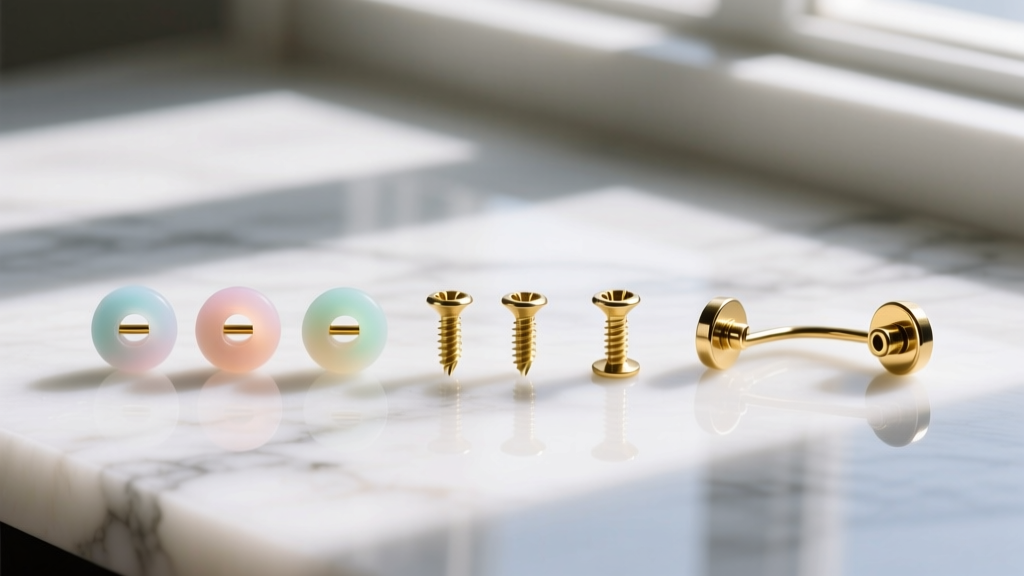
| Jumbo Silicone Discs | Medical-Grade TPU / Silicone | High (8mm - 14mm) | Heavy studs, diamond solitaires | Degrades with oil/perfume exposure |
| Threaded Screw Backs | 14k/18k Gold, 316L Steel | Medium (4mm - 6mm) | Valuable jewelry, active wear | Cross-threading strips the post |
| Locking Leverbacks | Hypoallergenic Alloys | N/A (Hooks wire) | Dangles, heavy drop earrings | Hinge mechanism wears out over time |
| Adhesive Support Patches | Medical Polyurethane | Extreme (Full lobe) | Severely stretched holes, chandeliers | Adhesive fails in high humidity/sweat |
1. Jumbo Silicone and TPU Discs: The Everyday Lifesaver
For beginners, jumbo silicone discs are the most accessible and immediately effective earring backs for droopy ears. Unlike standard butterfly backs that measure a mere 4mm across, jumbo discs range from 8mm to 14mm in diameter. The secret to their effectiveness lies in their material hardness, typically measured on the Shore A scale. High-quality jewelry silicone sits around 40A to 50A—soft enough to conform to the curvature of your earlobe, but firm enough to resist compressing entirely under the weight of a 5-gram diamond stud.
Expert Tip: Always look for 'medical-grade' or 'platinum-cured' silicone. Cheap, mass-produced rubber backs often contain latex or phthalates that can trigger contact dermatitis on the sensitive, micro-torn skin of a stretched piercing hole. If you have a known metal allergy, ensure the inner core of the silicone back is lined with 316L surgical steel or pure titanium to prevent nickel exposure (DermNet NZ).
2. Threaded Screw Backs: Maximum Security for High-Value Pieces
If your drooping is accompanied by a fear of losing expensive jewelry, threaded screw backs are mandatory. These require a specialized earring post that features precision-cut threads, usually in 18-gauge (1.02mm) or 16-gauge (1.29mm) thicknesses. The backing screws onto the post, creating a mechanical lock that is entirely independent of the earlobe's grip.
The primary failure mode here is user error. Forcing a screw back at the wrong angle will 'cross-thread' the metal, permanently ruining the post. To apply correctly, place the backing on the tip of the post, turn it counter-clockwise until you feel a tiny 'click' (this aligns the threads), and then gently twist clockwise until snug. Never over-tighten, as this can warp the back and make it impossible to remove without pliers.
3. Locking Leverbacks and French Wires with Stoppers
For dangle and drop earrings that utilize a wire hook rather than a straight post, the earlobe droop is often caused by the wire sliding forward through the piercing. Locking leverbacks feature a hinged clasp that snaps securely into a groove at the front of the earring, completely enclosing the earlobe tissue. This prevents the earring from sliding forward, effectively forcing the decorative element to hang straight down from the base of the lobe rather than pivoting from the middle of the hole.
The Secret Weapon: Adhesive Earlobe Support Patches
Sometimes, the earring back alone cannot solve the problem because the piercing hole itself is severely elongated or torn. This is where adhesive earlobe support patches (popularized by brands like Lobe Wonder and BlingWraps) come into play. These are ultra-thin, self-adhesive polyurethane pads with a pre-punched hole in the center.
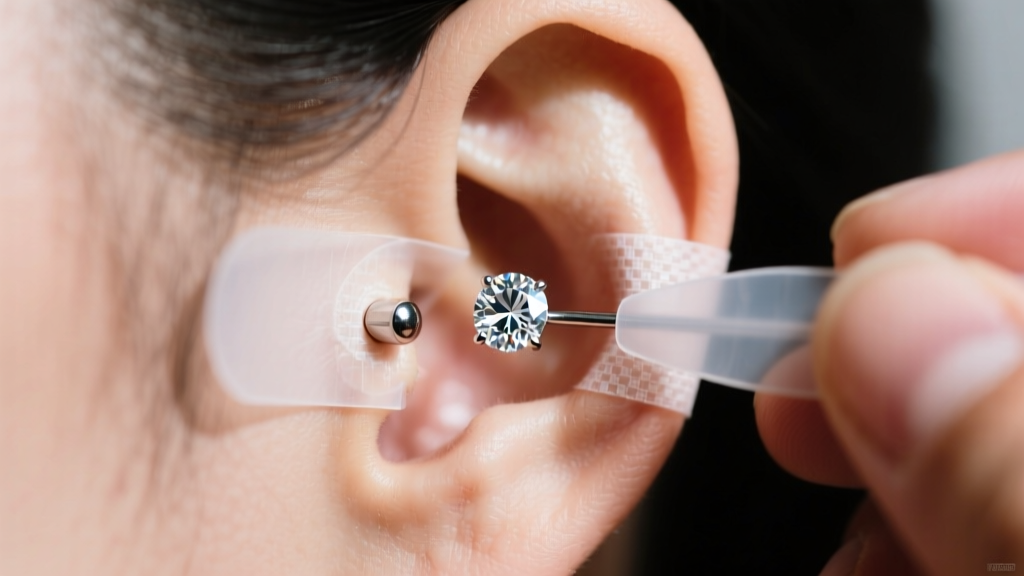
How They Work: You apply the sticky patch to the back of your earlobe, aligning the punched hole with your piercing. When you insert the earring post, it passes through both the patch and your skin. The patch acts as an artificial, high-tensile layer of skin, bearing the brunt of the earring's weight and preventing the metal post from pulling downward against your natural tissue. They are virtually invisible, hypoallergenic, and can support chandelier earrings weighing upwards of 15 grams per ear.
Pro Application Tip: Always clean the back of your earlobe with rubbing alcohol and let it dry completely before applying a support patch. Natural sebum oils and moisturizers will break down the medical adhesive, causing the patch to slide off mid-day.
Weight-to-Backing Decision Matrix
Use this quick-reference framework to select the correct earring backs for droopy ears based on the specific weight and style of your jewelry:
- Under 3 Grams (Standard Studs): Standard 6mm silicone friction backs or standard butterfly backs are usually sufficient, provided the lobe is not severely stretched.
- 3 to 8 Grams (Heavy Solitaires, Small Hoops): Upgrade to 10mm or 14mm jumbo silicone discs. The wider surface area prevents the 'cheese-cutter' effect where thin metal slices into the back of the lobe.
- 8 to 15 Grams (Statement Drops, Chandeliers): Combine an 18-gauge threaded screw back with an adhesive earlobe support patch for maximum structural integrity.
- Over 15 Grams (Vintage Clip-ons converted to Pierced, Heavy Chandeliers): Use locking leverback wires paired with support patches. Avoid straight posts entirely, as the sheer gravitational pull will eventually tear the tissue regardless of the backing used.
Maintenance and Hygiene for Stretched Lobes
Using specialized earring backs for droopy ears requires a slightly more rigorous maintenance routine than standard jewelry care. Silicone and TPU materials are porous at a microscopic level. They absorb sweat, dead skin cells, and cosmetic products, which not only degrades the material (causing it to turn yellow and brittle) but also creates a breeding ground for bacteria near an open wound.
The Gemological Institute of America (GIA) recommends regular, gentle cleaning for all jewelry components. For silicone backs, remove them from the posts weekly and soak them in a solution of warm water and mild, fragrance-free antibacterial soap. Avoid harsh chemicals like bleach or acetone, which will melt the polymers. For metal screw backs, use a soft-bristled baby toothbrush to gently clear debris from the internal threads to ensure smooth, cross-thread-free application every time.
By understanding the physics of your jewelry and upgrading to structural, high-surface-area backings, you can comfortably wear your heaviest, most beloved pieces without the constant annoyance of the forward droop. Invest in medical-grade materials, respect the weight limits of your tissue, and your earrings will sit perfectly perpendicular to the world once again.


