Earring Barbie Aesthetic: Technical Guide To Barbiecore Jewelry
Explore the earring barbie aesthetic with our technical guide. Learn material science, gauge sizing, and anatomical limits of Barbiecore jewelry.

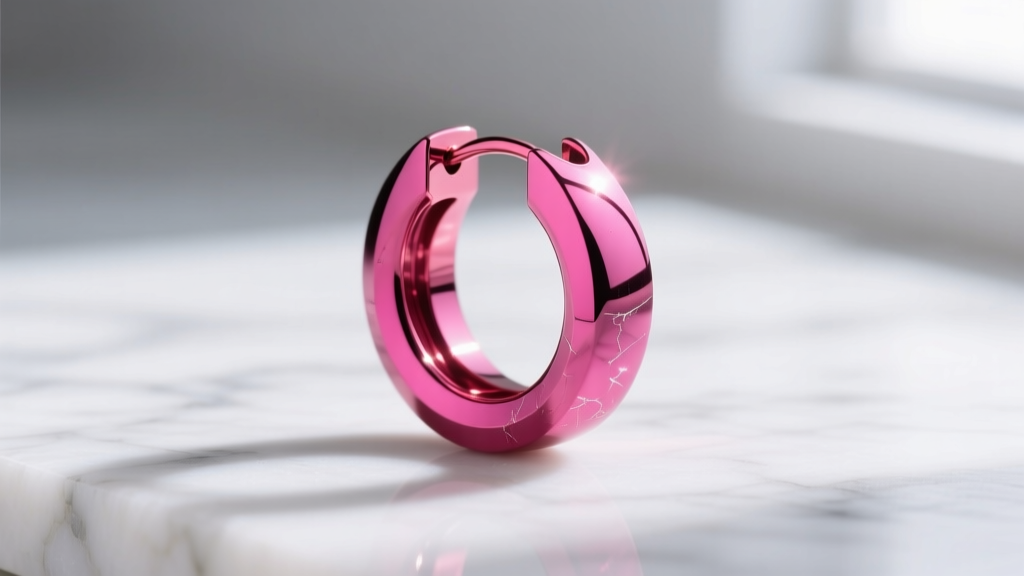
The Engineering of the Earring Barbie Aesthetic
When analyzing the earring barbie trend, jewelry historians and metallurgists observe a fascinating intersection of nostalgic 1/6 scale doll accessories and contemporary human body modification. The aesthetic is defined by hyper-feminine silhouettes, exaggerated proportions, and unapologetic 'hyper-pink' colorways. However, translating the visual language of a toy into wearable, anatomically viable fine jewelry requires rigorous material science. Cheap fashion interpretations often rely on toxic alloys and heavy solid resins that cause contact dermatitis and lobe migration. This technical deep dive explores how master jewelers engineer the perfect pink aesthetic without compromising structural integrity or dermatological safety.
Material Science: Achieving Hyper-Pink Without the Nickel
The most significant point of failure in novelty 'Barbiecore' jewelry is the base metal. To achieve a bright, opaque pink finish cheaply, mass manufacturers often use nickel-brass alloys coated in tinted epoxy. According to the American Academy of Dermatology, nickel is the leading cause of allergic contact dermatitis, affecting up to 18% of adults. When sweat breaks down cheap plating, nickel ions leach into the micro-tears of a fresh or healing piercing, causing severe localized reactions.
To engineer a safe, high-end earring barbie piece, experts utilize Grade 23 Titanium (Ti-6Al-4V ELI) or 316L Implant-Grade Stainless Steel as the substrate. The pink coloration is then achieved through one of three advanced methods:
- PVD (Physical Vapor Deposition): Titanium is placed in a vacuum chamber where vaporized pink gold or specialized ceramic compounds bond to the metal at a molecular level. This creates a scratch-resistant, hypoallergenic pink finish that will never flake into the piercing channel.
- Vitreous Enamel: Silica-based glass powder is fused to the metal substrate at temperatures exceeding 1400°F. This creates a luminous, glass-like pink surface that is entirely inert and biocompatible.
- Anodization: Titanium is submerged in an electrolytic bath and subjected to specific voltages. While true 'hot pink' is difficult to achieve via anodization (which typically yields purples and magentas), precise voltage control can approximate the Barbie aesthetic without adding any foreign dyes.
Comparative Analysis of Pink Jewelry Materials
| Material / Finish | Weight Factor | Hypoallergenic Rating | UV Degradation Risk | Avg. Price Range |
|---|---|---|---|---|
| Cold Enamel (Epoxy) | Low | Poor (Often over brass) | High (Yellows rapidly) | $15 - $40 |
| Vitreous Enamel | Medium | Excellent (Glass-based) | None | $85 - $250 |
| PVD Pink Gold (Ti) | Ultra-Low | Excellent (Implant-grade) | None | $60 - $180 |
| Cast Acrylic Resin | Low | Good (External only) | Medium (Becomes brittle) | $20 - $75 |
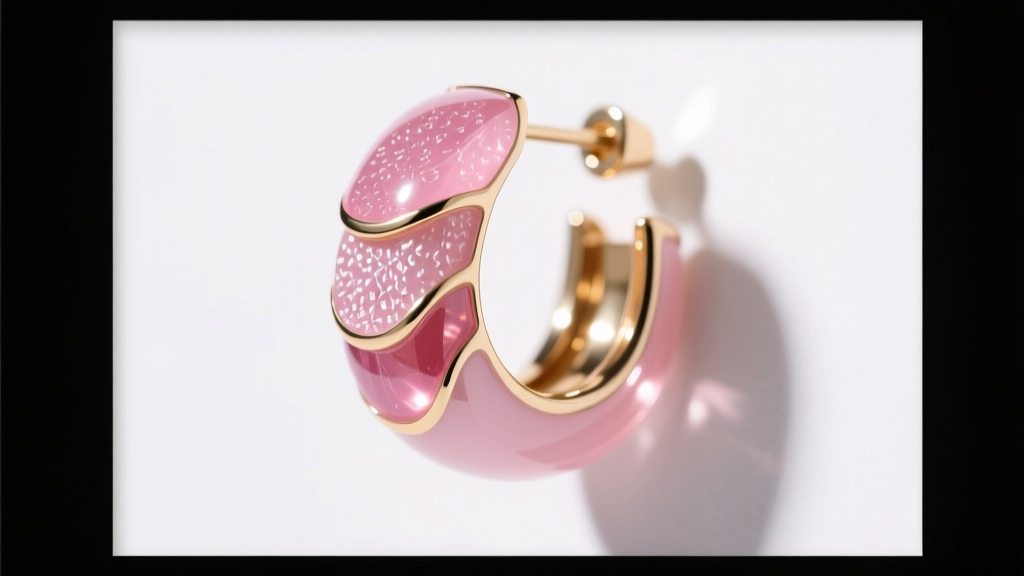
Proportional Scaling: Doll Jewelry vs. Human Anatomy
The core visual tenet of the earring barbie aesthetic is exaggerated scale. A 1-inch hoop on a 1/6 scale doll translates mathematically to a 6-inch hoop on a human. While human jewelry doesn't scale linearly, the desire for oversized, statement-making geometry remains. This introduces severe biomechanical challenges regarding load-bearing limits in human cartilage and earlobes.
Lobe vs. Cartilage Load-Bearing Limits
Human tissue has strict tensile limits before the 'cheese cutter effect' occurs—a phenomenon where a thin, heavy wire slowly slices through the skin. The National Center for Biotechnology Information notes that prolonged mechanical stress on piercings leads to tissue necrosis and migration.
- Standard Earlobe: Can safely support 15 to 20 grams of static weight indefinitely. To achieve the oversized 'doll' look without exceeding this limit, jewelers use hollow electroforming techniques or ultra-lightweight aerospace-grade acrylics for the decorative elements.
- Cartilage (Helix/Conch): Lacks the vascular elasticity of the lobe and is highly prone to pressure necrosis. Cartilage piercings should never bear more than 5 to 8 grams. 'Barbie' style cartilage cuffs must rely on tension-fit mechanics or lightweight 18-gauge (1.0mm) titanium threading rather than heavy dangles.
Gauge Sizing and Post Thickness
Toy earrings notoriously use thick, blunt, and irregularly shaped posts that damage human tissue. For adult 'Barbiecore' jewelry, the post must be precision-machined. Standard lobe studs should utilize an 18-gauge (1.0mm) or 16-gauge (1.2mm) post. If the decorative head of the earring is oversized (e.g., a 25mm wide pink acrylic star), the post must be upgraded to 14-gauge (1.6mm) to distribute the rotational torque and prevent the piercing channel from stretching asymmetrically.
Face Shape Geometry for Oversized Studs
Applying the earring barbie aesthetic to human faces requires an understanding of geometric contrast. Oversized, hyper-feminine studs and hoops interact directly with the jawline and cheekbones. The Gemological Institute of America frequently discusses how jewelry proportions must balance facial landmarks.
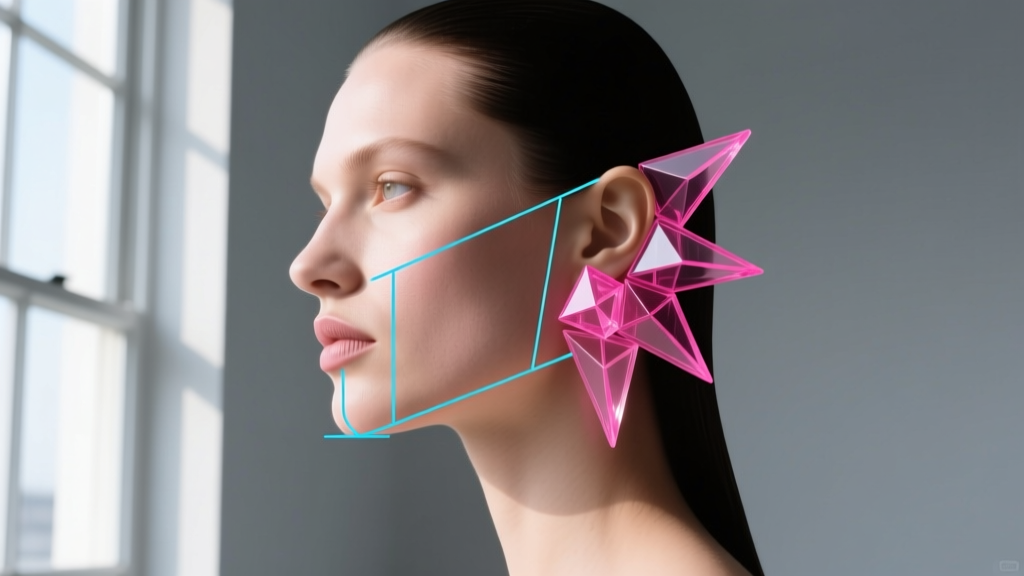
- Round Face Shapes: Avoid perfectly circular, oversized pink hoops, which will exaggerate facial width. Instead, opt for elongated 'Barbie' teardrop dangles or vertical rectangular acrylic studs to create an illusion of verticality and structure.
- Square Face Shapes: The sharp angles of the jawline benefit from the organic, curved shapes typical of the aesthetic. Oversized pink heart-shaped huggies or soft, scalloped-edge enamel clips will soften the lower third of the face.
- Heart Face Shapes: Characterized by a wider forehead and narrow chin. Chandelier-style dangles featuring lightweight pink resin beads add necessary visual weight to the bottom of the face, balancing the overall proportions.
Maintenance and Polymer Degradation
While PVD-coated titanium and vitreous enamel are virtually indestructible, many 'Barbiecore' pieces incorporate cast acrylics, polymer clays, or cold enamels to achieve complex, multi-colored 3D shapes. These polymers are highly susceptible to environmental degradation.
Expert Insight: Never clean acrylic or cold-enamel pink jewelry with alcohol-based solutions or ultrasonic cleaners. The solvents will break down the polymer chains, causing the vibrant 'Barbie pink' to cloud, craze, and eventually fracture. Use only warm water and a mild, pH-neutral surfactant with a microfiber cloth.
Furthermore, prolonged exposure to UV radiation (specifically UVA rays) will cause the photoinitiators in cold enamels to yellow, turning a vibrant hot pink into a muddy salmon tone over 12 to 18 months of daily wear. Collectors and daily wearers must store these specific polymer pieces in opaque, UV-blocking jewelry boxes when not in use to preserve the optical clarity of the aesthetic.
Final Verdict on the Aesthetic
The earring barbie movement is far more than a fleeting pop-culture trend; it is a demanding design discipline. Successfully executing this look requires a masterful balance of nostalgic visual cues and unforgiving anatomical realities. By prioritizing implant-grade substrates, respecting the gram-load limits of human cartilage, and understanding the photochemical vulnerabilities of pink polymers, wearers can safely enjoy hyper-feminine, oversized jewelry without sacrificing their dermatological health or piercing longevity.


