Earring Plaza on Broadway: A Beginner's Shopping Guide
Discover our beginner-friendly guide to shopping at the Earring Plaza on Broadway. Learn about gold karats, gauge sizes, and how to spot quality earrings.

Navigating the Earring Plaza on Broadway
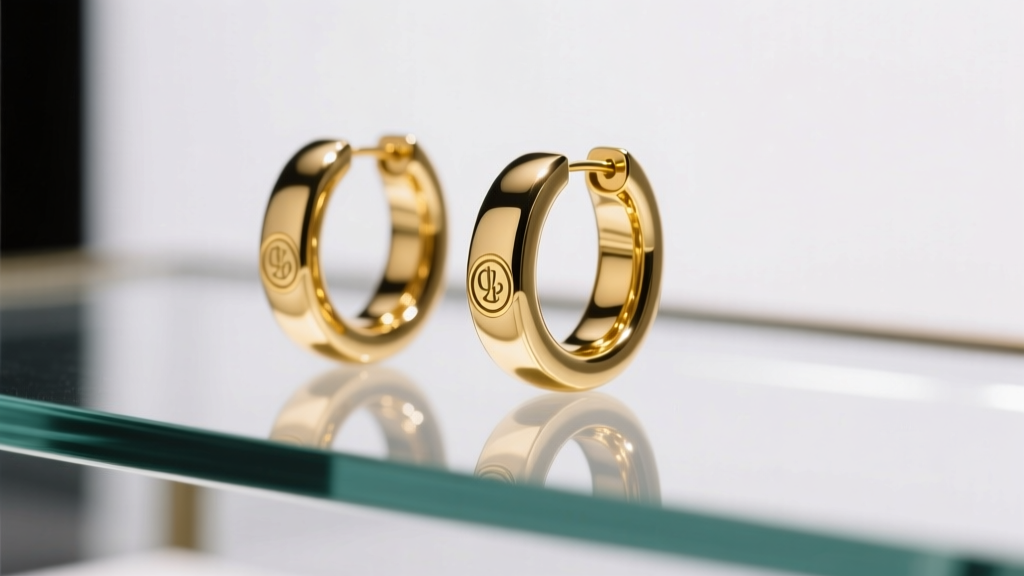
Stepping into the bustling Earring Plaza on Broadway for the first time can feel like entering a glittering labyrinth. Whether you are navigating the historic jewelry exchanges of Lower Manhattan or the vibrant storefronts of Los Angeles' Broadway district, the sheer volume of options is overwhelming. For a beginner, the flashing neon signs and fast-talking vendors can easily lead to buyer's remorse. However, with a foundational understanding of jewelry metallurgy, gauge sizing, and market pricing, you can transform this chaotic environment into a treasure trove of high-quality, fairly priced earrings.
In 2026, the landscape of physical jewelry shopping has shifted. With global gold prices remaining at historic highs, vendors at the plaza have adapted by offering more intricate hollow-core designs and advanced gold-filled alternatives. This guide will equip you with the exact specifications, material grades, and negotiation tactics you need to shop like a seasoned industry insider.
Decoding Metal Stamps: What You Are Actually Buying
The most critical skill when shopping at the Earring Plaza on Broadway is reading metal hallmarks. Vendors will often use terms like "gold" loosely, but the stamp inside the earring post or on the clasp tells the real story.
Solid Gold vs. Plated vs. Vermeil
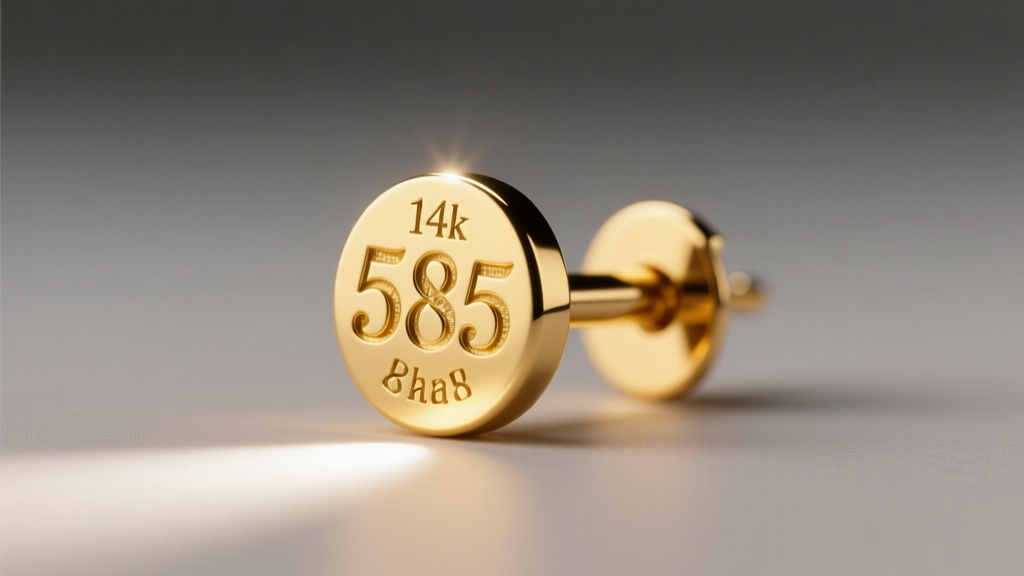
Solid gold earrings are alloyed with other metals for durability. You will typically see 14K (stamped 585) or 18K (stamped 750). 14K is the gold standard for everyday wear because it contains 58.5% pure gold, offering an ideal balance of rich color and scratch resistance. 18K (75% pure gold) is softer, more expensive, and better suited for special-occasion studs rather than heavy hoops.
Beware of unmarked "gold" jewelry. According to the Federal Trade Commission (FTC), jewelry must meet specific micron thicknesses to be legally marketed as gold plated or vermeil. Vermeil must have a sterling silver (.925) base with at least 2.5 microns of gold plating. If a vendor at the plaza tries to sell you "gold over brass," you are buying costume jewelry that will tarnish within months. Always demand to see the .925 and 14K stamps on vermeil pieces.
The Gauge Guide: Lobe vs. Cartilage Piercings
One of the most common mistakes beginners make at the Earring Plaza on Broadway is buying the wrong wire thickness for their specific piercing. Earring wire thickness is measured in gauges (g). Counterintuitively, the higher the gauge number, the thinner the wire.
According to the Association of Professional Piercers (APP), wearing jewelry that is too thin can cause the "cheese-cutter effect," where the thin wire slowly migrates through the flesh of your earlobe. Conversely, forcing a thick wire into a delicate cartilage piercing can cause micro-tears and hypertrophic scarring.
| Gauge Size | Millimeter (mm) | Best Used For | Common Styles at the Plaza |
|---|---|---|---|
| 20g | 0.81mm | Standard Earlobe (Most Common) | Butterfly-back studs, thin wire hoops |
| 18g | 1.02mm | Standard Earlobe, Nostril | Huggies, slightly thicker studs |
| 16g | 1.29mm | Cartilage, Helix, Tragus | Clicker rings, captive bead rings |
| 14g | 1.60mm | Thick Cartilage, Industrial | Heavyweight seamless hoops |
Pro Tip: Always carry a digital caliper or ask the vendor to measure the post with one. Many mass-imported earrings at the plaza are mislabeled as 18g when they are actually 20g.
Gemstone Verification: CZ vs. Lab vs. Natural
The Earring Plaza on Broadway is famous for its diamond and gemstone earrings, but the untrained eye can easily be deceived. In 2026, lab-grown diamonds have achieved massive market penetration, and high-grade moissanite is virtually indistinguishable from diamond to the naked eye.
- Cubic Zirconia (CZ): The cheapest option. It has high dispersion (rainbow flashes) but a low Mohs hardness (8.0-8.5). It will scratch and cloud within a year of daily wear. Expect to pay $20–$50 for CZ studs.
- Moissanite: A silicon carbide crystal with a Mohs hardness of 9.25. It is doubly refractive, meaning it sparkles more intensely than a diamond. Excellent for budget-friendly, durable plaza purchases ($100–$300).
- Lab-Grown Diamond: Chemically and optically identical to mined diamonds. The Gemological Institute of America (GIA) provides specific grading reports for lab diamonds. Always ask for the GIA or IGI report number laser-inscribed on the girdle of stones over 0.50 carats.
Clasps and Closures: Security Matters
A beautiful earring is useless if it falls out and gets lost on the subway. When inspecting earrings at the plaza, pay close attention to the closure mechanism.
For Studs
Avoid standard "butterfly" friction backs for expensive solid gold or diamond studs. They rely on tension that degrades over time. Instead, look for La Pousette (screw-back) clasps or locking ear-wires that feature a mechanical click. If the vendor only has friction backs, negotiate a discount and plan to buy silicone or metal locking backs separately.
For Hoops and Huggies
Check the hinge on huggie earrings. A high-quality hinge should open smoothly and close with an audible, satisfying "snap." If the post feels loose in the catch, the earring will eventually open on its own. For continuous (endless) hoops, ensure the wire is tempered and springs back into the receiving tube tightly.
Negotiation and Pricing Realities
Haggling is an expected part of the culture at the Earring Plaza on Broadway, but it must be done respectfully and with market awareness. Because gold spot prices have surged, vendors operate on thinner margins for solid gold items by weight.
"Never negotiate the price of a piece until you have verified its weight and metal purity. Haggling over a mystery alloy is a losing game." — Veteran Jewelry Appraiser
- Ask for the "Melt" or Gold Weight Price: For plain gold hoops, ask the vendor to weigh the earrings on a digital gram scale. Calculate the raw gold value (based on the daily 14k or 18k scrap price) and expect to pay a 20% to 40% markup for the craftsmanship. This prevents you from paying arbitrary retail markups.
- The Cash Discount: Most independent plaza vendors pay 2.5% to 3.5% in credit card processing fees. Offering to pay in physical cash can instantly unlock a 5% to 10% discount on the final price.
- Bundle Pricing: If you are buying multiple pairs (e.g., a pair of 14k huggies and some 16g cartilage clickers), leverage the total cart value to negotiate a flat rate.
Your Final Pre-Purchase Checklist
Before handing over your cash or card at the counter, run through this quick mental checklist:
- Did I verify the metal hallmark (585, 750, or .925) with a loupe?
- Is the gauge thickness appropriate for my specific piercing placement?
- Does the clasp mechanism feel secure and mechanically sound?
- If buying gemstones, is there a verifiable lab report for stones over 0.50ct?
- Did I negotiate the final "out-the-door" price, including any local sales tax?
By approaching the Earring Plaza on Broadway with technical knowledge and a discerning eye, you transition from a vulnerable tourist to an empowered buyer. Take your time, inspect the craftsmanship, and enjoy the thrill of the hunt.


