Earring Beading Hoops: 2026 Buying Guide & Style Tips
Discover the best earring beading hoops in our 2026 buying guide. Learn about materials, gauge sizes, bead types, and how to choose the perfect pair.

The Renaissance of Earring Beading Hoops
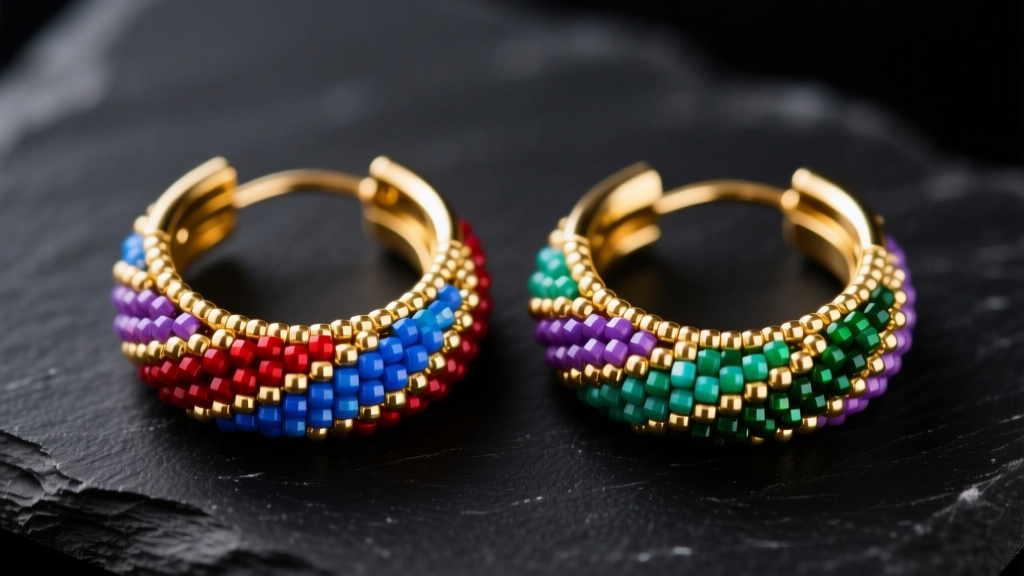
The market for earring beading hoops has evolved dramatically over the last few years, transitioning from simple craft projects to high-end, structurally engineered jewelry. In 2026, we are seeing a massive surge in demand for hoops that combine the fluid movement of traditional metal rings with the intricate, tactile beauty of beadwork. Whether woven directly onto a rigid wire frame or strung along a flexible inner core, beaded hoops offer a unique way to introduce color, texture, and personalization to your ear stack.
However, buying beaded hoops requires a much more critical eye than purchasing standard cast metal jewelry. The introduction of beads adds kinetic friction, weight distribution challenges, and potential failure points at the clasp. As a jewelry specialist, I have evaluated hundreds of designs to bring you this comprehensive buying guide. Below, we break down the exact specifications, material grades, and structural red flags you need to know before investing in your next pair.
Anatomy of a High-Quality Beaded Hoop
Base Metal and Wire Gauge
The foundation of any beaded hoop is the wire armature. For lightweight seed beads, a 20-gauge (0.8mm) wire is standard, providing enough rigidity to hold a circular shape while remaining light on the earlobe. However, if you are purchasing hoops featuring heavier gemstone beads, Czech glass, or dense metallic accents, you must look for an 18-gauge (1.0mm) or even 16-gauge (1.2mm) base wire. According to metallurgical standards from Rio Grande, anything thinner than 20-gauge will suffer from 'work hardening' and eventually snap under the repetitive micro-movements of heavy beads.
Material-wise, 14k gold-filled wire remains the gold standard for mid-tier pricing, offering a thick outer layer of karat gold that will not flake or tarnish like plated alternatives. For those with severe nickel allergies, look for hoops crafted from pure niobium or implant-grade titanium (ASTM F136), which can be anodized to create vibrant colors that complement the beadwork.
Stringing Tension and Bead Friction
How the beads are secured is just as important as the wire itself. In continuous (endless) hoops, beads are often strung directly onto the wire. High-quality manufacturers use micro-crimp beads or tiny silicone O-rings at the ends of the bead sequence to prevent the beads from sliding into the clasp mechanism. If the beads slide freely over the clasp joint, they will grind against the metal hinge, causing premature wear and eventual clasp failure.
Material Matrix: Choosing Your Beads
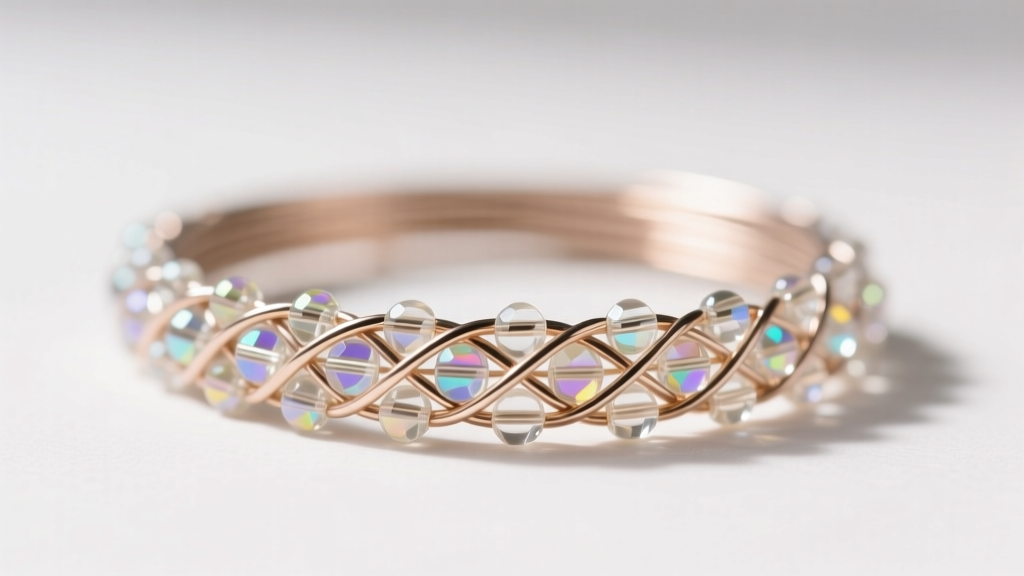
The type of bead used drastically alters the weight, durability, and price of the earring. The Gemological Institute of America (GIA) notes that natural stone beads require careful inspection for internal fractures, which can split when subjected to the tension of a curved hoop. Below is a comparison of the most common bead materials used in modern hoop designs.
| Bead Material | Avg. Hole Size | Weight Impact | Durability | Best Hoop Gauge |
|---|---|---|---|---|
| Miyuki Delica (Seed) | 0.8mm | Ultra-Light | High (Glass) | 20g - 22g |
| Czech Fire-Polished | 0.7mm - 1.0mm | Light-Medium | Medium | 18g - 20g |
| Freshwater Pearl | 0.4mm - 0.6mm | Medium | Low (Scratch-prone) | 22g (Requires thin wire) |
| Semi-Precious Stone | 0.8mm - 1.2mm | Heavy | Variable | 16g - 18g |
Pro Tip: If you are buying hoops with freshwater pearls, ensure the wire has a nylon coating. Bare metal wire will eventually wear through the nacre of the pearl from the inside out due to friction.
Sizing and Proportions for Face Shapes
Beaded hoops carry more visual weight than plain metal hoops of the exact same diameter. The texture and color draw the eye immediately, meaning you must scale the size appropriately for your face shape to avoid overwhelming your features.
- Round Faces: Opt for elongated, teardrop-shaped beaded hoops or standard hoops (30mm-40mm) where the beadwork is concentrated at the bottom half. This creates a vertical line that lengthens the face.
- Square Faces: Choose medium-sized circular hoops (25mm-35mm) with uniform bead distribution. The continuous curve of the beads softens sharp jawlines and angular cheekbones.
- Heart-Shaped Faces: Look for smaller huggie-style beaded hoops (15mm-20mm) or hoops that feature heavier beadwork near the top, tapering down to bare metal at the bottom to balance a narrower chin.
- Oval Faces: You have the most versatility. Experiment with oversized 50mm+ statement hoops featuring bold, chunky gemstone beads.
Common Failure Modes and Troubleshooting
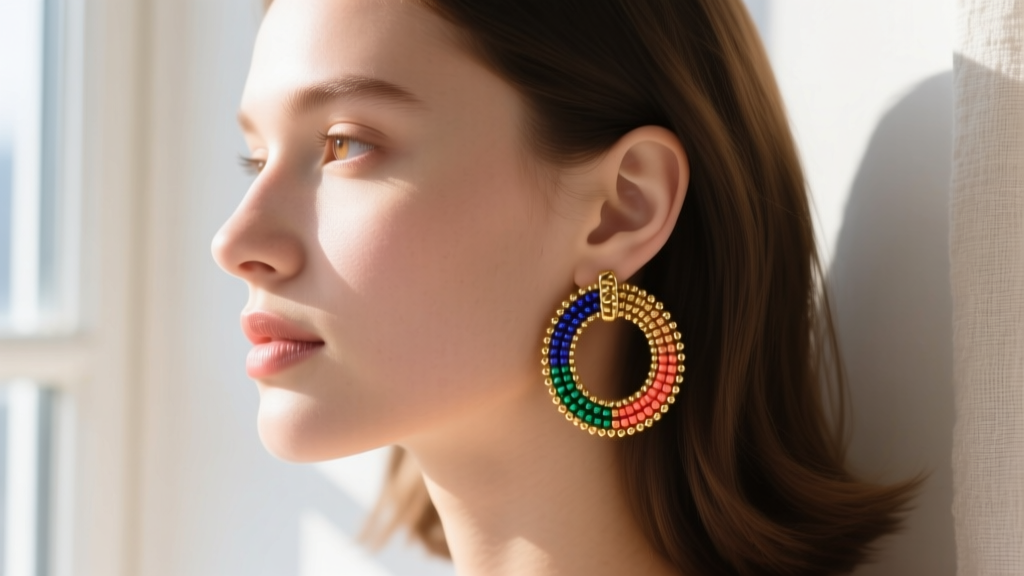
When evaluating earring beading hoops in a boutique or online, you must actively look for structural vulnerabilities. Here are the three most common failure modes and how to spot them before buying.
1. Clasp Slip and Wire Fatigue
On latch-back or click-top hoops, the post must fit snugly into the catch. If the beadwork is too heavy, the momentum of the earring swinging can slowly pull the post out of the catch. Always perform the 'flick test': gently flick the bottom of the hoop. If the clasp pops open even a fraction of a millimeter, reject the pair. Hinged snap clasps with a secure locking click are vastly superior for heavy beaded designs.
2. Bead Chipping at the Clasp Joint
Inspect the beads closest to the hinge or post. Are they chipped or scratched? If the manufacturer did not use a wire guard or a smooth metal spacer bead between the clasp and the decorative beads, the sharp edges of the metal joint will act like a saw against the glass or stone beads every time the earring moves.
3. Wire Warping
Hold the hoop up to eye level and look straight down the curve of the wire. It should form a perfect circle or oval. If you see flat spots or kinks near the bead clusters, it means the wire gauge was too thin to support the weight of the beads during manufacturing or shipping. This warped wire will eventually snap.
Pricing Tiers in 2026
Understanding what you should pay helps you avoid overpriced costume jewelry masquerading as fine art. Here is the current market breakdown for beaded hoops:
- Entry-Level ($15 - $35): Typically features brass or copper wire with gold plating, strung with acrylic or mass-produced glass beads. Expect the plating to wear off within 6-12 months of daily wear. Best for occasional, trend-driven styling.
- Mid-Tier Artisan ($45 - $95): The sweet spot for quality. These feature 14k gold-filled or sterling silver armatures, hand-woven with high-quality Miyuki or Czech glass seed beads. Brands in this tier often use silicone stoppers and reinforced clasps.
- Fine Jewelry ($150 - $400+): Solid 14k or 18k gold wire paired with hand-cut semi-precious gemstones, micro-pave diamond accents, or ethically sourced freshwater pearls. These are heirloom-quality pieces that require specialized stringing techniques, often utilizing silk thread cores inside a flexible metal mesh.
Final Verdict
Investing in high-quality earring beading hoops is about balancing aesthetic vibrancy with structural engineering. Always prioritize the wire gauge and clasp security over the sheer volume of beads. By understanding the material matrix and checking for friction points, you can curate a collection of beaded hoops that are not only visually stunning but built to withstand the kinetic realities of daily wear. For further education on identifying genuine gemstone beads, consult the educational resources at Fire Mountain Gems before making high-end purchases.


