Earring Care After Piercing: A Material Guide for Fast Healing
Discover how metal choices impact earring care after piercing. Compare titanium, gold, and niobium to avoid allergies and ensure rapid healing.

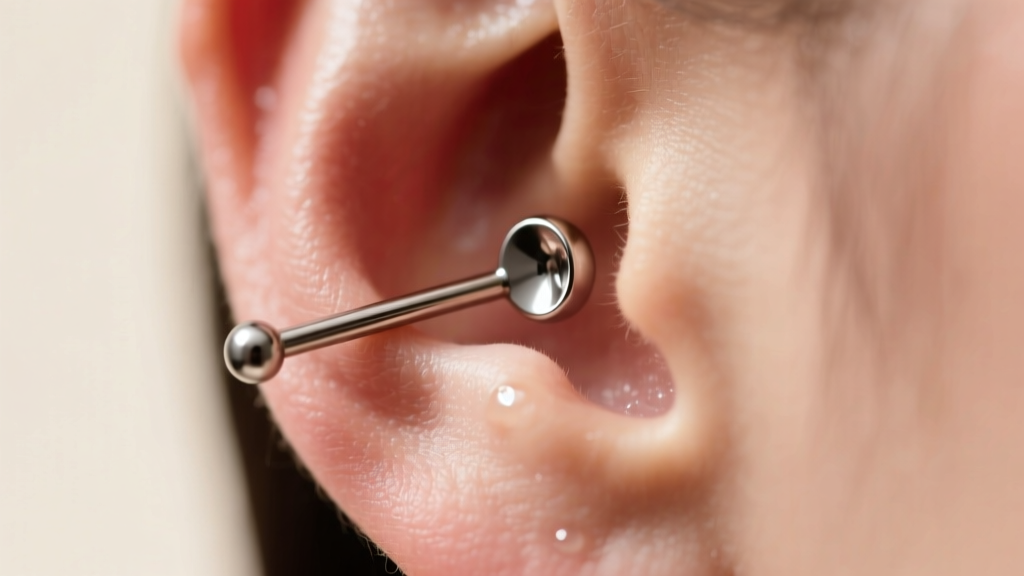
The Hidden Variable in Earring Care After Piercing: Metallurgy
When most people research earring care after piercing, they focus on aftercare routines: sterile saline sprays, avoiding pools, and not sleeping on the fresh wound. While these practices are vital, they ignore the most critical variable sitting directly inside the healing tissue—the metallurgical composition of the jewelry itself. A fresh piercing is not just a hole; it is an active, weeping biological environment. The interstitial fluid, blood, and lymph create a highly conductive electrolyte bath. If the metal inserted into this environment is reactive, unstable, or porous, no amount of saline spray will prevent complications.
As we move through 2026, the professional piercing community has largely moved away from outdated "surgical steel" standards, embracing strict biocompatibility metrics. Understanding how different alloys interact with your body's chemistry is the foundation of successful earring care after piercing. Let us break down the exact material grades, failure modes, and biological responses associated with the most common starter earrings.
Material Breakdown: What Touches Your Fresh Wound?
Implant-Grade Titanium (ASTM F-136)
Implant-grade titanium is the undisputed gold standard for initial piercings. Specifically, you want titanium that meets the ASTM F-136 standard (often labeled as Ti6Al4V ELI, meaning Extra Low Interstitial). This specific alloy is entirely nickel-free and boasts a highly polished surface finish that prevents bacterial adhesion. Because it is biologically inert, the body does not recognize it as a foreign threat, drastically reducing the inflammation phase of healing. Furthermore, titanium can be anodized using electrical currents to create vibrant colors without introducing toxic paints or dyes into the wound bed.
14k and 18k Solid Gold (Palladium Alloyed)
Gold is a classic choice, but purity matters immensely. 24k gold is too soft for body jewelry; it scratches easily, creating microscopic grooves where bacteria thrive. Conversely, lower karat golds (10k or 12k) contain high amounts of alloy metals, often including nickel or copper, which can cause severe contact dermatitis. For safe earring care after piercing, you must source 14k or 18k solid gold that is explicitly nickel-free. High-end manufacturers alloy their gold with palladium or silver to maintain structural integrity and biocompatibility. Avoid gold-plated or gold-filled jewelry entirely for fresh piercings, as the microscopic gold layer will flake off into the healing fistula, exposing the reactive base metal beneath.
Niobium (Unalloyed Element 41)
Niobium is a highly reactive, hypoallergenic elemental metal. Unlike titanium, which is an alloy, niobium is used in its pure, unalloyed state for body jewelry. It shares a similar biocompatibility profile with implant-grade titanium and is exceptionally well-tolerated by those with severe metal sensitivities. Like titanium, it can be heat-anodized to achieve rich, dark colors like deep blues, purples, and blacks. Its primary drawback is that it is heavier than titanium, making it less ideal for large-gauge or heavy cartilage hoop setups during the initial healing phase.
The "Surgical Steel" Trap (316L)
The term "surgical stainless steel" is largely a marketing myth when applied to body piercing. The most common grade used in mall kiosks and budget jewelry stores is 316L stainless steel. While it is used in surgical tools (which are used temporarily and sterilized), it is not suitable for long-term implantation. 316L contains between 8% and 10.5% nickel. In the moist, saline environment of a healing piercing, this nickel leaches into the tissue. According to the Mayo Clinic, nickel allergy is one of the most common causes of allergic contact dermatitis, leading to the itchy, weeping, and swollen piercings that many mistakenly attribute to "infection."
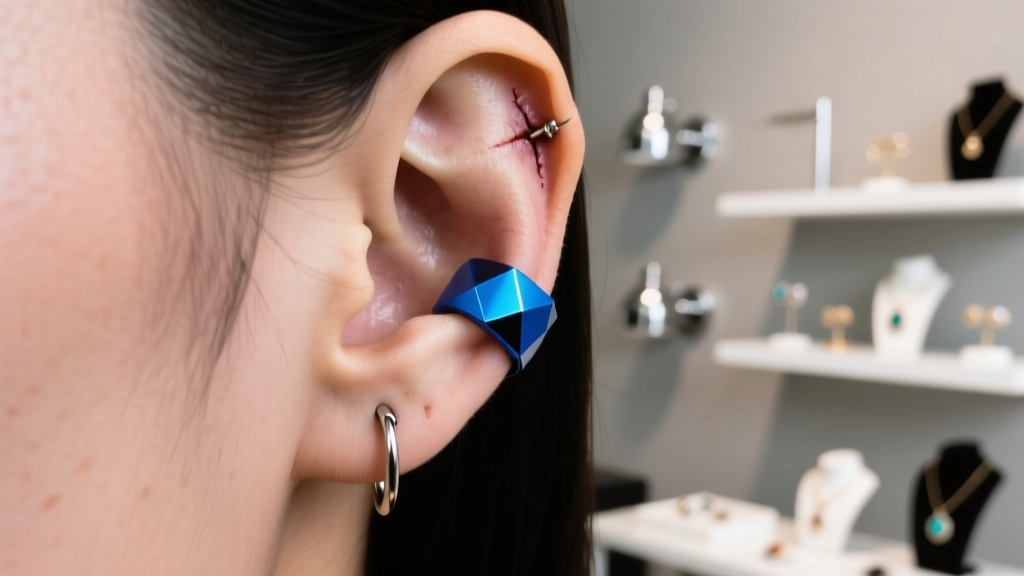
Comparative Data: Healing Metrics & Material Properties
To make informed decisions about your starter jewelry, review the comparative data below. This table highlights the practical realities of each material regarding biocompatibility, structural integrity, and market pricing for standard 16-gauge or 14-gauge flat-back labret studs.
| Material Grade | Nickel Content | Corrosion Resistance in Saline | Safe for Initial Piercing? | Avg. Price Range (Per Stud) |
|---|---|---|---|---|
| Implant Titanium (F-136) | 0% | Exceptional (Passive oxide layer) | Yes (Highly Recommended) | $35 - $85 |
| 14k/18k Solid Gold | 0% (if palladium alloyed) | Excellent | Yes (If polished > 800 grit) | $90 - $250+ |
| Niobium (Unalloyed) | 0% | Exceptional | Yes (Best for heavy metal allergies) | $30 - $70 |
| Surgical Steel (316L) | 8% - 10.5% | Poor (Prone to pitting & leaching) | No (High rejection risk) | $10 - $25 |
How Metal Reacts with Saline Aftercare Solutions
The standard protocol for earring care after piercing involves spraying the area twice daily with a 0.9% sterile sodium chloride (saline) solution. While this is isotonic and safe for human tissue, it acts as an electrolyte when it pools around metallic jewelry. If you are wearing low-quality metals or mixed-metal jewelry (for example, a steel post with a gold-plated decorative end), you inadvertently create a microscopic galvanic cell.
Galvanic corrosion occurs when two dissimilar metals are submerged in an electrolyte, causing the more reactive metal to rapidly oxidize and degrade. This releases metallic ions directly into the unhealed fistula, triggering localized toxicity, hyperpigmentation (where the skin turns grey or black around the hole), and chronic inflammation. This is why professional piercers insist on single-material, internally threaded, or threadless jewelry systems for fresh piercings.
Downsizing and Upgrading: Timing Your Material Swaps
Proper earring care after piercing extends beyond cleaning; it requires mechanical management of the jewelry. When a lobe or cartilage piercing is first performed, the piercer will insert a post with an elongated length—typically 8mm to 10mm (5/16" to 3/8")—to accommodate the inevitable swelling that peaks around days 3 through 7.
Once the swelling subsides (usually between weeks 4 and 8), the long post becomes a liability. It can snag on hair and clothing, causing micro-tears in the fragile healing tissue, and the excess weight can cause the piercing channel to heal at an awkward angle, leading to migration. Downsizing is the process of swapping the initial long post for a shorter, snug-fitting post, typically 5mm to 6mm (3/16" to 1/4").
"Leaving an overly long post in a healing piercing invites snagging, irritation bumps, and angle deviation. Downsizing at the appropriate time is just as critical as the initial jewelry material selection." — The Association of Professional Piercers (APP)
When you return to your piercer for a downsize, this is the safest window to upgrade your material or swap to a different decorative end, provided you stick to ASTM F-136 titanium or solid gold.
Expert Troubleshooting: Signs of Metal Rejection vs. Infection
A major pitfall in earring care after piercing is misdiagnosing the body's response to the jewelry. Many people assume their piercing is infected when they are actually experiencing allergic contact dermatitis or early-stage rejection due to poor metal quality.
- Allergic Contact Dermatitis (Metal Sensitivity): Characterized by intense itching, clear or slightly yellowish weeping fluid (lymph), and localized redness that perfectly matches the shape of the jewelry. The tissue may feel warm but is rarely throbbing. Solution: Immediately swap the jewelry to implant-grade titanium or niobium. Do not remove the jewelry entirely, or the hole will close, trapping the allergen inside.
- Bacterial Infection: Characterized by deep, throbbing pain, excessive heat radiating from the area, systemic fever, and thick, opaque purulent exudate (pus) that is green, brown, or foul-smelling. Solution: Leave the jewelry in place to allow drainage and seek medical attention from a physician for potential antibiotics. Do not rely on a piercer to diagnose a true bacterial infection.
- Irritation Bumps (Hypertrophic Scarring): Small, fleshy, skin-colored bumps adjacent to the jewelry. Often caused by mechanical irritation (snagging, sleeping on it) or moisture buildup, not necessarily a metal allergy. Solution: Downsize the post, ensure the area is dried gently after showering, and apply warm saline compresses.
Ultimately, successful earring care after piercing is an exercise in biological compatibility. By investing in verified, high-quality materials like implant-grade titanium or palladium-alloyed gold from the start, you eliminate the vast majority of variables that lead to prolonged healing, irritation bumps, and allergic flare-ups. Treat your fresh piercing with the respect a surgical wound deserves, and your jewelry will be a seamless extension of your anatomy for decades to come.


