Which Earring Clasp Offers the Best Value and Security?
Discover which earring clasp offers the best security and value. We compare pricing, materials, and durability to protect your jewelry investment.

The Hidden Cost of Lost Jewelry: Why Your Earring Clasp Matters
When budgeting for fine jewelry, consumers routinely scrutinize diamond clarity, gold purity, and brand prestige. Yet, the most critical component for protecting that investment—the earring clasp—is often an afterthought. According to industry estimates shared by Jewelers of America, a significant percentage of lost diamond studs and heirloom drops fail not because of a broken setting, but due to a compromised or inadequate earring clasp. In 2026, with the rising cost of precious metals and gemstones, evaluating the budget-to-value ratio of your earring hardware is no longer optional; it is a financial necessity.
A cheap clasp on a $5,000 diamond stud is a catastrophic point of failure. Conversely, overspending on proprietary locking mechanisms for $50 fashion hoops yields diminishing returns. This guide provides a deep-dive metallurgical and economic assessment of common earring clasps, helping you determine exactly where to allocate your budget for maximum security and longevity.
Breakdown of Common Earring Clasp Types & Value
To assess true value, we must look beyond the initial purchase price and evaluate the failure modes, material fatigue, and replacement costs associated with each clasp style.
Friction Backs (Butterfly and Push Backs)
The standard butterfly friction back is the most common and economical earring clasp on the market. They rely on the metal's tensile strength and the rolled "wings" to grip the notch on the earring post. The E-E-A-T Reality: Friction backs suffer from metal fatigue. A standard 14k gold friction back (Vickers hardness of ~135 HV) will begin to lose its spring tension after approximately 40 to 60 removal cycles. Once the wings stretch beyond their yield point, the clasp becomes a liability. While cheap to replace ($15–$25 per pair), the risk of losing a high-value earring makes them a poor long-term value for stones over 0.50 carats.
Screw Backs
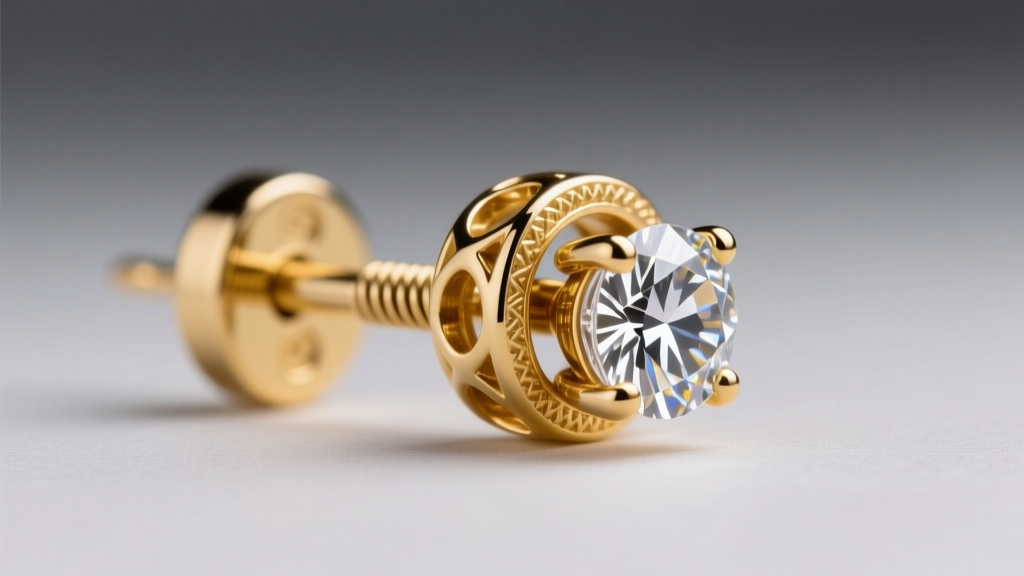
Screw backs feature a threaded post and a matching threaded nut. They offer excellent security against accidental pulls. The E-E-A-T Reality: The value of a screw back hinges entirely on precision machining. Most 20-gauge (0.81mm) posts utilize a 0.8mm thread pitch, while 18-gauge (1.02mm) posts use a 0.9mm or 1.0mm pitch. Forcing a mismatched nut will strip the threads, permanently ruining the earring post. Furthermore, skin oils and cosmetic debris easily clog the micro-threads, requiring ultrasonic cleaning to maintain functionality. They offer high security but demand meticulous maintenance.
Leverbacks and Latch Backs
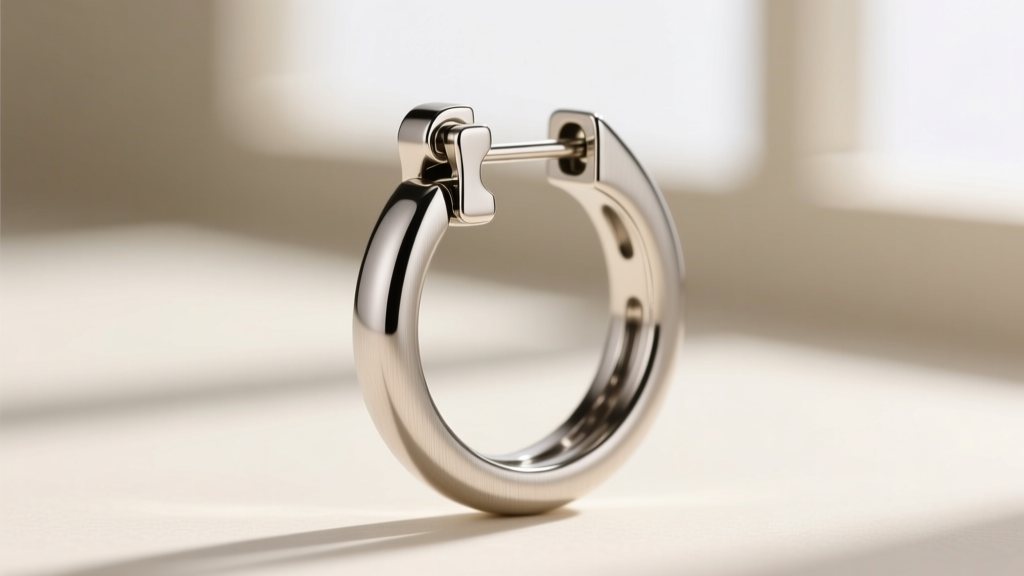
Commonly used for dangles and drops, leverbacks feature a hinged wire that snaps into a catch. The E-E-A-T Reality: The failure point here is the hinge pin and the catch tension. In budget-friendly sterling silver or low-karat gold, the hinge pin can wear down, causing the lever to droop and fail to catch. Investing in a leverback crafted from 14k gold or platinum ensures the hinge maintains structural integrity over decades, offering superior value for heavy drop earrings that exert kinetic stress on the clasp.
Secure Locking Backs (La Pousette Style)
Often considered the gold standard for high-value studs, locking backs utilize a dual-spring mechanism inside a hollow barrel that grips the post securely. The E-E-A-T Reality: While expensive upfront ($60 to $120 per pair for 14k/18k gold), the Gemological Institute of America (GIA) frequently recommends secure locking mechanisms for valuable gems. The internal springs are typically made of surgical-grade stainless steel or titanium to prevent fatigue, encased in a gold exterior. The value proposition is undeniable: a $90 clasp protects a $10,000 asset with near-zero failure rates.
Material Grades and Pricing: What Are You Paying For?
When upgrading or replacing an earring clasp, the base metal dictates both the price and the biocompatibility. Below is a market assessment of replacement clasp costs and material longevity.
| Material Grade | Avg. Replacement Cost (Pair) | Tensile Strength & Fatigue | Best Use Case |
|---|---|---|---|
| Surgical Steel (316L) | $8 - $15 | High strength, zero metal fatigue | Heavy hoops, budget locking backs |
| 14k Yellow/White Gold | $25 - $45 | Moderate strength, good spring-back | Standard friction backs, leverbacks |
| 18k Yellow Gold | $40 - $75 | Softer (lower HV), prone to bending | Screw backs (less thread stripping) |
| Platinum (950) | $80 - $150+ | Extremely high density, no fatigue | Heirloom studs, high-carat locks |
The Silicone vs. Metal Debate: Budget Hacks vs. Long-Term Value
A popular budget hack in 2026 is replacing lost metal friction backs with silicone O-rings or "jelly backs." These are undeniably cheap, often costing less than $5 for a pack of fifty. But do they offer real value?
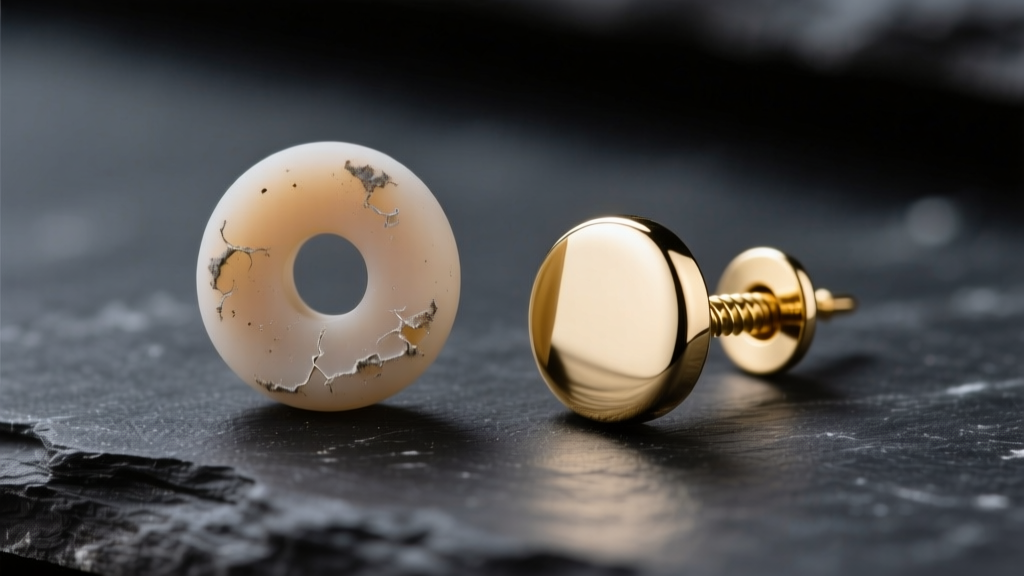
From a materials science perspective, silicone ear backs possess a Shore A hardness of roughly 30-40, making them incredibly grippy. However, silicone is highly porous and susceptible to degradation from UV exposure, cosmetic chemicals, and human sebum. Within 6 to 8 months of daily wear, silicone backs will stretch out, become brittle, and harbor bacterial biofilms that can lead to contact dermatitis or localized earlobe infections.
The Verdict: Silicone backs are an excellent emergency stopgap or a good choice for lightweight, low-value fashion jewelry. For fine jewelry, the "budget hack" becomes a false economy. The cost of replacing a lost diamond far outweighs the $20 investment in a proper 14k gold or La Pousette locking earring clasp.
Actionable Framework: When to Upgrade Your Earring Clasp
Use this decision matrix to determine if your current jewelry warrants a clasp upgrade:
- Under $100 Value (Fashion/Sterling Silver): Stick to standard friction backs or silicone O-rings. The cost of a locking mechanism exceeds the replacement value of the earring itself.
- $100 - $1,000 Value (Semi-Fine/Gold Vermeil): Upgrade to high-quality 14k gold friction backs with double-notched posts, or utilize secure silicone backs replaced bi-annually.
- $1,000 - $5,000 Value (Fine Jewelry/Diamond Studs): Mandatory upgrade to screw backs or mechanical locking backs. Ensure the post gauge (usually 18g or 20g) perfectly matches the thread pitch of the new clasp.
- $5,000+ Value (Heirloom/High Carat): Invest exclusively in platinum or 18k gold La Pousette-style locking backs. Have a bench jeweler laser-weld a custom safety chain if the design permits.
Final Verdict: Maximizing Your Jewelry Budget
Evaluating an earring clasp through the lens of budget and value requires shifting your mindset from "accessory" to "insurance." While it is tempting to rely on the complimentary push-backs provided at the point of sale, recognizing the metallurgical limitations of mass-produced clasps is the hallmark of a savvy jewelry collector. By matching the security level of your clasp to the financial and sentimental value of your earrings, you ensure that your most cherished pieces remain safely in your jewelry box—and on your ears—for a lifetime.


