How to Choose the Right Earring Sizes Hoops for You
Learn how to choose the perfect earring sizes hoops for your ear shape and piercing. Discover exact mm measurements, gauge thicknesses, and styling tips.


Hoops are arguably the most versatile and timeless jewelry staple in any collection. Yet, when beginners start shopping, they quickly realize that finding the perfect fit is far more complex than simply picking a design they like. The world of hoop sizing involves precise millimeter measurements, gauge thicknesses, and ear anatomy. In 2026, the jewelry industry has seen a massive shift toward personalized, anatomy-specific jewelry, moving away from the 'one-size-fits-all' approach of the past. If you want to avoid uncomfortable pinching, snagging, or the dreaded 'cheese-cutter' migration effect, understanding the standard earring sizes hoops are manufactured in is your crucial first step.
Why Hoop Sizing Matters More Than You Think
Unlike stud earrings, which sit flush against the earlobe, hoops interact dynamically with your ear's anatomy. A hoop that is too small in diameter will press against the piercing hole, causing pressure necrosis—a condition where the lack of airflow and constant friction lead to irritation, swelling, and potential infection. Conversely, a hoop that is too large or too heavy can catch on hair, sweaters, and headphones, leading to accidental tears in the earlobe.
Furthermore, the distance from your piercing hole to the edge of your ear (your 'fistula' depth) dictates the minimum inner diameter you can comfortably wear. A standard lobe piercing might require a 12mm hoop for a snug fit on one person, but a 15mm hoop on someone with thicker earlobes.
Decoding the Numbers: Inner Diameter vs. Outer Diameter
One of the most common points of confusion for beginners is how jewelers measure hoops. When you see a hoop listed as '15mm,' it almost always refers to the Inner Diameter (ID). This is the measurement of the empty space inside the ring.
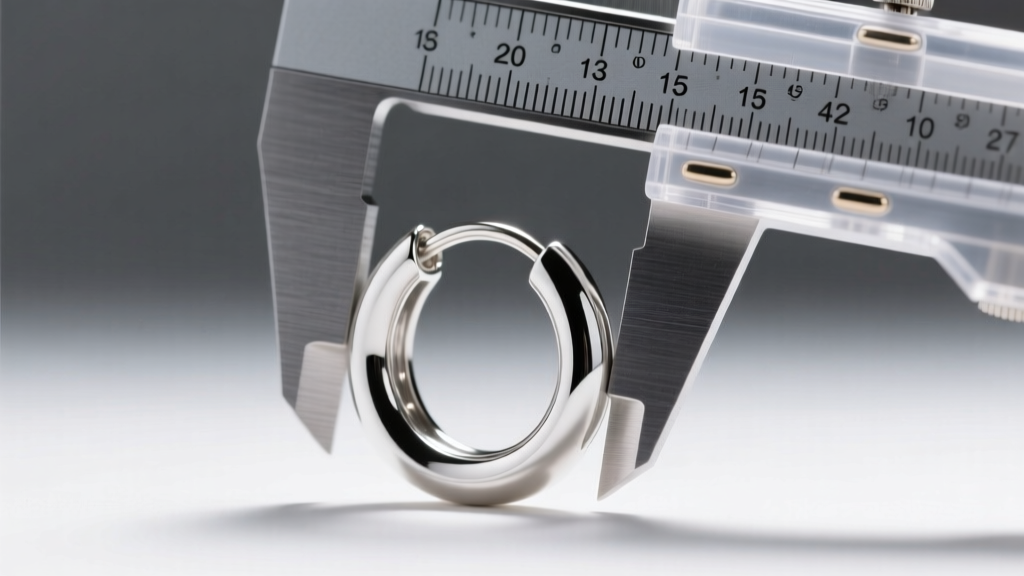
However, some thick huggies or ornate hoops are measured by Outer Diameter (OD). If a thick 3mm wire huggie has an OD of 12mm, its actual wearable ID is only 6mm (since you subtract the wire thickness from both sides). Always check the product description to confirm whether the brand lists ID or OD. According to the Association of Professional Piercers (APP), relying on ID is the safest way to ensure the jewelry will clear your tissue without compressing it.
Standard Earring Sizes Hoops Chart
To help you visualize the dimensions, here is a comprehensive conversion chart detailing the most common earring sizes hoops feature in modern jewelry collections, along with their best use cases.
| Size (mm) | Size (Inches) | Visual Reference | Best Piercing Placement |
|---|---|---|---|
| 8mm | 5/16" | Pencil eraser width | Tragus, Snug, Tight Helix |
| 10mm | 3/8" | Standard pencil width | Standard Lobe (snug), Conch |
| 12mm | 15/32" | Slightly larger than a dime | Standard Lobe (comfort fit) |
| 15mm | 19/32" | Dime diameter | Standard Lobe, Lower Cartilage |
| 20mm | 3/4" | Nickel diameter | Standard Lobe (classic drop) |
| 30mm+ | 1.18"+ | Half-dollar and up | Statement Lobe Only |
Matching Hoop Sizes to Piercing Placements
Standard Lobe Piercings
For a classic, everyday lobe piercing that sits just below the earlobe, a 12mm to 15mm inner diameter is the gold standard. This size allows the hoop to dangle slightly below the ear without resting heavily on the neck or jawline. If you prefer a 'huggie' style that hugs the lobe tightly, measure the distance from your piercing hole to the edge of your ear and add 1-2mm for breathing room.
Cartilage, Helix, and Tragus
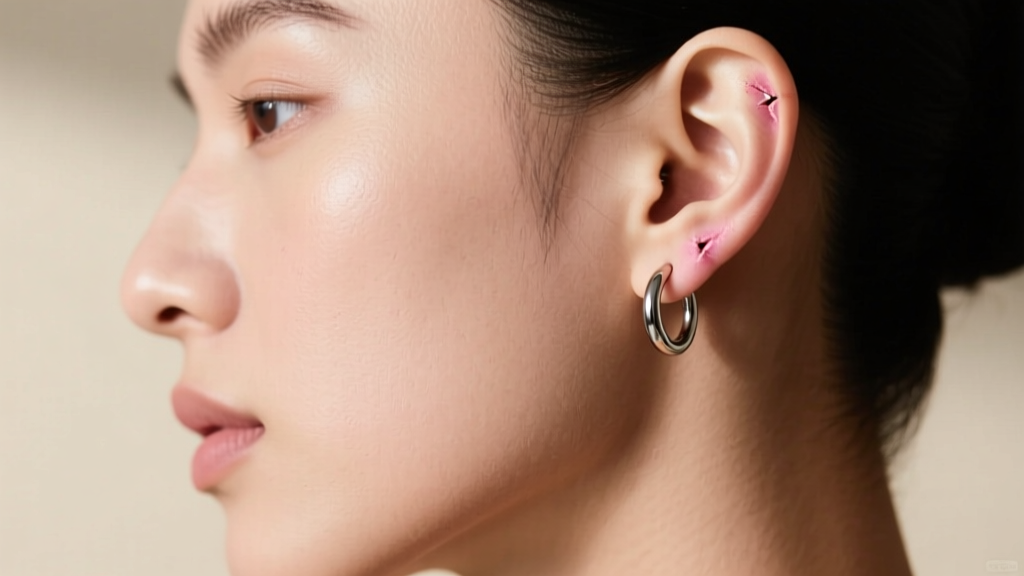
Cartilage piercings require much smaller diameters due to the shallow depth of the tissue. A standard helix piercing usually accommodates an 8mm or 10mm hoop. The tragus, being a small, thick flap of cartilage, often requires a highly specific 6mm to 8mm hoop with a secure clicker closure to prevent it from flipping outward.
Conch and Daith
The conch (the deep bowl of the ear) can accommodate larger hoops, typically ranging from 10mm to 14mm, depending on how high the piercing was placed. The daith, which passes through the innermost cartilage fold, usually requires a 10mm or 12mm diameter to allow the jewelry to rotate slightly for cleaning without pulling on the delicate tissue.
The Hidden Variable: Gauge Thickness and Weight
Beginners often obsess over diameter while completely ignoring gauge (the thickness of the wire). The Jewelry Shopping Guide notes that standard earlobe piercings are usually done at 20G (0.81mm) or 18G (1.02mm). However, wearing a large, heavy 30mm hoop on a thin 20G wire is a recipe for disaster.
This creates the 'cheese-cutter effect'. The heavy weight of the large hoop pulls downward, and the thin wire acts like a cheese wire, slowly migrating through the earlobe tissue over time. This can lead to permanent lobe splitting.
- For hoops 15mm and smaller: 20G or 18G wire is perfectly safe.
- For hoops 20mm to 30mm: Upgrade to a thicker 16G (1.29mm) wire to distribute the weight.
- For hoops 30mm and larger: Opt for lightweight materials like hollow-tube gold, titanium, or aluminum, and ensure the wire is at least 14G (1.6mm) if solid.
Face Shape and Proportion Rules
While anatomy dictates the minimum size you can wear, your face shape dictates the most aesthetically pleasing size. In 2026, stylists recommend using hoop proportions to balance facial features:
- Round Faces: Elongated drop hoops or angular geometric hoops (25mm+) help create the illusion of length. Avoid perfectly round, wide 20mm hoops that mimic the face's circular shape.
- Square Faces: Medium-sized circular hoops (15mm-20mm) soften sharp jawlines. Avoid stiff, boxy, or square-shaped hoops.
- Heart-Shaped Faces: Teardrop hoops or huggies with bottom-heavy charms balance a wider forehead and narrow chin.
- Oval Faces: The universal shape. You can pull off virtually any earring sizes hoops offer, from micro-huggies to massive statement rings.
Common Beginner Mistakes to Avoid
Even with the right measurements, a few common pitfalls can ruin your hoop-wearing experience. First, never sleep in hoops larger than 10mm. The pressure of your head against the pillow will bend the wire and irritate the piercing channel. Second, avoid 'fishhook' or 'French wire' closures for active days; these easily snag and pull out. Instead, invest in hoops with hinged clicker closures or segment rings for secure, all-day wear. Finally, if you have nickel sensitivities, ensure your hoops are crafted from implant-grade titanium (ASTM F-136) or solid 14k/18k gold, as the constant friction of a hoop against the skin can trigger severe contact dermatitis from base metals.
By prioritizing inner diameter, respecting your gauge thickness, and matching the style to your unique ear anatomy, you can build a hoop collection that is as comfortable as it is stylish.


