Earring Clips Value Guide: Budget vs Premium in 2026
Discover if premium earring clips are worth the investment. We compare budget vs. high-end mechanisms, metals, and comfort for non-pierced ears.

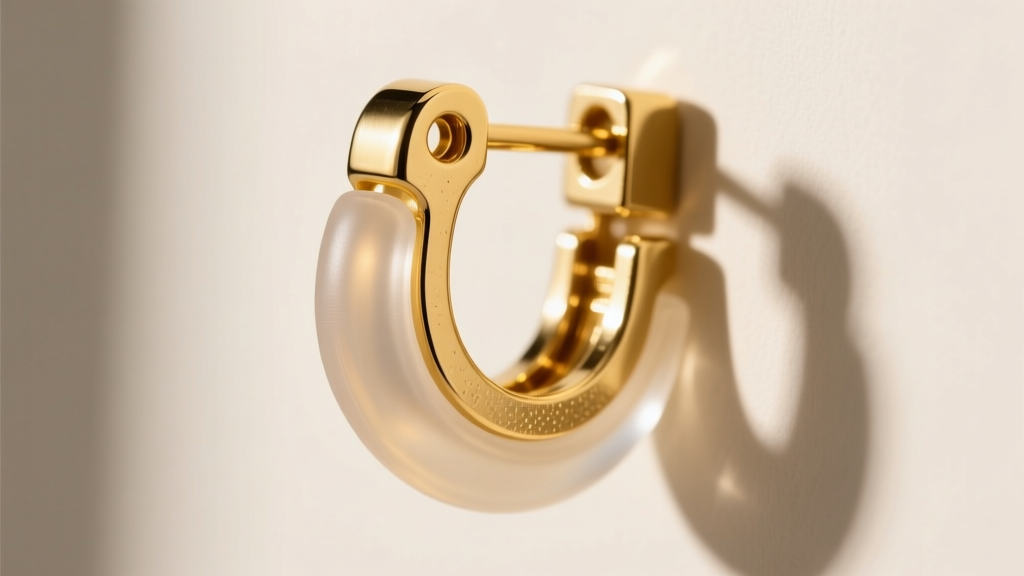
The Hidden Economics of Non-Pierced Jewelry
The resurgence of non-pierced jewelry has transformed earring clips from a nostalgic vintage accessory into a highly engineered component of modern fashion. As we navigate the 2026 jewelry market, consumers are increasingly divided between ultra-cheap fast-fashion clip-ons and premium, artisan-crafted alternatives. But when it comes to the hardware that actually grips your earlobe, does spending more genuinely yield better value, or are you simply paying for a brand name?
As a jewelry hardware specialist, I evaluate earring clips not just by their aesthetic appeal, but by their clamping force, metallurgical integrity, and ergonomic design. A failing clip doesn't just mean losing a $100 earring; it means compromised skin health and physical discomfort. This guide breaks down the exact specifications that separate budget earring clips from premium investments, helping you allocate your jewelry budget where it actually matters.
Mechanism Breakdown: Spring, Hinge, and Screw-Back
The value of an earring clip is fundamentally dictated by its mechanical architecture. There are three primary mechanisms used in modern non-pierced earrings, each with distinct failure modes and price points.
1. Spring-Loaded Clips (The Budget Standard)
Spring clips rely on a tiny metal coil to generate tension. In budget tiers ($5–$15), manufacturers use low-carbon steel springs that suffer from metal fatigue within 30 to 50 uses. The spring loses its memory, resulting in a loose grip. Premium spring clips utilize beryllium copper alloys for the internal coil. Beryllium copper retains its tensile memory exponentially longer, ensuring the clip maintains a consistent 180 to 220 grams of clamping force for years.
2. Hinge and Paddle Clips (The Mid-Tier Workhorse)
Hinge clips use a simple lever mechanism, often paired with a comfort pad. The value here lies in the hinge pin. Budget hinges use soft brass pins that warp under lateral stress (e.g., brushing your hair). High-value hinges use 316L stainless steel or titanium pins, ensuring the lever action remains perfectly aligned without developing a 'wobble' over time.
3. Screw-Back Clips (The Premium Benchmark)
Screw-backs allow the wearer to manually calibrate the clamping pressure. While highly secure, the threading is where budget versions fail. Cheap cast threads strip easily. Premium screw-back earring clips feature precision-machined threads, often with a microscopic Teflon or silicone coating on the screw post to prevent cross-threading and ensure buttery-smooth adjustment.
Metallurgy and Skin Safety: Why Base Metals Fail
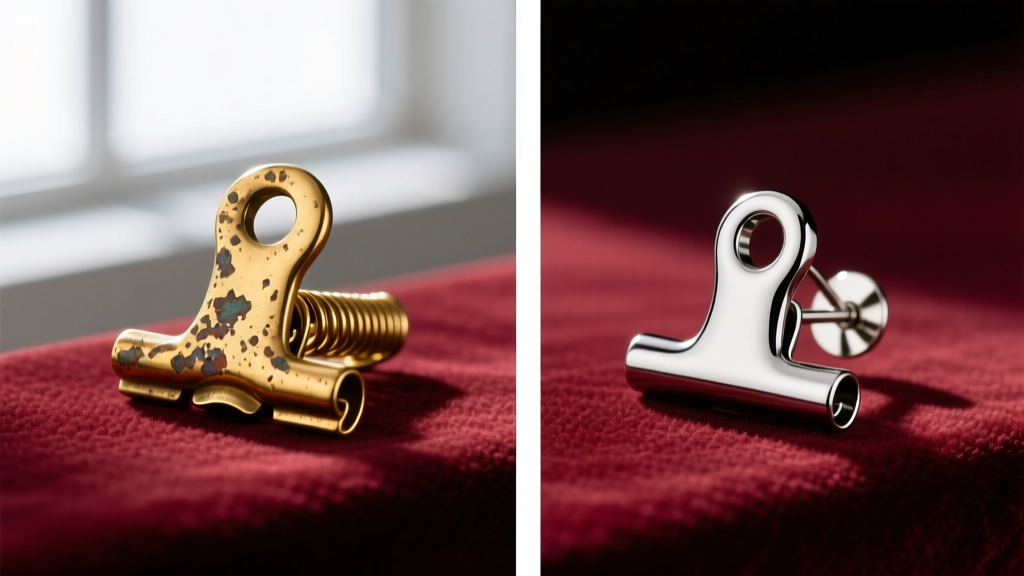
The most critical hidden cost of budget earring clips is dermatological. The earlobe is a highly vascular area, and prolonged pressure from a metal clip can cause micro-abrasions. If the metal contains reactive alloys, these micro-abrasions become entry points for allergens.
According to the Mayo Clinic, nickel allergy is one of the most common causes of allergic contact dermatitis. Budget earring clips are frequently stamped from zinc alloy or brass and flash-plated with a microscopic layer of nickel (for brightness) and gold. Once the friction of the clip wears through the 0.1-micron gold plating, the nickel is exposed directly to the skin, exacerbated by the pressure of the clip.
Expert Insight: Never compromise on the metal grade of the part that touches your skin. If a product description simply says 'gold-plated' without specifying the base metal or the plating thickness (e.g., 2.5 microns for vermeil), assume it is a high-risk base metal.
The Premium Standard: 316L and Gold-Filled
High-value earring clips are forged from 316L surgical stainless steel (which is virtually nickel-free) or utilize 14k/18k gold-filled materials. Gold-filled wire features a thick outer layer of karat gold mechanically bonded to a brass core. Unlike plating, gold-filled layers are measured in fractions of the total weight (usually 1/20th), making it impossible for the friction of a clip-on mechanism to wear through to the base metal during a normal lifespan.
Ergonomics: The Science of the Comfort Pad
The comfort pad (or cushion) is the unsung hero of the earring clip. Its job is to distribute clamping force and increase friction so the earring doesn't slide off the lobe.
- Budget Pads (PVC/Hard Rubber): Rated around Shore 60A durometer. They are rigid, cause ischemic pain (numbness from restricted blood flow) after 2 hours, and degrade into a sticky mess when exposed to skin oils and perfume.
- Premium Pads (Medical-Grade Silicone): Rated around Shore 20A durometer. They mimic the softness of human tissue, gripping the lobe via high-friction surface tension rather than brute clamping force. They are hypoallergenic, non-porous, and easily replaceable.
When assessing value, check if the brand sells replacement silicone pads. A brand that supports its hardware with replacement parts is a brand engineering for longevity, not planned obsolescence.
2026 Value Assessment: Budget vs. Premium Hardware
To visualize the true cost-per-wear and hardware differences, refer to the comparative matrix below.
| Feature | Budget Tier ($5 - $15) | Mid-Tier ($20 - $45) | Premium Tier ($50 - $150+) |
|---|---|---|---|
| Base Metal | Zinc Alloy / Brass (Nickel Flash) | Sterling Silver / Brass Vermeil | 316L Steel / Solid 14k Gold |
| Spring Core | Low-Carbon Steel (Rusts/Fatigues) | Standard Stainless Steel | Beryllium Copper (Memory Retentive) |
| Comfort Pad | Hard PVC (Degrades in 3 months) | Standard Silicone (Shore 40A) | Medical Silicone (Shore 20A) |
| Clamping Force | 300g+ (Causes Lobe Numbness) | 200g - 250g (Moderate Comfort) | 150g - 180g (Calibrated for 12hr Wear) |
| Failure Mode | Plating rubs off; spring snaps. | Hinge pin warps; pads yellow. | Loss of pad (easily replaceable). |
Cartilage Ear Cuffs: A Different Tension Paradigm
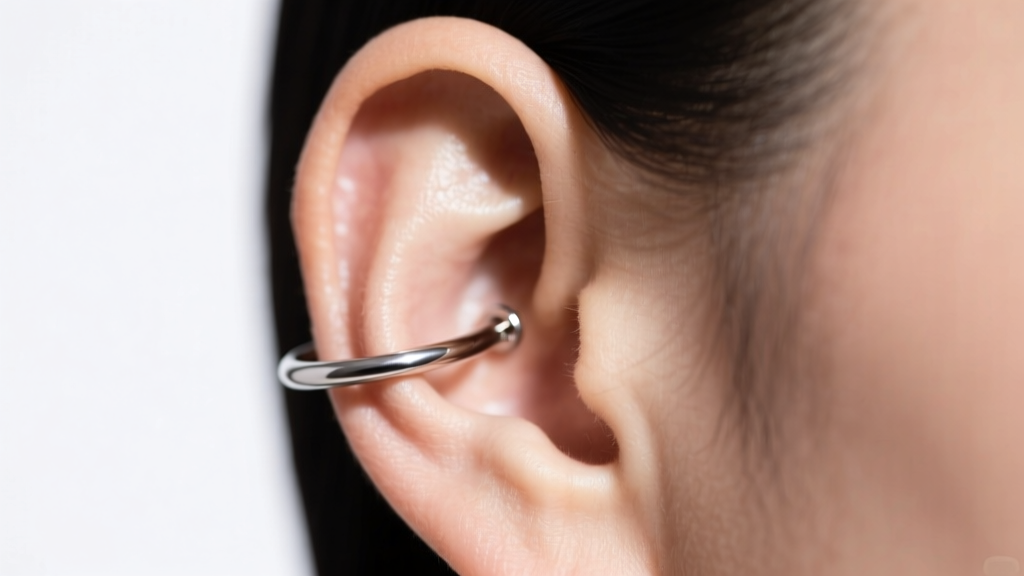
While traditional earring clips target the soft tissue of the earlobe, ear cuffs target the cartilage of the helix or conch. The value assessment here shifts entirely from padding to metal tensile strength and gauge thickness.
Cartilage lacks the pliability of the lobe. A cuff must be sprung open to slide over the cartilage edge and then compress to grip it. Budget ear cuffs are often made from soft, thin aluminum or low-grade brass wire (22-gauge or thinner). These metals lack 'spring-back' memory; once bent to fit your specific ear shape, they permanently deform and eventually snap from metal fatigue.
The Titanium Advantage
Premium ear cuffs utilize Grade 5 Titanium (Ti-6Al-4V) or Niobium. Titanium offers an exceptional strength-to-weight ratio and high yield strength. An 18-gauge titanium ear cuff can be flexed open hundreds of times without losing its structural memory or snapping. Furthermore, the American Academy of Dermatology frequently highlights titanium as a premier biocompatible metal, making it the ultimate value proposition for sensitive cartilage piercings and non-pierced cuffs alike. When buying cartilage clips, always prioritize the metallurgical grade over the decorative elements.
The Verdict: Where to Spend and Where to Save
So, are premium earring clips worth the investment? The answer depends on your wear frequency and skin sensitivity.
When to Buy Budget
If you are purchasing highly ornate, trend-driven statement earrings that you plan to wear for a single event or a single season, budget clips are acceptable. However, always swap out the factory PVC pads for aftermarket medical-grade silicone cushions (available for under $5 online) and apply a layer of clear nail polish or a specialized jewelry shield to the metal contact points to prevent nickel exposure.
When to Invest in Premium
If you are buying everyday staples—such as gold hoops, diamond solitaire studs, or pearl drops—you must invest in premium earring clips. The hardware is the only thing keeping a $500 pearl from dropping onto a concrete floor. Furthermore, if you suffer from contact dermatitis, the premium tier is not a luxury; it is a medical necessity. Spending $80 on a pair of 14k gold-filled, beryllium-spring hinge clips ensures all-day comfort, zero allergic reactions, and a mechanical lifespan that will easily outlast a decade of daily wear.
Ultimately, true value in non-pierced jewelry isn't about finding the cheapest option; it's about investing in precision engineering that respects both the security of your gems and the biology of your skin. For more insights on jewelry hardware and metallurgy, you can explore the educational resources at the Gemological Institute of America (GIA), which provides extensive data on precious metal alloys and their long-term durability in fine jewelry applications.


