Earring Crust Explained: Biological Causes and Metal Reactions
Discover the biological causes of earring crust, how different metal alloys react with sebum, and expert cleaning protocols for healthy piercings.

The Biochemistry of Earring Crust: What It Actually Is
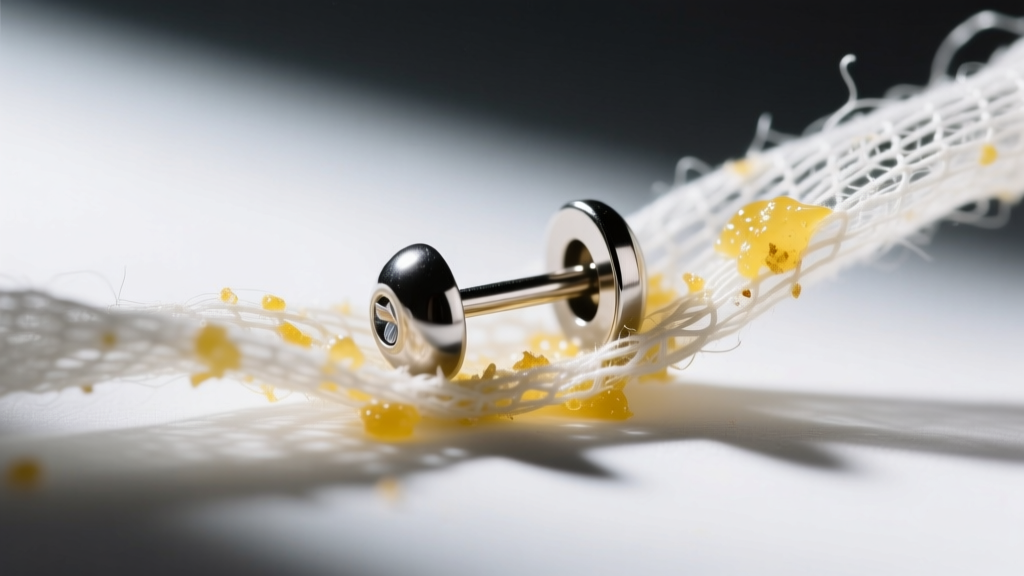
To effectively manage earring crust, we must first understand its biological composition. Colloquially referred to as 'ear cheese,' this buildup is not merely dirt or external grime. It is a complex biological matrix produced by the fistula (the epithelial tissue tunnel that forms a healed piercing). The fistula behaves like any other skin surface, undergoing continuous cellular turnover.
The primary components of earring crust include:
- Desquamated Corneocytes: Dead skin cells shed from the inner lining of the fistula tract. Because the piercing is a closed tunnel, these cells cannot flake away naturally and accumulate around the jewelry post.
- Sebum: An oily, waxy lipid mixture secreted by sebaceous glands to lubricate the skin. Sebum acts as a binding agent, gluing the dead skin cells to the metal post.
- Lymph Fluid: In newer or irritated piercings, the body produces lymph (blood plasma minus the red blood cells) as part of the inflammatory healing response. When exposed to air, lymph dries into a hard, yellowish shell.
- Environmental Particulates: Microscopic dust, laundry detergent residue, and hair product aerosols that become trapped in the sebum matrix.
The distinct, often unpleasant odor associated with earring crust is caused by the oxidation of squalene, a primary lipid found in human sebum. When squalene interacts with oxygen and the natural bacteria present on the skin (such as Staphylococcus epidermidis), it breaks down into volatile fatty acids, producing a rancid, cheesy scent.
Metallurgy and Sebum: How Jewelry Alloys Accelerate Buildup
The material of your earring post plays a critical role in how quickly crust forms and how firmly it adheres to the jewelry. The surface roughness (Ra value) and the chemical reactivity of the metal dictate the biological response of the fistula.
For instance, 316L surgical steel contains between 8% and 10.5% nickel. When exposed to the slightly acidic pH of human sebum (which typically ranges from 4.5 to 5.5), nickel ions can leach from the alloy. This triggers localized allergic contact dermatitis in sensitive individuals. The immune system responds by increasing lymph production and tissue inflammation, which directly results in excessive, stubborn earring crust. According to the National Center for Biotechnology Information (NCBI), nickel allergy is the most common cause of contact dermatitis, making reactive metals a primary culprit for chronic piercing irritation.
Conversely, implant-grade titanium (specifically Ti6Al4V ELI, ASTM F136) is entirely nickel-free and highly biocompatible. Furthermore, high-quality titanium jewelry is polished to a mirror finish, drastically reducing surface porosity. A smoother surface provides fewer microscopic crevices for sebum and corneocytes to anchor into, making the crust significantly easier to remove.
| Material Grade | Nickel Content | Surface Porosity | Crust Adhesion Risk |
|---|---|---|---|
| ASTM F136 Titanium | 0% | Ultra-Low (Mirror Polished) | Minimal |
| 316L Surgical Steel | 8-10.5% | Moderate (Micro-pitting) | High (Exacerbated by lymph weeping) |
| 14k/18k Solid Gold | 0% (if alloyed with Pd/Ag) | Low | Low to Moderate |
| Sterling Silver (925) | 0% (typically) | High (Oxidizes/Tarnishes) | Very High (Tarnish binds to sebum) |
Gauge Size, Threading, and Backing Mechanics
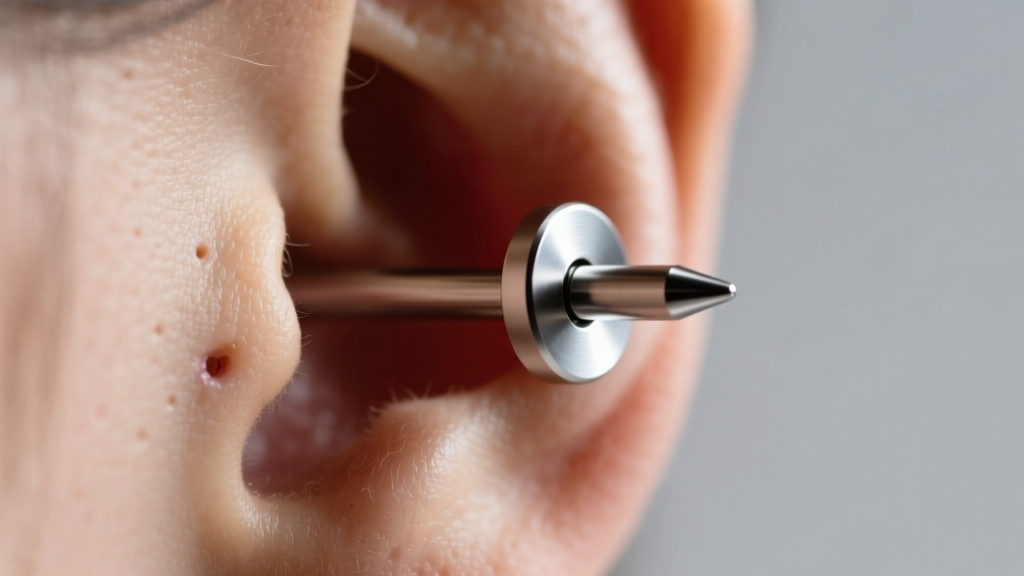
The physical architecture of the earring is just as important as its chemical composition. Standard mall kiosk piercings are often performed at 20-gauge (0.81mm) or 18-gauge (1.02mm). Professional piercers, however, typically recommend 14-gauge (1.6mm) or 12-gauge (2.0mm) for earlobes. A thicker gauge provides structural stability and prevents the 'cheese-cutter effect,' where a thin wire migrates through the tissue. More importantly, a 14G post leaves adequate space within the fistula tract for saline solution to flow through and flush out accumulating debris, whereas a 20G post tightly packs the tract, trapping sebum and dead cells.
Threadless vs. Internally Threaded vs. Externally Threaded
The threading mechanism of your earring post directly impacts tissue trauma and crust accumulation:
- Externally Threaded: The screw threads are on the outside of the post. When inserted, these sharp ridges act like a micro-file against the delicate fistula wall, scraping off epithelial cells and pushing existing earring crust deep into the piercing tract. This causes micro-tears, triggering an inflammatory response and more lymph crust.
- Internally Threaded: The threads are inside the decorative end, leaving the post completely smooth. This is the standard recommended by the Association of Professional Piercers (APP) for safe insertion and minimal tissue disruption.
- Threadless (Push-Pin): Utilizes a tension-fit mechanism with no threads whatsoever. This provides the smoothest possible surface, eliminating any mechanical scraping and significantly reducing the mechanical trapping of sebum and dead skin.
Clinical Cleaning Protocols: What Works and What Damages Tissue
Removing earring crust requires emulsifying the lipid bonds of the sebum without destroying the delicate epithelial cells of the fistula. Many commercial cleaning solutions are highly cytotoxic and actually prolong the healing process or cause chronic irritation.
Agents to Strictly Avoid
Never use rubbing alcohol, hydrogen peroxide, tea tree oil, or antibacterial soaps (like Dial) on a piercing. Hydrogen peroxide and alcohol are non-selective biocides; they kill bacteria, but they also destroy fibroblasts (the cells responsible for tissue repair). Tea tree oil is a known contact allergen and can cause severe chemical burns when trapped inside a closed fistula tract. Furthermore, ointments and creams create an occlusive barrier that traps anaerobic bacteria and prevents the wound from breathing.
The Gold Standard: Sterile Saline and Mechanical Action
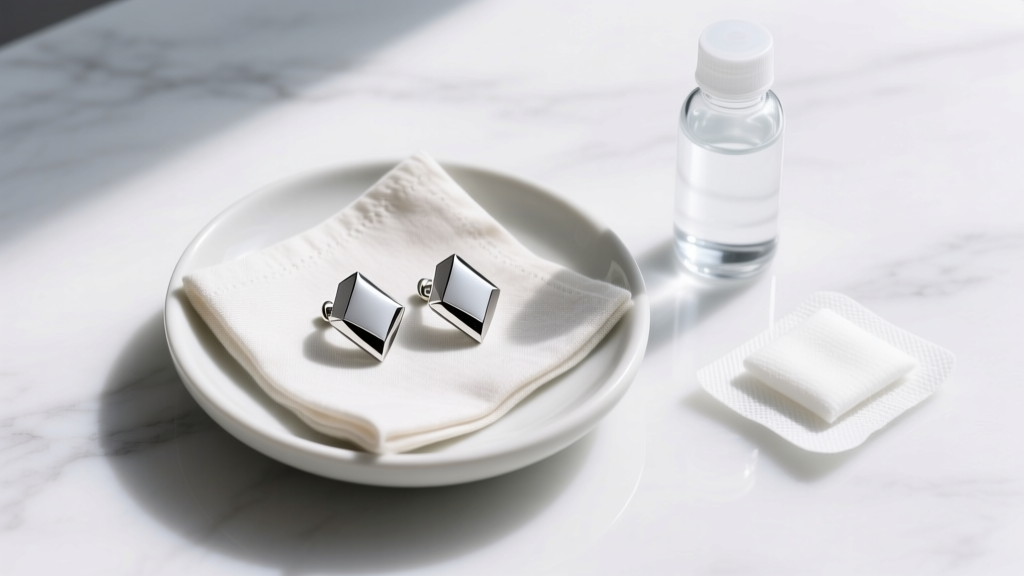
The only solution recommended for daily piercing hygiene is 0.9% sterile sodium chloride (wound wash saline) with no additives or preservatives. For active removal of stubborn earring crust on fully healed piercings, follow this protocol:
- Saturate a piece of non-woven gauze with warm sterile saline. (Avoid cotton balls or swabs, as they shed microscopic fibers that can become embedded in the crust).
- Apply the warm, wet gauze to the earring post and backing for 60 to 90 seconds. The heat and moisture will soften the hardened lipids and rehydrate the desquamated corneocytes.
- Gently rotate the jewelry and wipe away the emulsified crust. For heavy buildup, use a soft, medical-grade silicone cleansing brush to gently dislodge the debris from the threading or post junction.
- Rinse the area with clean water in the shower and pat completely dry with a disposable paper towel. Moisture left behind can lead to fungal or bacterial overgrowth.
When Crust Indicates Infection vs. Normal Healing
It is vital to differentiate between normal biological earring crust and purulent exudate (pus) caused by a bacterial infection. Misidentifying an infection as normal crust can lead to severe complications, including abscess formation or systemic infection.
Normal Sebum and Lymph Crust
Normal crust is typically white, pale yellow, or greyish. It is dry, flaky, or forms a hard, brittle shell around the jewelry. It may have a mild, cheesy odor when manually removed, but the surrounding tissue is completely asymptomatic—meaning there is no pain, no excessive heat, and no spreading redness.
Purulent Exudate (Infection)
Infection presents with a distinctly different clinical profile. The discharge is wet, sticky, and thick, often presenting in shades of dark yellow, green, or brown. It is accompanied by the classic cardinal signs of inflammation: rubor (spreading redness), calor (heat radiating from the tissue), tumor (swelling beyond the immediate piercing site), and dolor (throbbing pain). If you observe these symptoms, do not attempt to scrub the area or remove the jewelry, as removing the post can trap the infection inside the tissue, forming an abscess. Seek evaluation from a medical professional or a highly experienced APP-certified piercer immediately.
Summary Framework for Long-Term Piercing Hygiene
Managing earring crust is an ongoing requirement for anyone with permanent body modifications. By upgrading to implant-grade titanium or solid gold jewelry, utilizing threadless or internally threaded posts at a 14-gauge thickness, and adhering to a strict 0.9% sterile saline cleaning regimen, you can reduce crust adhesion by over 80%. Remember that the fistula is a living, breathing organ that requires gentle, biocompatible care to remain healthy, odor-free, and structurally sound over a lifetime of wear.


