How Long Before You Can Change Earrings? Tissue & Healing Guide
Discover exactly how long before you can change earrings based on piercing type, tissue density, and material grades. Expert healing timelines inside.

The Biological Reality of Piercing Healing
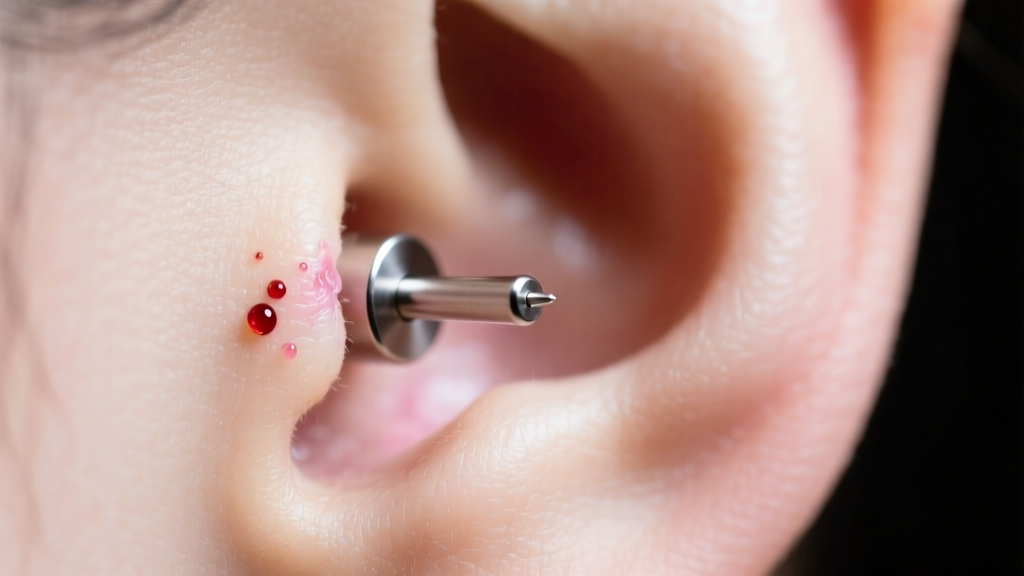
When clients ask, "how long before you can change earrings?", the standard retail answer is often a blanket six weeks. However, from a clinical and anatomical perspective, this is a dangerous oversimplification. The timeline for safely swapping jewelry is dictated not by an arbitrary calendar date, but by the biological phases of wound healing and the specific tissue density of the piercing site.
A piercing is essentially a controlled puncture wound. According to the National Center for Biotechnology Information (NCBI), wound healing occurs in four distinct, overlapping phases: hemostasis, inflammation, proliferation, and maturation. The critical milestone for changing earrings is the end of the proliferation phase, where the body forms a fistula—a protective tube of collagen-rich scar tissue that lines the piercing channel.
If you remove the initial jewelry before this fistula has sufficiently cross-linked and matured, the delicate epithelial cells can collapse, micro-tear, or fuse shut within minutes. This resets the inflammatory phase, inviting bacterial ingress and prolonging the total healing time by months.
Lobe vs. Cartilage: Exact Timelines for Changing Earrings
The vascularization of the tissue dictates the speed of cellular turnover. Earlobes are composed of highly vascularized adipose (fat) and connective tissue, allowing for rapid delivery of leukocytes and fibroblasts. Conversely, the auricular cartilage of the upper ear is avascular, relying on the perichondrium (the membrane surrounding the cartilage) for nutrient diffusion. This fundamental anatomical difference creates vastly different timelines for when you can safely change earrings.
| Piercing Location | Tissue Type | Minimum Wait Time (Initial Swap) | Full Maturation (Fistula Stabilization) |
|---|---|---|---|
| Standard Earlobe | Vascular / Adipose | 6 to 8 weeks | 6 to 12 months |
| Upper / High Lobe | Dense Connective | 8 to 12 weeks | 9 to 18 months |
| Helix (Cartilage) | Avascular Cartilage | 6 to 9 months | 1 to 2 years |
| Tragus / Conch | Thick Cartilage | 6 to 9 months | 1 to 2 years |
| Industrial (Scaffold) | Dual-Point Cartilage | 9 to 12+ months | 2+ years |
Note: The "Minimum Wait Time" refers to the earliest a professional piercer should downsize or swap the initial post to accommodate swelling reduction. The "Full Maturation" phase indicates when the fistula is robust enough to handle frequent jewelry changes, heavier dangles, or unsterilized hands.
The Metallurgical Factor: Material Grades and Tissue Reaction
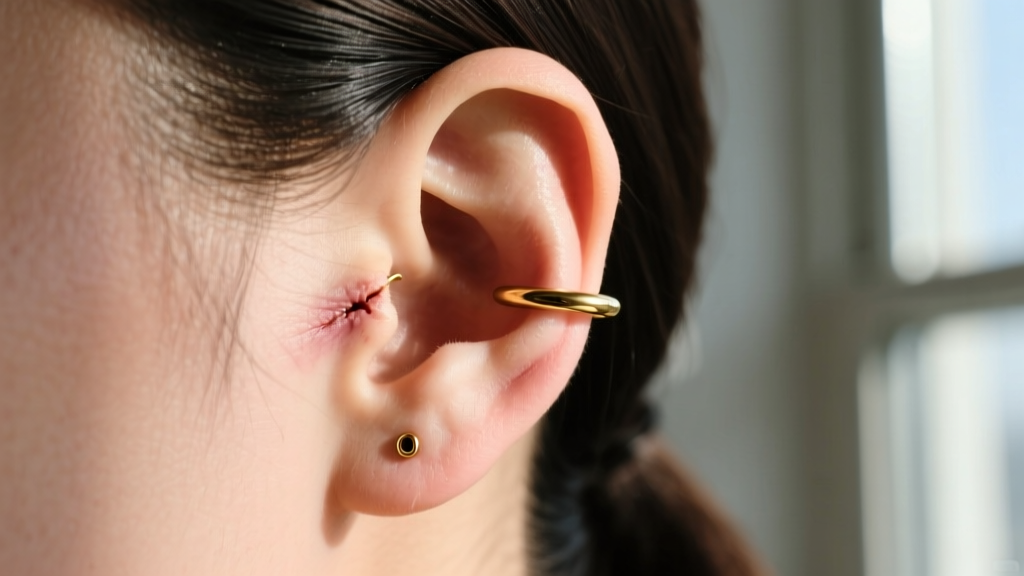
The question of how long before you can change earrings is inextricably linked to the metallurgical composition of the jewelry itself. Substandard materials trigger chronic low-grade inflammation, which stalls the proliferation phase and delays fistula formation.
Implant-Grade Titanium (ASTM F-136)
This is the gold standard for initial piercings and early jewelry swaps. ASTM F-136 titanium is entirely nickel-free, highly polished, and biocompatible. Because it does not provoke an immune response, the body can focus entirely on building the fistula rather than fighting off metal ions. If you must change earrings early due to an emergency, swapping to F-136 titanium minimizes the risk of a healing setback.
316L Surgical Steel
Often marketed as "hypoallergenic," 316L steel actually contains 8-10% nickel. While the nickel is bound in the alloy, the microscopic pits and scratches on lower-quality steel posts can leach nickel ions into the moist environment of a healing fistula. This causes contact dermatitis, swelling, and the production of excess lymph fluid, effectively doubling the time you must wait before changing earrings again.
Solid 14k or 18k Gold
High-karat, nickel-free gold (alloyed with palladium or silver instead of zinc or copper) is safe for healed piercings. However, gold is a softer, more porous metal than titanium. Changing to gold earrings before the 6-month mark in a cartilage piercing can trap bacteria in the metal's microscopic pores, leading to localized infections.
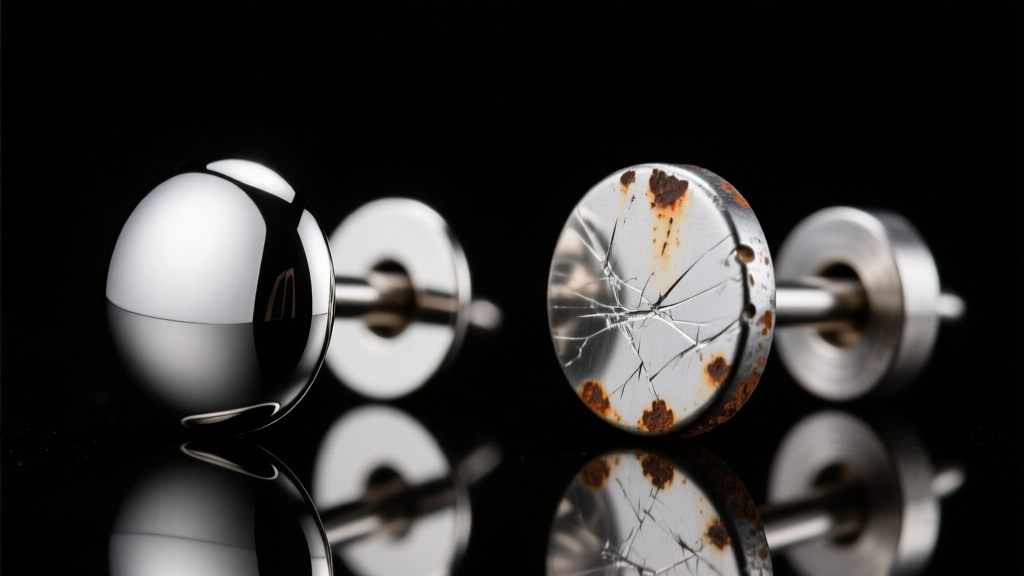
Gauge Size, Weight, and Mechanical Stress
Another technical variable often ignored in retail jewelry advice is the gauge (thickness) and weight of the replacement earring. Most standard commercial earrings are 20-gauge (0.8mm) or 22-gauge (0.6mm). Professional piercings are typically performed at 16-gauge (1.2mm) or 14-gauge (1.6mm) to provide structural stability.
If you change from a 16-gauge flat-back labret to a 20-gauge butterfly-back stud before the fistula has fully matured, the thinner wire can act like a cheese cutter. The mechanical stress of a heavy earring head on a thin wire will cause the jewelry to migrate, cutting through the healing tissue. Furthermore, the "cheese-cutter effect" can lead to a blowout, where the tissue is forced outward, creating a permanent, unsightly ridge of scar tissue.
Expert Rule of Thumb: For the first year, never drop more than one gauge size when changing earrings, and avoid any dangle or drop earrings that exceed 3 grams in weight until the maturation phase is complete.
Clinical Signs Your Piercing is Ready for a Jewelry Swap
Rather than relying solely on a calendar, evaluate the biological indicators of your piercing. According to the Association of Professional Piercers (APP), a piercing is only ready for a jewelry change when it exhibits the following clinical signs:
- Absence of Lymph: No yellowish or white crusting (lymph fluid) around the entry or exit points for at least 14 consecutive days.
- No Erythema: The tissue immediately surrounding the puncture matches your normal skin tone, with zero redness or localized heat.
- Painless Glide: When gently manipulated by a professional, the jewelry moves through the channel without any resistance, "clicking," or sharp pain.
- Swelling Subsidence: The initial edema has completely resolved, meaning the original post is now visibly too long and protruding from the tissue.
"Changing jewelry prematurely is the leading cause of hypertrophic scarring in cartilage piercings. The fistula requires mechanical stability to lay down organized collagen fibers; disrupting this process invites chaotic scar tissue formation." — Clinical Guidelines on Body Art Aftercare
Troubleshooting Premature Earring Changes
If you changed your earrings too early and are now experiencing complications, immediate intervention is required to save the piercing.
1. The Earring Won't Go Back In
If you removed the initial stud and the hole is closing, do not force a new earring through the tissue. Forcing a blunt post through a collapsing fistula will create a false passage, tearing the tissue and causing severe swelling. Visit a professional piercer immediately; they possess sterile, tapered insertion tools that can gently dilate the channel without causing micro-trauma.
2. Sudden Swelling and Tenderness
If the earlobe or cartilage swells 24 to 48 hours after a jewelry swap, you have likely introduced bacteria or triggered a metal allergy. Revert to an ASTM F-136 titanium flat-back labret immediately. Cleanse the area twice daily with sterile 0.9% sodium chloride wound wash, and avoid all ointments, which trap anaerobic bacteria inside the puncture.
3. Hypertrophic Scarring (The "Cartilage Bump")
A localized, fleshy bump next to the piercing site is a hypertrophic scar, usually caused by the angle of the new earring putting uneven pressure on the healing fistula. To resolve this, you must downsize to a shorter titanium post to eliminate movement, and apply warm sterile saline compresses to encourage cellular turnover. If the bump does not regress within four weeks, consult a dermatologist for a localized corticosteroid injection.
Understanding the deep tissue mechanics behind your piercing transforms the waiting period from an exercise in frustration into a necessary biological process. By respecting the fistula's maturation timeline and prioritizing implant-grade materials, you ensure a stable, lifelong canvas for your favorite jewelry.


