Expert Care and Cleaning for Blue and Yellow Earrings
Learn expert cleaning methods for blue and yellow earrings. Discover safe care protocols for lapis, sapphire, gold, and enamel materials.

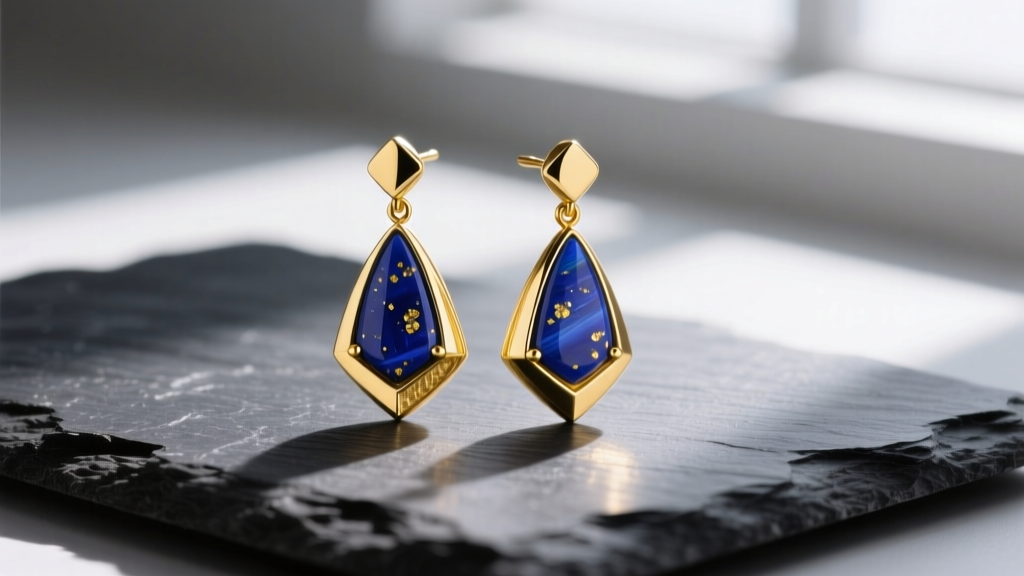
The Material Matrix: Decoding Your Blue and Yellow Earrings
The complementary contrast of blue and yellow earrings makes them a striking staple in any jewelry collection. However, this high-impact color pairing often combines materials with vastly different physical and chemical properties. Whether your pieces feature deep blue lapis lazuli set in 18k yellow gold, vibrant blue sapphires accented with citrine, or cobalt vitreous enamel on brass, applying a universal cleaning method is a recipe for disaster. As of 2026, gemstone treatment standards have evolved, but the fundamental mineralogy of these stones dictates strict, specialized care protocols.
To clean your jewelry safely, you must first identify the exact materials. The 'blue' in your earrings might be a porous, acid-sensitive mineral like turquoise, or a highly durable corundum like sapphire. The 'yellow' might be soft, easily scratched 24k gold, or a reactive base metal like brass that requires specific polishing compounds. According to the Gemological Institute of America (GIA), misidentifying a porous gemstone and subjecting it to ultrasonic vibrations can cause catastrophic fracture propagation.
Blue Gemstones: Porous vs. Corundum
Blue gemstones generally fall into two care categories. Lapis lazuli and turquoise are porous and often contain calcite matrices or epoxy stabilizers. They are highly sensitive to heat, harsh chemicals, and prolonged water exposure, which can cause discoloration or structural crumbling. Conversely, blue sapphire is a corundum (Mohs 9), making it exceptionally durable and resistant to almost all standard jewelry cleaning methods, including ultrasonic and steam.
Yellow Metals & Stones: Gold, Brass, and Citrine
Yellow metals require distinct approaches. 14k and 18k yellow gold are relatively soft and prone to micro-scratches, requiring gentle surfactant soaks. Brass, a common alternative for fashion earrings, is highly susceptible to oxidation and dezincification if exposed to ammonia-based cleaners. For yellow gemstones, citrine (Mohs 7) is generally safe for mild soap baths but should never be steam-cleaned, as sudden thermal shock can cause internal fractures.
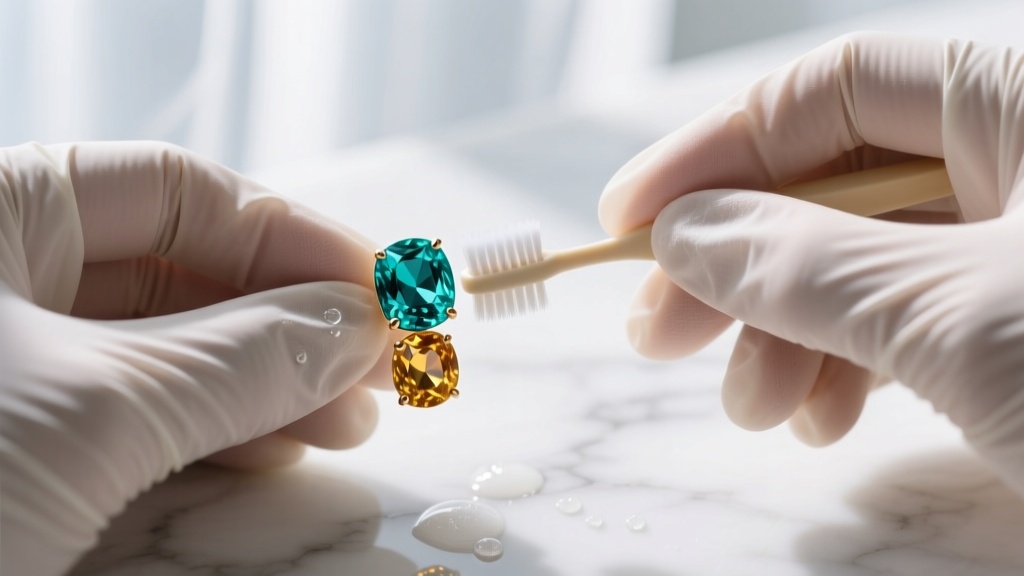
The Mohs Scale & Cleaning Safety Chart
Understanding the Mohs hardness scale and material porosity is critical before selecting a cleaning method. Use the matrix below to determine the safest protocol for your specific blue and yellow earrings.
| Material | Mohs Hardness | Ultrasonic Safe? | Steam Safe? | Recommended Method |
|---|---|---|---|---|
| Blue Sapphire | 9.0 | Yes | Yes | Ultrasonic, Steam, or Mild Soap |
| Citrine | 7.0 | Yes (with caution) | No | Mild Soap Soak |
| Lapis Lazuli | 5.0 - 6.0 | No | No | Damp Microfiber Cloth Only |
| Turquoise (Stabilized) | 5.0 - 6.0 | No | No | Dry Brushing / Dry Cloth |
| Vitreous Enamel | 5.0 - 7.0 | No | No | Soft Dry Cloth |
| 18k Yellow Gold | 2.5 - 3.0 | Yes | Yes | Mild Soap Soak |
| Brass | 3.0 - 4.0 | No | No | Specialized Brass Polish |
Step-by-Step Cleaning Protocols
Never use generic 'jewelry dips' on multi-material earrings. Commercial dips often contain thiourea and sulfuric acid, which will instantly strip the polish from brass and dissolve the calcite veins in lapis lazuli. Instead, follow these targeted protocols based on your material combination.
Protocol A: The Porous Blue & Soft Yellow Method (Lapis/Turquoise + Gold/Brass)
- Prep: Mix a few drops of pH-neutral dish soap (like Dawn) into a bowl of lukewarm distilled water. Do not use hot water.
- Spot Clean: Dip an extra-soft baby toothbrush (with bristles no thicker than 0.1mm) into the solution, shake off excess moisture, and gently brush the yellow gold settings. Avoid scrubbing the porous blue stones directly.
- Wipe: Use a barely damp microfiber cloth to gently wipe the surface of the lapis or turquoise. Never submerge these stones.
- Dry: Immediately pat dry with a lint-free cotton cloth. Allow to air dry completely in a low-humidity room before storing.
Protocol B: The High-Durability Method (Sapphire + Citrine + Gold)
- Soak: Submerge the earrings in a bowl of warm water and mild dish soap for 15 to 20 minutes to loosen sebum and cosmetic buildup.
- Agitate: Use a standard soft-bristled toothbrush to gently scrub the pavilion (back) of the sapphires and citrines, where light-blocking grime accumulates.
- Rinse: Rinse thoroughly under lukewarm running water, ensuring the drain is plugged.
- Dry: Use a hairdryer on the 'cool' setting to blow water out of the prong settings, preventing hard water spots on the gold.
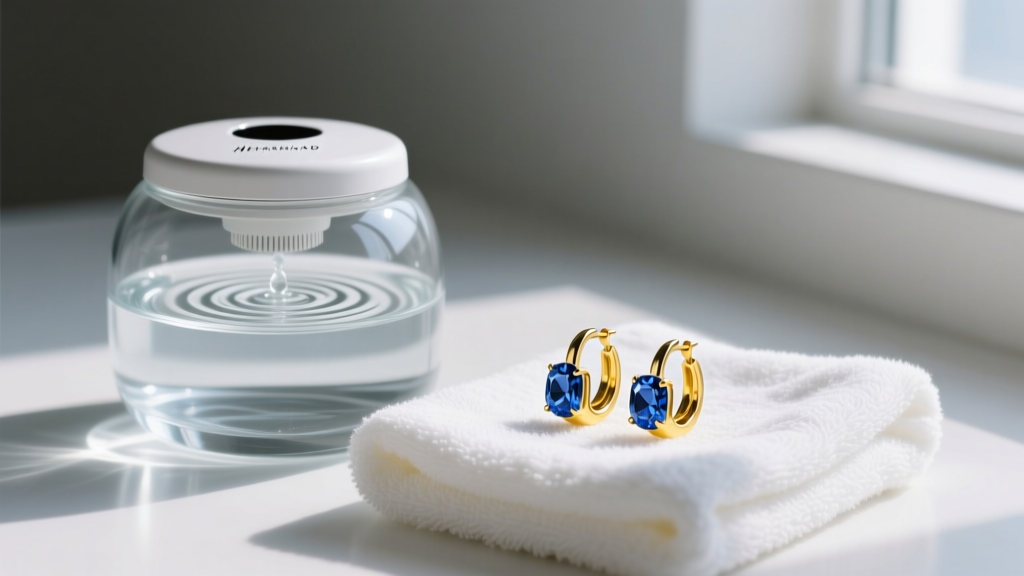
Hardware Hygiene: Cleaning the Earring Post
While gemstones get the visual focus, the earring post and backing are the primary culprits for contact dermatitis and earlobe infections. Standard lobe earrings typically use 20-gauge (0.81mm) or 18-gauge (1.02mm) posts. These thin metal cylinders accumulate a hardened mixture of sebum, dead skin cells, and hair products that cannot be removed with simple soap.
Expert Tip: To sanitize the earring post without damaging the gemstone head, soak a cotton swab in 91% isopropyl alcohol and vigorously rub the metal post and the groove near the butterfly backing. Keep the alcohol strictly away from porous stones like turquoise, as it can dissolve the epoxy resins used in modern stabilization treatments.
For the American Gem Society-recommended deep clean, remove the earring backings and soak them in a small cap of hydrogen peroxide for 10 minutes to break down organic matter, then rinse and dry.
Storage and Environmental Hazards
Proper storage is an extension of the cleaning process. Blue and yellow earrings face unique environmental threats when resting in your jewelry box.
- Brass Oxidation: If your yellow elements are brass, store them in an airtight ziplock bag with a 3M anti-tarnish strip. Exposure to ambient sulfur in the air will cause the brass to develop a brown patina within weeks.
- Enamel Chipping: Cobalt blue vitreous enamel is essentially fused glass. Store enamel earrings in individual soft pouches. If they knock against a sapphire (Mohs 9) in a shared compartment, the sapphire will easily scratch or chip the enamel (Mohs ~6).
- Turquoise Dehydration: Avoid storing turquoise earrings in extremely dry environments or near heat sources. Over time, severe dehydration can cause the stone to craze (develop a network of fine cracks) and lose its vibrant blue hue, shifting toward a dull green.
When to See a Professional Jeweler
While home maintenance is sufficient for routine grime, certain scenarios require professional intervention. If your blue sapphire earrings feature fracture-filled stones (a common treatment to improve clarity), ultrasonic cleaners can melt the filler, leaving the stone looking cloudy and fractured. Additionally, if the yellow gold prongs holding your lapis lazuli are snagging on clothing, a jeweler must re-tip them using a laser welder; traditional torch soldering will generate enough heat to scorch and permanently ruin the lapis. By respecting the material science behind your blue and yellow earrings, you ensure their structural integrity and optical brilliance for decades to come.


