The Best Earring for Guys: Troubleshooting Fit, Pain, and Irritation
Struggling with ear pain or tearing? Discover how to choose the right earring for guys by troubleshooting gauge sizes, metal allergies, and lobe damage.


The landscape of men's jewelry has shifted dramatically over the last decade. What was once limited to basic stainless steel studs or novelty novelties has evolved into a sophisticated market of fine jewelry, structural hoops, and precision-machined ear cuffs. However, as more men explore ear adornments, a parallel rise in piercing complications has emerged. Finding the perfect earring for guys is rarely just about aesthetics; it is an exercise in anatomical troubleshooting.
Many men experience chronic irritation, lobe tearing, or contact dermatitis simply because they are wearing jewelry engineered for short-term fashion rather than long-term biological compatibility. In this comprehensive troubleshooting guide, we will diagnose the most common earring failures, decode metal grades, and provide actionable frameworks to upgrade your ear game safely and comfortably.
The Anatomy of a Problematic Piercing
Before swapping out your jewelry, you must understand why your current setup is failing. The male earlobe is generally denser and thicker than the female earlobe, often requiring slightly longer posts or wider gauges to sit flush without creating pressure necrosis. When an earring is poorly fitted, the body responds with inflammation, localized swelling, and eventually, tissue rejection or migration.
The three primary culprits behind earring discomfort are:
- Metallurgical Incompatibility: The presence of reactive alloys like nickel or brass.
- Gauge Discrepancies: Posts that are too thin, leading to the "cheese-cutter" effect.
- Backing Hardware Failures: Butterfly clutches that trap bacteria and restrict lymphatic drainage.
Troubleshooting Metal Allergies and Contact Dermatitis
If your earlobes are perpetually itchy, red, or flaking, you are likely suffering from allergic contact dermatitis. According to the American Academy of Dermatology, nickel allergy is the most common contact allergy worldwide, and it is the primary reason men abandon earrings altogether.
The "Surgical Steel" Myth
Many mass-market brands label their products as "surgical steel" (typically 316L stainless steel). While 316L is excellent for scalpels and bone screws, it contains 8-10% nickel. When exposed to the saline environment of a healing or irritated piercing, the nickel leaches into the tissue, triggering an immune response. If you are troubleshooting chronic pain, the first step is to immediately discard all 316L stainless steel jewelry.
The Implant-Grade Titanium Standard
The definitive solution for reactive ears is ASTM F136 Implant-Grade Titanium. This specific alloy contains zero nickel and is polished to a mirror finish, preventing microscopic scratches that harbor bacteria. For men seeking a stealth, masculine aesthetic, titanium can be anodized to a dark gunmetal or matte black finish without the use of toxic surface platings.
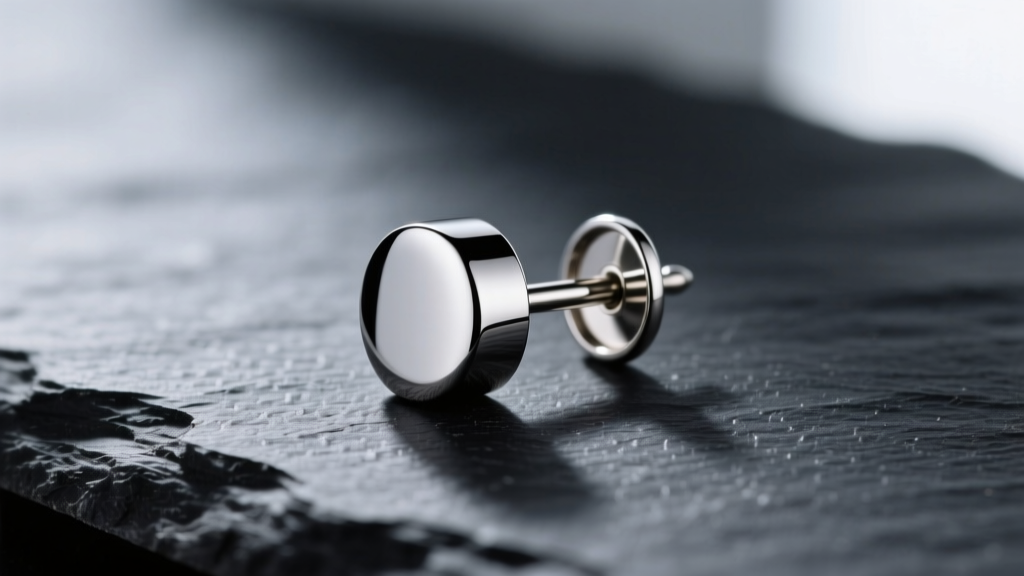
Pro-Tip: If you prefer the look of silver but have reactive skin, look for Niobium. Niobium is a highly biocompatible, nickel-free elemental metal that can be heat-anodized to mimic the dark, oxidized look of blackened silver or hematite.
Solving Gauge and Fit Discrepancies
Gauge refers to the thickness of the earring post. The standard lobe piercing is typically done at 20-gauge (0.81mm) or 18-gauge (1.02mm). However, many fast-fashion brands manufacture men's earrings at 22-gauge (0.64mm) to save on precious metal costs. This creates a severe structural vulnerability.
The Cheese-Cutter Effect
When a heavy earring head is attached to a micro-thin 22-gauge post, the weight distribution is entirely concentrated on a microscopic surface area of the earlobe. Over time, gravity and the natural movement of the jaw pull the thin wire downward, slowly slicing through the tissue—a phenomenon professional piercers call the "cheese-cutter" effect. To troubleshoot this, you must size up your gauge to distribute the weight.
| Gauge Size | Millimeter (mm) | Common Application | Troubleshooting Note |
|---|---|---|---|
| 22-Gauge | 0.64mm | Ultra-lightweight fashion studs | Avoid. High risk of tissue tearing and migration. Never sleep in this size. |
| 20-Gauge | 0.81mm | Standard commercial lobes | Acceptable for lightweight studs under 2 grams. Poor for heavy hoops. |
| 18-Gauge | 1.02mm | Ideal baseline for men | Recommended. Provides excellent structural support for daily wear and moderate weight. |
| 16-Gauge | 1.29mm | Cartilage, helix, and heavy lobes | Best for heavy signet rings or thick sleeper hoops. Requires professional piercing. |
Fixing Lobe Tearing and Hardware Friction
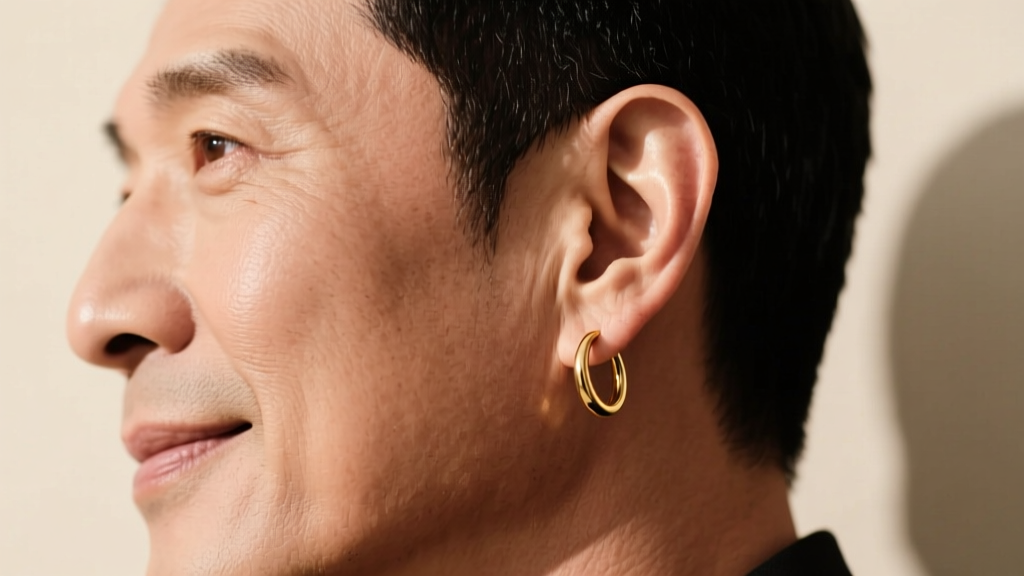
Even with the correct metal and gauge, the hardware securing the earring can cause significant trauma. The traditional "butterfly clutch" backing is a notorious trap for dead skin cells, sebum, and hair products. Furthermore, the sharp prongs of a butterfly back frequently dig into the mastoid region behind the ear while sleeping, causing pressure ulcers.
Upgrading Your Backing Systems
To resolve friction and hygiene issues, transition to one of the following advanced backing systems:
- Flat-Back Labrets (Threadless or Internally Threaded): A flat titanium disc sits flush against the back of the ear. This eliminates pressure points entirely, making it the only safe option for sleeping. The Association of Professional Piercers (APP) strongly recommends flat-backs for all long-term wear.
- La Pousette (Clutch) Backs: Originally designed for high-end pearl earrings, these feature a dual-spring mechanism that locks securely onto the post without pinching the skin. They are easy to grip for men with larger hands.
- Silicone O-Rings: For hoop earrings or casual wear, medical-grade silicone O-rings provide a secure, frictionless grip that won't harbor bacteria like porous rubber or cheap plastics.
Maintenance and Healing Protocols
Troubleshooting doesn't end at the point of purchase. Men often expose their earrings to harsh environments, from sweat-heavy gym sessions to chlorinated pools, without adequate aftercare. Oxidation and trapped moisture lead to localized infections that mimic allergic reactions.
The 2026 Daily Maintenance Framework
- Saline Flushing: Spray sterile 0.9% sodium chloride wound wash over the jewelry twice a week to clear sebum buildup. Avoid alcohol or hydrogen peroxide, which destroy healthy fibroblast cells.
- Friction Polishing: If you wear solid 14k or 18k gold, use a microfiber jewelry cloth once a month to restore the mirror finish. Micro-scratches in gold can trap environmental allergens.
- Tension Checks: For internally threaded or threadless jewelry, check the tension of the pin or the tightness of the bead every 30 days. Vibration from daily commutes and exercise can slowly loosen threaded components.
Final Verdict: Upgrading Your Ear Game
Finding the right earring for guys requires moving past the accessory aisle and thinking like a bio-engineer. By eliminating reactive metals like 316L steel, upgrading to a structural 18-gauge post, and swapping butterfly clutches for flat-back titanium hardware, you can permanently resolve the pain, tearing, and irritation that plague poorly planned piercings. Invest in ASTM F136 titanium or solid 14k gold, respect the physics of weight distribution, and your earrings will remain a seamless, comfortable extension of your personal style for decades to come.


