Expert Guide to Earring Gauge Sizes for Lobe and Cartilage Health
Master earring gauge sizes with our expert technical guide. Learn exact measurements, tissue biomechanics, and material grades for lobe and cartilage.

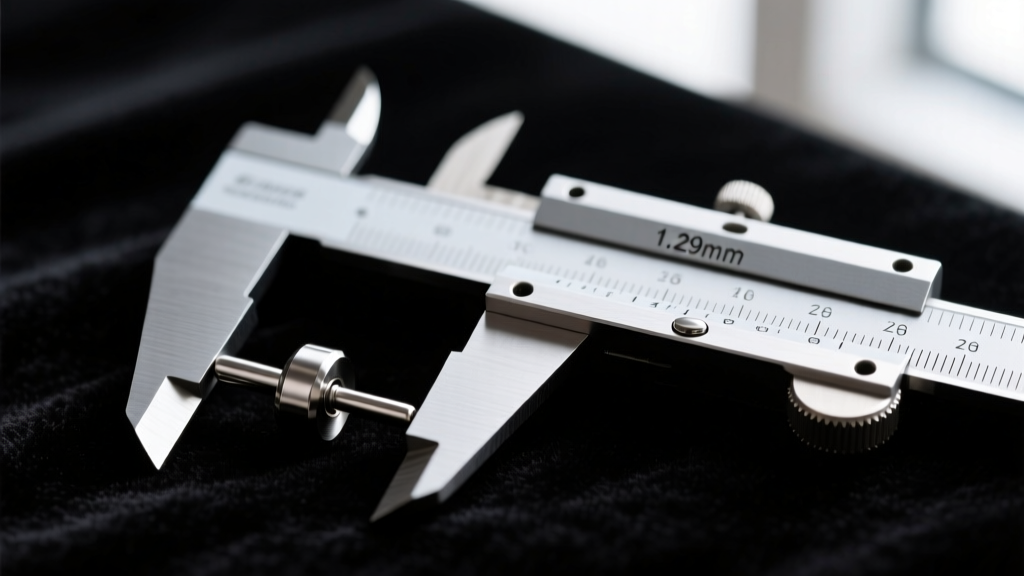
Understanding earring gauge sizes is not merely a matter of aesthetic preference or jewelry availability; it is a fundamental biomechanical requirement for long-term tissue health. In the professional piercing and dermatological communities, the gauge of a post or wire dictates how mechanical stress is distributed across the fistula (the healed tube of skin lining the piercing channel). Selecting the incorrect gauge can lead to a cascade of anatomical failures, including pressure necrosis, migration, and the infamous 'cheese-cutter effect.' This expert deep dive explores the metallurgical and anatomical realities of earring gauge sizes, providing a technical framework for both lobe and cartilage piercings.
The Biomechanics of Piercing Gauges: Why Size Dictates Tissue Health
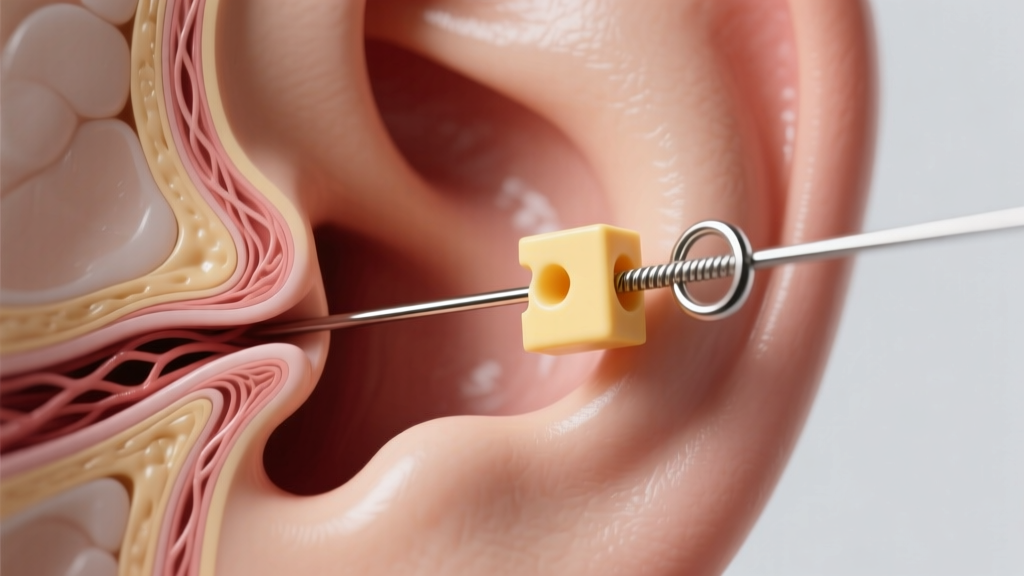
The gauge system is an inverse measurement scale originating from wire drawing manufacturing: the higher the gauge number, the thinner the jewelry. When a piece of jewelry rests inside a piercing, it exerts continuous outward and downward pressure on the surrounding epithelial and connective tissues. If the surface area of the jewelry (determined by its gauge) is too small, the pressure per square millimeter exceeds the capillary perfusion pressure of the local tissue. This restricts blood flow, leading to localized ischemia and eventual pressure necrosis.
Furthermore, thin wires act as a fulcrum. When subjected to the weight of a heavy earring or the friction of daily movement, a thin gauge will slowly slice through the tissue—a phenomenon clinically referred to as the cheese-cutter effect. According to guidelines published by the American Family Physician (AAFP), improper jewelry sizing and excessive mechanical stress are primary catalysts for piercing migration and traumatic tearing. To maintain a stable, healthy fistula, the jewelry must possess enough thickness to distribute mechanical loads evenly across the tissue bed.
Standard Earring Gauge Sizes Decoded
To navigate the market effectively, one must translate gauge numbers into exact millimeter measurements. The following data table outlines the standard earring gauge sizes utilized in professional body modification, alongside their primary anatomical applications.
| Gauge (G) | Millimeters (mm) | Inches (in) | Primary Application & Tissue Type |
|---|---|---|---|
| 22G | 0.64mm | 0.025' | Mass-produced fashion jewelry; structurally unsound for permanent wear. |
| 20G | 0.81mm | 0.032' | Standard piercing gun lobes; high risk of migration in cartilage. |
| 18G | 1.02mm | 0.040' | Professional needle-pierced lobes; delicate cartilage (e.g., tragus). |
| 16G | 1.29mm | 0.051' | Industry standard for most cartilage (helix, conch, flat). |
| 14G | 1.63mm | 0.064' | Industrial scaffolds, daith, rook, and stretched lobe transitions. |
| 12G | 2.05mm | 0.081' | Intentional lobe stretching; heavy-gauge cartilage projects. |
Lobe vs. Cartilage: Divergent Gauge Requirements
The 20G vs. 18G Lobe Debate
The earlobe is primarily composed of adipose (fat) and dense fibrous connective tissue, boasting a robust vascular network. Because of this high blood supply, lobes are forgiving and heal rapidly. While 20G (0.81mm) is the ubiquitous standard for mall-kiosk piercing guns, professional piercers almost universally advocate for 18G (1.02mm) or 16G (1.29mm) for initial lobe piercings. The 18G threshold provides sufficient structural integrity to support heavier drop earrings and hoops later in life without inducing the cheese-cutter effect. Wearing 20G or 22G wires in a healed lobe while sleeping or wearing heavy pendants is a leading cause of acquired lobe clefts (splitting).
Cartilage Rigidity and the 16G Minimum Rule
Unlike the lobe, the upper ear is composed of elastic cartilage wrapped in a thin layer of perichondrium. Cartilage is strictly avascular—it contains no direct blood vessels. It relies entirely on the diffusion of nutrients and immune cells from the surrounding skin and perichondrium. This avascular nature makes cartilage highly susceptible to pressure necrosis and hypertrophic scarring if subjected to concentrated stress.
The Association of Professional Piercers (APP) mandates a minimum of 16G (1.29mm) for most cartilage piercings, and often 14G (1.63mm) for complex folds like the daith or rook. A 16G post provides a wider surface area that disperses the swelling inherent to the initial inflammatory phase of cartilage healing. Attempting to pierce or wear 18G or 20G jewelry in a conch or helix drastically increases the risk of the jewelry migrating through the rigid cartilage matrix, resulting in severe anatomical distortion and permanent scarring.
Metallurgical Intersections: How Gauge Affects Material Strength
The structural viability of earring gauge sizes is intrinsically linked to the metallurgy of the jewelry. Materials behave differently when drawn into thin wires versus thick posts.
- Implant-Grade Titanium (ASTM F-136): Titanium possesses an exceptional strength-to-weight ratio. Even at 18G, an F-136 titanium post maintains high tensile strength and resists bending, ensuring the fistula remains perfectly cylindrical. This prevents microscopic crevices where anaerobic bacteria and biofilm can accumulate.
- Solid Gold (14k and 18k): Gold is inherently malleable. When crafted into 20G or 22G wires, gold becomes highly susceptible to warping under the minimal pressure of a heavy earring backing or accidental snagging. A warped wire creates uneven pressure points inside the fistula, leading to localized irritation bumps. For gold jewelry, a minimum of 16G is recommended to ensure structural rigidity.
- Surgical Steel (316L): While heavier and containing trace nickel, 316L steel is rigid. However, at thinner gauges, the polishing quality of the microscopic surface becomes critical. Inferiorly polished thin steel wires can act like a microscopic saw against delicate healing tissue.
'Jewelry for initial piercings must be made of materials that are biocompatible and possess sufficient structural integrity to prevent warping, which can harbor pathogens and disrupt the epithelialization of the fistula.' — APP Jewelry Standards
Troubleshooting Gauge-Related Complications
When earring gauge sizes are mismatched to the anatomical location or the weight of the jewelry, specific failure modes emerge. Recognizing these early is critical for tissue preservation.
- Migration: Characterized by the slow movement of the piercing channel toward the surface of the skin. The jewelry becomes increasingly visible under the epidermis. Cause: Gauge is too thin (e.g., 18G in a helix), causing the immune system to treat the wire as a foreign splinter and push it out.
- Embedding: The skin swells and completely grows over the jewelry backing or decorative end. Cause: A thin gauge (like 20G) concentrates pressure, causing the tissue to swell violently around the wire, while a flat-back labret post that is too short restricts lymphatic drainage.
- Hypertrophic Scarring: Localized, raised bumps of scar tissue forming directly adjacent to the exit hole. Cause: Mechanical friction from a thin, easily bent wire moving excessively within the channel, disrupting the fragile collagen matrix during healing.
Sizing Up and Down: The Protocol for Gauge Transitions
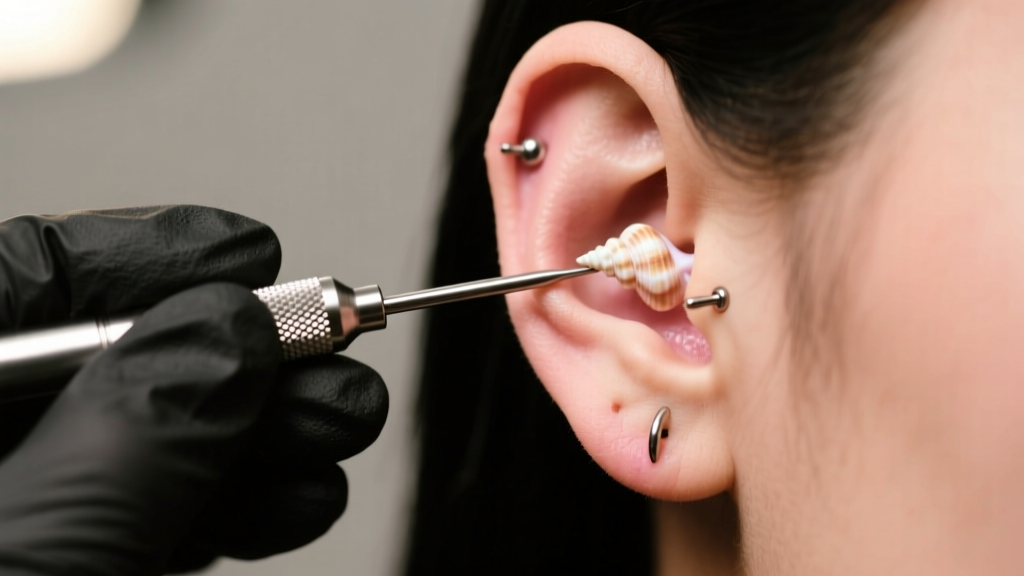
Transitioning between earring gauge sizes requires strict adherence to tissue limits. 'Dead stretching' (forcing a thicker piece of jewelry into a smaller hole) is highly discouraged for cartilage and should only be attempted on fully healed, elastic lobes using lubricated, single-millimeter increments.
For cartilage, transitioning from 16G to 14G must be performed by a professional using a sterilized steel insertion taper. The taper provides a smooth, continuous gradient that gently expands the fibrous tissue of the fistula without causing micro-tears. Downsizing (moving from a thicker gauge to a thinner one) is generally safe once the fistula is mature (1+ years old), but the tissue will permanently shrink to accommodate the new, smaller gauge within a few weeks. Reverting to the original thicker gauge later will require a professional tapering session to avoid traumatizing the shrunken channel.
Ultimately, respecting the biomechanical limits of earring gauge sizes ensures that your piercings remain a lifelong asset rather than a source of chronic dermatological intervention. Always prioritize thickness, material grade, and anatomical placement over the fleeting trends of ultra-fine fashion jewelry.


