Earring Gun Metals vs Implant-Grade Titanium: A Safety Guide
Discover why earring gun metals fail and how implant-grade titanium outperforms surgical steel for safe, long-lasting ear piercings.

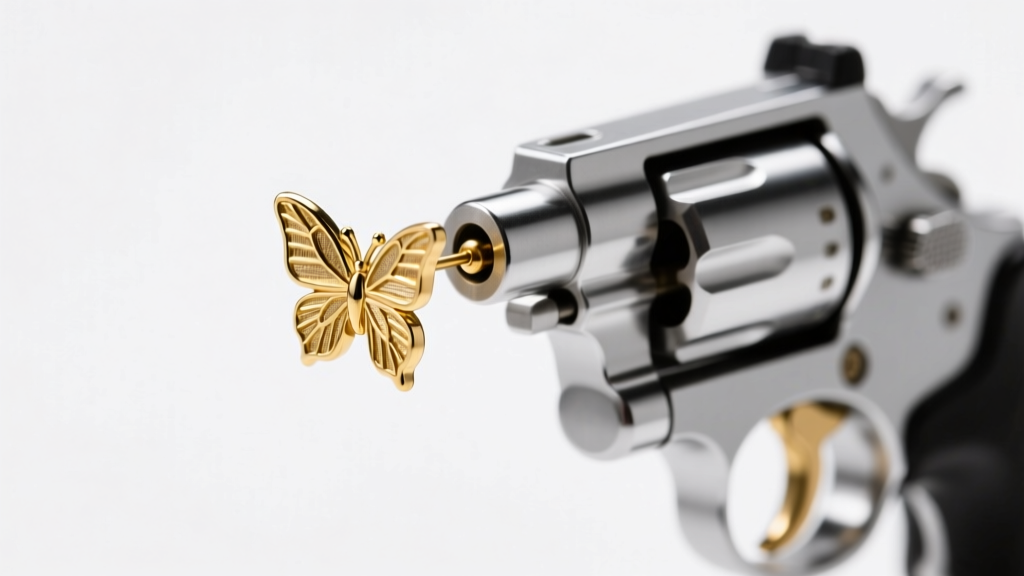
The debate surrounding the earring gun versus the hollow piercing needle is a staple in body modification communities. However, most discussions focus entirely on the mechanics of the tool itself, largely ignoring the metallurgical reality of the jewelry these devices force into your tissue. When you choose to use an earring gun, you are not just accepting a suboptimal piercing method; you are accepting a specific, often problematic, grade of metal. In 2026, with advanced metallurgy and body-safe jewelry more accessible than ever, understanding the material properties of 'starter' earrings versus professional body jewelry is critical for your long-term tissue health.
The Metallurgical Reality of Earring Gun Starter Jewelry
Most earring gun studs are marketed as 'surgical steel' or 'hypoallergenic.' From a metallurgical standpoint, these terms are largely unregulated marketing buzzwords. The vast majority of gun studs are manufactured from 316L stainless steel, an alloy that contains between 8% and 14% nickel to provide corrosion resistance and a polished shine. While 316L is perfectly safe for surgical instruments that briefly touch the skin, it is highly problematic for jewelry left inside a healing, open wound.
When the earring gun forces the blunt post through the ear, it creates a crush wound rather than a clean incision. This traumatized tissue is highly permeable and reactive. As the body attempts to heal, it is exposed to the nickel in the steel. According to the American Academy of Allergy, Asthma & Immunology, nickel is one of the most common contact allergens, and prolonged exposure through a fresh piercing can trigger severe contact dermatitis, localized rejection, and chronic inflammation. Furthermore, the 'gold' or 'rose gold' plating often applied to these studs is merely a microscopic flash-plating that wears away within weeks, exposing the reactive base metal directly to your bloodstream.
Material Breakdown: Mystery Metals vs. Implant-Grade Titanium
To understand why professional piercers universally condemn the earring gun, we must compare the materials used in mall kiosks against those used in professional studios. The gold standard for fresh piercings is ASTM F-136 implant-grade titanium (Ti6Al4V ELI). This specific alloy is entirely nickel-free, highly biocompatible, and capable of osseointegration (fusing safely with human tissue).
| Property | Earring Gun 'Surgical' Steel | ASTM F-136 Titanium |
|---|---|---|
| Nickel Content | 8% - 14% (High Allergy Risk) | 0% (Nickel-Free) |
| Surface Finish | Micro-porous, prone to scratching | Mirror polish, anodized safe |
| Biocompatibility | Low (high rejection/infection rate) | High (medical implant grade) |
| Typical Gauge | 20g (0.81mm) - 18g (1.02mm) | 16g (1.29mm) - 14g (1.63mm) |
| Average Cost | $5 - $15 per pair | $35 - $90 per single piece |
As highlighted by the Association of Professional Piercers (APP), implant-grade titanium possesses a passive oxide layer that prevents galvanic corrosion. This means the metal will not degrade, rust, or leach heavy metals into your healing fistula, drastically reducing the risk of irritation bumps and hypertrophic scarring.
The Blunt Force Trauma: How Tool Mechanics Affect Material Integrity
The failure of earring gun jewelry is not just chemical; it is mechanical. The earring gun operates via spring-loaded blunt force, essentially acting as a miniature punch. This crushing action causes localized
Cartilage piercings performed with an earring gun are notorious for developing perichondritis (infection of the cartilage tissue) and severe keloid scarring. The blunt force shatters the delicate cartilage matrix, while the low-grade steel introduces allergens into an area with very little blood supply to fight off infection. Conversely, a hollow needle cleanly removes a tiny crescent of tissue, allowing a 16g titanium barbell to sit securely without pressure, promoting a stable 6-to-12-month healing process.
Actionable Framework: Transitioning from Gun to Needle Jewelry
If you have recently been pierced with an earring gun, or if you are dealing with a chronic irritation bump on an old gun piercing, taking immediate action regarding the material in your ear is paramount. Follow this framework to mitigate tissue damage:
- Do Not Wait for the 'Recommended' 6 Weeks: Gun operators often tell you to leave the starter studs in for six weeks. If your ear is hot, throbbing, or leaking yellow/green fluid, the metal is likely reacting. Seek a professional piercer immediately.
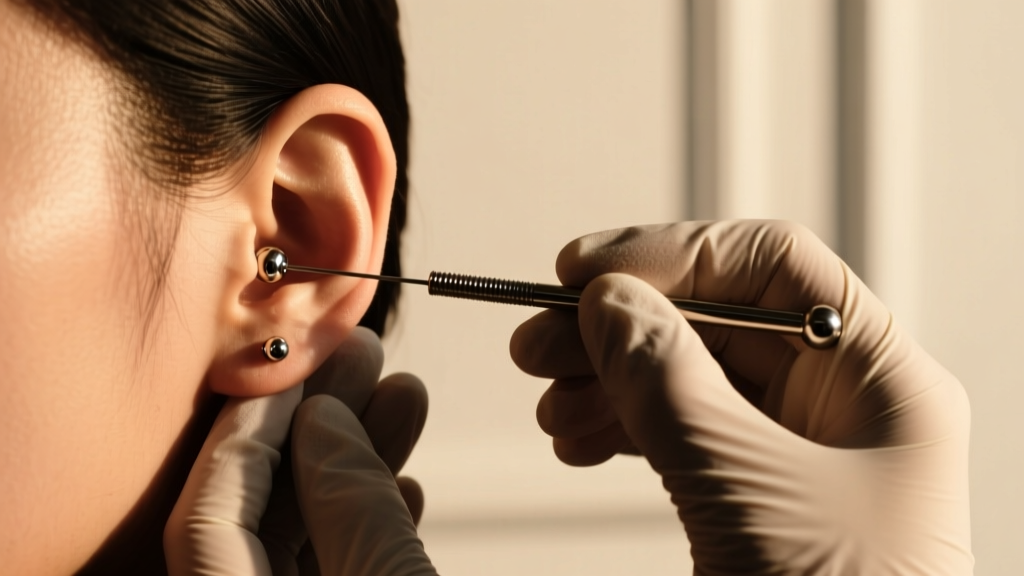
- Upgrade to Implant-Grade Titanium: Visit an APP-certified piercer and request an 'upsizing' and material swap. They will safely remove the gun stud, clean the fistula, and insert a sterilized, internally threaded 16g titanium flat-back labret.
- Accommodate the Swelling: Because gun piercings cause massive blunt-force trauma, the initial titanium post must be longer to accommodate the inevitable swelling. Your piercer will downsize the post after 2-4 weeks to prevent the jewelry from snagging.
- Switch to Saline, Avoid Ointments: The APP aftercare guidelines strictly recommend sterile 0.9% sodium chloride wound wash. Avoid alcohol, peroxide, and antibiotic ointments, which trap bacteria and degrade the healing tissue matrix.
Conclusion: Investing in Tissue Health
The true cost of an earring gun piercing is never just the $15 fee at the mall kiosk; it is the potential months of treating infections, managing allergic reactions, and hiding blown-out piercings. By understanding the profound differences between porous, nickel-laden gun studs and mirror-polished, ASTM F-136 implant-grade titanium, you can make informed decisions that respect your body's anatomy. When it comes to permanent body modification, the metal you choose is just as critical as the skill of the person performing the procedure. Ditch the mystery metals, respect the hollow needle, and give your ears the biocompatible materials they deserve.


