The Science of Sparkling Earrings: Cuts, Settings, and Light Return
Discover the optical physics behind sparkling earrings. We analyze gemstone cuts, critical angles, and setting mechanics to maximize light return.

The Optical Physics of Scintillation in Ear Adornments
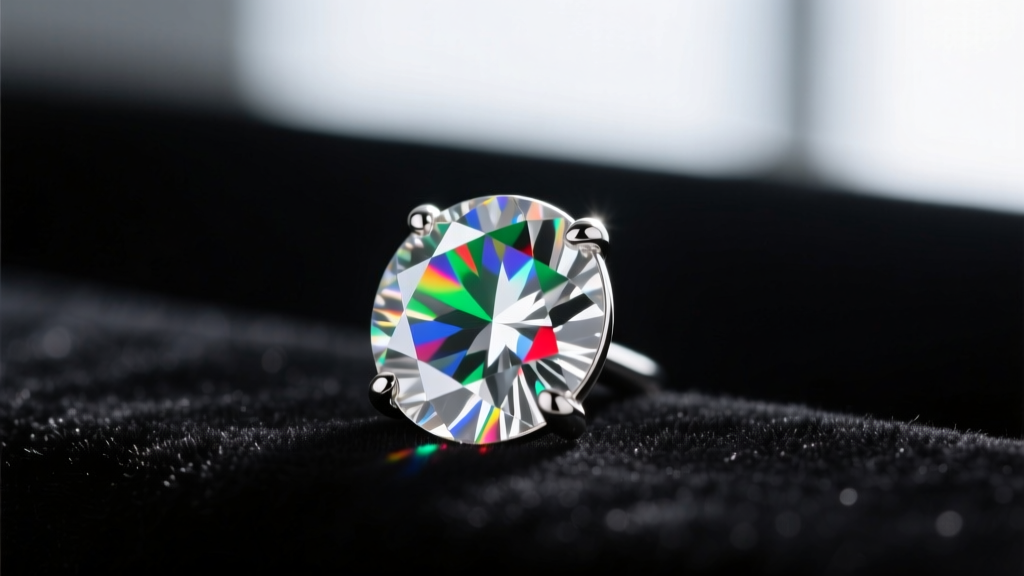
When consumers and jewelers discuss sparkling earrings, the conversation often relies on subjective visual appeal. However, as gemologists and jewelry engineers, we evaluate sparkle through three distinct, measurable optical metrics: brilliance (white light return), fire (chromatic dispersion), and scintillation (the dynamic flash pattern observed during movement). Unlike rings or pendants, which are often viewed statically or from a fixed downward angle, earrings are in constant motion and are typically viewed from a distance of two to four feet. Because of this unique spatial dynamic, maximizing scintillation is paramount for ear adornments.
Scintillation is governed by the precise arrangement of facets on the crown and pavilion of a gemstone. When light enters the stone, it must bounce off the interior pavilion facets and return through the crown to the observer's eye. If the earrings are cut with poor symmetry or incorrect angles, light will leak out of the bottom or sides, resulting in 'extinction'—dark, lifeless areas within the stone. According to the Gemological Institute of America (GIA), a diamond's cut grade is heavily weighted toward its optical symmetry and proportion, which directly dictate its ability to scintillate in motion.
As of 2026, advancements in laser mapping and AI-driven cutting algorithms for both mined and lab-grown gemstones have pushed the boundaries of ideal proportions. Modern cutters can now achieve near-perfect light return by mapping the exact refractive index of the rough crystal before a single facet is polished, ensuring that sparkling earrings deliver maximum visual impact even in low-light environments.
Gemstone Materials and Critical Angle Thresholds
The foundation of any sparkling earring is the material's Refractive Index (RI). The RI measures how much light bends as it enters the gemstone. A higher RI means light bends more sharply, allowing for a steeper pavilion angle and, consequently, a thinner, more elegant setting. The 'critical angle' is the maximum angle at which light can hit the interior pavilion facet and still reflect back up; if the light hits the facet at an angle wider than the critical threshold, it escapes through the bottom of the stone.
| Gemstone Material | Refractive Index (RI) | Dispersion (Fire) | Ideal Pavilion Angle | Critical Angle Threshold |
|---|---|---|---|---|
| Diamond (Mined/Lab) | 2.42 | 0.044 | 40.75° | 24.4° |
| Moissanite | 2.65 - 2.69 | 0.104 | 41.5° | 22.2° |
| White Sapphire | 1.76 - 1.77 | 0.018 | 45.0° | 34.5° |
| Cubic Zirconia (CZ) | 2.15 | 0.058 | 41.0° | 27.5° |
As illustrated in the data above, moissanite possesses a significantly higher dispersion rate (0.104) compared to diamond (0.044), resulting in the intense 'disco ball' rainbow flashes often sought after in modern sparkling earrings. White sapphire, while highly durable (9 on the Mohs scale), suffers from a low dispersion rate and a shallow critical angle, making it prone to looking flat and glassy unless cut with extreme precision and set in highly reflective white gold or platinum mounts.
Setting Architecture and Light Leakage
The setting of an earring is not merely a structural necessity; it is an optical frame that can either enhance or suffocate a gemstone's sparkle. The most common setting for sparkling stud earrings is the prong setting, but the engineering of those prongs dictates light performance.
The 4-Prong vs. 6-Prong Martini Debate
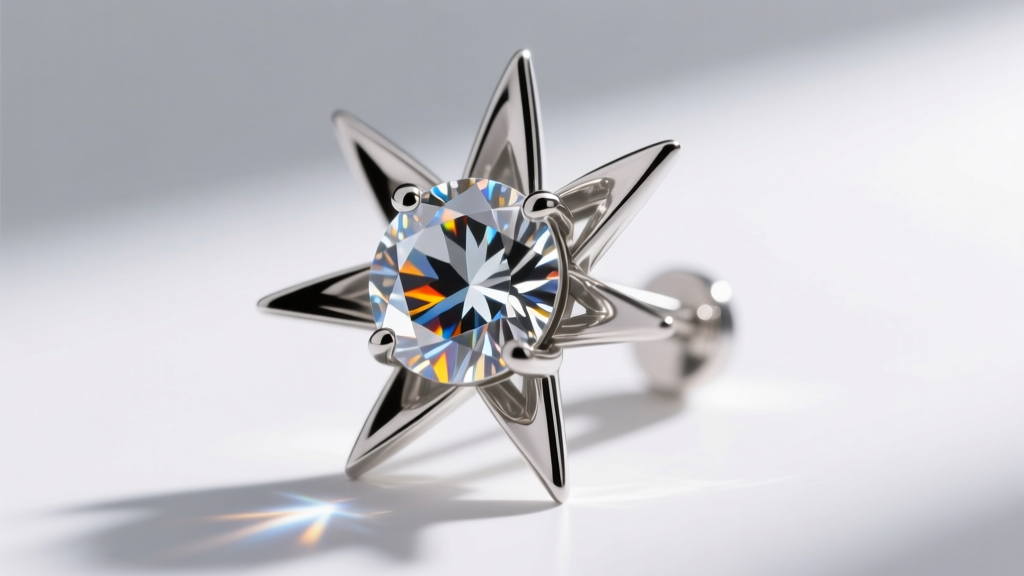
A classic 4-prong setting allows maximum light entry into the crown and girdle of the stone. However, it can visually square off a round brilliant cut. The 6-prong martini setting, conversely, offers superior structural security for heavier stones (typically 1.5 carats and above) but introduces more metal into the optical path. A standard 1.2mm prong will block approximately 4% more peripheral light than an ultra-fine 0.8mm prong. For high-carat sparkling earrings, jewelers in 2026 frequently utilize tapered, knife-edge prongs that minimize the metal footprint while maintaining the tensile strength required to secure the stone during daily wear.
The Problem with Basket Settings
Basket settings feature a horizontal metal gallery wire that wraps around the lower pavilion of the stone. While this provides a secure base and prevents the stone from tilting, the gallery wire acts as an opaque barrier, blocking lateral light from entering the lower facets. For earrings, where lateral light capture is essential for dynamic scintillation, basket settings often result in a noticeable drop in overall brilliance. For maximum sparkle, a peg-head or open-air martini setting is vastly superior, as it leaves the entire pavilion exposed to ambient light.
The Hidden Variable: Earring Backings and Reflectivity
One of the most overlooked elements in the engineering of sparkling earrings is the earring backing. Standard butterfly clutches (the traditional friction backs) are notorious optical killers. Their complex, multi-looped wire structure traps dead skin cells, hair products, and sebum. Sebum has a refractive index of approximately 1.48. When sebum coats the pavilion of a diamond (RI 2.42), it bridges the optical gap between the stone and the air, destroying the total internal reflection required for sparkle. The light simply passes through the oily stone and is absorbed by the dark, dirty metal of the butterfly clutch.
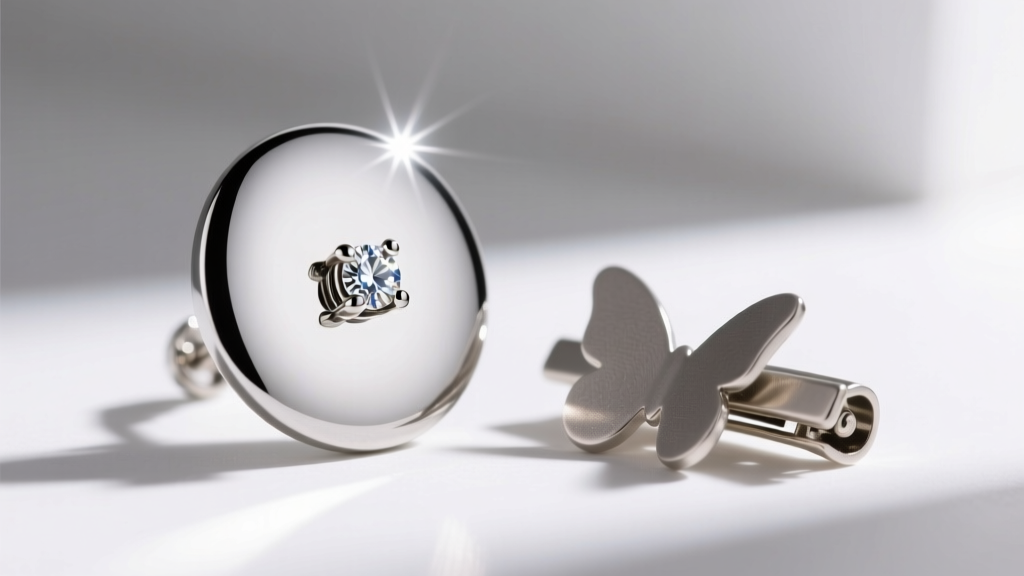
To combat this, high-end sparkling earrings are increasingly paired with flat disc backings (often branded as La Poussiere or similar security backs). These discs feature a smooth, highly polished interior surface that sits parallel to the base of the earring post. Not only do they prevent sebum from pooling directly against the gemstone's culet, but their polished metal surface acts as a secondary reflector, bouncing ambient light back up into the base of the stone. For drop earrings and dangles, utilizing hinged omega backs or lever-backs ensures the stone remains upright, maintaining the optimal crown-to-eye angle for light return.
Maintenance Protocols for Sustained Optical Performance
Even the most perfectly cut sparkling earrings will lose their fire if subjected to environmental degradation and poor maintenance. The American Gem Society (AGS) notes that a microscopic layer of lotion or skin oil can reduce a diamond's light return by up to 30%. Because earrings sit close to the hair and neck, they are constantly exposed to aerosolized hairsprays, perfumes, and natural body oils.
Ultrasonic and Chemical Cleaning Parameters
For routine maintenance of diamond, sapphire, and moissanite earrings, a 40kHz ultrasonic cleaner filled with a mild, ammonia-free degreasing solution is the gold standard. The 40kHz frequency creates microscopic cavitation bubbles that implode against the stone's surface, dislodging particulate matter from beneath the girdle and around the prong tips without scratching the metal. However, caution must be exercised with fracture-filled diamonds or porous gemstones like opals and emeralds, which can shatter or lose their oils in an ultrasonic bath.
For quick, on-the-go restoration of sparkle, a specialized jewelry cleaning pen equipped with a micro-brush and a surfactant-based gel can break the surface tension of oils on the crown facets. It is critical to brush the pavilion (the underside) of the earring, not just the top. The underside is where oil accumulates most heavily, and cleaning only the crown will yield a mere 10% improvement in perceived sparkle, whereas cleaning the pavilion restores the stone's total internal reflection capabilities.
Conclusion: Engineering the Perfect Sparkle
Creating truly captivating sparkling earrings requires a synthesis of gemological science, precision metallurgy, and an understanding of human biomechanics. By prioritizing high-RI materials cut to exact critical angle thresholds, utilizing open-air setting architectures, and pairing the adornments with reflective, low-profile backings, jewelers can engineer earrings that maximize scintillation in real-world conditions. As optical grading technology continues to evolve through 2026, the standard for what constitutes a 'sparkling' earring will only become more rigorous, demanding exactitude from the rough crystal to the final polish.


