The Ultimate Guide to Earring Hangers: Wires, Gauges, and Materials
Discover everything about earring hangers. Learn how to choose the right wire findings, gauge sizes, and hypoallergenic materials for dangle earrings.

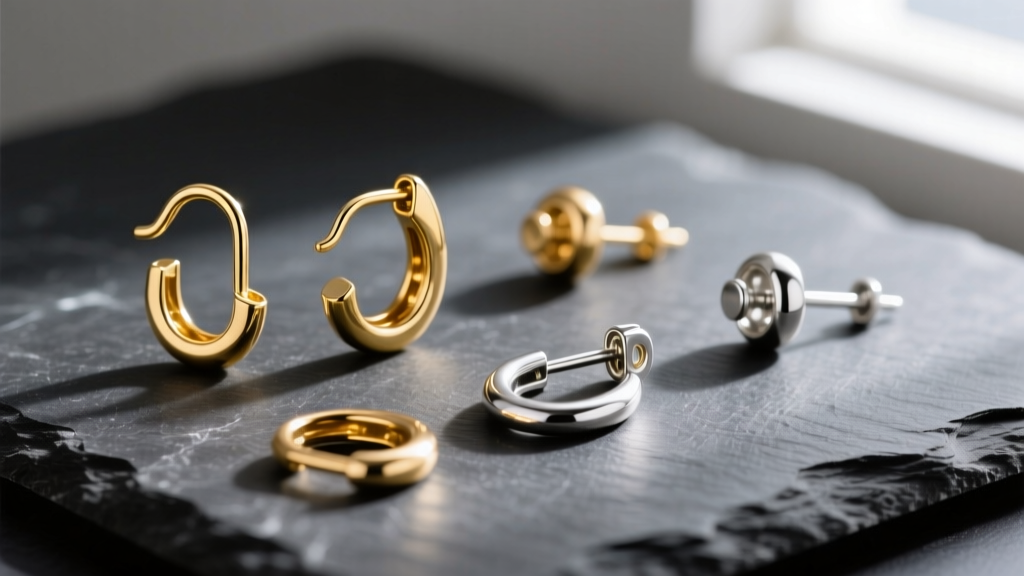
What Exactly Are Earring Hangers?
When you admire a beautiful pair of dangle or drop earrings, your eye is naturally drawn to the gemstones, pearls, or intricate metalwork. However, the unsung hero of these designs is the earring hanger (often referred to as ear wires or earring findings). In jewelry design and manufacturing, earring hangers are the foundational suspension systems that connect the decorative elements of an earring to your ear piercing.
Choosing the correct hanger is not just an aesthetic decision; it is a matter of structural integrity, comfort, and dermatological safety. A poorly chosen hanger can lead to metal fatigue, lost earrings, or severe contact dermatitis. As we navigate the jewelry landscape in 2026, understanding the anatomy of these components is essential for both beginner jewelry makers and everyday collectors looking to swap out hooks for custom drops.
The 4 Primary Styles of Earring Hangers
Before diving into metallurgy and wire thickness, you must understand the mechanical designs available. Each style serves a distinct functional purpose based on the weight of the earring and the security required.
- French Wire (Fishhook): The most common and versatile hanger. It features a long, curved wire that passes through the piercing and hangs freely. While elegant, they are prone to falling out if bumped.
- Kidney Wire: Shaped like a kidney bean, this hanger features a catch mechanism where the straight end of the wire snaps into a small loop. This provides a more secure closure than the French wire without the need for a separate rubber back.
- Leverback: Featuring a hinged lever that snaps securely into a catch at the front of the earring. Leverbacks are the gold standard for heavy, expensive drop earrings because they offer maximum security and a clean, continuous silhouette.
- Ear Threads (Threaders): A delicate chain with a straight post at one end that threads entirely through the piercing. They rely on friction and the weight of the chain to stay in place, offering a highly minimalist look.
| Hanger Style | Security Level | Best For | Common Failure Mode |
|---|---|---|---|
| French Wire | Low to Medium | Lightweight, everyday dangles | Snagging on hair or clothing and pulling out |
| Kidney Wire | Medium | Medium-weight artisan drops | Catch loop stretching out over time |
| Leverback | High | Heavy gemstone or chandelier earrings | Hinge pin breaking if forced open |
| Ear Thread | Low | Delicate chains, minimalist styling | Slipping out during sleep or vigorous movement |
Decoding Gauge Sizes and Weight Limits
The thickness of the wire used in earring hangers is measured using the American Wire Gauge (AWG) system. Counterintuitively, a higher gauge number means a thinner wire. Selecting the correct gauge is critical to prevent the hanger from warping under the weight of your earring drops.
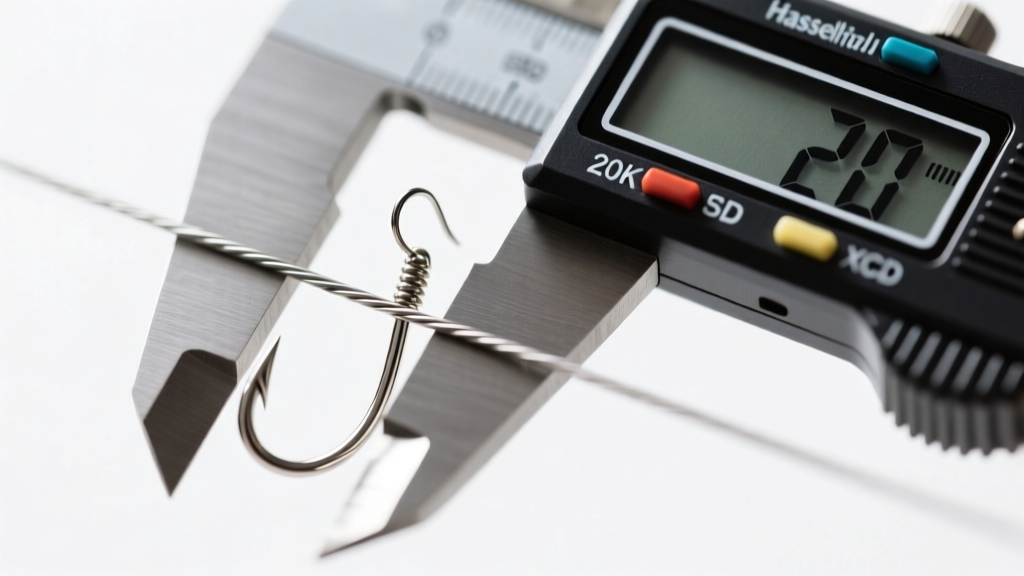
20-Gauge (0.81mm) - The Industry Standard
The 20-gauge wire is the undisputed workhorse of the jewelry industry. It is thick enough to support moderate-weight drops (up to 8-10 grams per earring) without bending, yet thin enough to slide comfortably through a standard healed lobe piercing. If you are buying wholesale findings or making your own jewelry, 20-gauge should be your default starting point.
22-Gauge (0.64mm) - For Delicate Designs
A 22-gauge hanger is noticeably thinner and more flexible. It is ideal for lightweight pearl drops, seed beadwork, or minimalist geometric shapes. Warning: Using 22-gauge wire for heavy gemstone drops will result in rapid metal fatigue. The wire will stretch at the curve of the hook, eventually leading to structural failure and a lost earring.
18-Gauge (1.02mm) - Heavy Duty and Cartilage
Reserved for heavy, oversized artisan pieces or specific cartilage piercings. Note that an 18-gauge hanger will not fit through a standard 20-gauge lobe piercing without causing micro-tears and discomfort. Always verify the gauge of the wearer's piercing before selecting thick hangers.
Pro Tip on Metal Fatigue: Every time you bend a wire hanger to open or close a jump ring, you cause 'work hardening.' Repeatedly bending the same spot will make the metal brittle and cause it to snap. Always use flat-nose pliers to twist loops open laterally, rather than pulling them apart.
Material Grades and Hypoallergenic Standards
The metal touching the inside of your piercing dictates your body's immune response. According to the Association of Professional Piercers (APP), understanding material grades is non-negotiable for avoiding contact dermatitis and nickel allergies.
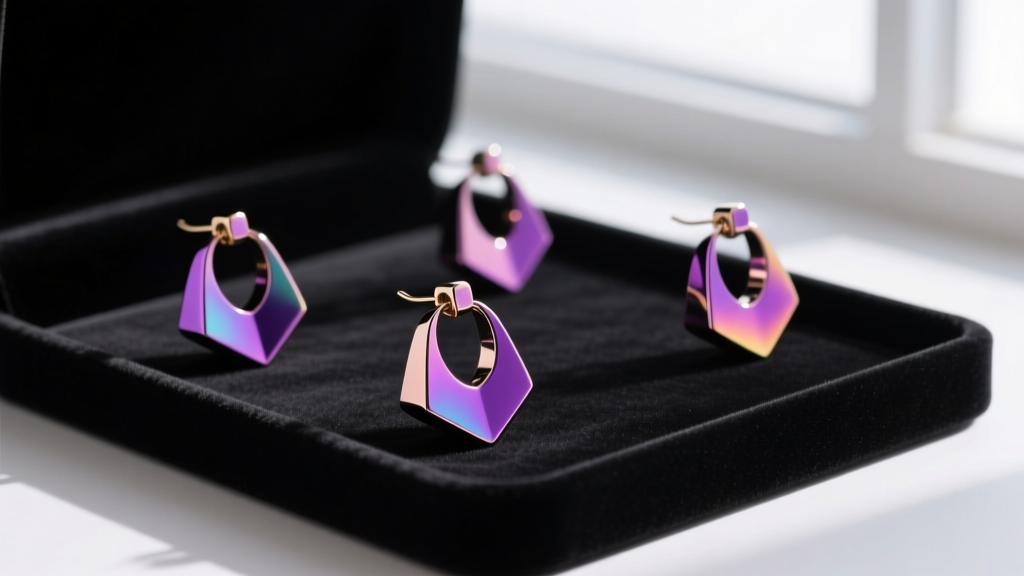
Implant-Grade Titanium (ASTM F136)
This is the ultimate standard for sensitive ears and fresh piercings. ASTM F136 titanium is entirely nickel-free, highly biocompatible, and incredibly lightweight. It is the exact same grade of metal used in surgical joint replacements.
Niobium
Niobium is a highly reactive elemental metal that is completely hypoallergenic. Its unique property is its ability to be anodized—using an electrical current to change the surface oxide layer, creating vibrant colors (like deep purples, blues, and golds) without the use of toxic dyes or platings that can flake off inside the piercing.
316L Surgical Steel
While widely sold and perfectly safe for the majority of the population, 316L surgical steel does contain trace amounts of nickel. For individuals with severe nickel allergies, or for use in unhealed piercings, it should be avoided in favor of titanium or niobium.
Karat Gold (14k and 18k)
Solid 14k or 18k gold is excellent for sensitive ears, provided it is alloyed with nickel-free metals like silver or palladium. Avoid 'gold-plated' or 'gold-filled' hangers for long-term wear, as the base metal (usually brass or copper) will eventually bleed through microscopic scratches in the plating, causing severe allergic reactions.
Lobe vs. Cartilage: Matching Hangers to Piercings
The anatomy of your ear dictates which hanger style will function best. Earlobes are soft, fleshy, and highly flexible, meaning they can accommodate the sweeping curve of a French wire or the bulk of a leverback hinge. Cartilage (such as the helix, forward helix, or tragus), however, is rigid and unforgiving.
Using a long French wire in a cartilage piercing is a recipe for disaster. Because the wire extends far below the piercing site, it acts as a lever. If the hanger snags on a hairbrush or a sweater, the rigid cartilage cannot bend to absorb the shock, which can result in the hanger tearing completely through the tissue. For cartilage drops, always opt for leverback hangers or short kidney wires that sit flush against the ear, minimizing the risk of snagging.
Pro Tips for Securing and Maintaining Your Hangers
Even the best earring hangers require basic maintenance to ensure longevity and security. Here are actionable steps to protect your jewelry:
- Use Silicone O-Rings: If you love the look of French wires but hate losing them, slide a tiny, clear silicone O-ring (available from suppliers like Rio Grande) onto the back of the wire. This provides a friction grip that prevents the earring from slipping out without the bulk of a traditional butterfly back.
- Clean the Contact Points: Sebum and dead skin cells accumulate in the catch-loop of kidney wires and the hinge of leverbacks. Soak your hangers in warm water with a drop of mild dish soap, and use a soft-bristled baby toothbrush to clear the mechanisms. This prevents the hinge from becoming stiff and breaking.
- Check for Burrs: Run a cotton swab along the wire of your hanger. If the cotton snags, there is a microscopic metal burr that will irritate your piercing canal. Gently buff the wire with a micro-mesh polishing pad until it is perfectly smooth.
By understanding the mechanics, gauges, and metallurgy of earring hangers, you can confidently select, design, and wear dangle earrings that are as structurally sound as they are beautiful.


