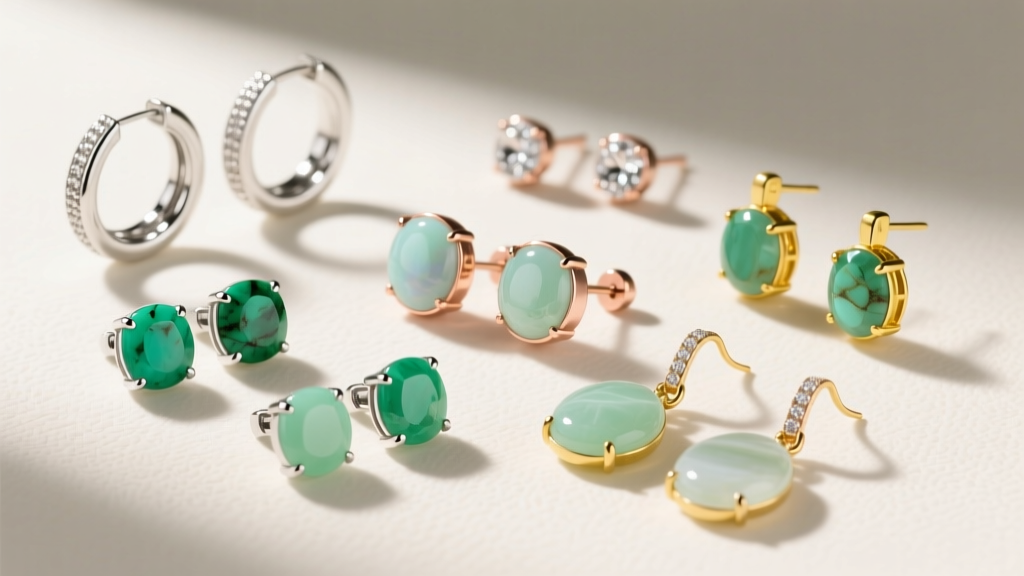
How to Choose the Best Earring Holder Organizer for Your Collection
Learn how to choose or build the perfect earring holder organizer. Step-by-step guide to storing studs, hoops, and dangles while preventing tarnish.

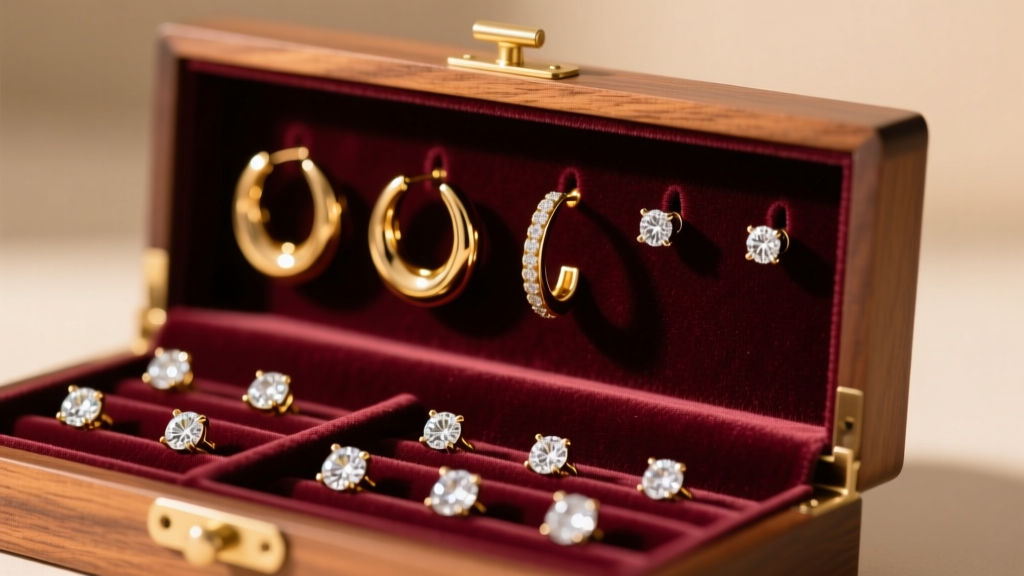
Building a comprehensive jewelry collection is an investment, yet many enthusiasts overlook the crucial final step: proper storage. A high-quality earring holder organizer is not merely a decorative accessory; it is a functional preservation system. When dealing with delicate 20-gauge gold posts, heavy brass dangles, or easily tangled chain drops, the wrong storage solution can lead to bent posts, lost backings, and accelerated oxidation. This step-by-step guide will walk you through auditing your collection, selecting anti-tarnish materials, and configuring a customized earring holder organizer that protects your pieces while keeping them accessible.
The Anatomy of a Functional Earring Holder Organizer
Before purchasing or building a system, it is essential to understand what separates a premium earring holder organizer from a cheap, mass-produced display. A functional organizer must address three core physical challenges: structural load, environmental exposure, and mechanical friction.
- Structural Load: Heavy chandelier earrings and thick brass hoops require a reinforced base. Flimsy acrylic or thin cardboard will warp under the weight of a 50-piece collection, causing the organizer to tip over and bend your earring posts.
- Environmental Exposure: Sterling silver and copper alloys are highly susceptible to hydrogen sulfide and moisture in the air. An effective organizer must either seal out ambient air or incorporate active anti-tarnish agents.
- Mechanical Friction: When earrings are crammed together, gemstones can scratch soft metals (like 24k gold or high-karat alloys), and clasp mechanisms can snag on delicate chains.
Step 1: Audit Your Collection by Weight and Backing Type
The first step in selecting the right earring holder organizer is auditing your current inventory. Different backing types and metal gauges require entirely different storage geometries. For instance, standard stud posts typically range from 20-gauge (0.81mm) to 18-gauge (1.02mm). If the puncture holes in your organizer's display panel are larger than 1.5mm, lightweight studs will slip through and fall to the bottom of the drawer.
| Earring Type | Average Post Gauge | Weight Profile | Required Organizer Feature |
|---|---|---|---|
| Standard Studs | 20G - 18G (0.8-1.0mm) | Light (< 3g) | Tight-fit holes (1.0mm) or slotted foam |
| Huggies & Small Hoops | 18G - 16G (1.0-1.2mm) | Medium (3-8g) | Horizontal hanging bars or T-bar slots |
| Heavy Dangles / Chandeliers | 18G - 14G (1.0-1.6mm) | Heavy (10g+) | Reinforced vertical clearance (min 3 inches) |
| Ear Cuffs & Climbers | N/A (Wire/Clip) | Variable | Flat, divided velvet trays with shallow lips |
Step 2: Selecting the Right Material for Tarnish Prevention
The material of your earring holder organizer dictates the chemical environment your jewelry lives in. According to the Gemological Institute of America (GIA), silver tarnish is primarily caused by a reaction between silver and sulfur compounds in the air. Therefore, the lining and structural materials of your organizer must be chemically inert or actively absorb these compounds.
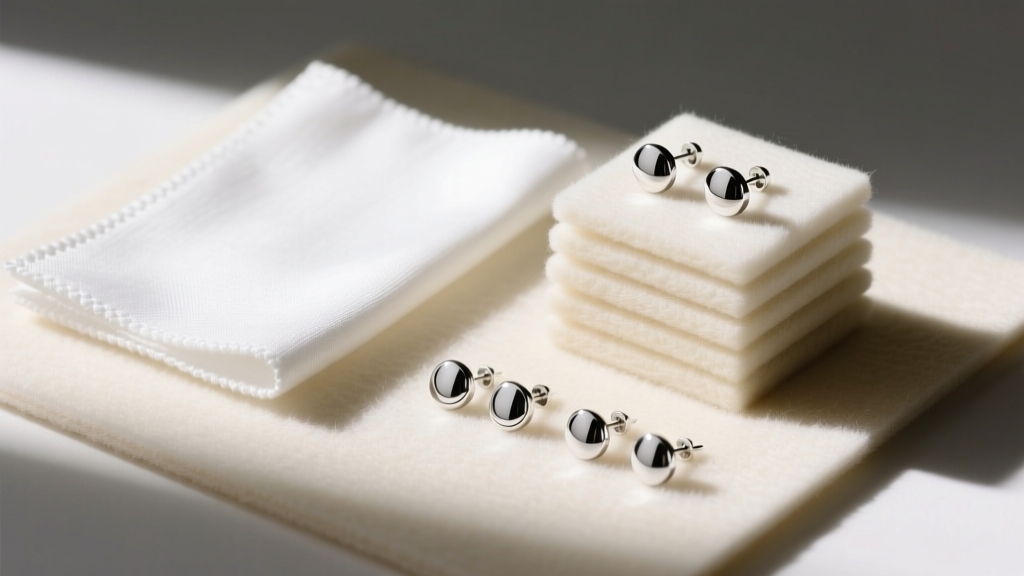
Material Comparison Chart
| Organizer Material | Tarnish Risk | Best Used For | Expert Notes |
|---|---|---|---|
| Pacific Silvercloth | Extremely Low | High-end sterling silver, heirloom pieces | Embedded with fine silver particles that absorb sulfur before it reaches your jewelry. Must not be washed. |
| Acid-Free Felt | Low | Gold, platinum, and gemstone studs | Prevents micro-scratches. Ensure it is certified acid-free, as standard craft felt can off-gas acidic vapors. |
| Standard PU Leather | High | Fashion jewelry, stainless steel | Often contains glues and dyes that off-gas VOCs, accelerating the oxidation of copper and brass alloys. |
| Raw Wood (Unsealed) | Medium-High | Chunky bohemian styles, heavy hoops | Wood naturally releases acetic acid. Always line raw wood drawers with a barrier like polyurethane foam. |
For a truly protective earring holder organizer, look for models lined with treated flannel or incorporate Jewelers of America recommended 3M anti-tarnish strips into the base of the storage compartments. These strips utilize copper-based particles to neutralize corrosive gases and typically last for six months in a semi-enclosed space.
Step 3: Configuring Zones for Different Earring Styles
A common mistake is treating all earrings as uniform objects. To maximize the utility of your earring holder organizer, you must establish distinct micro-zones. This prevents the mechanical damage that occurs when a heavy gemstone drop swings against a delicate pearl stud.
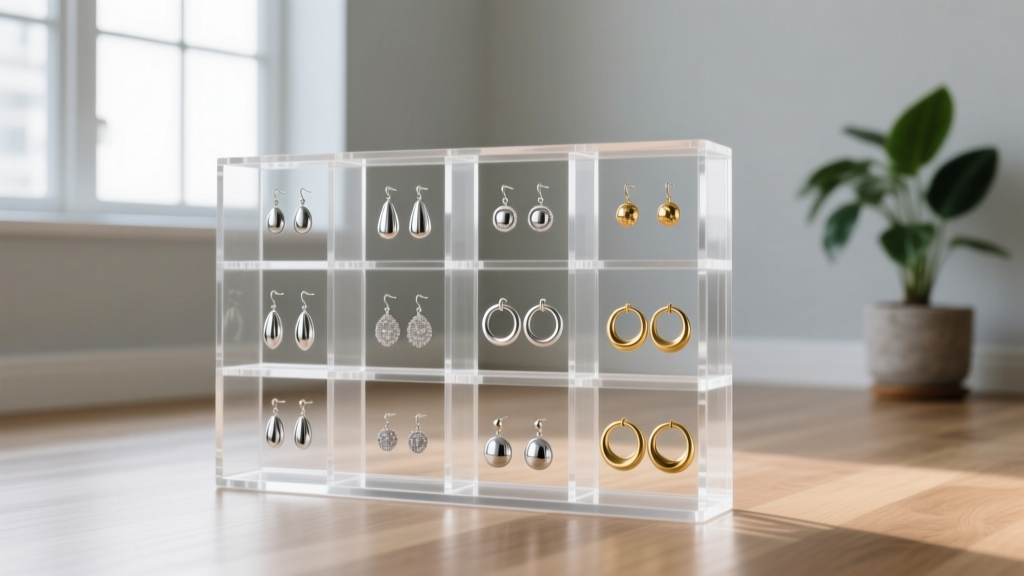
Zone A: The Piercing Post Matrix (Studs & Sleepers)
Dedicate the top or most accessible drawer to a high-density post matrix. If you are building a DIY earring holder organizer, use a sheet of 1/4-inch thick, high-density polyurethane foam. Score a grid pattern into the foam with an X-Acto knife. The friction of the foam will grip 20-gauge posts securely without requiring you to fumble with butterfly backings, which are easily lost.
Zone B: The Suspension Gallery (Hoops & Dangles)
Hoops and dangles must hang freely to maintain their shape and prevent chain tangling. Utilize a T-bar suspension system within your organizer. For large 50mm+ statement hoops, ensure the vertical clearance between the hanging bar and the base of the organizer is at least 3.5 inches. If the organizer is enclosed, line the back wall with a soft microfiber to prevent the earring hooks from scratching the acrylic or glass when the drawer is pulled open.
Zone C: The Flat-Lay Conservatory (Ear Cuffs & Climbers)
Ear cuffs, ear climbers, and threader earrings lack standard posts and cannot be hung or pierced through foam. They require a flat-lay conservatory zone. Use shallow, divided compartments lined with velvet. The shallow depth (no more than 1/2 inch) ensures that when you open the drawer, the cuffs do not flip over or become buried under other pieces.
Step 4: Maintenance and Anti-Tarnish Upkeep
Even the most expensive earring holder organizer requires routine maintenance to function as a preservation environment. Humidity is the catalyst for almost all jewelry degradation. To maintain an optimal micro-climate inside your organizer, follow these actionable steps:
- Integrate Silica Gel Desiccants: Place two to three reusable, color-indicating silica gel packets in the corners of your organizer. Keep the relative humidity inside the storage space below 45%. When the silica beads turn from orange to green, bake them at 200°F for two hours to recharge.
- Rotate Anti-Tarnish Strips: If using copper-based anti-tarnish strips, replace them every six months. Mark the installation date on the strip with a fine-tip permanent marker.
- Clean Before Storing: Never place an earring directly into the organizer after wearing it. The natural sebum, dead skin cells, and cosmetics on the post will degrade the foam or cloth lining and attract dust. Wipe posts with a microfiber cloth or a quick swipe of isopropyl alcohol before storage.
Expert Troubleshooting: Common Storage Failures
Even with a meticulous setup, you may encounter specific storage failures. Here is how to troubleshoot the most common issues associated with earring holder organizers:
Problem: Bent Posts on Heavy Studs
Diagnosis: The foam or cardstock holding the stud is too thin, causing the weight of the gemstone to pull the post downward, bending it against the base.
Solution: Upgrade to a dual-layer foam system. The top layer (1/8 inch) acts as a friction grip, while the bottom layer (1/4 inch) provides a hollow cavity so the post tip never touches a hard surface.
Problem: Tangled Threader Earrings
Diagnosis: Threaders are stored in standard compartments where the long chain loops back on itself.
Solution: Create a dedicated threader slot. Use a small piece of acid-free cardstock with a tiny slit cut into it. Thread the short end of the chain through the slit, allowing the long chain to hang straight down inside a vertical drop zone.
Problem: Lost Butterfly Backings
Diagnosis: Backings are stored loosely in a general drawer, leading to loss.
Solution: Repurpose a small, multi-compartment pill organizer or a specialized bead storage vial exclusively for backings. Keep this vial magnetically attached to the side or inside the lid of your primary earring holder organizer.
By treating your earring holder organizer as a specialized preservation tool rather than a simple display box, you extend the lifespan of your metals, protect the structural integrity of your gemstone settings, and ensure your collection remains ready to wear at a moment's notice.