Soda Tab Earrings: Material Properties & Upcycled Aluminum Guide
Discover the material science behind soda tab earrings. Compare upcycled aluminum alloys to traditional jewelry metals for weight, durability, and skin safety.

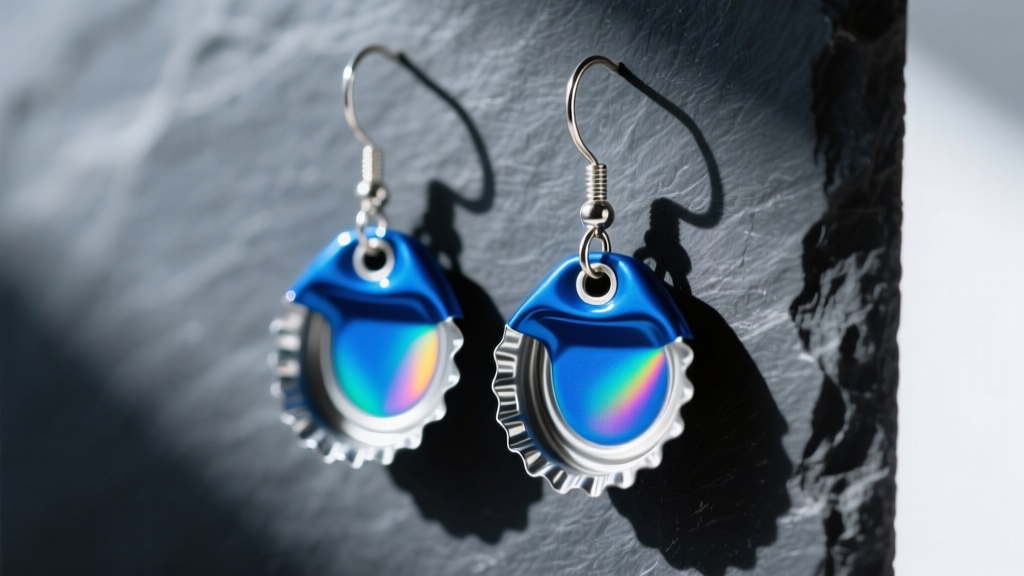
The Metallurgy of the Pull-Tab: What Are Soda Tabs Actually Made Of?
When evaluating soda tab earrings from a materials science perspective, we must first look past the novelty of upcycling and examine the actual alloy in use. Unlike the body of a standard beverage can, which is typically drawn from 3004 or 3104 aluminum-manganese alloys for maximum malleability, the pull-tab is engineered for high tensile strength and leverage. According to AZoM Materials Science, pull-tabs are almost exclusively stamped from 5182-H19 aluminum alloy.
The '5182' designation indicates an aluminum-magnesium alloy containing roughly 4.0% to 5.0% magnesium, which significantly increases its yield strength compared to pure aluminum. The 'H19' temper means the metal has been strain-hardened to its maximum limit without thermal treatment. This specific metallurgical profile gives the tab the rigidity required to puncture the can's scored opening without buckling. For jewelry makers, this translates to a base material that is exceptionally stiff, highly resistant to scratching, and remarkably lightweight. However, this same strain-hardened property means the metal has a low tolerance for repeated bending, a critical factor we will explore in the structural integrity section.
Weight & Wearability: The Density Advantage
The most immediate physical benefit of soda tab earrings is their extreme lightness. Aluminum has a density of approximately 2.70 g/cm³. To put this into context, sterling silver sits at 10.49 g/cm³, and 316L surgical steel is roughly 8.00 g/cm³. A standard soda tab weighs between 0.35 and 0.45 grams. Even when doubled, layered, or augmented with resin and jump rings, a finished pair of upcycled tab earrings rarely exceeds 3 grams total.
This ultra-low mass makes them an ideal choice for individuals with stretched earlobes, thin ear tissue, or those prone to earlobe fatigue and migration. While heavy brass or steel dangles can cause microscopic tearing in the fistula over time, the negligible gravitational pull of aluminum tabs ensures zero traction on the piercing channel. For cartilage piercings, such as helixes or forward helixes where heavy metals can cause pressure necrosis or discomfort during sleep, the featherweight nature of 5182 aluminum is a distinct ergonomic advantage.
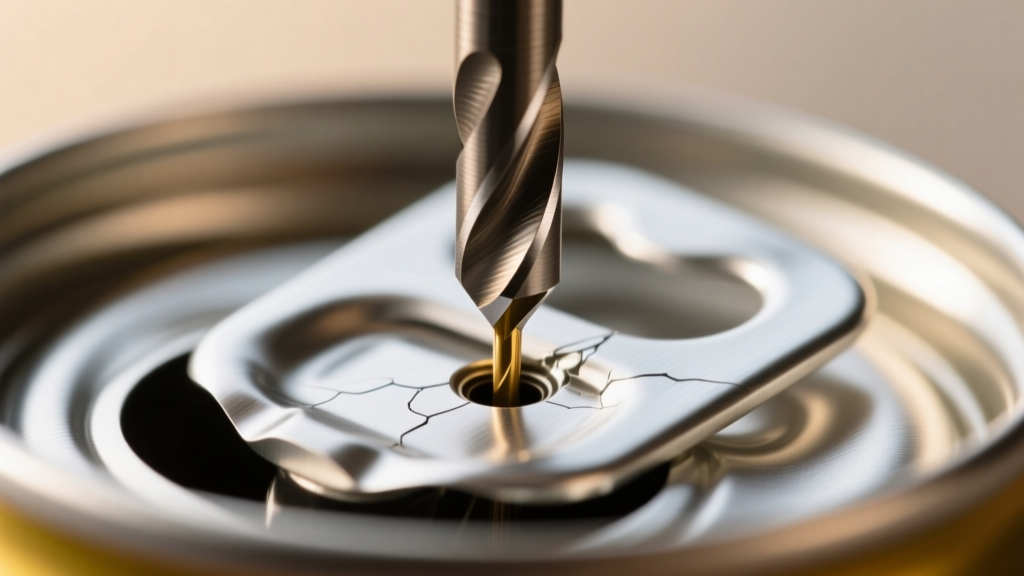
Skin Reactivity and the Hidden Allergen Trap
A common misconception in the sustainable jewelry community is that because pure aluminum is generally hypoallergenic and nickel-free, soda tab earrings are inherently safe for sensitive skin. This is dangerously false. While the 5182 aluminum core contains no nickel, the surface of a beverage tab is heavily treated. According to research on jewelry contact dermatitis published by the NIH, surface coatings and industrial adhesives are frequent culprits for allergic contact dermatitis.
Soda tabs are coated in industrial acrylic inks, clear protective lacquers, and often carry microscopic residue from the can's internal epoxy lining (which historically contains BPA or BPS). If worn directly against the skin—especially in the humid, high-friction environment of the earlobe—these industrial coatings can degrade, leach, and cause severe contact dermatitis. Furthermore, the sharp, unstamped edges of a cut tab can create micro-abrasions on the skin, accelerating localized allergic reactions.
The Imperative of Encapsulation Sealing
To make soda tab earrings biocompatible for prolonged wear, the aluminum must be hermetically sealed. Jewelry makers must encapsulate the tab to isolate the skin from the industrial coatings. The most effective methods include:
- Jewelry-Grade UV Resin: Brands like Lisa Pavelka Magic-Glos or Padico UV-LED resin provide a thick, glass-like encapsulation that cures in minutes and completely locks in surface toxins.
- Two-Part Epoxy Doming: Offers superior structural rigidity and a high-domed finish, though it requires a 24-hour cure time and precise mixing ratios to avoid tacky, uncured spots.
- Electroplating: Advanced makers can copper-plate the tab using a conductive paint base, followed by silver or gold plating. However, if the plating layer is too thin, the underlying aluminum can cause galvanic corrosion when exposed to sweat.
According to the EPA's aluminum recycling data, aluminum is infinitely recyclable, but the chemical coatings must be accounted for when repurposing post-consumer waste into wearable goods. Never wear raw, unsealed soda tabs directly against a fresh or healing piercing.
Material Comparison Matrix: Upcycled Aluminum vs. Fine Jewelry Metals
To understand where soda tab earrings fit into the broader jewelry market, we must compare their physical properties against industry-standard metals. The table below highlights the stark differences in density, hardness, and biocompatibility.
| Material | Alloy / Grade | Density (g/cm³) | Vickers Hardness (HV) | Hypoallergenic? | Best Use Case |
|---|---|---|---|---|---|
| Soda Tab (Raw) | 5182-H19 | 2.70 | ~135 | No (Surface Coatings) | Layered, sealed statement pieces |
| Titanium | Grade 23 (Ti 6Al-4V) | 4.43 | ~350 | Yes (ASTM F136) | Fresh piercings, sensitive skin |
| Sterling Silver | 925 (Ag/Cu) | 10.49 | ~65 | Mostly (Copper allergy risk) | Healed lobes, fine jewelry |
| Surgical Steel | 316L | 8.00 | ~150 | No (Contains 8-10% Nickel) | Healed, non-sensitive piercings |
As the matrix demonstrates, while 5182 aluminum boasts an impressive hardness for its weight class (rivaling 316L steel), its lack of inherent biocompatibility due to surface treatments relegates it to the realm of sealed, novelty, or statement fashion jewelry rather than fine, everyday body jewelry.
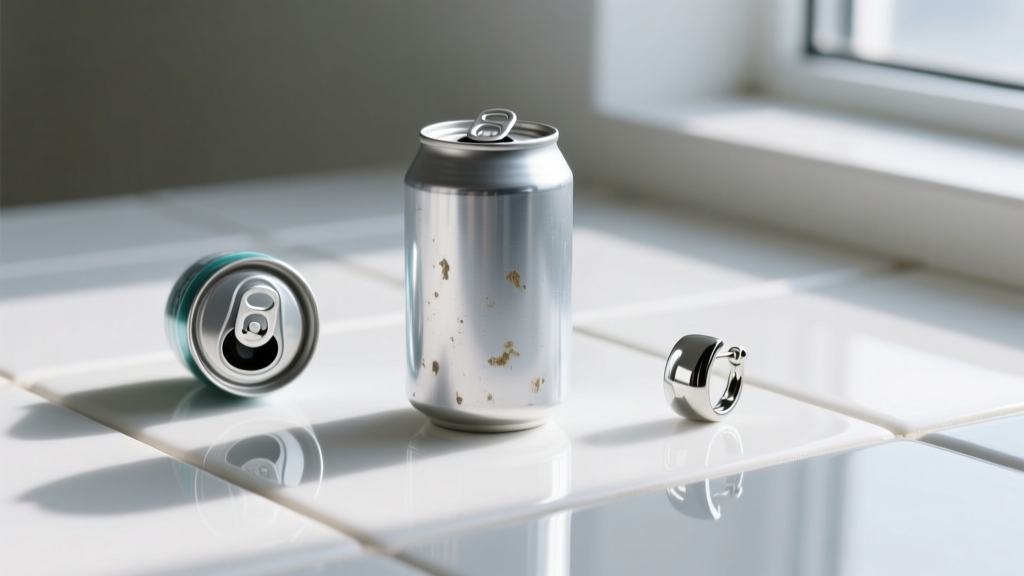
Structural Integrity: Bending, Fatigue, and Failure Points
Working with 0.28mm (approx. 0.011 inches) thick strain-hardened aluminum requires specific jewelry fabrication techniques. Because the 5182-H19 alloy is already at its maximum hardness, it exhibits severe metal fatigue when subjected to cyclic loading. If a jewelry maker attempts to bend a soda tab back and forth to snap it, or repeatedly adjusts a wire wrap around the tab's edge, the metal will quickly work-harden further and shear cleanly.
Best Practices for Assembly and Findings
To maintain the structural integrity of soda tab earrings, makers must avoid mechanical stress on the thin aluminum sheet.
- Cutting: Do not use standard jewelry flush cutters, which will crush and deform the 0.28mm sheet. Use micro aviation snips or specialized sheet metal shears to ensure a clean, sheared edge.
- Deburring: The sheared edges of a soda tab are microscopically serrated and razor-sharp. Edges must be sanded using Micro-Mesh pads progressing from 1500 up to 12000 grit, or carefully filed with a fine cup bur to prevent the aluminum from slicing through the skin or the sealing resin.
- Drilling vs. Punching: Never use a steel hole punch on a soda tab; the blunt force will warp the alloy. Instead, secure the tab in a nylon-jawed vise and use a 1.0mm carbide micro drill bit at high RPM with a drop of cutting fluid. This ensures a perfectly round hole without introducing stress fractures.
- Attaching Findings: Because the tab is so thin, threading a 20-gauge (0.81mm) ear wire directly through a drilled hole will cause the wire to act as a lever, eventually tearing through the aluminum. Always use a 22-gauge or 24-gauge anodized aluminum or niobium jump ring as an intermediary buffer between the tab and the primary ear wire.
Final Verdict: Who Should Wear Upcycled Aluminum?
Soda tab earrings represent a fascinating intersection of sustainable upcycling and material science. When properly fabricated—meaning the edges are meticulously deburred, the surface is hermetically sealed with UV resin, and the findings are attached via stress-distributing jump rings—they offer an incredibly lightweight, durable, and eco-conscious alternative to heavy metal dangles.
Expert Insight: Reserve upcycled, resin-sealed soda tab earrings for fully healed earlobe piercings and temporary wear. For new piercings, stretched lobes requiring tissue breathing room, or wearers with severe contact dermatitis, stick to implant-grade titanium (ASTM F136) or solid niobium, as the long-term biocompatibility of sealed post-consumer aluminum cannot be medically guaranteed.
Ultimately, the appeal of soda tab earrings lies not in their intrinsic precious value, but in the maker's ability to manipulate a high-strength, strain-hardened aerospace-adjacent alloy into a delicate, wearable piece of modern eco-art.


