Why Your Earring Hole Is Bleeding: Expert Causes and Healing Fixes
Discover why your earring hole is bleeding. Expert guide on piercing trauma, metal allergies, gauge mismatches, and clinical steps to stop it.

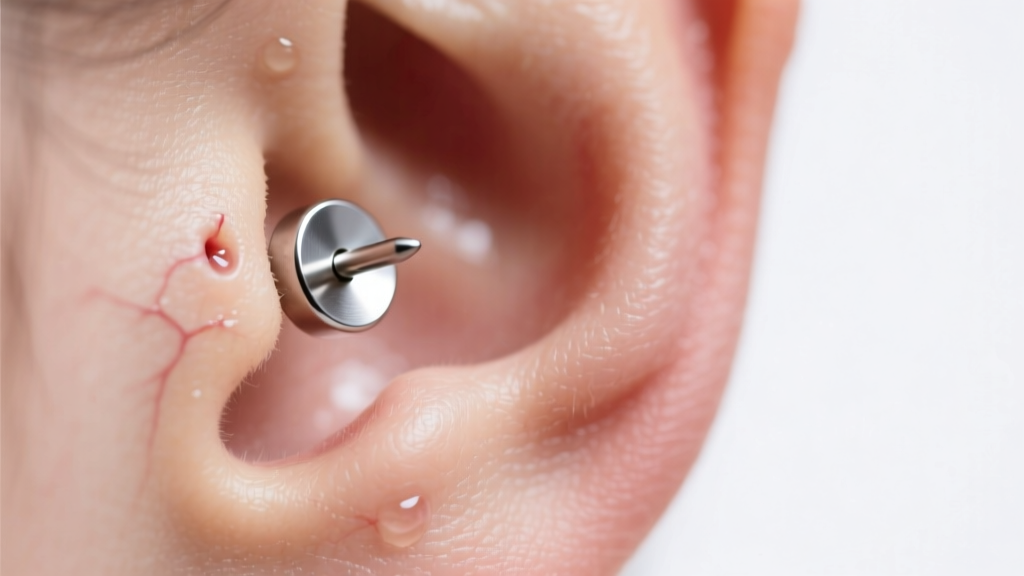
The Anatomy of a Bleeding Piercing: Trauma vs. Rejection
When you notice your earring hole is bleeding, the immediate biological response is capillary rupture within the fistula—the tube of healed epithelial tissue lining the piercing channel. While minor spotting is expected in fresh piercings (typically within the first 14 to 21 days), bleeding in a fully healed piercing indicates structural compromise, chemical irritation, or localized infection. To properly diagnose and treat the issue, we must first differentiate between vascular lobe tissue and avascular cartilage, as the failure modes and bleeding mechanisms differ drastically between the two.
Vascular Earlobes vs. Avascular Cartilage
The earlobe is highly vascularized, meaning it possesses a dense network of capillaries. If an earring hole is bleeding in the lobe, it is usually due to mechanical micro-tears from heavy jewelry, gauge stretching, or aggressive snagging. Cartilage (such as the helix, tragus, or conch), however, is avascular; it contains no direct blood supply and relies on the perichondrium (the connective tissue membrane surrounding the cartilage) for nutrients. If a cartilage earring hole is bleeding, it signals severe perichondrial trauma, a developing hematoma, or an advanced infection that has compromised the surrounding vascular tissue. Cartilage bleeding should never be ignored, as untreated perichondrial hematomas can lead to necrosis and permanent structural deformity (cauliflower ear).
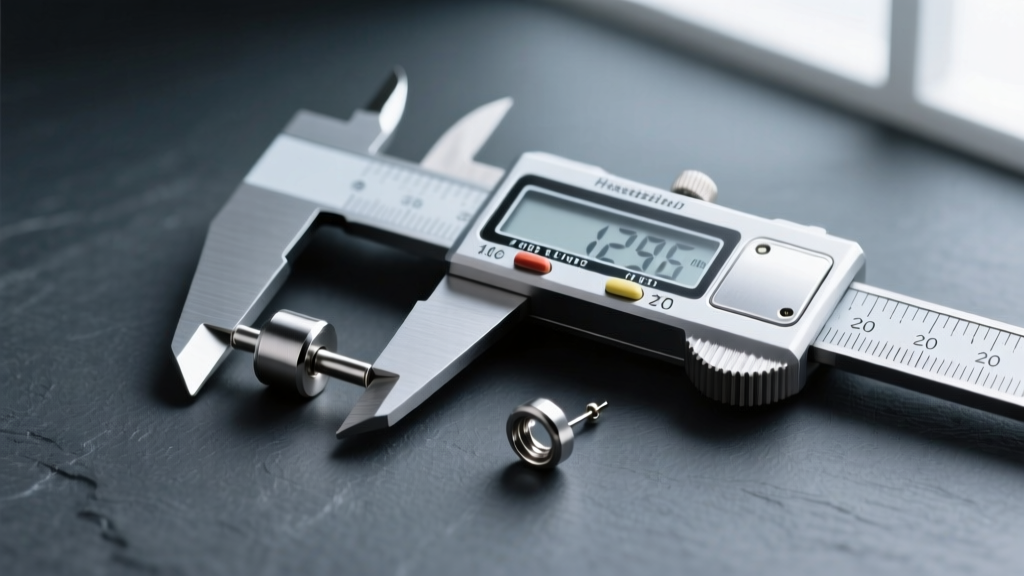
Micro-Trauma from Gauge Mismatches
One of the most frequent technical reasons an established earring hole is bleeding is the forced insertion of mismatched jewelry gauges. Standard commercial fashion earrings are typically manufactured at 20-gauge (0.81mm) or 22-gauge (0.64mm). However, professional body piercings are usually established at 18-gauge (1.02mm) for lobes and 16-gauge (1.29mm) or 14-gauge (1.63mm) for cartilage.
Attempting to force a thicker post into a healed, narrower fistula acts like a blunt dilator, instantly tearing the delicate epithelial lining. Conversely, wearing a 20-gauge earring in a 16-gauge hole creates a 'cheese-cutter effect.' The thin wire concentrates the weight of the jewelry onto a microscopic surface area, slowly slicing through the tissue bed and causing delayed, chronic bleeding and migration.
Metallurgical Culprits: When Jewelry Chemistry Causes Hemorrhage
If mechanical trauma is ruled out, the next variable to investigate is metallurgical incompatibility. Allergic contact dermatitis (ACD) caused by reactive metals breaks down the skin barrier inside the fistula, leading to weeping, granuloma formation, and subsequent bleeding. According to the American Academy of Dermatology, nickel is the most common contact allergen, yet it is frequently found in low-grade 'surgical steel' jewelry.
To prevent tissue degradation, the Association of Professional Piercers (APP) strictly recommends implant-grade materials. Below is a technical breakdown of common earring materials and their biological impact on the fistula.
| Material | ASTM Standard | Nickel Content | Tissue Reaction & Bleeding Risk |
|---|---|---|---|
| Implant-Grade Titanium | ASTM F136 | 0% | Highly biocompatible; lowest risk of inflammation or bleeding. |
| Niobium | N/A (Pure Element) | 0% | Excellent biocompatibility; safe for reactive, bleeding fistulas. |
| 14k/18k Solid Gold | N/A (Alloy) | Varies (Must be Ni-free) | Safe if alloyed with palladium/silver; risky if alloyed with nickel. |
| Surgical Steel | ASTM F138 | 8% - 12% | High risk of ACD, tissue weeping, and chronic micro-bleeding. |
| Sterling Silver | N/A | 0% (Contains Copper) | Oxidizes in the body; causes argyria (tissue staining) and irritation. |
The Pyogenic Granuloma Factor
If your earring hole is bleeding profusely with minimal provocation and presents with a small, red, fleshy bump near the exit point, you may have developed a pyogenic granuloma (lobular capillary hemangioma). This is a benign vascular tumor that frequently forms in response to chronic piercing irritation, foreign body reactions, or hormonal fluctuations (often seen during pregnancy). Pyogenic granulomas are composed of dense capillary networks and will bleed heavily if bumped or cleaned aggressively. They do not resolve with standard saline aftercare and require professional intervention, such as silver nitrate cauterization or minor surgical excision by a dermatologist.
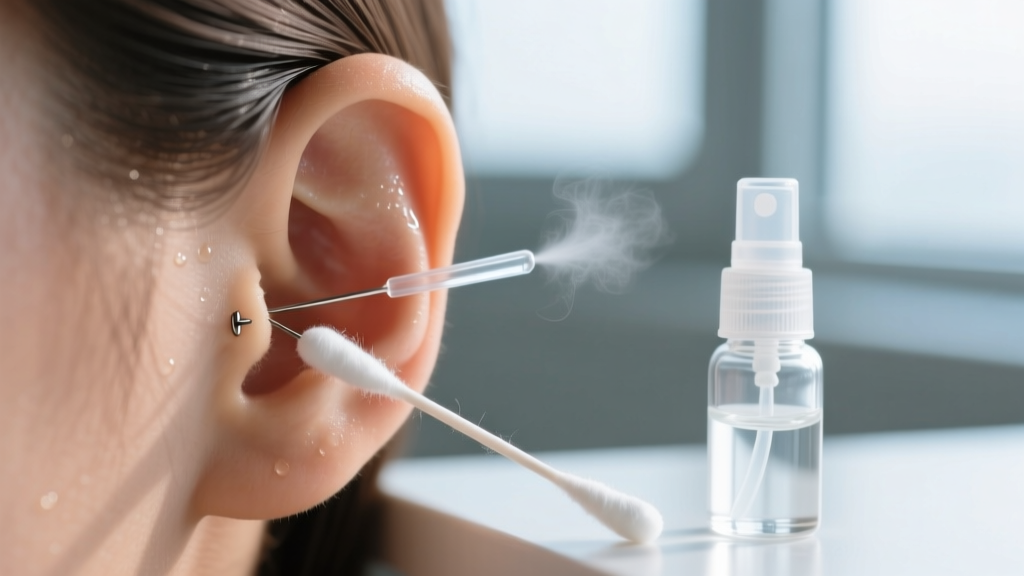
Immediate Clinical Protocol: How to Stop the Bleeding
When active hemorrhage occurs, abandon all aesthetic considerations and focus entirely on tissue stabilization. Follow this clinical triage protocol to halt the bleeding and preserve the fistula:
- Apply Direct, Sterile Pressure: Wash your hands thoroughly. Take a piece of sterile, non-woven gauze (avoid cotton balls, as the fibers can wrap around the jewelry post and embed in the wound) and apply firm, continuous pressure to both the front and back of the piercing for 5 to 10 minutes without peeking. Releasing pressure prematurely disrupts the forming platelet plug.
- Cold Compression: If pressure alone fails, apply a clean ice pack wrapped in a paper towel to the area. The cold induces vasoconstriction, narrowing the capillaries and reducing blood flow to the traumatized lobe or perichondrium.
- Flush with Sterile Saline: Once the active bleeding has ceased, gently flush the fistula with a sterile, isotonic saline solution (0.9% sodium chloride). This removes dried blood clots that can harbor bacteria and obscure your view of the tissue damage.
- Downsize or Swap to Implant-Grade Titanium: If the bleeding was caused by a heavy dangle earring or a reactive metal, swap it immediately for a lightweight, internally threaded, implant-grade titanium flat-back labret stud. The flat disc will apply gentle, even pressure against the back of the hole, acting as a mechanical bandage to keep the torn tissue edges approximated while they heal.
Never remove the jewelry entirely from a bleeding, fresh, or actively irritated piercing. Removing the jewelry allows the surface tissue to seal over the wound, trapping blood, bacteria, and necrotic debris inside the fistula, which almost guarantees an abscess.
Long-Term Tissue Rehabilitation and Downsizing
Once the acute bleeding event has passed, the fistula requires a rehabilitation period. For lobe tears caused by heavy hoops or gauge mismatches, you must wear lightweight titanium studs for a minimum of 6 to 8 weeks to allow the collagen matrix to rebuild. Avoid sleeping on the affected side to prevent pressure-induced ischemia, which starves the healing tissue of oxygen.
If the bleeding was triggered by a blowout (where the fistula tissue pushes outward due to aggressive stretching), you must immediately downsize your jewelry by two to three gauge sizes. For example, if a 10-gauge (2.4mm) stretch resulted in a blowout and bleeding, step down to a 14-gauge (1.63mm) glass or titanium retainer to relieve the outward tension and allow the tissue to retract and heal. Patience and strict adherence to material science and anatomical limits are the only ways to maintain healthy, bleed-free piercings long-term.


