Why Does Earring Hole Smell? Trend Analysis & Material Fixes
Discover why your earring hole smells, how curated ear trends and cheap alloys cause odor, and the exact material fixes for fresh piercings.

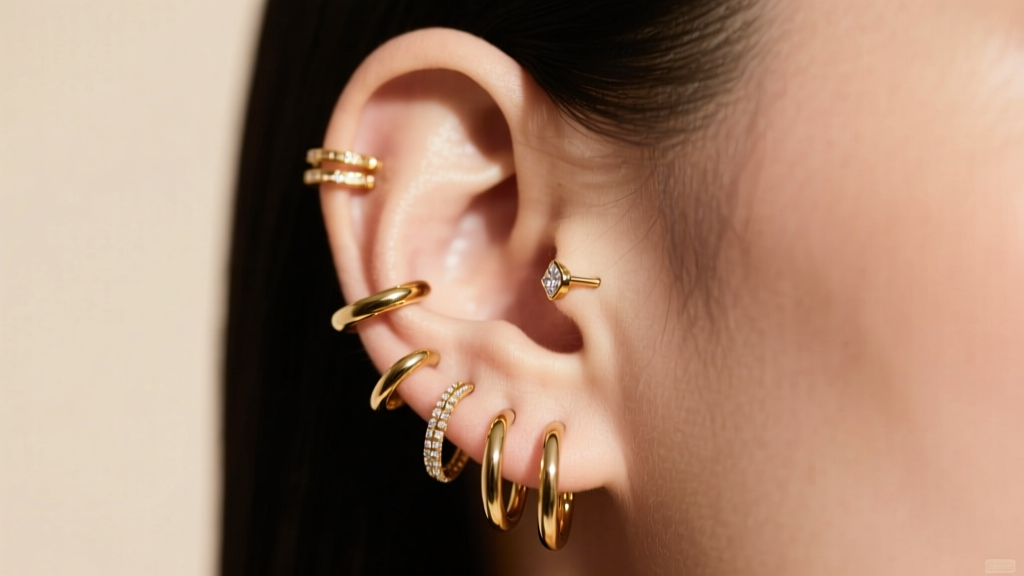
The Curated Ear Trend and the Hidden Hygiene Crisis
The modern 'curated ear' aesthetic has dominated jewelry styling for years, evolving into a highly personalized art form by 2026. We are seeing enthusiasts stacking five, six, or even seven pieces of jewelry per ear, mixing delicate threadless ends with chunky huggies and seamless hoops. However, this trend of continuous, heavy stacking has given rise to a closely guarded, rarely discussed issue in the styling community: the dreaded 'earring cheese' odor. If you have ever taken out a pair of everyday studs or cartilage hoops and been hit with a pungent, sour scent, you are not alone. Understanding why does earring hole smell requires looking past basic hygiene and examining the intersection of current styling habits, jewelry metallurgy, and human biology.
As a style analyst, I see many consumers investing thousands in high-end ear curation while unknowingly trapping biological debris in their fistulas (the healed piercing tunnel). The continuous wear of tight-fitting jewelry, combined with the widespread use of porous, mass-produced alloys, creates a perfect storm for odor. Let us break down the science of the smell, analyze which trending materials are the worst offenders, and provide a definitive framework for odor-free styling.
The Biochemistry of Odor: Sebum, Keratin, and Micro-Pitting
To solve the problem, we must first understand the biological mechanism. The odor emanating from an earring hole is not actually an infection in most cases; it is a buildup of sebum (your skin's natural oil), dead skin cells (keratin), and environmental debris. When this mixture becomes trapped inside the fistula, it becomes a breeding ground for naturally occurring bacteria, specifically Corynebacterium and Staphylococcus hominis.
As these bacteria break down the keratin and sebum, they release isovaleric acid. This is the exact same volatile organic compound responsible for the smell of pungent cheeses and foot odor. The issue is exponentially worsened by the physical texture of your jewelry. According to guidelines from the Association of Professional Piercers (APP), any metal with microscopic scratches, pitting, or porous plating will act like a cheese grater, scraping dead skin cells into the fistula and providing a textured surface for bacteria to cling to. Fast-fashion jewelry trends heavily rely on electroplated brass and copper bases, which oxidize rapidly when exposed to the acidic environment of sebum, creating a rough, pitted surface that traps odor-causing compounds.
Material Matrix: Which Earring Metals Trigger Odor?
Not all metals interact with the human body in the same way. When analyzing why does earring hole smell, the base material and the finishing polish of the jewelry are the most critical variables. Below is a comparative analysis of common earring materials and their propensity to harbor odor-causing bacteria.
| Material Grade | Porosity & Finish | Odor Risk Level | Stylist Recommendation |
|---|---|---|---|
| Implant-Grade Titanium (ASTM F136) | Non-porous, mirror-polished | Very Low | Best for new piercings, sensitive ears, and 24/7 wear. |
| Solid 14k or 18k Gold (Nickel-Free) | Low porosity, high polish | Low | Ideal for curated ear aesthetics and long-term styling. |
| Surgical Steel (316L) | Low porosity, contains nickel | Medium | Acceptable for healed lobes; avoid if you have metal sensitivities. |
| Gold-Plated / Vermeil Brass | High porosity, chips easily | High | Avoid for everyday wear; plating wears off, exposing reactive brass. |
| Sterling Silver (925) | Medium porosity, tarnishes | High | Never wear in unhealed piercings; silver sulfide tarnish traps bacteria. |
As the data illustrates, the push toward sustainable, high-quality metals is not just a luxury preference; it is a biological necessity for maintaining fresh-smelling piercings. If you are wearing gold-plated brass huggies to sleep, the friction will wear away the microscopic layer of gold, exposing the brass underneath. The brass reacts with your skin's acidity, creating a dark, porous layer that traps sebum and guarantees an odor.
Gauge Size and Hardware Mechanics: Where Bacteria Thrive
Beyond the metal itself, the physical mechanics of the earring backing play a massive role in fistula health. The traditional 'butterfly' friction back is arguably the worst offender in modern jewelry design. The tiny crevices in the butterfly clutch trap dead skin, hair products, and sebum. Furthermore, the pressure of the clutch against the back of the earlobe restricts airflow, creating a damp, anaerobic environment where odor-causing bacteria thrive.
The 'Cheese Wire' Effect: Another major styling trend is wearing heavy, oversized dangle earrings or chunky hoops on standard 20-gauge (0.8mm) or 18-gauge (1.0mm) wires. The weight of the earring pulls the thin wire downward, creating a 'cheese wire' effect that causes micro-tears in the bottom of the fistula. These micro-tears weep lymph fluid, which dries into crusts that harbor bacteria. According to the American Academy of Dermatology, repeated micro-trauma from heavy jewelry disrupts the skin barrier, leading to chronic inflammation and localized odors.
The 2026 Stylist Protocol for Odor-Free Piercings
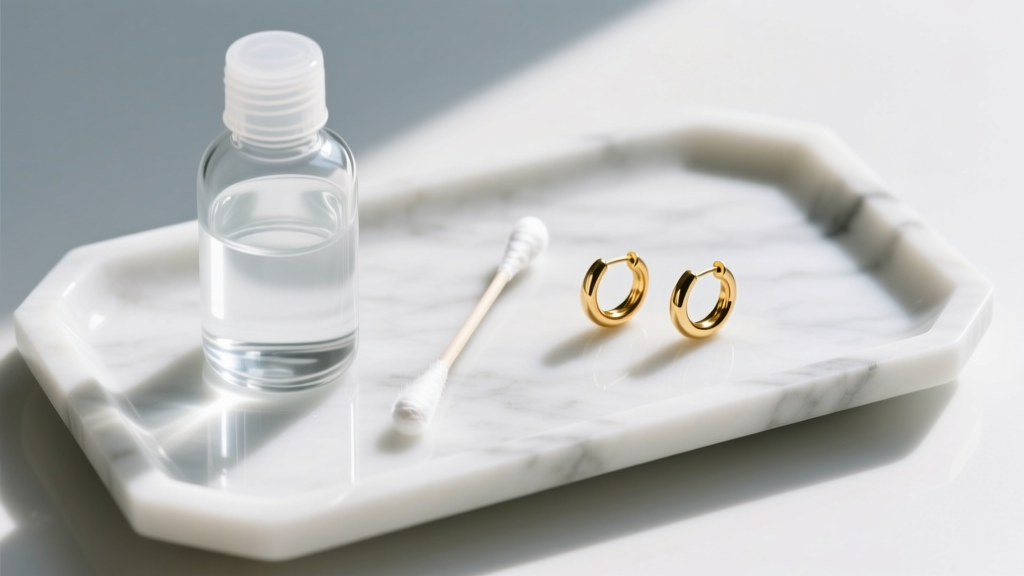
Eliminating the smell requires a shift in both your jewelry hardware and your maintenance routine. Ditch the harsh chemicals and upgrade your materials with this actionable, expert-backed protocol:
- Switch to Threadless or Internally Threaded Ends: Eliminate butterfly backs entirely. Threadless push-pin ends (where a bent pin snaps securely into a hollow post) provide a smooth, seamless surface that leaves no room for debris to hide. They also allow the fistula to breathe.
- Upsize Your Gauge for Heavy Styles: If you love the trend of heavy statement dangles, ensure the post or wire is at least 16-gauge (1.2mm) or 14-gauge (1.6mm). This distributes the weight evenly and prevents the cheese-wire micro-tearing effect.
- Implement the 'Dry Fistula' Method: After showering, gently dry the area around your earrings with a clean paper towel or a blast of cool air from a hairdryer. Leaving the fistula damp is the primary catalyst for bacterial overgrowth.
- Use Sterile Saline, Not Alcohol: Never clean your earring holes with rubbing alcohol or hydrogen peroxide. These astringents strip the fistula of its natural lipid barrier, causing the skin to overproduce sebum to compensate, which ironically leads to more odor. Use a sterile 0.9% sodium chloride wound wash once a week to gently flush the tunnel.
'The biggest mistake I see in curated ear styling is the refusal to take jewelry out. Your fistula is a living tunnel of skin. It needs to be flushed, dried, and given high-quality, mirror-polished metals to rest against. Treat your piercings like skincare, not just accessories.' — Master Piercer & Jewelry Stylist
When to Downsize or Switch Styles
If you have upgraded to implant-grade titanium or solid 14k gold, switched to threadless ends, and implemented a proper saline cleaning routine, but the odor persists, it may be time to evaluate the anatomy of your piercing. Sometimes, a piercing is done at an awkward angle, creating a 'pocket' or divot behind the ear where the post sits. This anatomical pocket traps moisture and skin cells regardless of the jewelry material.
In these cases, consulting a professional piercer for a 'downsize'—switching to a shorter post that sits flush against the skin—can eliminate the physical space where debris accumulates. By aligning your styling choices with biological realities, you can maintain a flawless, high-end curated ear that looks as fresh as it smells. Remember, true luxury in jewelry styling is not just about the visual aesthetic; it is about the seamless integration of premium materials with the human body.


