Why Your Earring Hole Smells: Budget Fixes & Material Guide
Discover why your earring hole smells and how to fix it. We assess the true cost of cheap metals vs. implant-grade titanium for odor-free piercings.

The Unspoken Reality of Piercing Odor
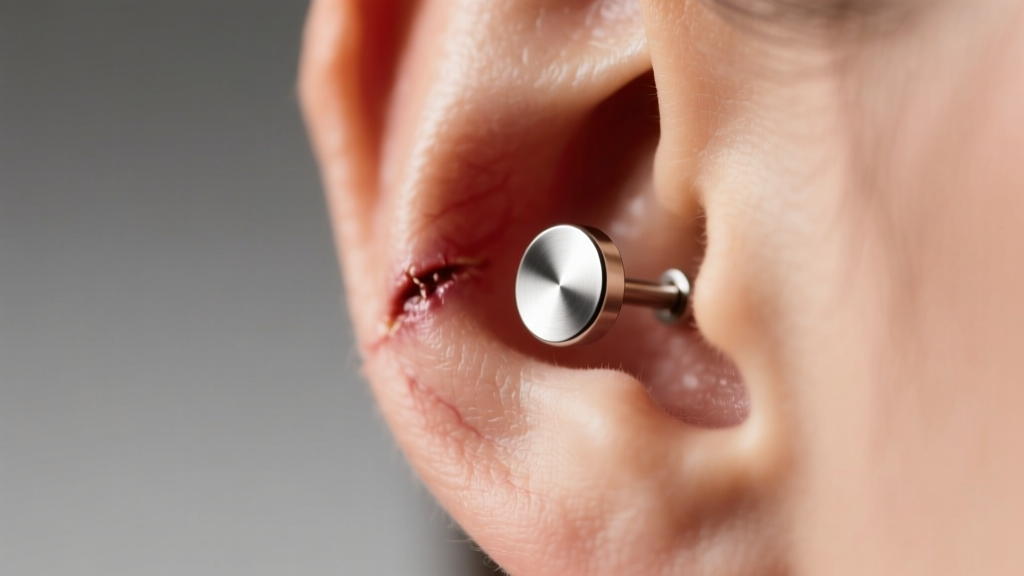
It is one of the most common, yet least discussed, issues in the jewelry world: the unpleasant odor emanating from a healed piercing. Colloquially dubbed "ear cheese," this scent is not a sign of poor hygiene, but rather a biological and metallurgical reaction. If you have ever wondered why your earring hole smells despite regular washing, the answer lies at the intersection of your body's natural sebum production and the elemental composition of your jewelry.
From a budget and value assessment perspective, repeatedly buying cheap earrings that exacerbate this issue is a poor financial strategy. In this guide, we break down the exact science behind piercing odor, evaluate the true cost-per-wear of various metals, and provide a definitive framework for investing in jewelry that keeps your piercings fresh, healthy, and odor-free.
The Biology and Metallurgy of "Ear Cheese"
To understand the financial value of upgrading your jewelry, we must first understand the biological mechanism causing the odor. A healed piercing is a fistula—a tube of skin tissue. Like all skin, the inside of this tube continuously sheds dead epidermal cells and secretes sebum (natural skin oils).
When you wear jewelry, these shed cells and oils become trapped against the metal post. However, the smell is specifically triggered by bacterial breakdown and, crucially, metal oxidation and allergic contact dermatitis. According to the American Academy of Dermatology, nickel allergies affect nearly 18% of the population. When a cheap alloy post touches the sensitive mucosal lining of the fistula, it causes micro-weeping (exudate). This protein-rich fluid mixes with dead skin and bacteria, creating a highly volatile, foul-smelling biofilm.
The Gauge Factor
The thickness of your jewelry also plays a role. Standard lobe piercings are typically 20G (0.81mm) or 18G (1.02mm), while cartilage piercings are often 16G (1.29mm) or 14G (1.63mm). Thicker jewelry leaves less physical space inside the fistula for debris to accumulate, but it requires a perfectly smooth surface finish to prevent micro-tears during insertion, which can otherwise lead to localized swelling and increased sebum production.
The True Cost of Cheap Jewelry: Budget vs. Value Assessment
When consumers experience an odor, the immediate reaction is often to buy more cleaning supplies or replace the earring with another cheap pair from a fast-fashion retailer. This is a classic "sunk cost" trap. Let us evaluate the actual financial and biological value of common earring materials.
| Material Grade | Avg. Price (Pair) | Nickel Content | Odor & Allergy Risk | Long-Term Value |
|---|---|---|---|---|
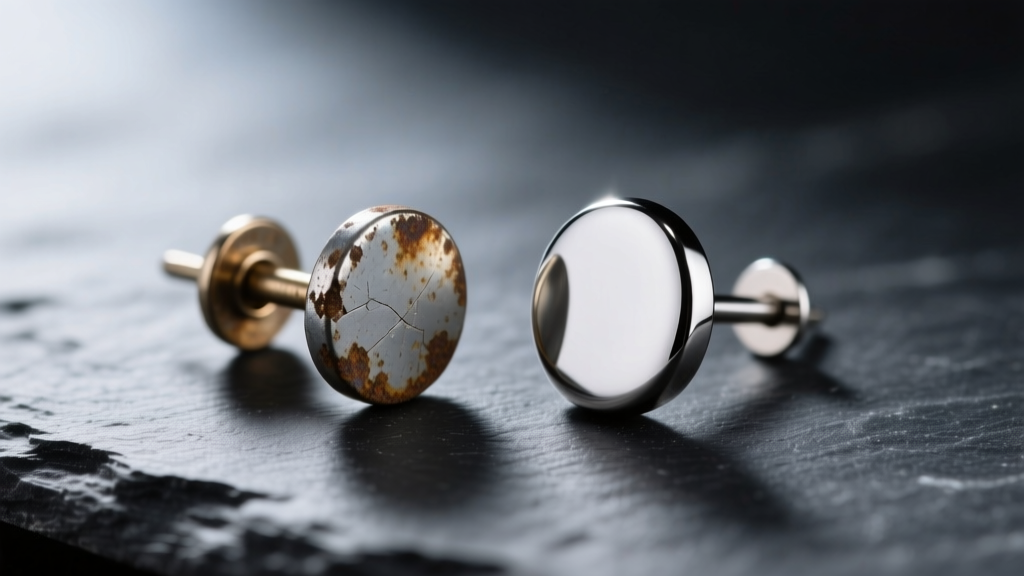
| Zinc Alloy / Brass | $2 - $8 | High (Unregulated) | Extreme (High porosity traps bacteria) | Poor (Tarnishes, causes green skin) |
| "Surgical" Steel (316L) | $10 - $25 | 8% - 10.5% | High (Leaches nickel in humid environments) | Low (Causes chronic fistula irritation) |
| Implant-Grade Titanium (ASTM F-136) | $25 - $50 | 0% (Nickel-Free) | Zero (Highly polished, biologically inert) | Excellent (Lifetime durability, zero odor) |
| Niobium (Unalloyed) | $30 - $60 | 0% | Zero (Excellent for sensitive cartilage) | Excellent (Hypoallergenic, versatile) |
| Solid 14k / 18k Gold | $150 - $400+ | Varies (Avoid white gold) | Low (If alloyed with silver/copper, not nickel) | High (Retains intrinsic monetary value) |
As the data illustrates, the initial savings of purchasing a $5 pair of alloy studs is quickly negated by the cost of topical treatments, replacement jewelry, and the potential medical costs of treating contact dermatitis. Investing $35 in a single pair of ASTM F-136 titanium flat-back labrets yields a drastically superior cost-per-wear and entirely eliminates the metallic catalyst for odor.
Material Deep-Dive: What to Buy to Stop the Odor
To permanently resolve the issue of an earring hole that smells, you must eliminate porous metals and nickel leaching. Here is how to allocate your jewelry budget for maximum biological compatibility.
1. The Budget Champion: ASTM F-136 Titanium
Do not settle for generic "titanium" or "surgical steel." You must look for ASTM F-136 or Ti6Al4V ELI certification. This is the exact grade of titanium used in medical joint replacements. It is entirely nickel-free, non-magnetic, and can be polished to a mirror finish (typically under 0.02 micrometers surface roughness), giving bacteria and dead skin cells nowhere to hide. Brands like Intrinsic Body or NeoMetal offer these in the $30-$45 range, representing the absolute best value in the body jewelry market.
2. The Mid-Tier Alternative: Niobium
If you prefer the darker, gunmetal aesthetic or need highly malleable jewelry for custom-bent ear cuffs and seamless hoops, Niobium is an elemental metal that is completely biocompatible. It is slightly softer than titanium, making it ideal for hoop earrings that need to be adjusted to fit the exact curvature of your helix or conch.
3. The Luxury Investment: Solid Gold (With Caveats)
While solid 14k or 18k gold is a fantastic long-term financial investment, you must be vigilant about the alloy mix. Yellow and rose gold are generally safe. However, many manufacturers alloy white gold with nickel to achieve a silver color. Always verify with the jeweler that their white gold is alloyed with palladium or silver, not nickel. Furthermore, avoid gold-plated or gold-filled jewelry for primary posts; once the microscopic outer layer wears away from the friction of the fistula, the base metal will immediately trigger an odor-causing reaction.
"The term 'hypoallergenic' is a marketing construct, not a metallurgical standard. Always demand specific alloy certifications, such as ASTM F-136, to ensure biological inertness." — Association of Professional Piercers (APP)
Budget-Friendly Cleaning Protocols That Actually Work
Even with implant-grade titanium, sebum and dead skin will naturally accumulate. However, the cleaning method you use can either protect your skin barrier or destroy it, leading to a cycle of overproduction and worse odors.
What to Avoid (The Hidden Costs)
- Rubbing Alcohol & Hydrogen Peroxide: These are far too harsh. They strip the fistula of its natural lipid barrier, signaling your sebaceous glands to overproduce oil to compensate. This leads to a thicker, more pungent buildup.
- Antibacterial Soaps: These disrupt the natural microbiome of the skin, allowing odor-causing anaerobic bacteria to colonize the piercing channel unchecked.
The Optimal, Low-Cost Routine
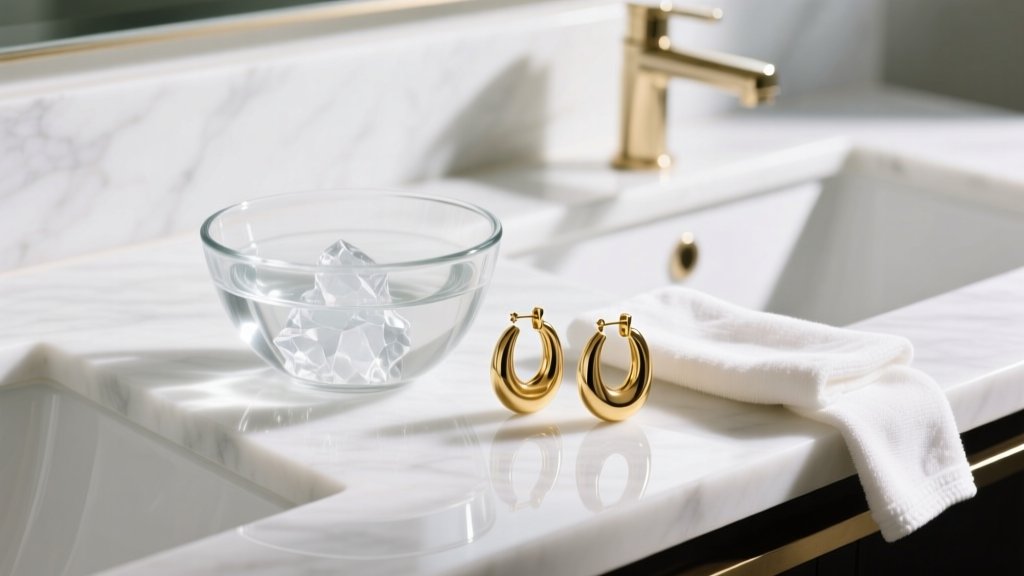
- Daily Saline Rinse: Use a sterile, preservative-free 0.9% sodium chloride wound wash (approx. $5 for a 6oz can). Spray directly onto the jewelry and let it air dry.
- Weekly Emulsification: Once a week, remove your titanium or gold jewelry. Wash the posts with a mild, fragrance-free liquid castile soap (like Dr. Bronner's Unscented Baby). The mild surfactants will bind to the lipid-heavy sebum and wash it away without scratching the metal.
- Ultrasonic Cleaning for the Jewelry: For a one-time budget investment of $25-$35, purchase a consumer-grade ultrasonic jewelry cleaner. Using only warm water and a drop of dish soap, the high-frequency cavitation bubbles will blast microscopic debris out of the threading and gemstone settings of your earrings, restoring them to a factory-new polish.
When to See a Professional: Infection vs. Odor
It is vital to differentiate between standard sebum buildup (which smells similar to aged parmesan or damp earth) and a true bacterial infection. If your piercing is accompanied by localized heat, throbbing pain, spreading erythema (redness), or thick green/yellow purulent discharge, you are likely dealing with a Staphylococcus or Pseudomonas infection.
Do not attempt to treat an active infection by simply changing your jewelry or using over-the-counter antibiotic ointments, which can trap bacteria inside the fistula. The most financially and medically sound decision is to consult a dermatologist or a certified professional piercer immediately. An infection can lead to tissue necrosis or the rejection of the piercing entirely, rendering your previous jewelry investments useless.
Final Assessment: Value Over Volume
The phenomenon of an earring hole that smells is rarely a hygiene failure; it is a material failure. By shifting your purchasing strategy away from high-volume, low-cost fashion jewelry and redirecting that budget toward a curated capsule collection of ASTM F-136 titanium and solid gold pieces, you eliminate the root cause of the odor. You will not only save money in the long run by avoiding constant replacements and skin treatments, but you will also ensure your piercings remain comfortable, healthy, and entirely odor-free for life.


