Barbed Wire Earrings: Technical Guide to Materials & Gauge Sizing
Master the mechanics of barbed wire earrings. Explore implant-grade metals, optimal gauge sizing, and structural design to prevent migration.

The Biomechanics of Asymmetrical Ear Jewelry
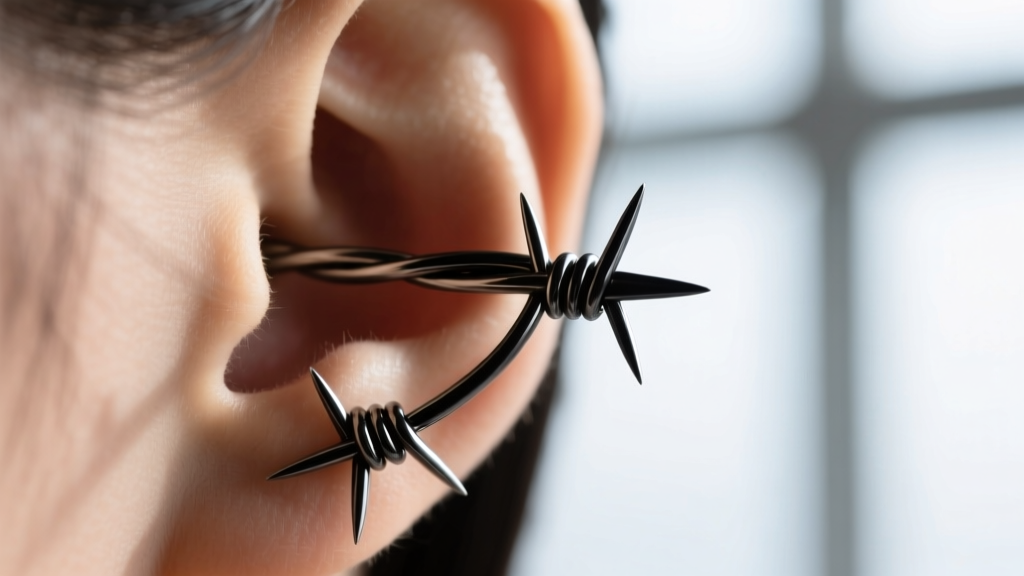
The barbed wire motif in fine body jewelry represents a fascinating intersection of alternative aesthetics and advanced metallurgical engineering. Unlike symmetrical studs or perfectly balanced continuous hoops, barbed wire earrings feature an inherently asymmetrical mass distribution. The design typically consists of a helical wire wrap punctuated by protruding nodes or 'barbs.' From a biomechanical perspective, this creates a complex lever arm. When the jewelry catches on hair, clothing, or bedding, the protruding nodes multiply the rotational torque applied directly to the fistula (the piercing channel). Understanding these vector forces is critical for both the jeweler manufacturing the piece and the wearer selecting the appropriate gauge and placement.
Metallurgical Standards: What Actually Survives Daily Wear
Because barbed wire designs are heavy and prone to snagging, the material must possess high tensile strength and absolute biocompatibility. The undisputed industry standard for high-end, heavy-gauge body jewelry is implant-grade titanium, specifically ASTM F136. This alloy (Ti-6Al-4V ELI) contains no nickel and features a passive oxide layer that resists corrosion from sebum, sweat, and environmental moisture.
Many mass-market retailers sell barbed wire earrings crafted from 316L surgical steel. While 316L is acceptable for lightweight, short-term wear, it is a metallurgical trap for heavy, continuous-wear pieces. 316L contains between 10% and 14% nickel. The constant micro-movement and friction caused by the heavy, asymmetrical barbed wire design can compromise the skin's stratum corneum, allowing nickel ions to leach into the tissue and trigger Allergic Contact Dermatitis (ACD). According to research published in the Journal of Clinical and Aesthetic Dermatology, nickel remains the most common contact allergen worldwide, making ASTM F136 titanium the only logical choice for complex, heavy ear wraps.
The Importance of Electropolishing
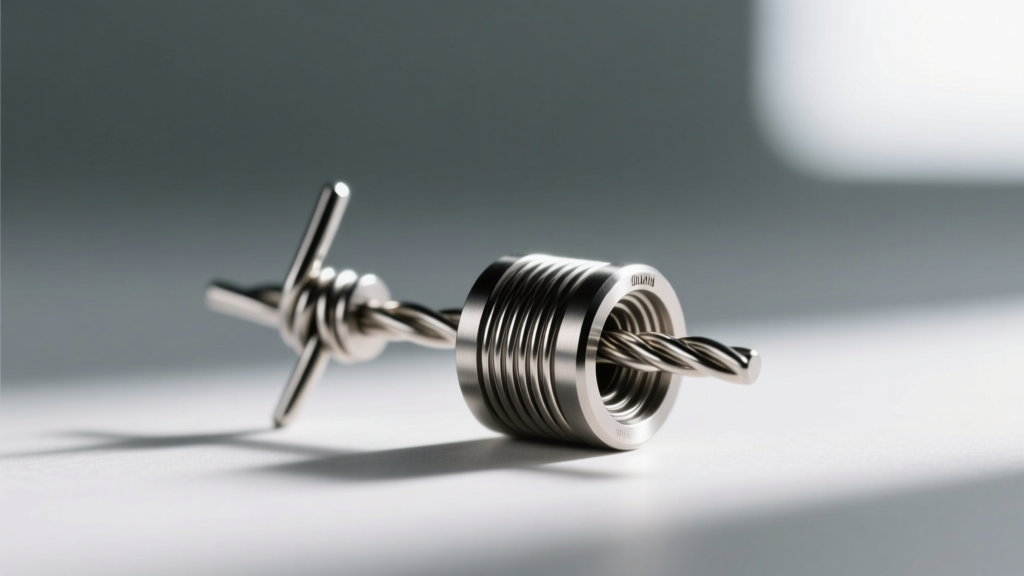
Beyond the base alloy, the surface finish dictates the long-term viability of the jewelry. Standard mechanical tumble polishing leaves microscopic scratches where bacteria and dead skin cells accumulate. Expert machinists utilize electropolishing, an electrochemical process that removes the amorphous surface layer of the titanium, leaving a mirror-smooth, highly passivated finish. This is non-negotiable for barbed wire designs, as the tight helical coils are notoriously difficult to clean manually.
Gauge Sizing and the 'Cheese Cutter' Effect
The most frequent failure mode in heavy alternative jewelry is the 'cheese cutter effect.' This occurs when the surface area of the jewelry post is too small to support the weight and dynamic movement of the decorative end. Physics dictates that Pressure = Force / Area. A standard 20-gauge (0.8mm) wire has a minuscule surface area bearing the load of a 6-gram barbed wire dangle. Over time, the continuous downward and rotational force will slowly slice through the tissue, leading to migration, rejection, or catastrophic tearing of the earlobe or cartilage.
To mitigate this, the gauge must be increased to distribute the load. The Association of Professional Piercers (APP) strictly advises against using thin gauges for heavy or asymmetrical jewelry. Below is the technical framework for sizing barbed wire earrings based on anatomical placement.
| Piercing Location | Minimum Recommended Gauge | Barbed Wire Style Type | Max Weight Tolerance |
|---|---|---|---|
| Standard Lobe | 16g (1.2mm) | Dangle / Drop | 8 grams |
| Helix / Cartilage | 14g (1.6mm) | Cuff / Wrap | 5 grams |
| Conch | 14g - 12g (1.6mm - 2.0mm) | Large Hoop w/ Nodes | 12 grams |
| Industrial | 14g (1.6mm) | Barbell Attachment | 10 grams |
Structural Engineering: Backings and Center of Gravity
The securing mechanism of a barbed wire earring is just as critical as the decorative front. Standard friction backs (butterfly clutches) are entirely inadequate for this style. The asymmetrical weight causes the earring to droop, and the friction back will inevitably slip down the post, leading to loss of the jewelry or the post embedding into the posterior tissue.
Threadless (Push-Pin) vs. Internally Threaded
High-end body jewelry manufacturers utilize two primary systems for heavy pieces:
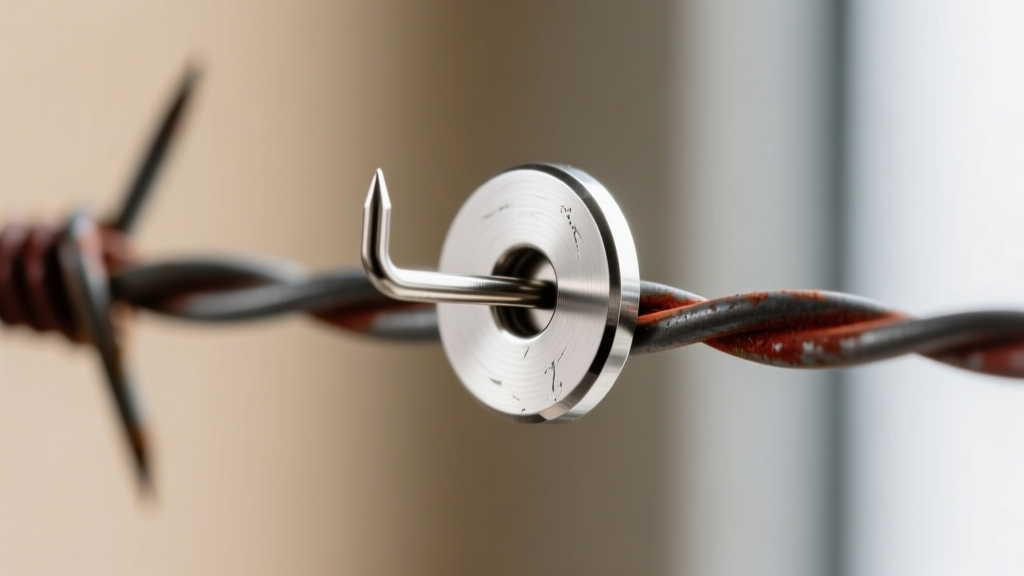
- Threadless (Push-Pin) Systems: The decorative end features a slightly bent titanium pin that inserts into a hollow post. The tension of the bent metal against the inner wall of the post creates a secure, adjustable lock. This is the superior choice for barbed wire cuffs and wraps, as it allows the jeweler to customize the tension based on the exact weight of the piece.
- Internally Threaded Systems: The threading is on the pin attached to the decorative end, which screws into a tapped hole inside the post. This prevents the sharp threads from passing through and damaging the fistula during insertion. While secure, it requires precise alignment and can be difficult to tighten if the heavy barbed wire nodes obstruct finger grip.
Mitigating Snag Hazards and Point Trauma
The defining feature of barbed wire earrings—the sharp, protruding nodes—presents a severe snag hazard. In a clinical or professional environment, these points can easily catch on knitted fabrics, hair, or even cause lacerations to the wearer's neck or face during sleep. Expert jewelers employ specific manufacturing techniques to retain the aggressive visual aesthetic while neutralizing the physical trauma risk.
'Jewelry intended for long-term wear must be free of nicks, scratches, and sharp edges that can harbor pathogens or cause mechanical irritation to the surrounding tissue.' — Association of Professional Piercers Guidelines
To achieve this, manufacturers use bead-tipping, a micro-soldering technique where a tiny, perfectly smooth sphere of titanium or 14k gold is fused to the apex of each 'barb.' Alternatively, the nodes are heavily rounded during the CNC milling process and finished with a vibratory tumbler using ceramic media, ensuring the points are blunt enough to glide over fabric rather than hook into it.
Expert Sourcing and Price Benchmarks
Authentic, structurally sound barbed wire earrings require precision CNC machining or expert hand-forging, followed by rigorous quality control. When sourcing these pieces, expect the following market benchmarks for 2026:
- Mass-Market / Dropshipped (316L Steel, 18g-20g): $15 - $35. Verdict: Avoid. High risk of tissue tearing and nickel allergy.
- Mid-Tier Boutique (ASTM F136 Titanium, 16g, PVD Coated): $65 - $120. Verdict: Acceptable for healed lobes, provided the backing is upgraded to a threadless system.
- Premium Custom Machinist (Solid 14k Gold or Niobium, 14g, Internally Threaded): $250 - $600+. Verdict: The gold standard for cartilage wraps and permanent installations.
By prioritizing implant-grade metallurgy, respecting the physics of gauge sizing, and demanding precision-engineered backing systems, you can safely integrate the aggressive, striking aesthetic of barbed wire earrings into a curated, long-term jewelry wardrobe without compromising the structural integrity of your piercings.


