Large Gold Flower Earrings: Troubleshooting Sag & Weight
Struggling with heavy floral jewelry? Learn how to troubleshoot sagging, post bending, and skin irritation from large gold flower earrings.

The Physics of Lobe Sagging: Why Statement Florals Pull
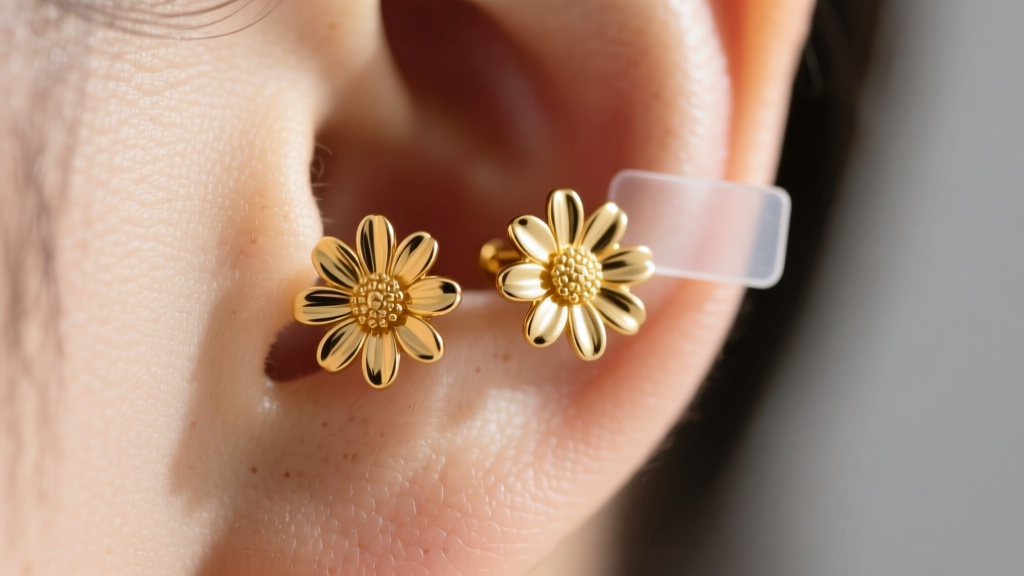
Large gold flower earrings are a timeless staple in 2026 jewelry trends, offering a bold, sculptural aesthetic that frames the face beautifully. However, their expansive surface area and solid metal construction introduce a significant structural challenge: weight distribution. A standard 30mm to 40mm floral statement earring crafted in solid 14k or 18k gold can easily weigh between 8 and 14 grams per piece. The average human earlobe begins to experience micro-tearing and permanent elongation when subjected to a constant downward pull exceeding 6 to 8 grams. When you wear heavy floral designs without proper support, the post acts as a lever, tilting the flower forward and stretching the piercing fistula over time.
Troubleshooting this issue requires a multi-faceted approach that addresses the earring's backing, the post's metallurgical hardness, and the physical support of the earlobe tissue itself. Below, we break down the exact failure modes of heavy floral earrings and provide actionable, jeweler-grade solutions to keep your petals sitting perfectly flush against the ear.
Material Breakdown: Solid Gold vs. Vermeil Weight Profiles
Before applying mechanical fixes, it is crucial to understand what your large gold flower earrings are actually made of. The term "gold" is frequently misused in commercial jewelry, and the base material dictates both the weight and the structural integrity of the post. According to guidelines from Jewelers of America, understanding karatage and alloy composition is the first step in troubleshooting jewelry wearability.
| Material Type | Avg. Weight (35mm Floral) | Post Hardness | Estimated Price Range |
|---|---|---|---|
| 14k Solid Gold | 8g - 11g | High (Ideal for posts) | $450 - $850 |
| 18k Solid Gold | 10g - 14g | Medium (Prone to bending) | $700 - $1,400 |
| Gold Vermeil (Sterling Base) | 5g - 8g | Medium-Soft | $90 - $220 |
| Gold Plated (Brass Base) | 4g - 7g | Rigid but brittle | $25 - $75 |
As the table illustrates, 18k gold is significantly heavier and softer than 14k gold due to its 75% pure gold content. If your 18k gold flower earrings are constantly drooping, the post itself may be bending under the weight of the floral head, not just the earlobe stretching.
Troubleshooting Guide: 4 Mechanical Fixes for Heavy Florals
1. Upgrade Your Earring Backings (The Omega & Screw-Back Solution)
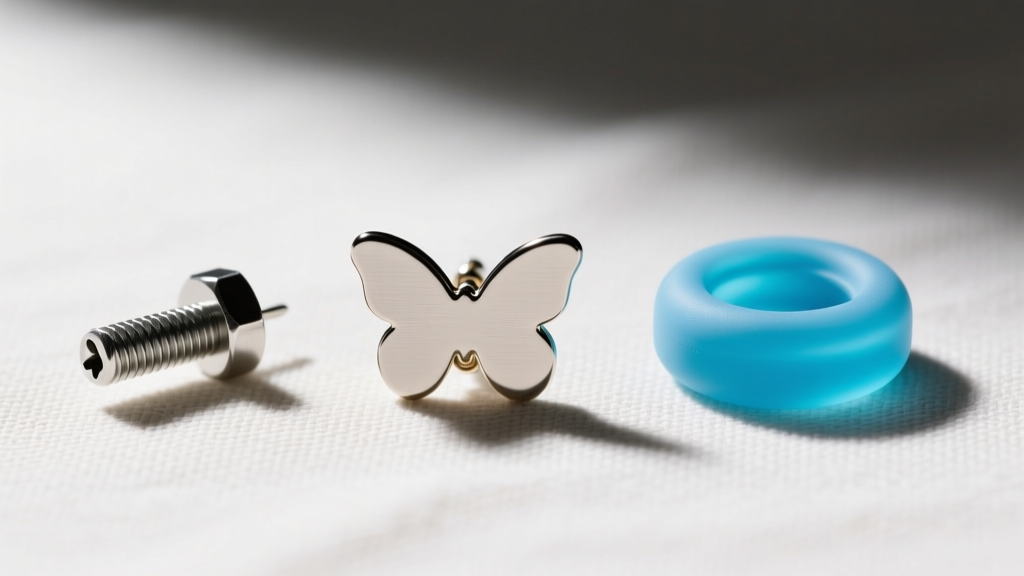
The standard "butterfly" friction clutch is entirely inadequate for large gold flower earrings. Friction clutches rely on a tiny groove on the post and a spring-loaded metal loop, which typically fails to grip securely under loads heavier than 4 grams. When the clutch slips, the earring slides down the post, shifting the center of gravity and exacerbating the forward tilt.
The Fix: Replace friction backs with La Pousette screw-backs or Omega clip-backs. La Pousette backs feature a threaded post and a screw-on clutch that locks the earring flush against the lobe, eliminating forward tilt. Omega backs utilize a hinged, spring-loaded wire that hugs the back of the earlobe, distributing the weight across a wider surface area of the cartilage and lobe base rather than concentrating it solely on the piercing hole.
2. Deploy Invisible Earlobe Support Patches
If the metal hardware is secure but your earlobe tissue is still stretching or turning red, you need to reinforce the biological anchor point. Invisible earlobe support patches (such as LobeWonder or BlingDots) are medical-grade, hypoallergenic adhesive discs with a reinforced central hole.
Application Protocol: 1. Cleanse the back of the earlobe with isopropyl alcohol to remove natural sebum and lotion residue. 2. Apply the adhesive patch directly over the piercing exit hole. 3. Push the earring post through the patch and the lobe. The patch acts as a structural splint, distributing the 12-gram pull of a solid gold sunflower or daisy design across a 15mm radius of skin, virtually eliminating the downward drag on the fistula.
3. Check and Thicken the Post Gauge
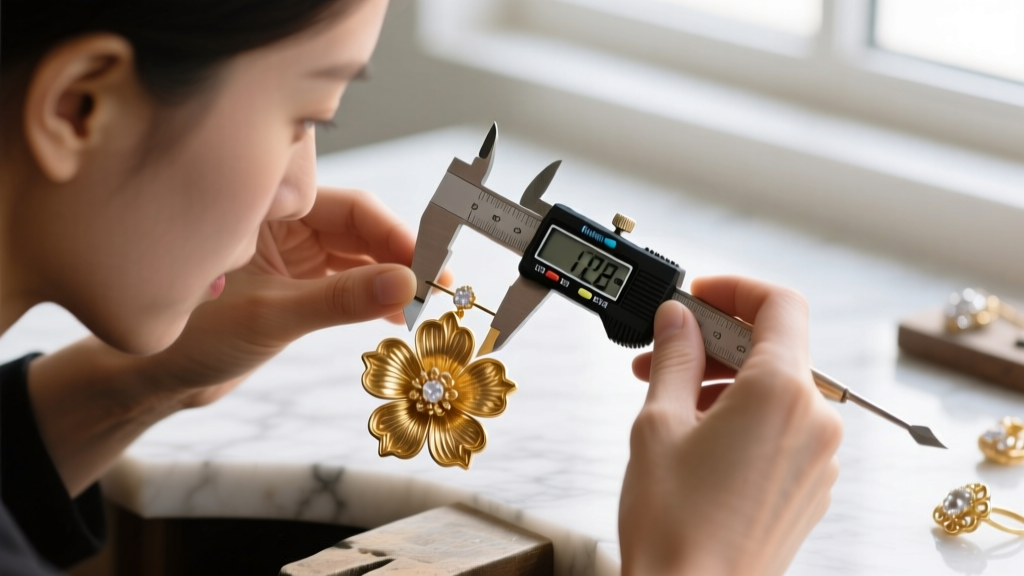
Most commercial earrings are manufactured with a 20-gauge (0.81mm) or 18-gauge (1.02mm) post to save on precious metal costs and fit standard piercings. However, a 20-gauge 14k gold post supporting a 30mm floral face will inevitably bend, causing the flower to sit at a crooked angle.
The Fix: Take your earrings to a bench jeweler and request a post upsizing to 16-gauge (1.29mm) or 14-gauge (1.63mm). This requires the jeweler to laser-weld a thicker, harder alloy post to the back of the flower head. You will then need to have your earlobe piercing gently stretched to accommodate the thicker post, which actually promotes healthier, more robust fistula tissue in the long run.
4. The Silicone O-Ring Stabilizer Trick
For a quick, budget-friendly fix when you cannot replace the backing or the post, use wide silicone O-ring stabilizers. Unlike standard plastic clutches, these flat, disc-shaped silicone backs measure 10mm to 12mm in diameter. They grip the post via friction but provide a wide, soft cushion against the back of the ear, preventing the heavy floral head from digging into the side of your neck or tilting outward.
Allergic Reactions: The "Gold" Illusion and Contact Dermatitis
A frequent troubleshooting complaint with large gold flower earrings is itching, flaking, or weeping skin directly behind the lobe. Many wearers assume they are allergic to gold, but true gold allergies are exceptionally rare. The culprit is almost always nickel or copper used in the alloy mix, or the degradation of a gold-plated brass base.
White gold floral earrings are particularly problematic, as they are often alloyed with nickel to achieve a silvery hue before being rhodium-plated. Once the rhodium wears off the post due to friction, the nickel is exposed to the skin. The American Academy of Dermatology identifies nickel as one of the most common causes of allergic contact dermatitis. If your large white gold flower earrings cause irritation, have a jeweler re-plate the posts in rhodium or, ideally, swap the posts entirely for hypoallergenic implant-grade titanium or platinum.
Maintenance: Cleaning Crevices Without Damaging the Petals
The intricate, overlapping petal designs of large gold flower earrings create microscopic crevices that trap dead skin cells, sebum, and cosmetic products like foundation or hairspray. Over time, this buildup dulls the gold and can cause localized skin infections.
What to Avoid: Never place large gold flower earrings in an ultrasonic cleaner if the center of the flower features a gemstone like an opal, pearl, or emerald. The high-frequency vibrations can shatter these porous or heavily included stones. Furthermore, if the earrings are gold vermeil, ultrasonic waves can strip the thin gold layer right off the sterling silver base.
The Correct Cleaning Protocol: 1. Submerge the earrings in a bowl of warm water mixed with a few drops of mild, phosphate-free dish soap for 10 minutes. 2. Use a brand-new, ultra-soft baby toothbrush to gently agitate the crevices between the gold petals. 3. Rinse thoroughly with distilled water to prevent hard water spot staining. 4. Dry immediately with a microfiber cloth, ensuring no moisture is trapped where the post meets the floral head, which can lead to localized tarnishing on lower-karat alloys.
Summary Checklist for Flawless Wear
- Weight Check: Weigh your earrings; if over 8g, mechanical support is mandatory.
- Hardware: Ditch butterfly clutches for La Pousette screw-backs or Omega clips.
- Tissue Support: Apply medical-grade adhesive lobe patches for all-day wear.
- Post Integrity: Upsize bent 20G posts to 16G or 14G via a professional bench jeweler.
- Allergy Audit: Verify the exact alloy; avoid nickel-heavy white gold posts if dermatitis occurs.
By addressing the physics of weight distribution and the metallurgy of the post, you can comfortably wear large gold flower earrings all day without compromising the health of your earlobes or the structural integrity of the jewelry.


