Earring Hole Styling: 2026 Trends for Stretched Lobes & Gaps
Discover 2026 earring hole styling trends, from stretched lobe material science to curated negative space and multi-hole stacking.

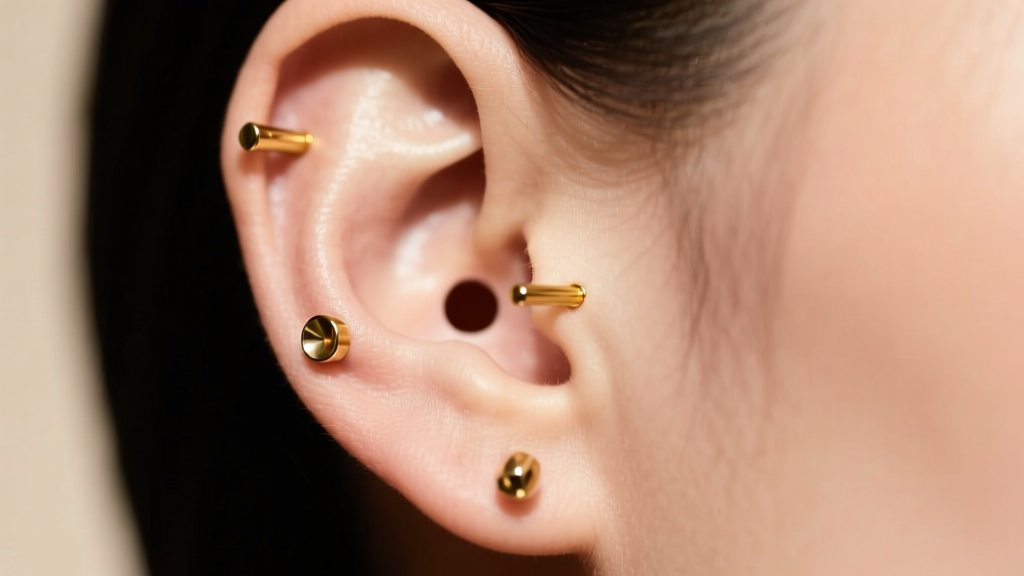
The Evolution of the Earring Hole in Modern Styling
For decades, the standard approach to ear piercing was purely utilitarian: create an earring hole, insert a stud, and hide the puncture when jewelry was removed. However, as we navigate the style landscape of 2026, the earring hole itself has become a deliberate aesthetic choice. Whether through the intentional stretching of lobes, the curation of negative space in multi-piercing stacks, or the architectural precision of parallel placements, the anatomy of the piercing is now just as important as the jewelry it holds.
This shift represents a broader movement in body modification where the 'canvas' is celebrated alongside the adornment. Professional piercers and high-end jewelry designers are collaborating to ensure that the angle, gauge, and healing quality of the earring hole contribute to a cohesive ear curation. In this comprehensive trend analysis, we break down the material science, structural styling, and troubleshooting required to master modern earring hole aesthetics.
2026 Trend Analysis: Intentional Gaps and Negative Space
One of the most prominent trends in contemporary ear curation is the use of 'ghost holes' or intentional negative space. Rather than filling every available earring hole with heavy metals or gemstones, stylists are leaving specific punctures empty—or fitted with ultra-minimalist retainers—to frame surrounding pieces.
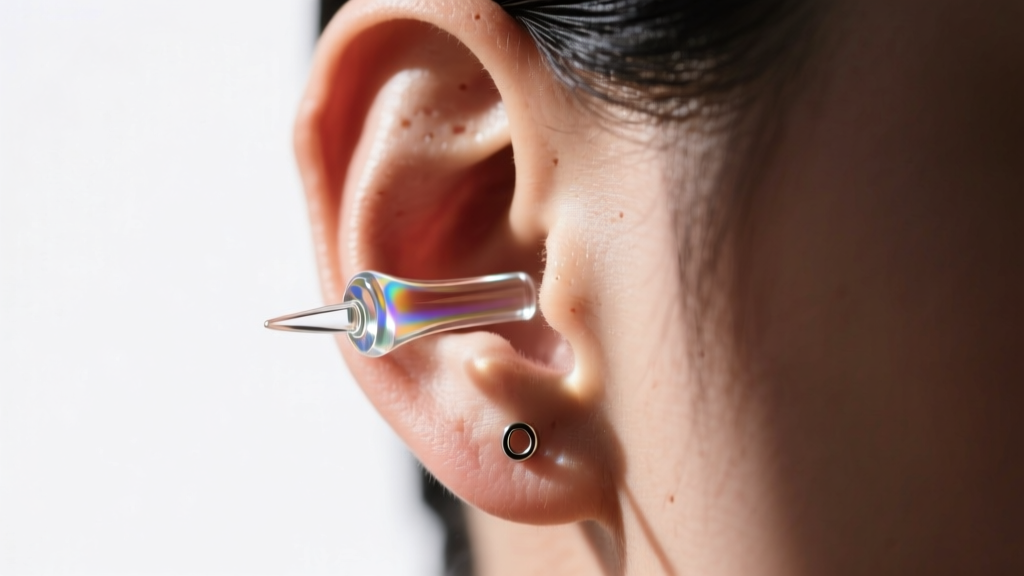
- The Framing Technique: Leaving a middle-lobe earring hole empty draws the eye upward to a conch or downward to a statement lobe cuff, creating visual breathing room.
- Minimalist Retainers: When an earring hole must remain open but visually absent, 18-gauge ASTM F136 titanium glass retainers with matte black O-rings are the industry standard.
- Asymmetrical Balance: Curators are increasingly pairing heavily stacked left ears with a single, stretched earring hole on the right lobe, using negative space to balance visual weight.
This approach requires meticulous planning during the initial piercing phase. A professional piercer will map the ear to ensure that an 'empty' earring hole still aligns perfectly with the geometric flow of the rest of the stack.
Stretched Lobes: Beyond the Standard Gauge
The stretched earring hole has moved firmly from subculture to high fashion. In 2026, the focus is on lobe health, tissue elasticity, and the integration of organic materials. The standard 20-gauge (0.8mm) lobe piercing is now frequently stretched to accommodate statement plugs, tunnels, and ear weights. However, the journey from a standard earring hole to a stretched canvas requires strict adherence to physiological limits.
Gauge Progression and Material Pairings
According to the Association of Professional Piercers (APP), safe stretching requires incremental sizing and biocompatible materials. Below is a breakdown of common stretched earring hole dimensions and their ideal material pairings for long-term wear.
| Gauge Size | Millimeter (mm) | Recommended Material | Best Use Case |
|---|---|---|---|
| 12g | 2.0mm | Implant-Grade Titanium | Initial stretching phases, daily wear |
| 6g | 4.0mm | Borosilicate Glass | Healing stretches, sensitive tissue |
| 2g | 6.5mm | Carved Wood / Stone | Short-term aesthetic wear |
| 0g | 8.0mm | ASTM F136 Titanium | Long-term stability, ear weights |
The 'point of no return'—the size at which an earring hole will not shrink back to a standard piercing—varies wildly by individual tissue elasticity, but is generally considered to be between 0g (8mm) and 00g (9.5mm). Stretching beyond this point should be viewed as a permanent body modification.
Material Science: Why Acrylic is a Failure Mode
Despite its low cost and vibrant color options, acrylic is universally condemned by professional piercers for stretched earring holes. Acrylic is highly porous, harboring bacteria and dead skin cells that lead to chronic irritation and foul odors. Furthermore, acrylic cannot be autoclaved, making proper sterilization impossible. For a healthy earring hole, BVLA and other high-end manufacturers strictly utilize implant-grade materials. Borosilicate glass (Pyrex) is the gold standard for fresh stretches due to its non-porous surface and smooth finish, while ASTM F136 titanium provides the necessary structural integrity for heavy ear weights.
Troubleshooting Common Earring Hole Failures
Even with meticulous care, structural failures can occur, particularly when pushing the boundaries of lobe elasticity. Understanding the mechanics of these failures is crucial for maintaining a healthy earring hole.
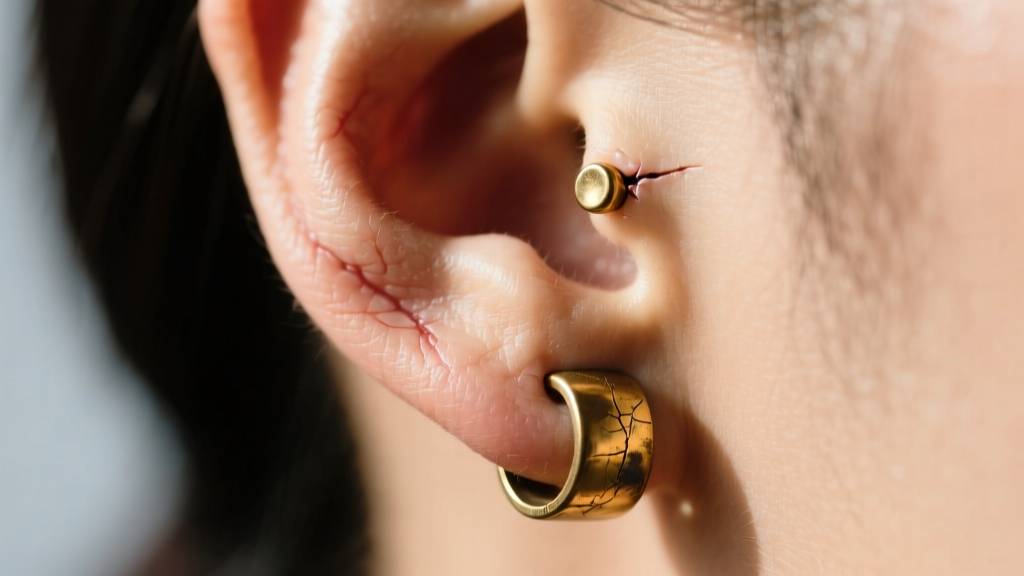
'The most common mistake we see with stretched lobes is the continuous use of heavy ear weights. Weights should be treated like high heels: worn for a few hours for aesthetic impact, then removed to allow the tissue to recover. Continuous wear leads to irreversible lobe thinning and eventual migration.' — Certified APP Piercer
Identifying and Correcting Blowouts
A blowout occurs when the earring hole is stretched too quickly, forcing a ring of scar tissue to extrude from the back of the lobe. This is a critical failure mode that requires immediate intervention.
- Downsize Immediately: Remove the current jewelry and insert a sterilized glass plug 2 to 3 sizes smaller than the current stretch to relieve pressure.
- Tissue Massage: Once the acute inflammation subsides, massage the lobe daily with pure, unrefined jojoba oil to promote cellular turnover and scar tissue breakdown.
- The Taping Method: For future stretches, abandon tapered steel spikes. Instead, wrap 1-2 layers of PTFE (Teflon) tape around a glass plug to incrementally increase the diameter of the earring hole by fractions of a millimeter, allowing the tissue to expand naturally without tearing.
Curating the Perfect Multi-Hole Lobe Stack
When designing a multi-hole lobe stack, the physical placement of the earring hole dictates the success of the entire composition. In 2026, the 'flush stack' is highly sought after. This requires the piercer to use a receiving tube and a hollow needle to ensure that three or four lobe holes are perfectly parallel to the floor and to each other.
If the earring hole angles are misaligned, flat-back labrets will splay outward at conflicting angles, ruining the visual symmetry. Furthermore, the distance between holes must account for the diameter of the jewelry's decorative ends. A standard 3mm gem requires a minimum spacing of 5mm between the earring hole punctures to prevent the settings from overlapping. Precision mapping with surgical markers prior to piercing is non-negotiable for high-end curation.
Final Thoughts on Earring Hole Aesthetics
The modern approach to ear styling recognizes that the earring hole is not merely a void to be filled, but a foundational element of personal architecture. Whether you are embracing the avant-garde appeal of intentional negative space, committing to the slow, mindful process of lobe stretching, or engineering a mathematically perfect flush stack, the health and geometry of your piercings must come first. By prioritizing implant-grade materials, respecting tissue limits, and collaborating with certified professionals, you ensure that your ear canvas remains as striking as the jewelry it displays.


