Mustard Seed Earrings: Sizing, Gauges, and Material Guide
Master the technical details of mustard seed earrings. Explore exact gauge sizes, implant-grade metals, micro-bezel settings, and cartilage fit.

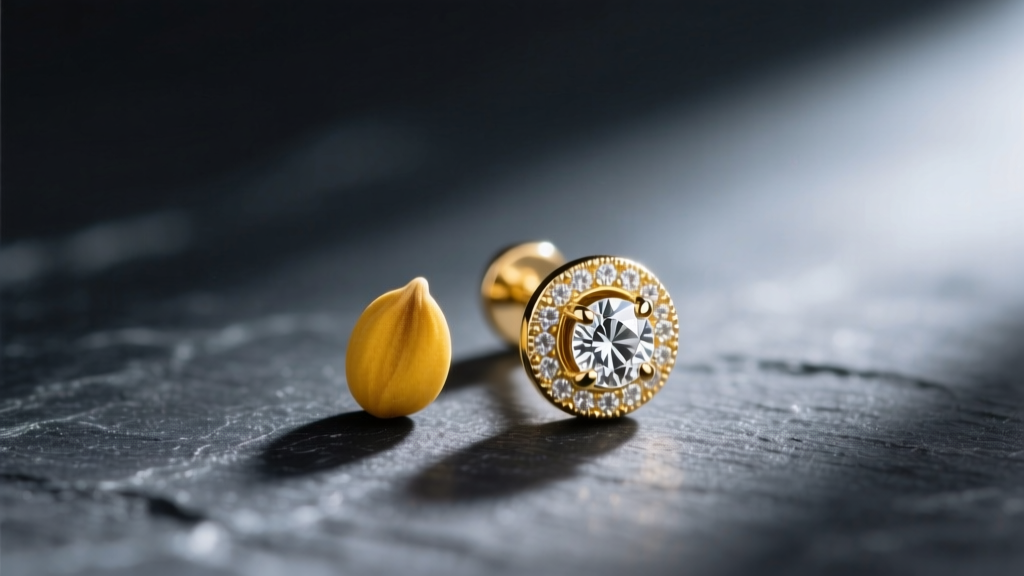
Defining the Mustard Seed Earring
In the specialized lexicon of fine body jewelry, the term 'mustard seed earring' is not merely a marketing buzzword for anything small; it refers to a highly specific micro-stud size class. True to their namesake, these earrings mimic the physical footprint of a literal mustard seed, typically ranging from 1.5mm to 2.5mm in total diameter. While standard diamond studs usually begin at 3.0mm (approximately 0.10 carats), mustard seed earrings occupy the sub-3mm micro-jewelry category. They are engineered specifically for high-density ear curation, secondary and tertiary lobe piercings, and delicate cartilage placements like the tragus, helix, and forward helix.
Designing and manufacturing jewelry at this microscopic scale introduces unique structural challenges. The margin for error in stone setting, post welding, and metal casting is measured in fractions of a millimeter. This technical deep dive explores the exact specifications, metallurgical requirements, and mechanical realities of mustard seed earrings to help you make informed, anatomically correct purchasing decisions.
The Anatomy and Sizing Matrix
Understanding the precise millimeter differences is critical when curating a micro-piercing layout. A half-millimeter variance completely alters the visual weight and physical footprint of the jewelry on the ear.
- 1.5mm (The Micro-Dot): The absolute lower limit for stone-set micro-jewelry. At this size, a diamond or cubic zirconia is roughly 0.015 carats. It reads as a tiny metallic pinprick of light and is exclusively used for tight cluster configurations or ultra-minimalist tragus piercings.
- 2.0mm (The Classic Mustard Seed): The industry standard for this category. A 2.0mm head provides enough surface area for a secure micro-bezel setting while maintaining the delicate, understated aesthetic that defines the style.
- 2.5mm (The Heavy Seed): Approaching the threshold of standard small studs (3.0mm). This size is ideal for primary lobe piercings where the wearer desires a minimalist look but requires a slightly more visible presence from a distance.
Metallurgy and Material Grades for Micro-Jewelry
When the overall surface area of an earring is under 5 square millimeters, material purity becomes a paramount health and safety concern. The Association of Professional Piercers (APP) strictly recommends implant-grade materials for fresh piercings, and this is doubly important for micro-jewelry where localized inflammation can quickly lead to rejection or embedding.
Implant-Grade Titanium (ASTM F136)
For fresh cartilage or lobe piercings utilizing mustard seed studs, Ti-6Al-4V ELI (ASTM F136) is the gold standard. Unlike commercially pure titanium (ASTM F67), F136 offers superior tensile strength, which is vital for the ultra-thin posts required for micro-studs. Furthermore, its virtually zero nickel-release rate prevents the localized contact dermatitis that can cause micro-piercings to swell and swallow the tiny earring head.
Solid 14k and 18k Gold Alloys
For healed piercings, solid gold is highly sought after. However, micro-casting 14k (58.5% gold) or 18k (75% gold) jewelry presents manufacturing hurdles. The alloying metals (copper, silver, zinc, or palladium) must be perfectly balanced to prevent shrinkage porosity during the centrifugal casting process. A microscopic void in a 1.5mm bezel wall will inevitably lead to stone loss. Always purchase micro-gold jewelry from reputable casters who utilize X-ray fluorescence (XRF) testing to verify alloy composition and ensure the complete absence of nickel or cadmium.
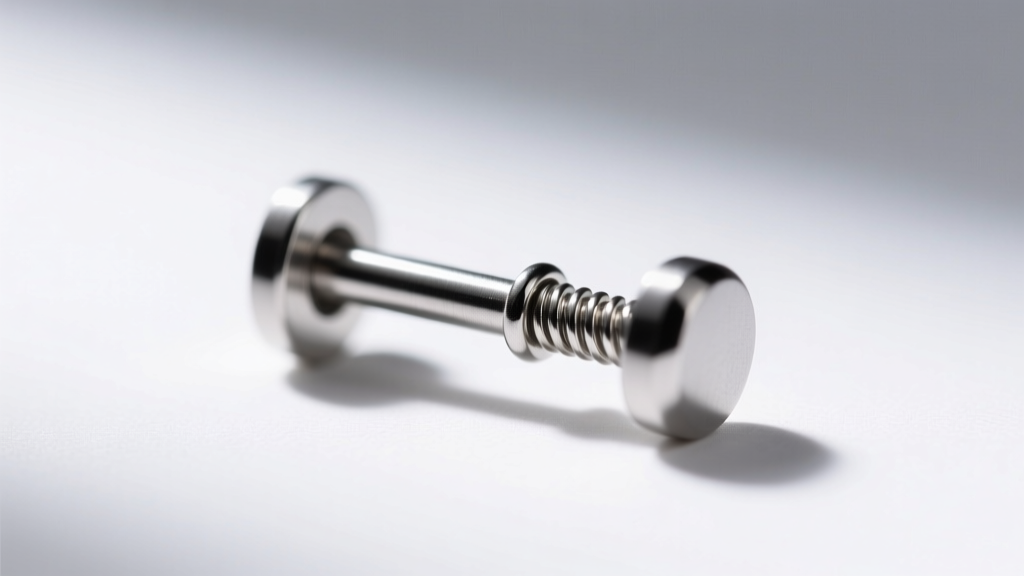
Gauge, Post Length, and Threadless Mechanics
The structural integrity of a mustard seed earring relies heavily on the gauge (thickness) of the post. While 18-gauge (1.02mm) is standard for most cartilage jewelry, micro-studs frequently require a 20-gauge (0.81mm) post. Why? Because an 18-gauge threadless pin takes up too much surface area inside a 1.5mm or 2.0mm head, leaving insufficient metal for the manufacturer to securely crimp the bezel or weld the post.
Technical Fit Matrix
| Piercing Site | Recommended Gauge | Optimal Post Length | Backing Mechanism |
|---|---|---|---|
| Standard Lobe | 20G (0.81mm) | 5.0mm - 6.0mm | Friction Back or Threadless |
| Thick Lobe / Conch | 18G (1.02mm) | 7.0mm - 8.0mm | Threadless Press-Fit |
| Helix / Flat | 18G (1.02mm) | 6.0mm - 7.0mm | Threadless Press-Fit |
| Tragus | 18G (1.02mm) | 5.0mm - 6.0mm | Threadless or Flat-Back Labret |
Note: For threadless (press-fit) systems like NeoMetal or BVLA, the 20G pin relies on a slight bend to create tension inside the hollow post. When working with 1.5mm mustard seed ends, the bend must be exceptionally precise—often less than 15 degrees—to ensure the tiny head sits flush against the skin without popping out under hair tension.
Micro-Setting Technologies: Bezel vs. Prong
Securing a sub-2mm melee diamond or cubic zirconia requires specialized lapidary techniques. The Gemological Institute of America (GIA) notes that melee stones (under 0.18 carats) are typically cut with fewer facets, meaning the setting must maximize whatever light return is possible while prioritizing security.
The Micro-Bezel Setting
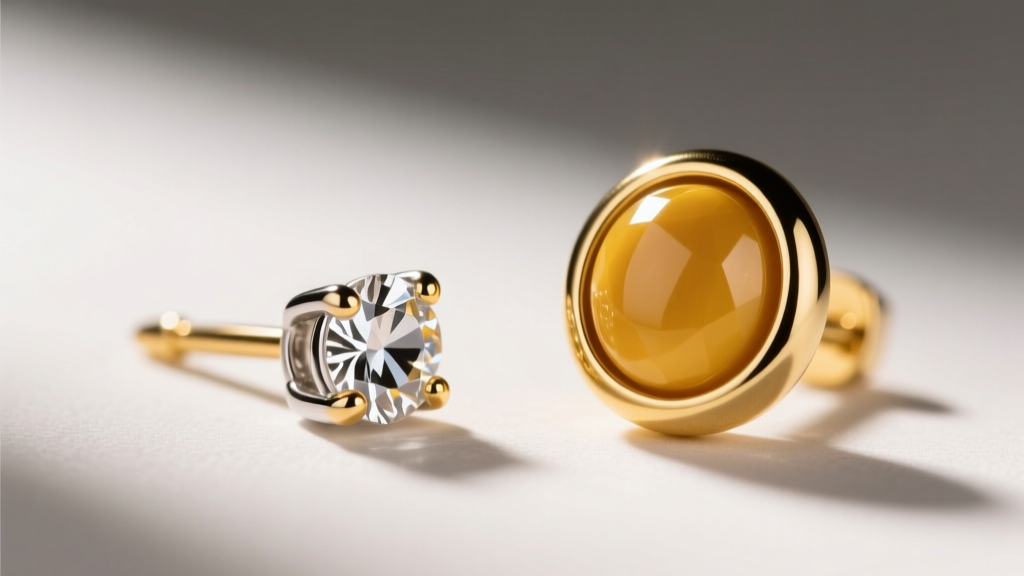
A continuous rim of metal is pushed over the girdle of the stone. For mustard seed earrings, the micro-bezel is the undisputed champion of longevity. It completely eliminates snagging on lace, sweaters, and hair. The trade-off is that the metal rim covers the outer 0.2mm of the stone's crown, slightly reducing the visible diameter and light refraction.
The Micro-Prong Setting
Four microscopic claws hold the stone. While this allows maximum light entry and makes a 1.5mm stone appear closer to 1.8mm, the prongs are notorious for catching on microfiber towels and hair. Over time, the friction can lift a prong, resulting in the loss of the micro-stone. If you choose prong-set mustard seed earrings, they are best reserved for low-traffic areas like the upper helix rather than the primary lobe.
Troubleshooting Micro-Setting Failures
If a stone falls out of a mustard seed earring within the first year, it is rarely due to user error. It is almost always a result of casting porosity (where the metal shrinks away from the stone during cooling) or improper burr usage by the setter. Because the stones are so small, setters must use microscope-mounted settings and 0.3mm carbide burrs. If a jeweler attempts to set a 1.5mm stone without magnification, the bearing cut will be uneven, guaranteeing eventual stone loss.
Pricing Tiers and Value Expectations
Due to the extreme precision required in manufacturing, mustard seed earrings often cost nearly as much as their 3mm counterparts, despite using less raw material. You are paying for the specialized labor and microscopic quality control.
- Tier 1: Titanium & CZ ($35 - $65): Machined from solid ASTM F136 titanium billets with precision-set cubic zirconia. Ideal for initial piercings and those with severe metal sensitivities.
- Tier 2: 14k Gold & Lab-Grown Diamond ($120 - $220): Cast in nickel-free 14k gold. Lab-grown melee diamonds offer identical optical properties to mined stones at a fraction of the environmental cost, making them the smart choice for micro-jewelry where inclusions are invisible to the naked eye anyway.
- Tier 3: 18k Gold & Natural Melee ($250 - $450+): Premium designer pieces featuring VS-clarity natural diamonds set in high-polish 18k gold. The price premium reflects the brand's lapidary expertise and the rarity of high-clarity sub-2mm natural stones.
Expert Care and Maintenance Protocols
Cleaning micro-jewelry requires a departure from standard jewelry care routines. Never place prong-set mustard seed earrings in an ultrasonic cleaner. The high-frequency acoustic cavitation can easily shatter the tiny girdles of sub-2mm stones or vibrate micro-prongs loose.
Instead, utilize a chemical and mechanical approach. Soak the earrings in a solution of warm distilled water and a few drops of pH-neutral dish soap for five minutes to dissolve sebum and cosmetic buildup. Then, use a specialized jewelry cleaning brush with ultra-soft 0.05mm nylon bristles to gently sweep the micro-crevices beneath the bezel or prongs. Rinse with distilled water to prevent hard water spotting, and dry immediately with a lint-free microfiber cloth. For threadless posts, periodically check the tension bend; if the earring feels loose in the piercing channel, remove the end and slightly increase the bend angle of the pin using smooth-jawed nylon pliers.


