Earring Hoop Wire Value: Budget vs Premium Metal Grades
Discover the true value of earring hoop wire. We compare budget vs. premium metal grades, gauges, and cost-per-inch for smart jewelry investments.

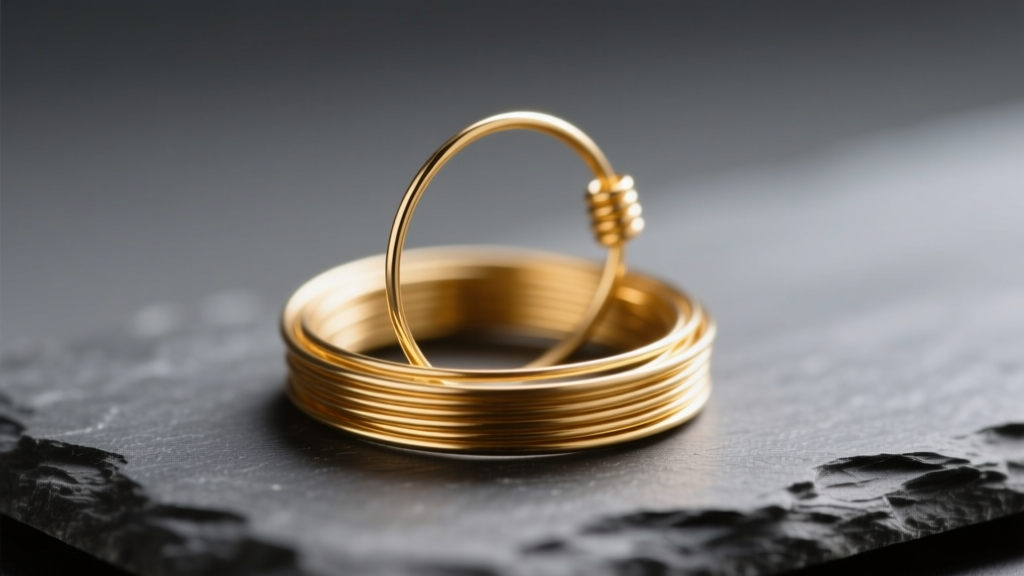
The Hidden Economics of Earring Hoop Wire
When evaluating the true cost and longevity of hoop earrings, most consumers focus entirely on the finished design, overlooking the foundational element that dictates both comfort and durability: the earring hoop wire itself. Whether you are an independent jewelry maker sourcing raw materials or a discerning buyer assessing the structural integrity of a finished piece, understanding the metallurgy, temper, and gauge of hoop wire is essential for making informed financial decisions in 2026.
The market is currently saturated with hyper-cheap, mass-produced hoops that warp within days and cause contact dermatitis. Conversely, premium wire options offer exceptional longevity but require a higher upfront investment. This guide strips away the marketing fluff to provide a rigorous budget and value assessment of earring hoop wire, breaking down exact material grades, structural failure modes, and long-term cost-per-wear metrics.
The Metallurgy of Hoop Wire: Understanding Temper
Before assessing metal types, we must address a critical variable that dictates a hoop's structural memory: temper. Temper refers to the hardness and malleability of the wire, achieved through specific annealing and cold-working processes during manufacturing.
- Dead-Soft: Highly malleable and easily bent by hand. While excellent for wire-wrapping and complex weaving, dead-soft earring hoop wire is a poor choice for standard hoops. It lacks the yield strength to hold its circular shape and will warp the moment the wearer twists it to open the clasp.
- Half-Hard: The industry gold standard for hoop earrings. Half-hard wire has been cold-worked to increase its tensile strength. It is stiff enough to maintain a perfect circle and resist everyday snagging, yet pliable enough to be gently twisted open and closed without snapping.
- Full-Hard: Extremely brittle and rigid. Attempting to open a full-hard hoop to insert it into a piercing will often result in the wire snapping or permanently creasing at the stress point.
Value Insight: Budget manufacturers frequently use dead-soft base metals to reduce tooling wear during mass production, resulting in hoops that lose their shape immediately. Always verify that the earring hoop wire is specified as 'half-hard' for optimal structural longevity.
Metal Grade Breakdown: Cost vs. Longevity
The material composition of the wire is the primary driver of both upfront cost and long-term value. Here is how the most common metals stack up in the current market.
Tier 1: Budget & Base Metals (Brass, Copper, Plated Alloys)
Base metals are the undisputed leaders in sheer volume and low initial cost. Raw brass or copper earring hoop wire typically costs between $0.15 and $0.40 per foot. When plated with a microscopic layer of gold or rhodium, these wires mimic premium metals at a fraction of the price.
The Failure Mode: Plated base metal wire suffers from rapid galvanic corrosion. The friction of inserting the hoop through the earlobe wears away the plating at the post and hinge within weeks, exposing the reactive brass underneath. This leads to rapid oxidation (the dreaded 'green ear' effect) and structural pitting. According to the Gemological Institute of America (GIA), gold plating is measured in micro-inches and is not considered a permanent finish, making it a poor long-term value despite the low entry price.
Tier 2: The Mid-Range Sweet Spot (Gold-Filled, Argentium Silver)
For the best balance of budget and premium aesthetics, 14/20 Gold-Filled (GF) and Argentium Silver wires dominate the market. By Federal Trade Commission (FTC) guidelines, 14/20 GF wire must contain exactly 5% solid 14k gold by weight, mechanically bonded to a brass core under extreme heat and pressure.
At approximately $1.50 to $3.00 per foot for 20-gauge wire, gold-filled earring hoop wire is roughly 10 times more expensive than plated brass, but it offers 100 times the longevity. The gold layer is thick enough to withstand years of daily wear, friction, and polishing without exposing the core. Similarly, Argentium Silver (an alloy containing germanium) costs about 20% more than standard Sterling Silver but is virtually tarnish-proof, eliminating the maintenance costs associated with traditional silver polishing.
Tier 3: Premium & Implant-Grade (Solid 14k/18k, Niobium, Titanium)
Solid gold wire represents the pinnacle of intrinsic value, with 14k half-hard wire costing upwards of $25 to $40 per foot depending on market spot prices. However, for those with severe metal sensitivities, the true premium value lies in ASTM F136 Implant-Grade Titanium and pure Niobium.
Titanium earring hoop wire is incredibly lightweight, highly resistant to corrosion, and completely nickel-free. While raw titanium wire is relatively inexpensive (around $2.00 per foot), the value proposition lies in its biocompatibility. As noted by ASTM International, F136 titanium is the standard for surgical implants, making it the ultimate investment for consumers who suffer from contact dermatitis and cannot tolerate standard alloys.
Gauge Size and Structural Integrity
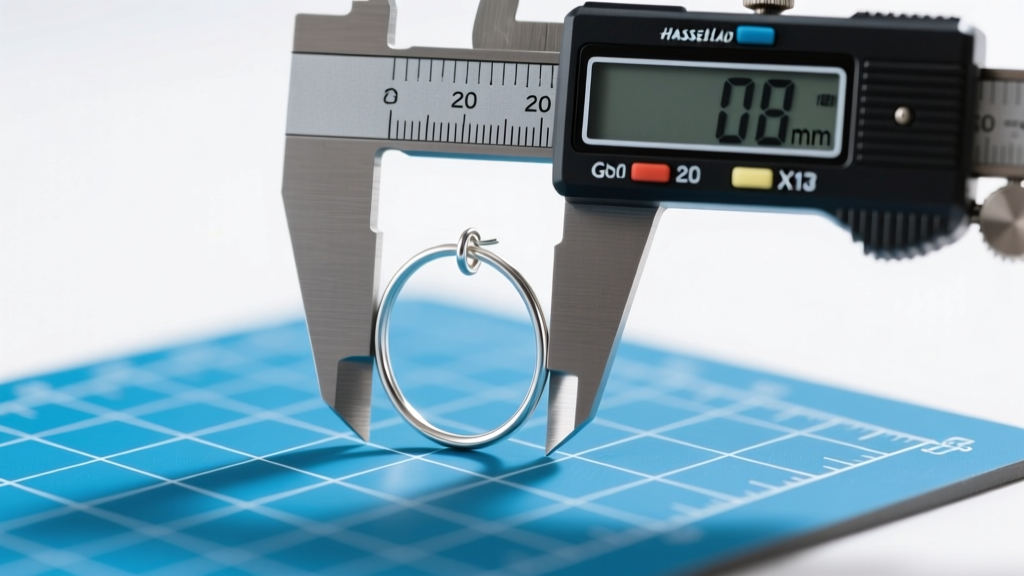
Gauge refers to the thickness of the wire, and it directly impacts both the price (more metal = higher cost) and the functional use-case of the hoop. In the American Wire Gauge (AWG) system, a lower number indicates a thicker wire.
| AWG Size | Millimeter (mm) | Best Use Case | Relative Cost Multiplier |
|---|---|---|---|
| 18 Gauge | 1.02 mm | Large statement hoops (30mm+), heavy structural support, cartilage hoops. | 1.5x Base Cost |
| 20 Gauge | 0.81 mm | Standard everyday hoops (15mm-25mm), huggies, standard lobe piercings. | 1.0x Base Cost (Standard) |
| 22 Gauge | 0.64 mm | Delicate minimalist hoops, lightweight dangles, secondary upper lobe piercings. | 0.7x Base Cost |
Expert Assessment: Many fast-fashion brands utilize 22-gauge or even 24-gauge wire for standard 20mm hoops to save on material costs. This results in a flimsy hoop that easily snags on hair or clothing and bends out of shape. For any hoop exceeding 15mm in diameter, 20-gauge half-hard wire is the absolute minimum requirement for structural viability.
Calculating True Cost-Per-Wear (CPW)
To accurately assess the value of earring hoop wire, we must move beyond the initial purchase price and calculate the Cost-Per-Wear (CPW). Let us compare a budget plated brass hoop versus a 14/20 gold-filled hoop, assuming both are worn three times a week.
The Budget Plated Hoop: Material cost is roughly $0.10. However, the plating degrades and the wire oxidizes within 60 days (approx. 24 wears). CPW = $0.004 per wear. More importantly, the 'failure cost' includes the potential expense of treating an earlobe infection caused by reactive metals.
The 14/20 Gold-Filled Hoop: Material cost is roughly $1.20. Due to the thick gold layer and half-hard temper, the hoop retains its shape and finish for a minimum of 5 years (approx. 780 wears). CPW = $0.0015 per wear.
While the gold-filled wire requires a 1,200% higher upfront material investment, its actual cost-per-wear is less than half that of the budget alternative, completely excluding the aesthetic and dermatological benefits.
Sourcing Smart: Wholesale vs. Retail
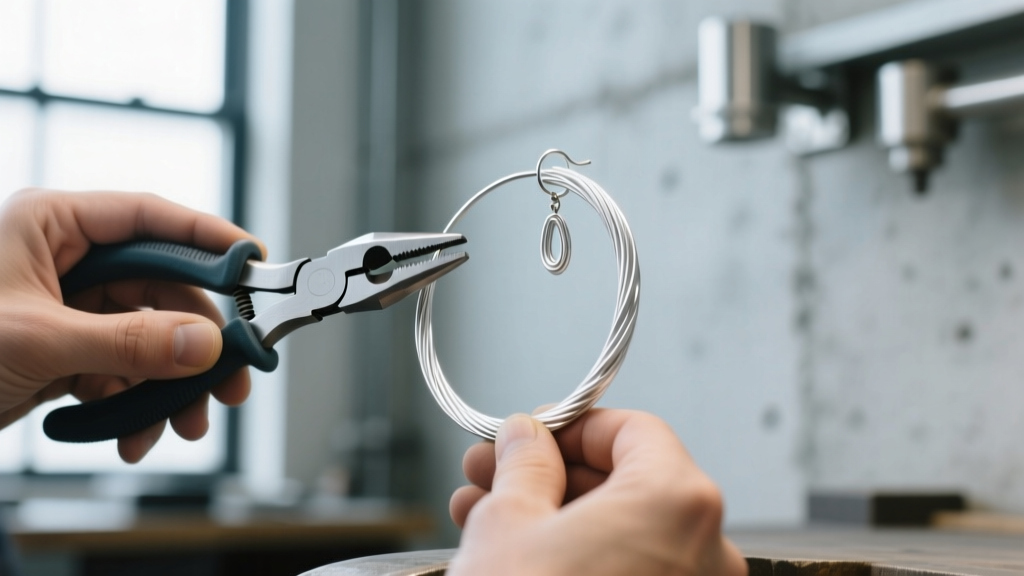
For independent makers and small studios, sourcing earring hoop wire from retail craft stores is a significant value leak. Retail spools are heavily marked up, often costing 300% to 500% more per ounce than wholesale suppliers.
To maximize your budget, establish trade accounts with reputable industrial jewelry suppliers like Rio Grande or Halstead. These suppliers provide exact metallurgical specifications, guarantee the karat weight of gold-filled materials, and sell wire by the troy ounce rather than the foot, drastically reducing the cost-per-inch for high-volume production.
Final Verdict: Which Wire Offers the Best ROI?
If your primary metric is absolute lowest upfront cost for short-term, trend-driven fashion jewelry, 20-gauge plated brass wire remains the default choice. However, for anyone prioritizing long-term value, structural integrity, and skin safety, 14/20 Gold-Filled half-hard wire is the undisputed champion of the mid-market. It delivers the visual warmth and tarnish resistance of solid gold at roughly 5% of the material cost, ensuring that your hoops remain a staple in the jewelry box rather than ending up in the landfill after a single season.


