Earring Keloid Treatment: Safe Metals & Material Properties Guide
Discover how jewelry metallurgy impacts earring keloid treatment. Compare implant-grade titanium, niobium, and gold for sensitive, scar-prone piercings.

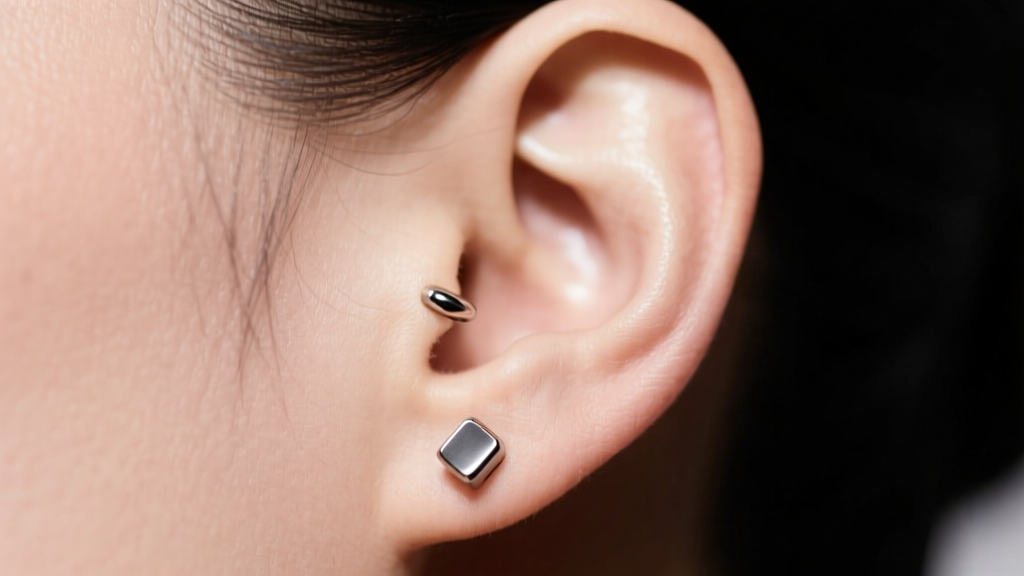
The Intersection of Dermatology and Metallurgy in Keloid Care
When navigating the complex landscape of earring keloid treatment, most patients and even some medical professionals focus exclusively on clinical interventions like intralesional corticosteroid injections (Kenalog), cryotherapy, or surgical excision. However, a frequently overlooked variable that dictates the long-term success of these treatments is the metallurgical composition of the jewelry worn during and after the healing phase. Keloids are the result of an aggressive, prolonged inflammatory response where fibroblasts overproduce collagen. If the earring resting inside the fistula (the piercing channel) continuously triggers micro-inflammation through metal ion leaching or surface porosity, the dermatological treatment is fundamentally undermined.
Understanding material properties is not just about avoiding basic allergic reactions; it is about controlling the localized immune response. According to the American Academy of Dermatology, preventing trauma and chronic irritation to the earlobe is a primary pillar of managing keloid-prone skin. This guide bridges the gap between clinical earring keloid treatment and material science, providing a definitive framework for selecting jewelry that supports, rather than sabotages, your dermatological progress.
Material Properties That Trigger or Aggravate Keloids
To understand why certain metals fail during earring keloid treatment, we must examine three specific material properties: ion release rates, surface porosity, and mechanical hardness.
1. Nickel Ion Release and Sensitization
Nickel is the most common contact allergen in jewelry. When sweat and sebum interact with nickel-containing alloys, the metal corrodes at a microscopic level, releasing nickel salts into the tissue. This triggers a Type IV hypersensitivity reaction. Even if you do not have a known nickel allergy, chronic low-level exposure can cause subclinical inflammation, which signals fibroblasts to produce excess scar tissue. The EU Nickel Directive (EN 1811:2011) limits nickel release to 0.2 μg/cm²/week, but many mass-market earrings far exceed this threshold.
2. Surface Porosity and Biofilm Adhesion
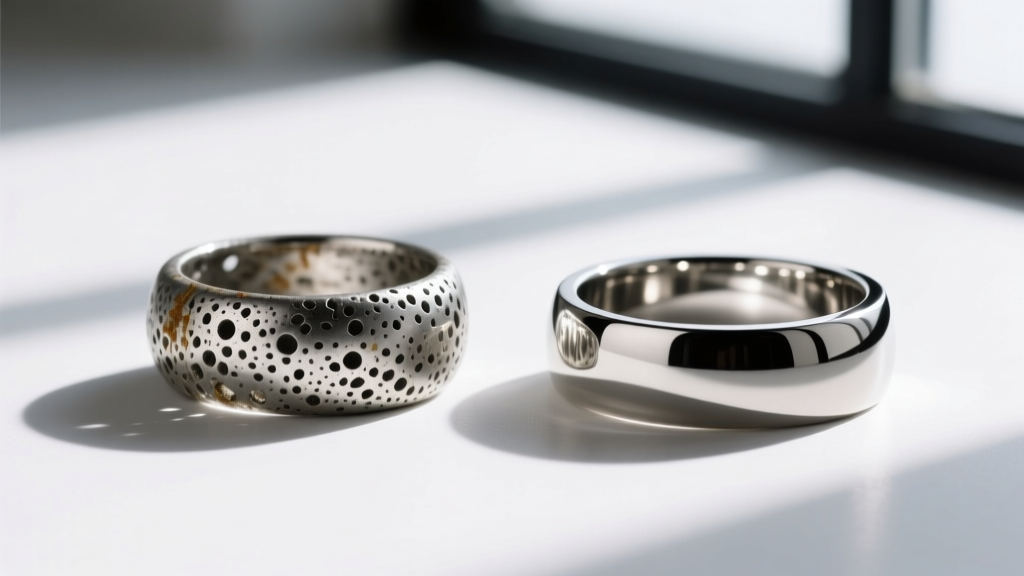
Cheap cast metals and plated jewelry possess microscopic pits and fissures. These imperfections harbor bacteria, such as Staphylococcus aureus and Pseudomonas aeruginosa, allowing them to form protective biofilms. A localized bacterial presence keeps the immune system in a state of high alert, directly fueling the hypertrophic or keloid scarring process.
The Safe List: Implant-Grade Metals for Post-Treatment Wear
When your dermatologist has reduced the keloid mass via steroid injections or excision, the jewelry you use to keep the fistula patent must be biologically inert. Below is a comparison of the only materials recommended during active earring keloid treatment.
| Material | Industry Standard / Grade | Nickel Release | Avg. Price Range | Best Use Case |
|---|---|---|---|---|
| Implant-Grade Titanium | ASTM F136 (Ti-6Al-4V ELI) | Zero / Undetectable | $15 - $45 | First choice for active treatment & fresh excisions |
| Niobium | Unalloyed (99.9% Pure) | Zero | $25 - $60 | Patients with extreme metal sensitivities |
| Solid 14k/18k Gold | Nickel-Free Alloy (Palladium/Silver) | Trace to Zero | $90 - $300+ | Long-term wear post-treatment (avoid in fresh wounds) |
| Fused Silica / Glass | Borosilicate / Quartz | Zero | $10 - $30 | Temporary spacers during cryotherapy or laser sessions |
Deep Dive: Why ASTM F136 Titanium is the Gold Standard
Not all titanium is created equal. Commercially pure titanium (Grade 1-4) is acceptable, but ASTM F136 Titanium (Ti-6Al-4V ELI - Extra Low Interstitial) is the exact alloy used in orthopedic joint replacements and pacemaker casings. The "ELI" designation means that interstitial elements like oxygen, nitrogen, and carbon are strictly minimized, resulting in a metal that is exceptionally corrosion-resistant and biocompatible.
Furthermore, high-quality titanium jewelry undergoes a process called passivation. This involves treating the metal with an acid bath to remove any free iron or machining debris from the surface, followed by the formation of a stable, inert titanium dioxide (TiO2) layer. This oxide layer is what makes the metal completely invisible to the human immune system, ensuring that your earring keloid treatment is not derailed by contact dermatitis.
Metals to Strictly Avoid During Active Keloid Treatment
The jewelry market is rife with misleading terminology. When undergoing earring keloid treatment, you must aggressively avoid the following materials, regardless of how they are marketed:
- "Surgical Steel" (316L / ASTM F138): Despite the clinical-sounding name, 316L stainless steel contains between 10% and 14% nickel. While the chromium oxide layer traps most of it, the high saline environment of a healing or treated fistula can break down this layer, leading to nickel leaching and subsequent keloid flare-ups.
- Sterling Silver (925): Silver is too soft for body jewelry and is alloyed with copper. Copper oxidizes rapidly in the presence of tissue fluids, creating silver sulfide tarnish inside the piercing channel. This causes localized tissue staining (argyria) and chronic irritation.
- White Gold: Traditional white gold is alloyed with nickel to achieve its silver color. Unless explicitly certified as a nickel-free palladium alloy, white gold is a massive liability for keloid-prone ears.
Gauge, Weight, and Mechanical Stress in Keloid Management
Material composition is only half the battle; the physical dimensions of the earring dictate mechanical stress on the tissue. The "cheese-cutter effect" occurs when a thin, heavy earring (like a 20-gauge wire hoop) pulls downward, slicing microscopically through the earlobe. This repetitive micro-trauma is a known catalyst for keloid formation.
During earring keloid treatment, transition to a thicker gauge to distribute the weight. A 16-gauge (1.2mm) or 14-gauge (1.6mm) labret stud or straight barbell provides a wider surface area, drastically reducing point-pressure on the fistula. Furthermore, opt for internally threaded or threadless (push-pin) jewelry. Externally threaded jewelry features sharp, jagged threads that must pass through the delicate fistula tissue, causing mechanical scraping that can trigger a fibroblast response.
Clinical Protocols: Integrating Jewelry Swaps with Treatment
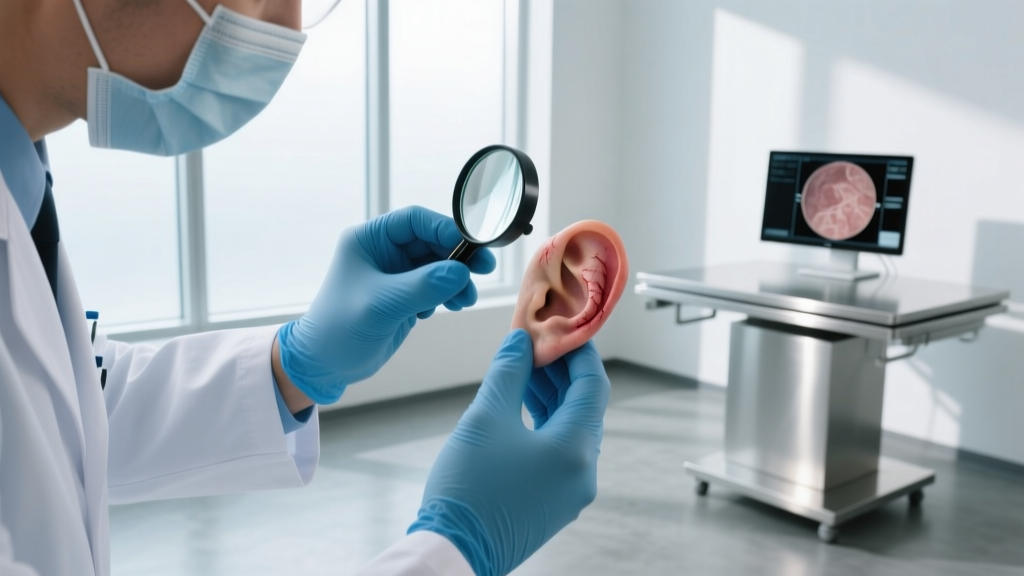
Timing your jewelry changes in tandem with your dermatologist's schedule is critical. If you are undergoing surgical excision of an earlobe keloid, the surgeon will often place a specialized spacer or suture to keep the hole open. According to guidelines from the Association of Professional Piercers, you should never swap jewelry in a fresh surgical wound yourself. Wait until the epithelial layer has sealed (usually 14-21 days post-op) before transitioning to an ASTM F136 titanium flat-back labret.
If you are receiving intralesional steroid injections, the tissue will temporarily soften and swell. A flat-back labret stud with a slightly longer post (e.g., 3/8" or 10mm) accommodates this swelling without compressing the tissue. Compression necrosis (tissue death from tight jewelry) will immediately trigger a new wave of scar tissue formation, negating the steroid injection.
Maintenance and Surface Finishing Protocols
Even the safest metal will cause irritation if the surface finish is compromised. For keloid-prone ears, demand a mirror polish finish. Matte, satin, or sandblasted finishes feature microscopic peaks and valleys that harbor dead skin cells and sebum. A true mirror polish (achieved through mechanical buffing followed by electropolishing) creates a surface so smooth that bacteria cannot easily adhere to it.
To maintain the passivation layer of your titanium or niobium jewelry, clean it using only sterile saline wound wash (0.9% sodium chloride) and avoid harsh chemical cleaners, alcohol, or tea tree oil, which can degrade the metal's protective oxide layer over time. By aligning your jewelry metallurgy with your clinical keloid treatment protocols, you create an environment where the tissue can finally down-regulate its inflammatory response and heal.
Expert Takeaway: Earring keloid treatment is a dual-discipline effort. While your dermatologist manages the biological overgrowth of collagen, you must manage the environmental triggers. Upgrading to ASTM F136 titanium, increasing your jewelry gauge to 14g or 16g to prevent mechanical tearing, and ensuring a mirror-polish finish are non-negotiable steps to prevent recurrence.


