The Earring Latch Back Revival: 2026 Style & Trend Analysis
Discover why the earring latch back is dominating 2026 jewelry trends. Explore styling tips, hinge mechanics, gauge sizes, and top luxury hoop designs.

The Mechanics of the Modern Earring Latch Back
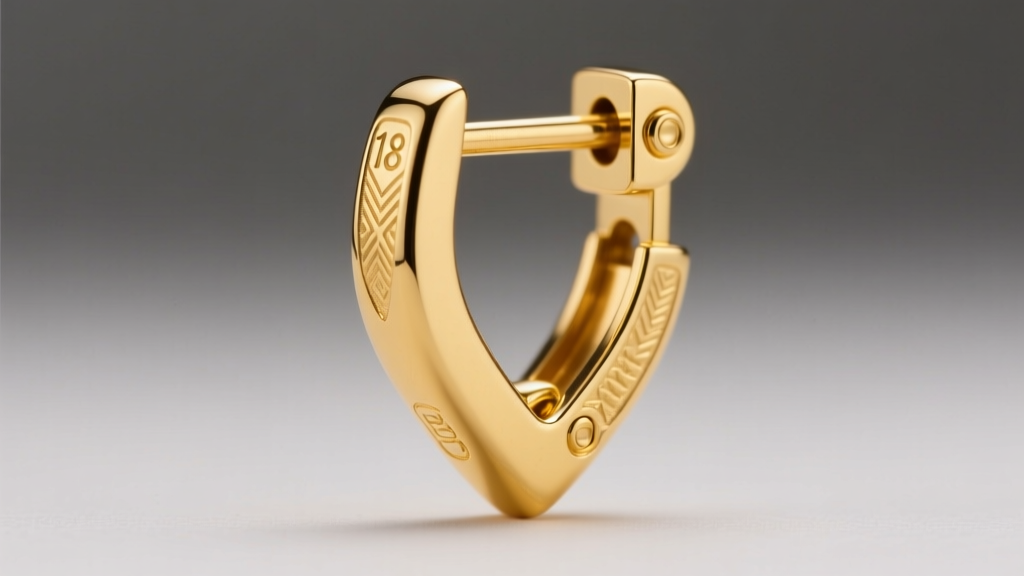
For decades, the earring latch back was relegated to vintage estate jewelry and heirloom hoops. Characterized by a hinged wire post that swings through the piercing and snaps into a notched catch, this closure mechanism was often viewed as secure but mechanically clunky. However, as we navigate the 2026 jewelry landscape, the latch back has undergone a micro-engineering renaissance. Driven by consumer demand for seamless silhouettes and high-security closures for heavy gemstone drops, the modern latch back is now a hallmark of premium craftsmanship.
Unlike the ubiquitous clicker, which relies on a tension-based ring snapping into a hollow tube, a true latch back utilizes a solid wire post that locks into a V-shaped groove. This requires exact tolerances. If the gauge is too thin, the wire bends; if the catch is too shallow, the earring pops open under the weight of a dangle. Today's master jewelers are utilizing CNC micro-milling to cut catches at exact 45-degree angles, ensuring an audible, satisfying snap that guarantees security without sacrificing the visual continuity of the hoop.
Material and Gauge Specifications
The structural integrity of a latch back is entirely dependent on the metallurgical properties of the alloy and the thickness of the wire. You will rarely find a high-quality latch back in anything below 18-gauge (1.0mm). The industry standard for luxury huggies and medium hoops sits firmly at 16-gauge (1.2mm) to 14-gauge (1.6mm).
- 14k and 18k Gold: The undisputed champions of latch back manufacturing. The natural malleability and memory of gold alloys allow the V-notch catch to maintain its grip over years of opening and closing. 14k offers slightly more rigidity, making it ideal for heavier architectural hoops.
- Platinum: Rarely used for traditional latch backs. Platinum's extreme rigidity and density make it difficult to form a micro-catch that won't eventually wear down the post wire through friction. When platinum is used, it is typically in a hybrid hinge system rather than a pure wire-to-catch latch.
- Titanium (Grade 5): Emerging in 2026 for hypoallergenic markets. Because titanium cannot be easily soldered or bent by hand, titanium latch backs are entirely CNC-machined from a single block, resulting in incredibly precise, albeit expensive, geometric closures.
2026 Trend Forecast: The Invisible Seam Movement
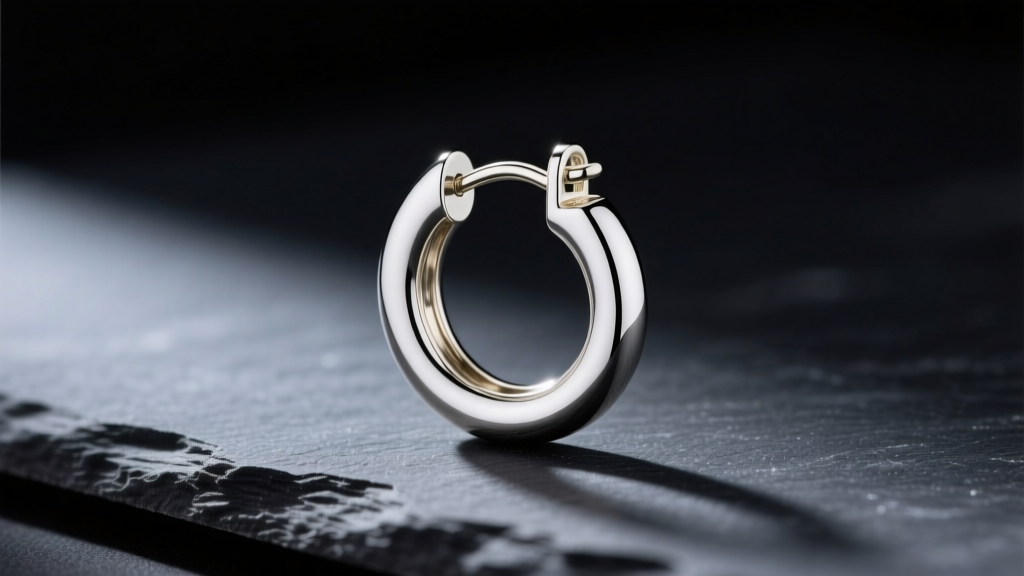
The defining aesthetic of 2026 is the invisible seam. Consumers are rejecting the bulky, visible hardware of early 2010s clickers in favor of continuous, fluid metal lines. The earring latch back is perfectly positioned to dominate this trend. Because the latch wire can be milled to perfectly match the outer diameter and profile of the hoop tube, the closure becomes virtually undetectable when worn.
“The modern consumer views their everyday hoops as a second skin. They want the security of a locking mechanism without the visual interruption of a hinge line. The precision-milled latch back is the only closure that delivers both.” — 2026 Trend Report, Jewelers of America
This trend is most visible in the chunky huggie category. Designers are pairing 12mm to 15mm diameter hoops with a 4mm thickness, utilizing a heavy-duty 14-gauge latch back to support the weight of pavé-set diamonds or solid geometric gold blocks. The result is an earring that feels substantial and secure, yet maintains a sleek, uninterrupted profile against the earlobe.
Comparative Analysis: Latch Back vs. Clicker vs. Friction Back
To understand the market shift, we must analyze the earring latch back against its primary competitors. Below is a technical breakdown of closure mechanisms currently dominating the fine jewelry sector.
| Feature | Earring Latch Back | Hinged Clicker | Friction / Push Back |
|---|---|---|---|
| Mechanism | Solid wire post snapping into a V-notch catch | Tension ring snapping into a hollow tube | Straight post pushed through a friction clutch |
| Security Level | Very High (Resists pulling) | High (Can pop if tube is dented) | Low to Medium (Clutches loosen over time) |
| Ideal Gauge | 16g to 14g (1.2mm - 1.6mm) | 18g to 16g (1.0mm - 1.2mm) | 20g to 18g (0.8mm - 1.0mm) |
| Price Premium | +15% to +30% (Labor intensive) | Standard (Mass produced) | Lowest (Simple stamping) |
| Best Application | Heavy hoops, huggies, drop earrings | Septum rings, thin cartilage hoops | Lightweight studs, basic solitaire drops |
Styling the Latch Back: Face Shapes and Silhouette Matching
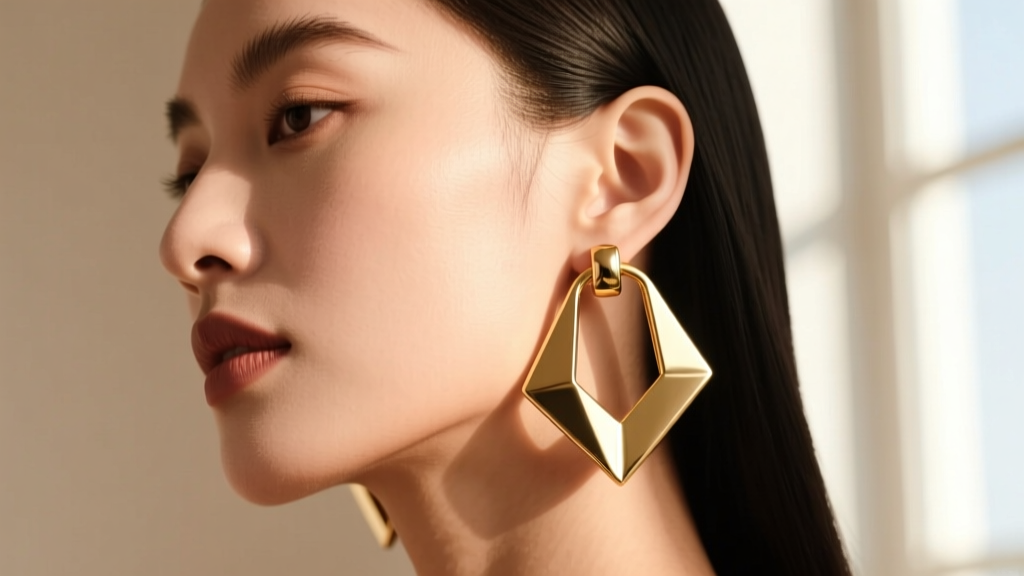
Because the earring latch back is predominantly used in hoops, huggies, and structured drops, styling requires an understanding of how the uninterrupted metal line interacts with facial geometry. The lack of a visible hinge allows the jewelry to act as a pure framing device.
Round and Oval Faces
Opt for elongated drop earrings featuring a latch back at the top of the dangle. The secure closure ensures that heavier geometric pendants hang perfectly plumb, creating a vertical line that lengthens the face. Avoid thick, small-diameter huggies, which can emphasize facial width.
Square and Heart Faces
Medium-sized continuous hoops (20mm to 30mm) with a hidden latch back are ideal. The smooth, circular silhouette softens strong jawlines and balances a narrower chin. The seamless nature of the modern latch back ensures the eye is drawn to the curve of the metal rather than a mechanical joint.
Cartilage and Helix Applications
While traditionally a lobe closure, 2026 has seen a surge in 14-gauge latch back huggies designed specifically for the helix and flat areas of the ear. The secure snap is vital here, as cartilage piercings are more prone to snagging on hair and clothing. A well-calibrated latch back will withstand the friction of daily wear far better than a standard clicker.
Maintenance and Failure Mode Troubleshooting
Despite their robustness, mechanical closures require maintenance. The most common failure mode of an earring latch back is catch fatigue, where the V-notch slowly widens over years of use, resulting in a loss of the signature snap. Here is a professional troubleshooting framework:
- Diagnose the Slack: Close the earring and gently pull the post. If it opens without resistance, the catch is worn. If it resists but lacks the audible click, the post wire may be slightly bent.
- The Nylon-Jaw Fix: For minor slack, use nylon-jaw jewelry pliers to very gently squeeze the sides of the catch together. Never use steel pliers, as they will mar the gold or platinum finish.
- Re-cutting the Notch: If the metal is too fatigued, a bench jeweler must use a micro-bur to re-cut the V-notch. This is a standard, low-cost repair that restores the earring to factory specifications.
- Hinge Pin Inspection: Annually check the microscopic pin holding the hinge. If you see lateral movement, the pin needs to be tightened or replaced before the post detaches entirely.
Investment Pricing and Market Leaders
The precision required to manufacture a flawless earring latch back commands a premium. In the 2026 market, consumers should expect the following pricing tiers for solid gold constructions:
- Entry-Level Fine (14k Gold, 10mm-12mm Huggies): $250 – $450. Brands like Mejuri and Catbird offer excellent entry points, though their catches are often shallower to reduce manufacturing costs.
- Mid-Tier Luxury (18k Gold, Pavé Accents): $800 – $1,800. Designers such as Anita Ko and Maria Tash utilize deeper, hand-finished catches to support the added weight of diamond settings.
- High Jewelry & Bespoke (Platinum/18k, Custom Milling): $3,500+. At this level, the latch back is often integrated into a complex kinetic drop or a fully diamond-encrusted continuous hoop where the seam must be optically invisible.
When investing in fine jewelry, always inspect the closure. According to manufacturing standards outlined by the Gemological Institute of America (GIA), the finishing of the mechanical parts is just as critical as the setting of the stones. Furthermore, the Jewelers of America recommends having all hinged and latched mechanisms professionally ultrasonically cleaned and inspected every 12 months to prevent debris buildup in the catch groove.
Ultimately, the earring latch back has transcended its vintage roots to become a defining feature of contemporary luxury. By prioritizing structural integrity, seamless aesthetics, and micro-engineered precision, this closure mechanism proves that true innovation in jewelry often lies in the details you can feel, rather than just what you can see.


