Earring Padlock Backs & Charms: Metal Properties Guide
Compare metals for earring padlock backs and charms. Discover how titanium, gold, and platinum perform in tension, durability, and skin safety.

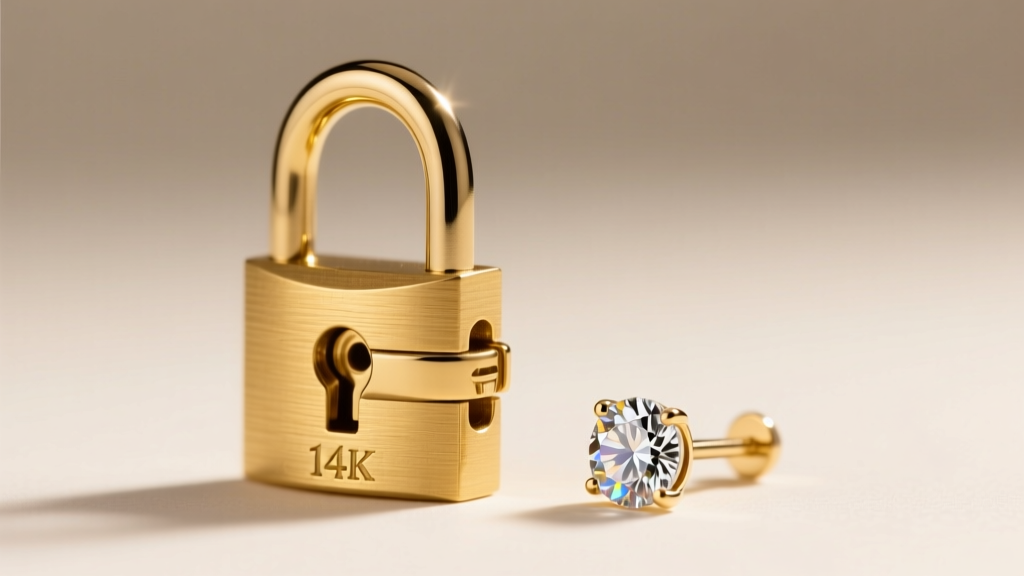
When securing high-value diamond studs or ensuring children's jewelry stays safely in place, the earring padlock mechanism is the gold standard of micro-engineering. Unlike standard friction butterfly clutches that rely on easily deformed tension arms, a true earring padlock utilizes a mechanical latch, hinge, and sometimes an internal micro-spring to physically lock the post in place. However, the longevity and security of these mechanisms are entirely dependent on the metallurgical properties of the materials used. As of 2026, advancements in CNC micro-milling have expanded the material possibilities, but fundamental metal properties still dictate which alloys survive daily wear and which fail catastrophically.
The Anatomy of an Earring Padlock Mechanism
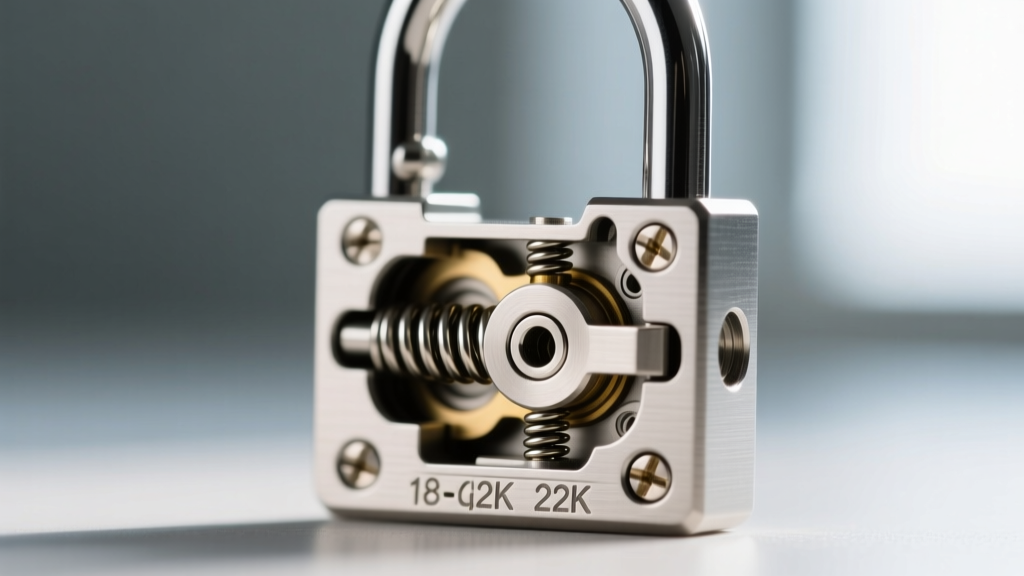
To understand material requirements, we must first break down the anatomy of the earring padlock. A standard locking mechanism consists of four critical components:
- The Post Receiver (Body): The hollow barrel that accepts the earring post, typically machined to a tolerance of 0.05mm for 20-gauge (0.81mm) or 18-gauge (1.02mm) posts.
- The Latch/Clasp: The moving door that swings shut to block the post from exiting.
- The Hinge Pin: The microscopic axis allowing the clasp to rotate, bearing the brunt of mechanical shear stress.
- The Tension Spring (Optional): A micro-coil or leaf spring that provides the 'snap' and holding tension when the padlock clicks shut.
Because these components are incredibly small, the metal must possess high yield strength to prevent warping, excellent fatigue resistance to survive thousands of open-close cycles, and biocompatibility to prevent contact dermatitis in the sensitive retroauricular area (behind the ear).
Material Comparison: Metals Used in Padlock Earrings
Not all precious metals are created equal when subjected to mechanical stress. Below is a comparative analysis of the most common metals used in earring padlock manufacturing, highlighting their mechanical properties and market positioning.
| Metal / Alloy Grade | Yield Strength (MPa) | Springback & Fatigue | Hypoallergenic Profile | Avg. Price Range |
|---|---|---|---|---|
| Implant-Grade Titanium (ASTM F136) | ~830 MPa | Exceptional | 100% Nickel-Free | $40 - $120 |
| 14K Gold (585 Alloy) | 200 - 400 MPa | Moderate | Low (if Nickel-Free) | $150 - $400 |
| 18K Gold (750 Alloy) | 150 - 250 MPa | Poor (Prone to Creep) | Very Low Risk | $250 - $800 |
| Platinum (950 Pt / Ru) | 120 - 170 MPa | Low (Work-Hardens) | 100% Hypoallergenic | $500 - $1,500 |
| Surgical Steel (316L) | ~290 MPa | Good | High Risk (Contains Nickel) | $10 - $30 |
Deep Dive: How Specific Metals Perform in Locking Mechanisms
Implant-Grade Titanium (ASTM F136)
Titanium is the undisputed champion of mechanical function in micro-jewelry. Specifically, ASTM F136 (Ti-6Al-4V ELI) offers a yield strength nearly four times that of platinum. When used for the internal leaf springs or tension arms of an earring padlock, titanium resists metal fatigue almost indefinitely. Furthermore, modern 5-axis CNC machining allows manufacturers to mill titanium padlock bodies with zero porosity, ensuring the hinge pin never snaps under lateral pressure. The only drawback is color; titanium cannot be alloyed to achieve the warm hues of yellow or rose gold, limiting its use in high-end aesthetic charms unless anodized or PVD-coated.
14K vs. 18K Gold Alloys
Gold is traditionally cast, but casting introduces microscopic porosity that is fatal to moving hinges. According to the Gemological Institute of America (GIA), the alloying metals used in gold (copper, silver, zinc) drastically alter its mechanical properties. 18K gold (75% pure gold) is too soft for the internal spring of a padlock mechanism; it suffers from 'metal creep,' where the tension arm slowly bends out of shape over time, causing the lock to fail. 14K gold (58.5% pure gold) is significantly harder and more suitable for the structural body and latch of the padlock. However, buyers must verify that the 14K alloy is nickel-free, as nickel is sometimes used to increase hardness in white gold, posing a severe allergy risk.
Platinum (950 Pt)
Platinum is incredibly dense and highly resistant to tarnish, making it a premium choice for the outer body of a padlock charm or huggie clasp. However, platinum is malleable and work-hardens. If used for the internal clicking mechanism, the repeated stress will cause the metal to become brittle and eventually snap. High-end jewelers solve this by utilizing a bi-metal construction: a 950 Platinum exterior body housing a titanium or spring-steel internal mechanism. This provides the heirloom aesthetic of platinum with the mechanical reliability required for a secure lock.
Failure Modes: Why Earring Padlocks Break or Jam
Understanding how these mechanisms fail helps in selecting the right material and maintaining them properly. The three most common failure modes include:
- Hinge Shear: Often seen in casted 18K gold or silver padlocks. The microscopic hinge pin develops micro-fractures from casting porosity and shears off when the clasp is forced open.
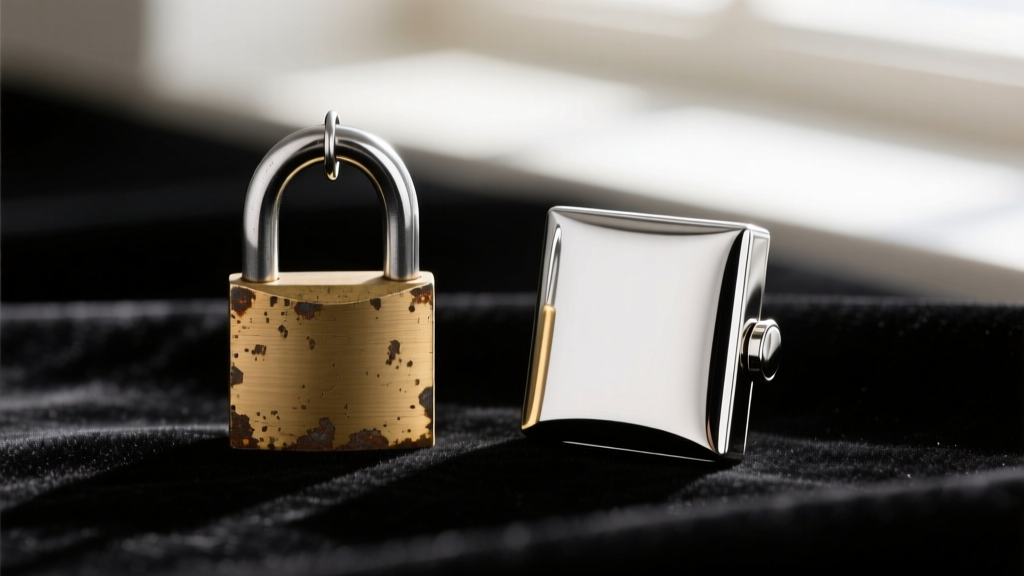
- Galvanic Corrosion: If an earring padlock back made of sterling silver is routinely paired with a surgical steel post, the introduction of sweat (an electrolyte) creates a galvanic cell. This rapidly corrodes the internal receiver, causing the padlock to jam permanently.
- Tension Loss: As mentioned with 18K gold, softer metals suffer from plastic deformation. The clasp will close, but without the necessary tension to grip the post groove, allowing the earring to slide out silently.
Maintenance and Care for Padlock Earring Backs
Because an earring padlock relies on precise mechanical tolerances, debris management is just as critical as material selection. Dead skin cells, sebum, and cosmetic products can compact inside the receiver barrel, preventing the latch from seating fully.
To maintain the mechanism, soak the padlock backs in a mild enzymatic cleaner or warm water with a drop of dish soap once a month. Use a soft-bristled interproximal brush to gently clear the post receiver. Never use ultrasonic cleaners on padlock mechanisms that contain internal micro-springs, as the high-frequency vibrations can dislodge the microscopic hinge pins or warp the tension arms. Additionally, always ensure the earring post and the padlock back are made of compatible metals to prevent the aforementioned galvanic corrosion.
Final Verdict: Choosing the Right Metal
For pure mechanical security and hypoallergenic safety, an ASTM F136 titanium earring padlock is unmatched. It provides the necessary springback and fatigue resistance to last a lifetime. For those prioritizing precious metal aesthetics, 14K gold offers the best balance of hardness and luxury, provided it is CNC-milled rather than cast. Platinum remains the ultimate choice for the exterior charm or huggie body, provided the internal locking mechanics are engineered from a harder, spring-compatible alloy. By prioritizing metallurgical properties over mere appearance, you ensure that your most precious earrings remain securely locked in place.
For more information on metal allergies and jewelry safety, refer to the guidelines provided by the American Academy of Dermatology regarding nickel contact dermatitis, and the Mayo Clinic's overview of metal allergens in wearable accessories.


