Stop Losing Jewelry: Troubleshooting Guide to Earring Bags
Stop losing backs and tangling hoops. Discover expert troubleshooting tips for choosing and using the best earring bags for travel and daily storage.

The Hidden Costs of Poor Earring Storage
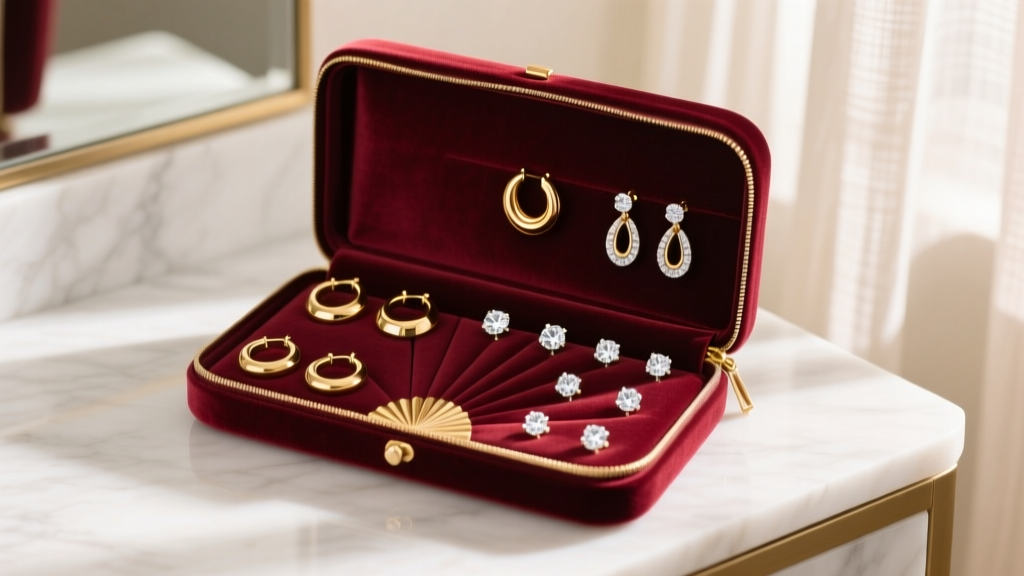
There is a specific, sinking feeling that every jewelry lover knows well. You arrive at your hotel, unzip your travel pouch, and realize that one of your diamond stud earrings is missing. Or worse, you open your daily storage bag to find your delicate gold hoops hopelessly tangled with your silver drop earrings, requiring twenty minutes of painstaking untangling and leaving the metal micro-scratched. The problem rarely lies with the jewelry itself; it lies with the inadequate earring bags we trust to protect them.
Most generic jewelry pouches are designed as afterthoughts—flimsy mesh sacks or single-compartment velvet drawstrings that offer zero structural protection. When you are dealing with high-karat gold, platinum settings, or delicate gemstones, a subpar storage solution is a liability. In this comprehensive troubleshooting guide, we will dismantle the common failures of standard earring bags and provide a structural framework for selecting, packing, and maintaining the right storage solutions for every type of earring in your collection.
Material Science: Preventing Tarnish in Earring Bags
The most insidious threat to your silver and low-karat gold earrings is not physical loss, but chemical degradation. Tarnish occurs when metals react with hydrogen sulfide and moisture in the air, forming a dark layer of silver sulfide or copper oxide. The material of your earring bags plays a critical role in either accelerating or halting this process.
The Danger of PVC Plastics
Never store your fine jewelry in standard polyvinyl chloride (PVC) plastic bags. PVC contains plasticizers and chlorine compounds that off-gas over time. When trapped in a sealed environment, these gases accelerate tarnishing and can actually pit soft metals or degrade the nacre of your pearl earrings. According to the Tiffany & Co. Care Instructions, silver should always be stored in anti-tarnish cloth or airtight, non-abrasive environments that neutralize sulfur exposure.
Anti-Tarnish Fabric Grades
If you are investing in fabric earring bags, look for materials treated with tarnish-inhibiting technology. Brands utilizing Pacific Silvercloth or similar treated flannels embed zinc or silver nanoparticles into the fabric weave. These particles act as a sacrificial anode, absorbing the corrosive sulfur gases before they can reach your earrings. For untreated fabrics, opt for 100% cotton flannel or acid-free tissue linings, and avoid synthetic polyesters that can generate static electricity, attracting dust and micro-abrasives to your gemstones.
| Bag Material | Tarnish Protection | Best Earring Types | Avg. Price Range |
|---|---|---|---|
| Treated Flannel (Zinc) | Excellent (Sacrificial Anode) | Sterling Silver, Oxidized Metals | $15 - $35 |
| 100% Cotton Velvet | Moderate (Breathable) | Gold, Platinum, Diamonds | $10 - $25 |
| Polyethylene (PE) Plastic | Low (Requires Anti-Tarnish Strips) | Costume Jewelry, Acrylics | $2 - $8 |
| PVC Plastic | Negative (Accelerates Tarnish) | None (Avoid Completely) | $1 - $5 |
Troubleshooting Common Earring Bag Failures
Even expensive, well-designed earring bags can fail if their structural mechanics do not align with the specific anatomy of your jewelry. Here is how to troubleshoot the three most common storage disasters.
Problem 1: Stud Backs Slipping Through the Mesh
Mesh earring bags are popular for their visibility, but they are notorious for swallowing earring backs. A standard 20-gauge (0.81mm) earring post paired with a 4mm butterfly friction back can easily slip through a standard 2mm to 3mm mesh weave if the bag is compressed under heavy luggage. The Fix: Upgrade to micro-mesh bags with a weave tighter than 1mm, or switch to solid fabric bags with dedicated button-hole slits. If you must use standard mesh, secure your studs using silicone O-locks or La Pousette backs, which have a wider, bulkier profile that physically cannot pass through standard mesh holes.
Problem 2: Hoops and Dangles Tangling
Drop earrings and large hoops act like grappling hooks inside a single-compartment bag, catching on each other and on the fabric lining. This not only causes tangles but can bend delicate ear wires and scratch soft gemstones like opals or turquoise. The Fix: Utilize earring bags with individual snap-loop compartments or rigid, accordion-style dividers. For hoops larger than 30mm in diameter, they should never share a compartment with any other jewelry piece.
Problem 3: Sharp Posts Puncturing the Bag
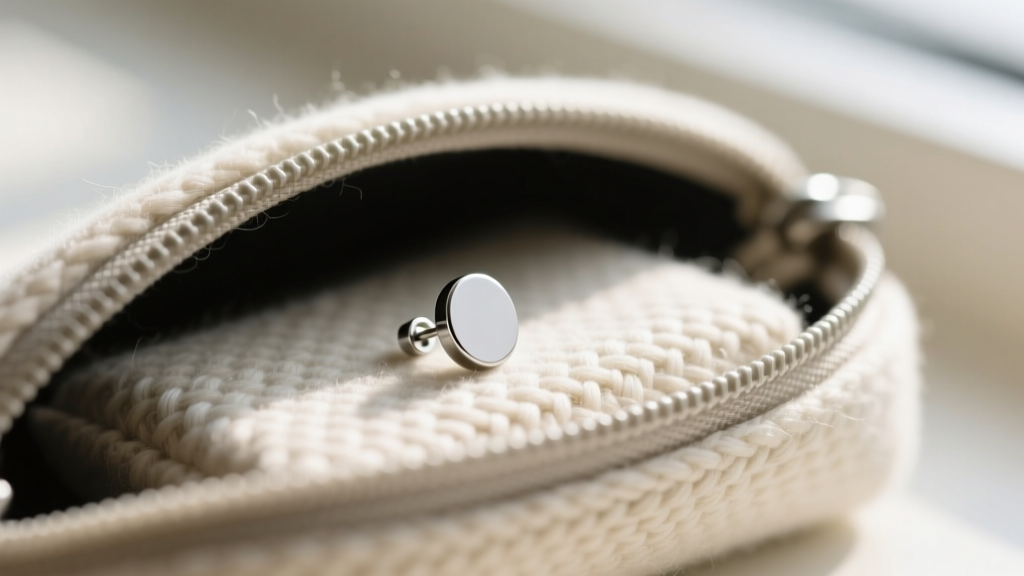
Standard earring posts are essentially blunt needles. When tossed loosely into a soft velvet or silk bag, the posts can easily pierce the fabric, ruining the bag and potentially scratching adjacent jewelry. The Fix: Always cap your earring posts before storage. If you have lost the original backs, use a small piece of floral foam, a specialized silicone post cap, or even a tiny eraser to cover the sharp tip before placing the earring in the bag.
The Ultimate Packing Framework by Earring Type
The Gemological Institute of America (GIA) emphasizes that proper storage is just as critical as regular cleaning for maintaining the structural integrity of fine jewelry. To achieve this, you must pack according to the earring's silhouette.
- Stud Earrings: Fasten the backs securely and push the posts through dedicated fabric slits or a piece of felt. This keeps them upright and prevents the gemstone faces from rubbing against the bag's interior.
- Huggies and Small Hoops: Clasp them shut and interlock pairs together (threading one hoop through the other) before placing them in a zippered micro-mesh pocket. This saves space and prevents them from opening and catching on fabric.
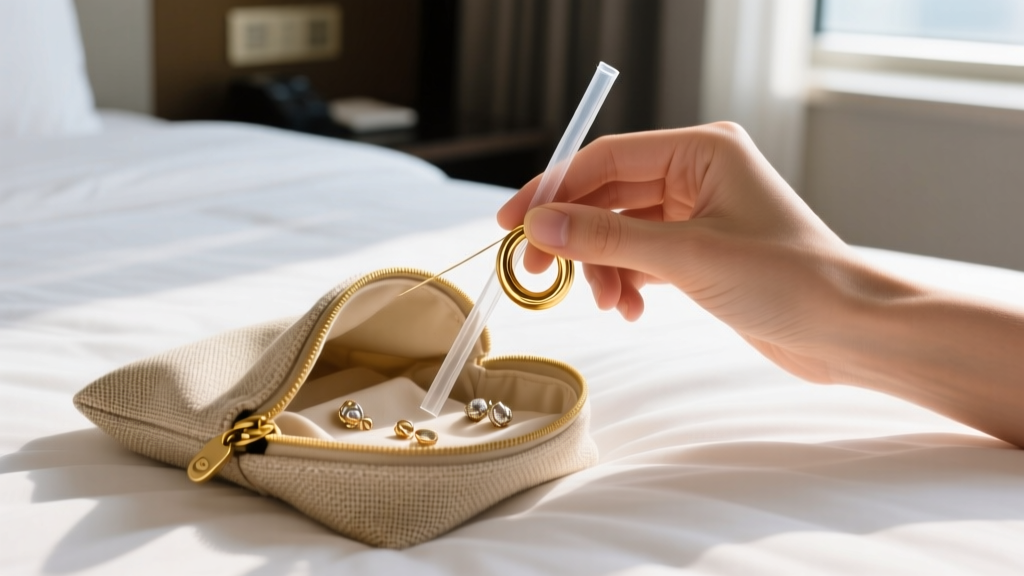
- Large Hoops: Thread the hoop through a hollow plastic drinking straw before clasping it. This rigid barrier prevents the hoop from being crushed or bent if your luggage is compressed.
- Chandelier and Drop Earrings: Wrap the dangling elements in a small square of acid-free tissue paper or anti-tarnish cloth before placing them in a rigid, hard-shell earring case. Soft bags offer insufficient protection against the crushing forces of travel.
DIY Emergency Fixes When You Don't Have a Proper Bag
If you are traveling and realize your earring bags are inadequate, you can improvise highly effective storage solutions using common household or hotel items.
The Button Trick for Studs: Take a standard spare button from a hotel sewing kit. Push the earring posts through two adjacent buttonholes and secure the backs. The button acts as a rigid barrier, keeping the studs separated and making them impossible to lose in the bottom of your suitcase.
The Pill Organizer for Dangles: A daily pill organizer with individual, hinged plastic compartments is an excellent makeshift earring bag. The hard plastic prevents crushing, and the separate compartments eliminate tangling. Just ensure the plastic is clean and dry to avoid moisture buildup.
The Felt Roll for Hoops: If you have a felt laptop sleeve or a thick felt craft sheet, roll your hoops inside it. The friction of the felt will keep the hoops from sliding around, and the thickness of the material provides a cushion against impacts.
Final Verdict: Upgrading Your Jewelry Travel Kit
Troubleshooting your earring storage is not just about organization; it is about asset protection. The right earring bags should be viewed as an extension of your jewelry's value. By abandoning cheap PVC plastics and flimsy, wide-weave mesh bags in favor of treated flannels, micro-mesh, and rigid structural dividers, you eliminate the risk of lost stones, bent wires, and chemical tarnish. Take inventory of your collection today, match your storage materials to your metals, and implement the packing frameworks outlined above. Your earrings will remain pristine, untangled, and ready to wear the moment you open your bag.


