Earring Side for Gay: Debunking the Myth with Modern Piercing Anatomy
Is there an earring side for gay men? We debunk the historical myth and explore modern piercing anatomy, gauge sizes, and asymmetric styling.


For decades, the cultural lexicon was dominated by a persistent, whispered question: is there a specific earring side for gay men? Originating in the clandestine social codes of the late 20th century, the concept of the "gay ear" became a mainstream phenomenon, dictating how millions of men approached ear adornment. However, as we navigate the jewelry landscape in 2026, the intersection of queer history, modern anatomical science, and advanced metallurgy has entirely rewritten the rules of ear piercing. Today, professional piercers and style experts do not look to outdated cultural myths to determine placement; they look to the unique topography of the human ear.
The Origins of the "Earring Side for Gay" Myth
To understand the technical evolution of ear piercing, we must first dissect the sociology of the "gay ear." In the 1970s and 1980s, LGBTQ+ communities relied on subtle visual signifiers to identify one another in spaces where overt expression was dangerous. This era gave rise to the "hanky code" and, subsequently, the piercing code. The prevailing rhyme of the era was "left is right, right is wrong," suggesting that a piercing on the right ear indicated homosexuality, while the left indicated heterosexuality. As documented by cultural historians and publications like Them.us, this code was never a universal mandate but rather a localized, subcultural shorthand that eventually leaked into mainstream consciousness.
By the mid-1990s, the code began to collapse under the weight of its own contradictions. Pop culture icons, athletes, and musicians began piercing both ears or arbitrarily choosing sides based purely on aesthetics. Today, the idea of an "earring side for gay" men is widely recognized as a historical artifact rather than a contemporary styling rule. Modern ear curation is driven by facial asymmetry, cartilage structure, and personal expression.
Modern Piercing Anatomy: Why Orientation Doesn't Dictate Placement
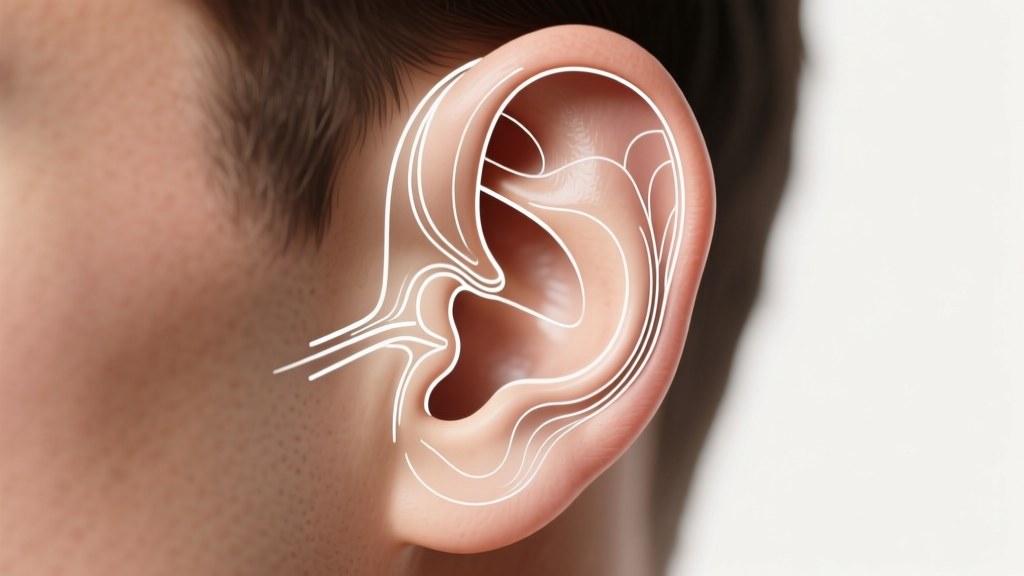
When you sit in the chair of an APP-certified professional, they are not evaluating your sexual orientation; they are evaluating your auricular anatomy. The human ear is composed of complex elastic cartilage covered by skin, featuring distinct landmarks such as the scapha, concha, tragus, and helix. No two ears are perfectly symmetrical, even on the same person.
Evaluating the Helix and Fossa Triangularis
For cartilage piercings, the angle of the helix rim is paramount. If a client desires a stacked helix setup on their right ear, the piercer will measure the flat surface area of the fossa triangularis. If the right ear has a more pronounced fold or lacks the necessary flat surface area to support a 16-gauge needle without hitting the opposite cartilage wall, the piercer will recommend the left ear. This anatomical limitation frequently overrides any stylistic preference for a "dominant" side.
Lobule Attachment and Tissue Density
The earlobe (lobule) is composed of areolar connective tissue and fat, lacking the rigid cartilage found in the upper ear. Piercers assess whether the lobule is "attached" (blending directly into the jawline) or "detached" (hanging free). Detached lobules can generally accommodate heavier, larger-gauge jewelry or intricate drop earrings without risk of migration, whereas attached lobules require precise angle calculations to ensure the jewelry sits flush against the face rather than pulling the tissue taut.
Technical Specifications for Asymmetric and Single-Ear Setups
While the "earring side for gay" myth focused on a single, solitary stud, modern 2026 aesthetics heavily favor the asymmetric stack or the curated single-ear setup. This involves dedicating one ear to a dense, multi-piercing constellation while leaving the other entirely bare or minimally adorned. Executing this requires strict adherence to spacing and gauge protocols.
| Piercing Placement | Standard Gauge | Optimal Jewelry Type | Avg. Healing Timeline |
|---|---|---|---|
| Standard Lobule | 18g - 14g (1.0 - 1.6mm) | Threadless Push-Pin or Internally Threaded | 6 - 8 Weeks |
| Upper Lobe / Mid Lobe | 16g - 14g (1.2 - 1.6mm) | Flat Back Labret (Threadless) | 8 - 12 Weeks |
| Helix / Flat | 16g (1.2mm) | Flat Back Labret or Seam Ring | 6 - 12 Months |
| Rook / Daith | 16g (1.2mm) | Curved Barbell or Clicker | 9 - 12 Months |
| Conch | 14g - 12g (1.6 - 2.0mm) | Large Flat Back Labret | 6 - 12 Months |
The Critical Rule of Spacing
When building a single-ear stack, the most common technical failure is inadequate spacing. Cartilage piercings must be placed a minimum of 6 to 8 millimeters apart. This gap is not merely aesthetic; it accounts for the initial swelling phase (edema) and prevents the jewelry backs from overlapping, which can cause pressure necrosis or localized infection. If a client's ear anatomy cannot support three distinct piercings with 8mm gaps, a skilled piercer will cap the project at two, prioritizing tissue health over arbitrary stacking goals.
Selecting Jewelry: Material Grades and Biocompatibility
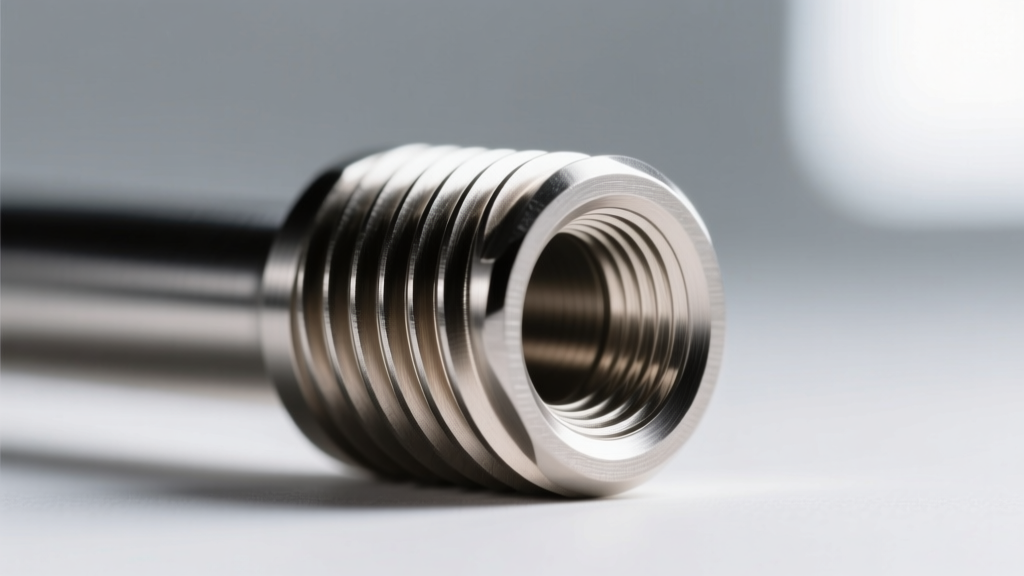
The technical success of any ear piercing, regardless of which side it occupies, hinges entirely on the metallurgical quality of the jewelry. The Association of Professional Piercers (APP) strictly advises against the use of generic "surgical steel" (often 316L stainless steel) for fresh piercings. 316L steel contains up to 14% nickel, which can leach into the fistula (the healing tissue tube) and trigger severe contact dermatitis or delayed healing.
The Gold Standard: ASTM F-136 Titanium
For initial piercings and long-term wear in asymmetric setups, ASTM F-136 implant-grade titanium is the undisputed industry standard. This specific alloy is completely nickel-free and boasts a mirror-polish finish that prevents bacterial adhesion. When curating a single-ear stack, utilizing F-136 titanium flat back labrets with threadless (push-pin) ends allows for micro-adjustments in post length. This is crucial, as a post that is too long will catch on hair and clothing, while a post that is too short will embed into the swelling cartilage.
Niobium and Solid Gold Alternatives
For clients seeking darker aesthetics without the risks of black anodized steel, Niobium is a highly biocompatible, hypoallergenic elemental metal that can be safely anodized to a deep black. Alternatively, 14k or 18k solid gold (specifically alloyed for body jewelry, avoiding zinc or copper-heavy mixes) is acceptable, provided the client has no underlying metal sensitivities. Gold-plated or gold-filled jewelry must be strictly avoided, as the microscopic friction of a healing fistula will strip the plating, exposing the reactive brass or copper core beneath.
Aftercare and Healing Timelines for Unilateral Piercings
Focusing all your piercing trauma on one side of the head presents unique aftercare challenges. When you undergo a multi-piercing session on a single ear, the cumulative inflammatory response can be significant. The body's immune system will direct localized lymph and blood flow to the affected side, often resulting in the ear feeling warm, heavy, and tender for the first 72 hours.
- Sleeping Mechanics: You must sleep exclusively on the unpierced side. Using a specialized travel neck pillow with your ear positioned in the center hole is a highly recommended technical hack to prevent nocturnal pressure and friction.
- Saline Protocol: Apply sterile 0.9% sodium chloride wound wash exactly twice daily. Over-cleaning disrupts the delicate mitotic cell division required to build the fistula.
- Downsizing: For cartilage piercings, return to your piercer between weeks 4 and 6 for a "downsize." This involves swapping the initial long post (used to accommodate swelling) for a shorter, snug-fitting post to ensure the jewelry sits flush and prevents migration.
Conclusion: Styling Without the Stigma
The historical obsession with finding the correct "earring side for gay" men is a fascinating study in mid-century semiotics, but it holds absolutely no weight in modern jewelry design or piercing science. Today's ear curation is an exercise in anatomical mapping, metallurgical precision, and personalized aesthetics. Whether you opt for a heavy, industrial conch piece on the left, a delicate threadless constellation on the right, or a perfectly balanced bilateral setup, the decision should be guided by the unique geometry of your cartilage and the expertise of a licensed professional, leaving outdated codes firmly in the past.


