Earring Stuck Inside Earlobe: Safe Removal & Cost Guide
Discover what to do when an earring is stuck inside your earlobe. Compare removal costs, assess jewelry value, and prevent future embedding.

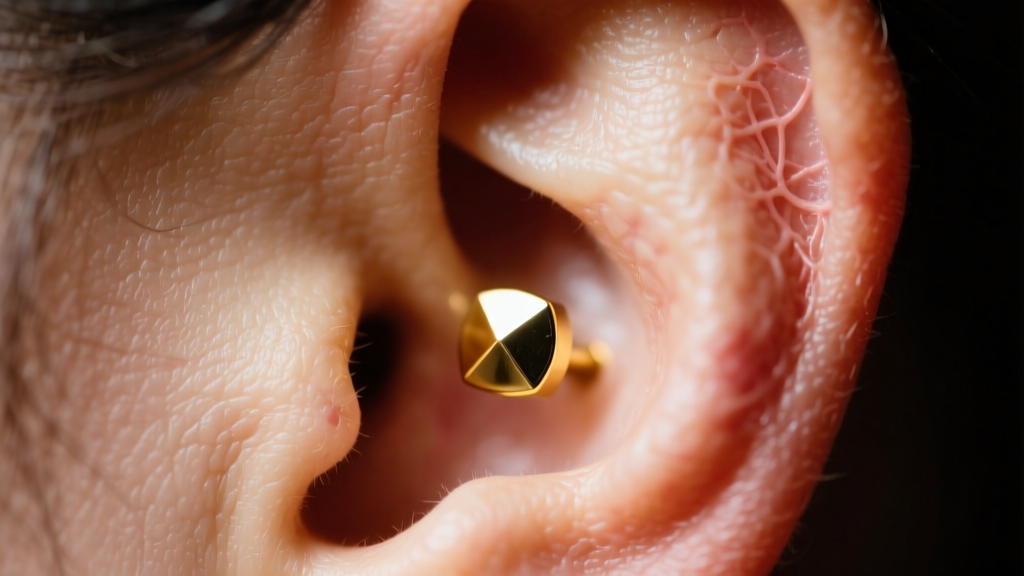
The Financial and Physical Cost of an Embedded Earring
Waking up to find an earring stuck inside earlobe tissue is a jarring experience that immediately shifts your focus from daily routines to damage control. While the physical discomfort is the primary concern, the financial implications of improper removal, medical intervention, and replacing ruined jewelry are often overlooked. As a budget and value assessment guide, this article breaks down the true cost of embedded earrings, evaluates when to seek professional help, and explains why investing in higher-quality hardware is the most cost-effective preventative measure you can take.
The Anatomy of an Embedded Earring: Why It Happens
An earring becomes embedded when the skin of the earlobe swells over the front or back of the jewelry. This is rarely a spontaneous event; it is usually the result of specific mechanical or chemical triggers:
- Allergic Contact Dermatitis: Cheap alloys containing nickel cause localized swelling, effectively swallowing the jewelry. According to the American Academy of Dermatology, nickel allergy is one of the most common causes of contact dermatitis, leading to severe tissue engorgement.
- The Cheese-Cutter Effect: Wearing heavy dangle earrings on thin, 20-gauge or 22-gauge wires creates downward tension, slicing through the tissue and causing trauma-induced swelling.
- Sleeping in Butterfly Backs: The narrow posts and tight friction backs of standard studs restrict blood flow and trap moisture, leading to overnight swelling that locks the metal inside the lobe.
Immediate Triage: DIY vs. Professional Removal
When you realize your earring is embedded, the instinct is to pull it out. Do not do this. Forcing metal through engorged, compromised tissue creates a jagged wound channel, increasing the risk of infection and permanent scarring. Your first step should be a value assessment of the situation: Is the earring worth the cost of professional removal, or is it a $3 fashion stud that should be sacrificed?

If the jewelry is made of high-value materials like 14k solid gold or platinum, preserving both the tissue and the asset is paramount. Apply a sterile saline compress and an ice pack (wrapped in a clean paper towel) for 10 minutes to reduce vascular swelling. If the skin does not recede from the metal, you must escalate to professional removal.
Cost Breakdown: Professional Removal Options
The cost to remove an earring stuck inside earlobe varies wildly depending on the professional you consult. Below is a comparative value assessment of your options in 2026:
| Removal Provider | Estimated Cost (USD) | Value Assessment & Pros/Cons |
|---|---|---|
| Professional Piercer (APP Member) | $25 - $60 | Best Value. Piercers have specialized taper tools, sterile environments, and deep anatomical knowledge. They can often save the jewelry and the piercing channel. |
| Urgent Care Clinic | $100 - $250 | Moderate Value. Medical staff can prescribe antibiotics and use local anesthetics, but they often resort to cutting the jewelry, destroying your asset. |
| Emergency Room | $500 - $1,500+ | Poor Value. Only necessary if systemic infection (fever, red streaks) is present. High out-of-pocket costs and jewelry will almost certainly be destroyed. |
Expert Insight: Always call an Association of Professional Piercers (APP) certified studio first. Their hourly rate for troubleshooting is a fraction of a medical co-pay, and they possess the specialized insertion tapers required to bypass swollen tissue without cutting the metal.
The Hidden Cost of Budget Jewelry
The most common culprit behind embedded earrings is the pursuit of budget-friendly, mass-produced jewelry. A $5 pair of alloy studs from a fast-fashion retailer seems like a steal until it triggers a severe nickel reaction. The Association of Professional Piercers explicitly warns against "surgical steel" for sensitive or healing lobes, as it contains up to 12% nickel. When your lobe swells shut over a cheap post, the subsequent $60 piercer removal fee and the cost of replacement jewelry instantly erase any initial savings.
True value in jewelry is measured by its biocompatibility. Investing in ASTM F-136 implant-grade titanium or 14k/18k nickel-free solid gold ensures that the metal will not react with your body's chemistry, virtually eliminating allergy-induced embedding.
Upgrading Your Hardware: A Preventative Investment
To protect your lobes and your wallet, audit your daily wear earrings. The structural design of the jewelry plays a massive role in preventing the earring stuck inside earlobe nightmare.
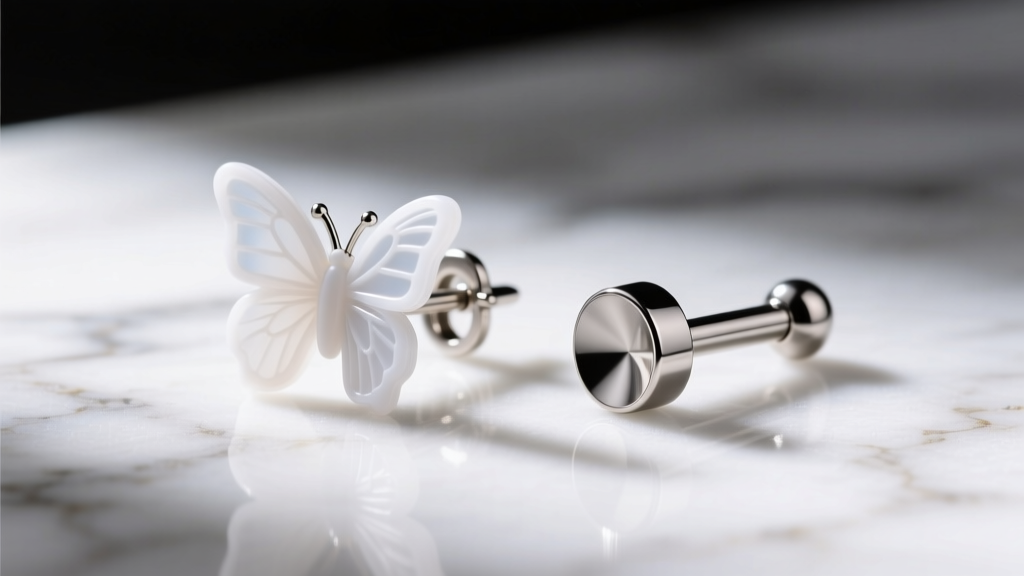
1. Ditch the Butterfly Backs
Friction butterfly backs are notorious for harboring bacteria and restricting lymphatic drainage. Upgrade to flat-back labret studs. These feature a smooth, flat disc that rests flush against the back of the earlobe, allowing the tissue to breathe and swell naturally without being choked by a metal wire.
2. Mind Your Gauges
Standard fashion earrings are often 20-gauge (0.8mm) or 22-gauge (0.6mm). These thin wires act like cheese cutters on heavy earlobes. Transitioning to 18-gauge (1.0mm) or 16-gauge (1.2mm) posts distributes weight more evenly, reducing mechanical trauma and subsequent swelling.
3. Threadless vs. Internally Threaded
If you must use threaded jewelry, ensure it is internally threaded (the screw is on the post, not the decorative end). Externally threaded jewelry features sharp ridges that tear the fistula (the piercing channel) upon insertion, causing micro-trauma that leads to swelling and embedding.
Salvage Assessment: Is the Stuck Earring Worth Keeping?
Once the earring is successfully removed, you must assess its salvage value. If the embedded piece was a porous, plated alloy that caused the allergic reaction in the first place, its value is zero. Dispose of it immediately to prevent future medical costs. However, if the piece is solid gold, platinum, or implant-grade titanium, it can be salvaged. Soak the jewelry in a sterile saline solution, scrub gently with a soft-bristled brush, and autoclave or sterilize it before re-wearing. By understanding the intersection of material science, anatomical health, and financial cost, you can transform a painful jewelry emergency into a long-term strategy for healthier, more valuable earlobe styling.


