Flat Hoop Earrings Value Assessment: 2026 Price Guide
Discover if flat hoop earrings are worth the investment. Our 2026 value guide compares materials, pricing tiers, and cost-per-wear for smart buyers.

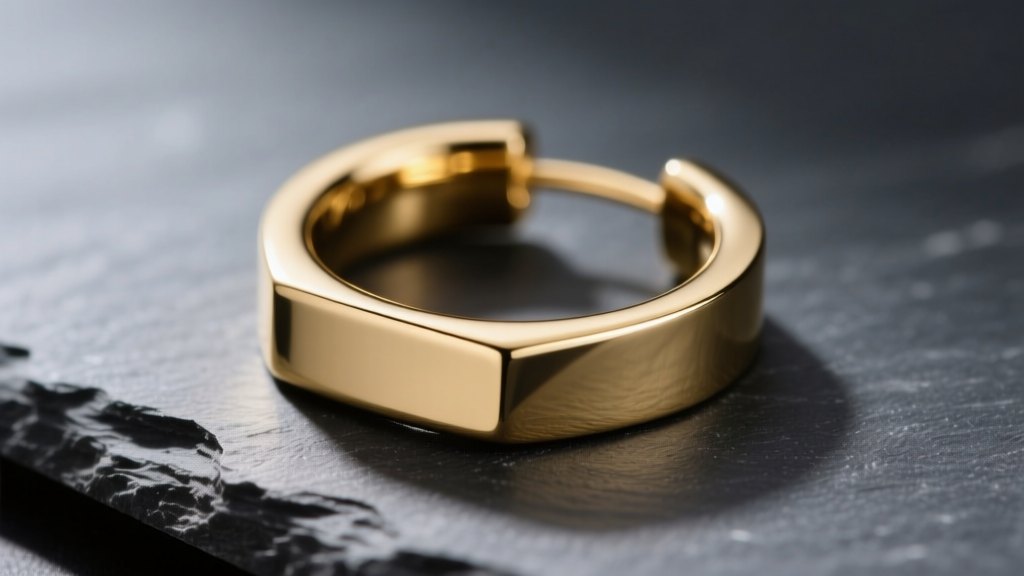
Flat hoop earrings have dominated the jewelry market over the last few years, celebrated for their sleek, modern aesthetic and their ability to sit flush against the earlobe or cartilage without catching on hair or clothing. However, as you browse the 2026 market, you will notice a massive price discrepancy. A pair of flat hoops can cost anywhere from $18 at a fast-fashion retailer to over $280 from a luxury boutique. For the discerning buyer, this raises a critical question: Are premium flat hoop earrings actually worth the investment, or are you just paying for a brand name?
In this comprehensive budget and value assessment, we strip away the marketing fluff. We will analyze the metallurgy, structural failure points, and true cost-per-wear of flat hoop earrings to help you determine exactly where your money is best spent this year.
The Geometry of Flat Hoops: Wire Cross-Sections vs. Profiles
Before assessing value, we must define what makes a hoop "flat." In jewelry manufacturing, this term is often misused. True flat hoops generally fall into two distinct structural categories, each with different manufacturing costs and durability profiles:
- Flat Wire Hoops (Rectangular Cross-Section): The wire itself is drawn or rolled into a rectangle (e.g., 2.0mm wide by 1.0mm thick). This requires specialized milling and more raw metal, making solid gold versions significantly more expensive to produce than round wire hoops.
- Flat Profile Huggies (Flush Fit): These utilize standard round or half-round wire but are engineered with a flattened inner curve or a specialized hinge mechanism to sit perfectly flush against the skin. The value here lies in the precision of the clasp engineering rather than the raw metal weight.
When shopping, always check the gauge (thickness). For standard lobe piercings, 18-gauge (1.0mm) or 20-gauge (0.8mm) flat wires are ideal. For cartilage, helix, or conch piercings, you must size up to 16-gauge (1.2mm) to prevent the "cheese-cutter effect," where a thin, flat wire can migrate through the tissue under pressure.
Material Tiers & 2026 Pricing Matrix
The core determinant of a flat hoop's price is its material composition. Because flat wire hoops have a higher surface-area-to-volume ratio than delicate round wires, the quality of the metal—and any plating applied to it—is paramount. Below is our 2026 market matrix breaking down what you should expect to pay and what you actually get.
| Tier | Material Composition | 2026 Price Range (Pair) | Lifespan & Durability | Value Verdict |
|---|---|---|---|---|
| Budget | Brass or 316L Steel with PVD Gold Plating | $15 - $35 | 6 - 14 Months | Poor long-term value. High risk of plating wear on the flat inner track. |
| Mid-Tier | ASTM F136 Titanium (PVD) or Heavy Gold Vermeil (Sterling Silver base) | $45 - $95 | 2 - 5 Years | Excellent value. Titanium offers hypoallergenic safety; vermeil offers luxury aesthetics. |
| Luxury | Solid 14k or 18k Gold (Nickel-Free Alloy) | $130 - $350+ | Lifetime / Heirloom | High initial cost, but lowest cost-per-wear. Retains intrinsic scrap value. |
The Friction Factor: Why Plated Flat Hoops Degrade Faster
If you are considering budget or mid-tier plated flat hoops, you must understand the unique failure mode of flat jewelry. According to the Federal Trade Commission's Jewelry Guides, gold electroplating must meet specific micron thicknesses to be marketed as "heavy gold electroplate" (minimum 2.5 microns). However, many budget brands use "flash plating" at a mere 0.1 to 0.3 microns.
Unlike round wire hoops, which have a minimal, curved contact point with the skin, flat hoops feature a broad, flat inner surface that rests directly against the earlobe or cartilage. This creates a high-friction "track." Throughout the day, the natural oils, sebum, and microscopic dead skin cells act as a mild abrasive against this flat surface. Furthermore, the slightly acidic pH of human sweat (typically between 4.5 and 7.0) accelerates galvanic corrosion when the base metal (like brass or copper in sterling silver) is eventually exposed through micro-scratches in the plating.
The Cartilage Complication
For cartilage piercings, the friction is compounded by sleeping pressure. If you sleep on a PVD-plated steel flat hoop, the sustained pressure drives the flat edge into the tissue, restricting blood flow and accelerating the breakdown of the coating. According to the Association of Professional Piercers (APP), only implant-grade materials like ASTM F136 Titanium or solid 14k/18k gold should be worn in cartilage to avoid severe contact dermatitis and hypertrophic scarring. If you are buying flat hoops for a helix piercing, never compromise on the budget tier.
Hinge Mechanics and Structural Failure Points
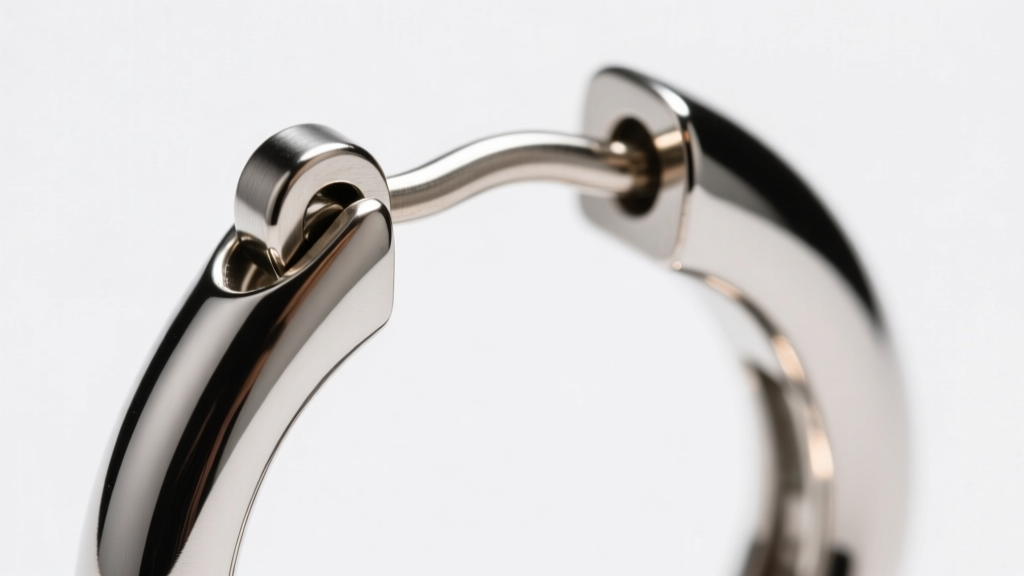
When evaluating flat profile huggies (hoops designed to hug the ear tightly), the hinge and clasp mechanism represent a massive portion of the manufacturing cost—and the most common point of failure.
- Friction Fit / Snap Clasps (Budget): Common in sub-$30 earrings. A small metal nub clicks into a groove. Over time, the metal fatigues, the nub flattens, and the earring falls out. Value Assessment: High replacement rate ruins the budget benefit.
- Pin-and-Barrel Hinges (Mid to Luxury): A micro-machined pin slides into a hollow barrel, often secured by a tension click. This requires precision CNC machining. If a brand charges under $40 for a true pin-and-barrel hinge, they have likely compromised on the metal density, making the thin barrel prone to snapping under lateral stress.
- Continuous / Endless Hoops: Some flat hoops forgo hinges entirely, using a tension-based continuous wire. While structurally sound, inserting a thick, flat continuous wire into a tight 16-gauge cartilage piercing can cause micro-tears in the fistula.
Cost-Per-Wear Analysis: The True Math of Jewelry Investment
To accurately assess the value of flat hoop earrings, we must abandon the sticker price and look at the Cost-Per-Wear (CPW). The formula is simple: Total Cost / Estimated Number of Wears.
Let's compare a $25 budget PVD-plated pair against a $180 solid 14k gold pair, assuming you wear them 4 days a week.
- Budget PVD Plated ($25): Due to friction wear on the flat inner surface, the plating will likely degrade to an uneven, brassy patch within 8 months. Assuming you wear them for 32 weeks (128 wears) before retiring them, your CPW is $0.19 per wear. However, you must also factor in the risk of allergic contact dermatitis, which could cost you a visit to the dermatologist.
- Solid 14k Gold ($180): Solid gold does not flake, tarnish, or wear away from skin friction. It requires only occasional polishing. Over a conservative 5-year period (1,040 wears), your CPW drops to $0.17 per wear. Furthermore, in 2026, the scrap value of 14k gold remains high, meaning you could recoup 30% to 40% of your initial investment if you ever chose to sell or melt them down.
When viewed through the lens of CPW and asset retention, the mid-tier and luxury options mathematically outperform the budget options, provided you have the upfront capital.
Final Verdict: Where to Invest Your Money
Are flat hoop earrings worth the premium price tag? The answer depends entirely on your piercing placement and your skin's reactivity.
The 2026 Jewel Style Radar Rule of Thumb:
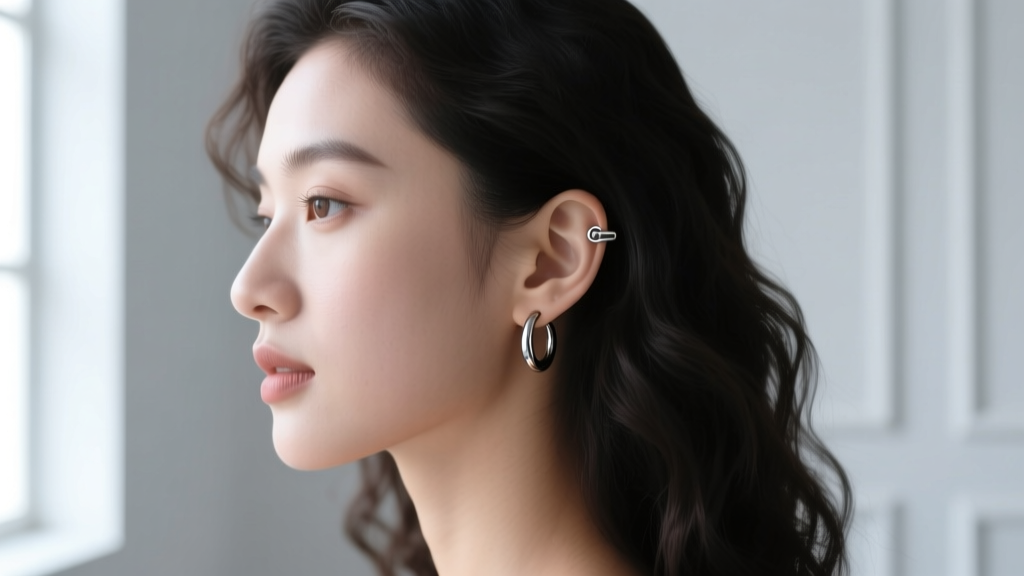
If you are buying flat hoops for standard earlobe piercings and you like to rotate your jewelry weekly, a Mid-Tier Heavy Gold Vermeil or PVD Titanium pair ($45–$85) offers the absolute best intersection of aesthetics and budget. However, if you are buying flat hoops for cartilage (helix, forward helix, tragus) or intend to wear them 24/7 without removal, you must bypass the budget tier entirely and invest in Solid 14k Gold or Implant-Grade Titanium ($100+). The cost of treating a cartilage infection or allergic reaction will instantly negate any money saved on cheap jewelry.
Ultimately, the sleek, architectural beauty of flat hoop earrings is best preserved when the material can withstand the unique friction of its design. Stop buying replacement pairs every six months, and invest in metallurgy that respects both your body and your wallet.


