What Size Gauge Is a Regular Earring? Material Properties
Discover what size gauge is a regular earring and how metal properties like tensile strength and density affect fit, comfort, and healing.

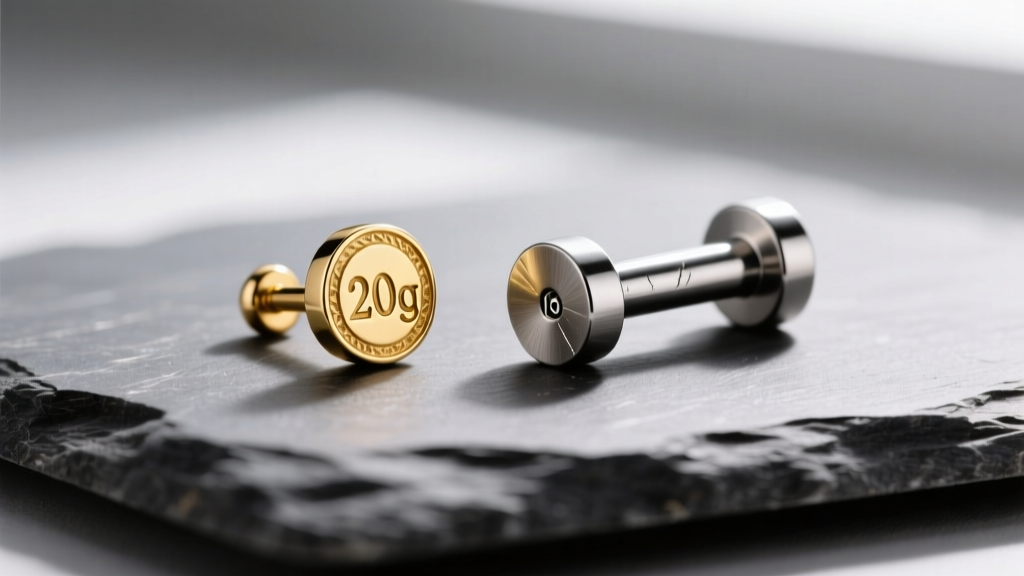
When building a curated ear stack or replacing a lost backing, the thickness of the metal post is just as critical as the aesthetic design. While most shoppers focus on carat weight or gemstone clarity, professional jewelers and piercers prioritize structural integrity. Understanding the intersection of wire thickness and metallurgy is the key to avoiding bent posts, torn lobes, and contact dermatitis.
The Short Answer: What Size Gauge Is a Regular Earring?
If you are asking what size gauge is a regular earring, the industry standard depends entirely on the placement of the piercing. For standard, healed earlobe piercings, the most common sizes are 20-gauge (0.81mm) and 18-gauge (1.02mm). These thin posts are lightweight and easily pass through the delicate fistula of a lobe piercing without causing friction or stretching.
However, "regular" changes when you move to the upper ear. For cartilage piercings—such as the helix, tragus, or conch—the standard jumps to 16-gauge (1.29mm) or 14-gauge (1.63mm). The Association of Professional Piercers (APP) strongly recommends thicker gauges for cartilage to prevent the "cheese cutter effect," where thin wire slowly migrates through the dense tissue due to pressure and gravity.
How Gauge Thickness Dictates Material Performance
A gauge size does not exist in a vacuum; its performance is entirely dictated by the material's tensile strength and yield point. A 20-gauge post made of pure silver will behave completely differently than a 20-gauge post made of implant-grade titanium.
Tensile Strength and Bending Risks
Precious metals like 18k and 14k gold are highly malleable. While 18k gold (75% pure gold) offers a rich, hypoallergenic finish, it is notoriously soft. An 18-gauge 18k gold wire has a low yield strength, meaning it will bend if you sleep on it or snag it on a sweater. By contrast, ASTM F-136 Implant-Grade Titanium boasts a yield strength of over 860 MPa. An 18-gauge titanium post is virtually unbendable under normal human pressure, making it the superior choice for active lifestyles, even at thinner gauges.
The Malleability of Niobium in Hoops
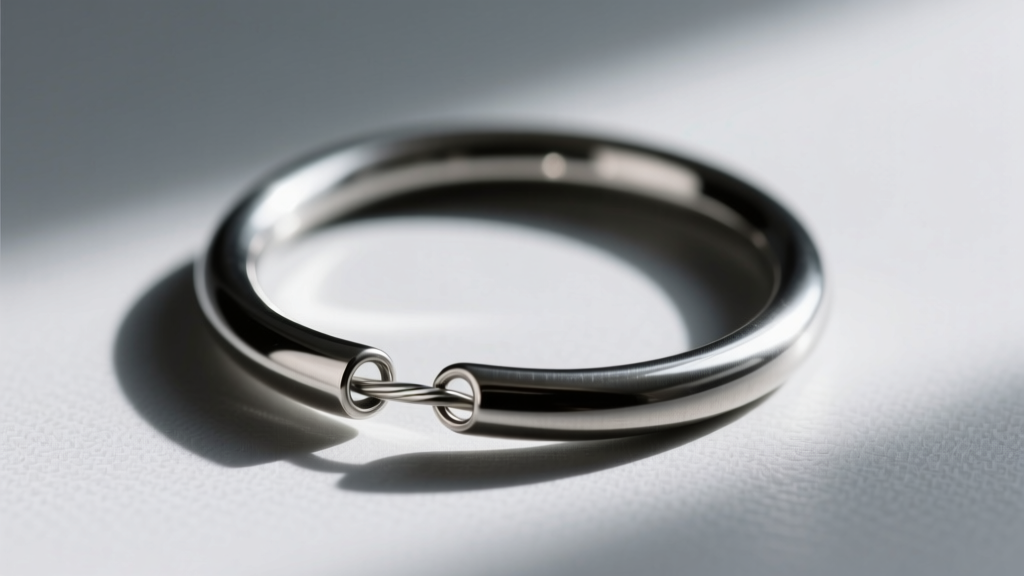
For seamless hoops and clickers, gauge thickness interacts with the metal's ability to be adjusted. Niobium (ASTM F-386) is highly malleable and memory-resistant. A 16-gauge niobium hoop can be bent open and closed repeatedly by hand without suffering from metal fatigue or snapping, a feat that 16-gauge surgical steel or white gold cannot replicate without eventually fracturing at the stress point.
Material Density, Weight, and the "Cheese Cutter" Effect
Density plays a massive role in how a specific gauge feels in the ear. The "cheese cutter effect" occurs when a thin wire (like 20g) supports a heavy material or charm, causing the wire to slice downward through the earlobe over time. To prevent this, you must balance the gauge size with the material's specific gravity.
| Gauge (mm) | Material | Density (g/cm³) | Tensile Behavior | Best Use Case |
|---|---|---|---|---|
| 20g (0.81mm) | 18k Yellow Gold | 15.6 | Soft, high bend risk | Lightweight, small lobe studs |
| 18g (1.02mm) | 316L Surgical Steel | 8.0 | Moderate flex | Standard lobe hoops & huggies |
| 16g (1.29mm) | Ti-6Al-4V (Titanium) | 4.43 | Rigid, high strength | Cartilage & heavy drop earrings |
| 14g (1.63mm) | Niobium | 8.57 | Malleable, adjustable | Daith, rook, and conch rings |
As the table illustrates, if you are designing or purchasing a heavy drop earring, utilizing a low-density material like titanium at a 16-gauge thickness provides the necessary structural support without dragging the lobe downward.
Hypoallergenic Properties Across Standard Gauges
Many wearers assume that if a metal is labeled "hypoallergenic," the gauge size doesn't matter. In reality, the surface-area-to-volume ratio of the wire affects how the skin reacts. Thinner gauges (20g and 18g) exert higher localized pressure on the fistula. If the material contains trace nickel—such as lower-grade brass or standard 316L stainless steel—this increased pressure can cause micro-abrasions inside the piercing channel, allowing nickel ions to enter the bloodstream and trigger contact dermatitis.
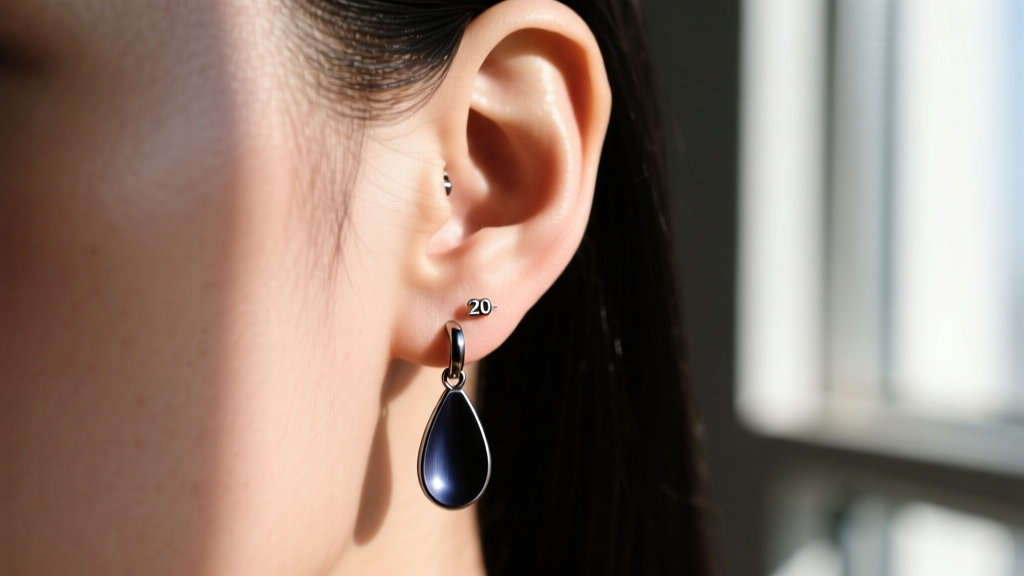
Conversely, thicker gauges (16g and 14g) distribute the weight of the earring over a wider surface area, reducing localized friction. For individuals with severe metal sensitivities, upgrading from an 18-gauge steel post to a 16-gauge titanium or niobium post often resolves unexplained soreness, even if the wearer previously thought they were only allergic to "cheap" metals.
Expert Troubleshooting: When Your Regular Earring Fails
Understanding material properties allows you to diagnose and fix common earring failures without abandoning your favorite styles.
- Problem: The post bends constantly when inserting the backing.
Diagnosis: You are likely using a 20-gauge or 18-gauge post in 18k gold or pure silver.
Solution: Switch to an 18-gauge 14k gold post (which has a higher copper/zinc alloy content for rigidity) or an 18-gauge titanium post. - Problem: The earlobe feels sore and stretched by the end of the day.
Diagnosis: The earring features a dense material (like solid steel or a large glass gemstone) on a thin 20-gauge wire.
Solution: Re-set the stone into a hollow 18-gauge tube or switch to a lightweight anodized aluminum or titanium setting. - Problem: The cartilage piercing migrates or rejects.
Diagnosis: The jewelry is too thin (18g or 20g) for the dense cartilage tissue, causing the body to push it out like a splinter.
Solution: Upsize to a 16-gauge or 14-gauge implant-grade titanium barbell to stabilize the fistula.
Final Thoughts on Gauge and Metallurgy
"A regular earring is only as good as the metallurgy supporting it. Matching the correct gauge to the material's tensile strength and density is the hallmark of fine, wearable jewelry."
Ultimately, answering the question of what size gauge is a regular earring requires looking beyond the numbers. Whether you are opting for a delicate 20-gauge gold stud or a bold 14-gauge titanium hoop, respecting the physical properties of the metal ensures your jewelry remains comfortable, secure, and beautiful for a lifetime.


