What is the Meaning of Earring in Left Ear? A Styling Guide
Discover the historical meaning of earring in left ear setups, plus a step-by-step guide to styling, choosing metals, and aftercare.

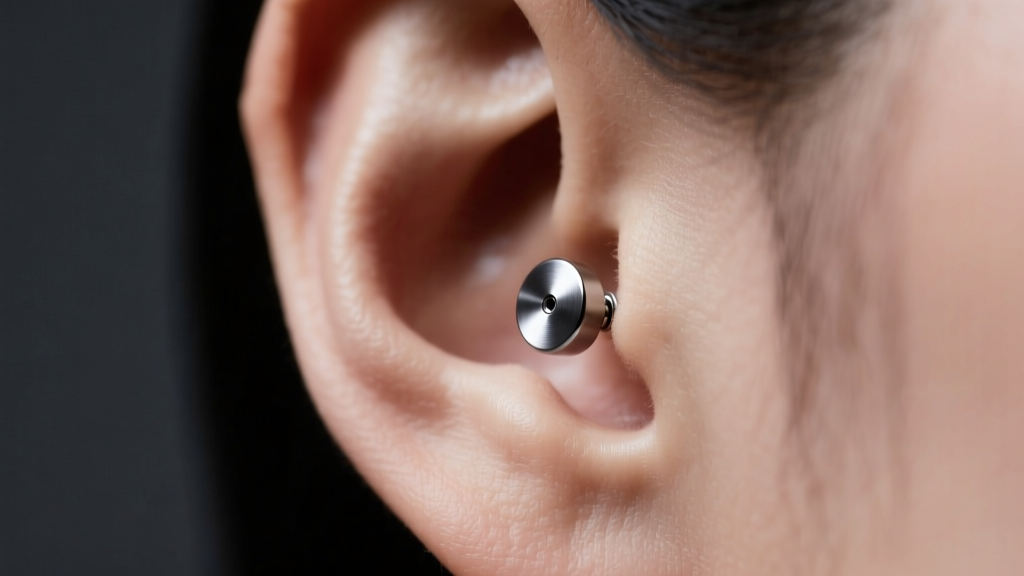
For decades, the placement of a single earring has carried whispered cultural codes, historical superstitions, and evolving fashion statements. If you have ever wondered about the meaning of earring in left ear placements, you are tapping into a rich tapestry of maritime lore, 20th-century subcultures, and modern asymmetrical styling. Today, the rules of ear piercing have largely been rewritten by personal expression, but understanding the history and knowing how to properly style, select, and care for a left-ear setup remains essential for any jewelry enthusiast.
This comprehensive, step-by-step guide will decode the historical context of the left-ear earring and provide actionable, expert-level advice on how to curate a stunning single-ear or asymmetrical look using premium materials and proper gauge sizing.
Step 1: Decoding the Historical Meaning of Earring in Left Ear
Before diving into curation and styling, it is crucial to understand the cultural baggage and history attached to ear placement. The meaning of earring in left ear configurations has shifted dramatically over the centuries.
The Maritime and Ancient Superstitions
Historically, sailors and pirates favored piercing their left ear. According to maritime folklore, a pierced left ear was believed to improve long-distance eyesight—a vital skill for lookouts. Additionally, it served as a talisman; if a sailor drowned and washed ashore, the gold earring was meant to pay for a proper Christian burial. In these contexts, the left ear was strictly practical and superstitious.
The 20th-Century Cultural Codes
In the 1970s and 1980s, Western pop culture adopted a covert signaling system, particularly among men. The prevailing rhyme was "Left is right, and right is wrong." In this era, a single piercing in the left ear was widely understood to indicate heterosexuality, while a right-ear piercing was a covert signal for homosexuality. According to cultural archives documented by organizations like GLAAD, these "hanky codes" and jewelry signals were vital for marginalized communities to identify one another safely before mainstream acceptance.
Modern Context: In 2026, these rigid gender and orientation codes are largely obsolete. Gen Z and millennial demographics view ear placement purely as an aesthetic choice. Asymmetry and single-ear curations are now celebrated as high-fashion statements rather than cultural signifiers.
Step 2: Selecting the Right Jewelry and Materials
When committing to a prominent left-ear styling, the quality of your jewelry is non-negotiable. Because the left ear is often the focal point in asymmetrical styling, you want pieces that offer both longevity and biocompatibility.
Understanding Gauge Sizes and Threading
Before purchasing, verify your piercing gauge. Standard lobe piercings are typically 20g (0.81mm) or 18g (1.02mm), while cartilage piercings (like the helix or tragus) are usually 16g (1.29mm). Always opt for internally threaded or threadless (push-pin) jewelry. External threading can tear the delicate fistula (the piercing channel) upon insertion.
Material Comparison Chart
| Material | Biocompatibility | Best For | Price Range (Per Piece) |
|---|---|---|---|
| ASTM F-136 Titanium | Excellent (Nickel-Free) | Fresh piercings, sensitive skin | $30 - $80 |
| 14k / 18k Solid Gold | Very Good (If alloyed properly) | Healed lobes, luxury styling | $80 - $350+ |
| 316L Surgical Steel | Poor (Contains 8-12% Nickel) | Avoid for long-term wear | $10 - $25 |
For the safest, most durable option, look for brands that utilize ASTM F-136 implant-grade titanium. As noted by the Association of Professional Piercers (APP), implant-grade titanium contains virtually zero nickel, eliminating the risk of contact dermatitis that plagues standard "surgical steel" wearers.
Step 3: Step-by-Step Guide to Styling the Left Ear
Styling a single left ear or an asymmetrical setup requires an understanding of facial balance, hair geometry, and visual weight. Follow these steps to curate a balanced look.
1. Analyze Your Hair Parting
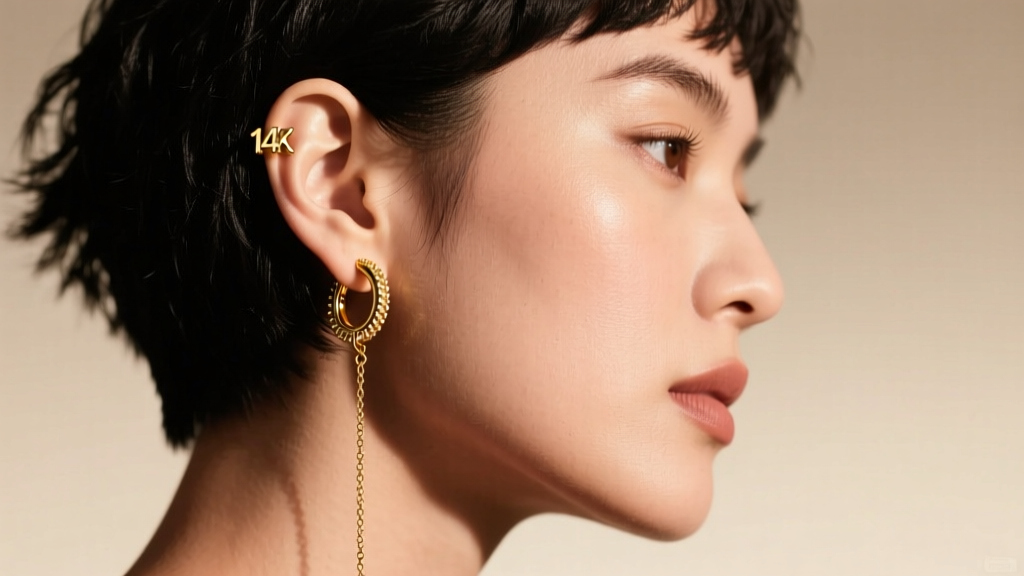
The visual impact of your left ear jewelry depends heavily on your hair. If you part your hair on the right side, your left ear will be naturally exposed, making it the perfect canvas for a statement piece. If your hair falls heavily over the left side, opt for larger, light-catching pieces like a 14k gold drop earring or a diamond-accented huggie that can peek through the strands.
2. Map the Ear Real Estate
If you are building a curated left-ear setup beyond a single lobe piercing, follow the "Rule of Descending Scale":
- Upper Lobe / Mid-Helix: Start with a slightly larger piece, such as a 3mm bezel-set threadless stud or a textured gold clicker.
- Standard Lobe: Anchor the ear with a substantial piece, like a 10mm diamond-cut huggie or a medium-sized hoop.
- Tragus / Conch: Use delicate, minimalist pieces (e.g., a 2mm gem) to avoid overwhelming the inner ear anatomy.
3. Balance the Facial Features
If you are wearing a bold, heavy piece in the left ear (like a chunky chain drop), keep the right ear completely bare or wear a micro-stud. This creates intentional asymmetry, drawing the eye across the face and highlighting the jawline.
Step 4: Piercing Aftercare and Troubleshooting
Whether you are getting a fresh left-ear lobe piercing or upgrading to a new cartilage placement, proper aftercare dictates the success of your styling. Cartilage piercings, in particular, are notorious for developing irritation bumps if improperly managed.
The 4-Step Daily Aftercare Routine
- Cleanse with Sterile Saline: Spray a 0.9% sterile sodium chloride solution (with no additives) onto the piercing twice daily. Do not use rubbing alcohol or hydrogen peroxide, as these destroy healing cells.
- Use Non-Woven Gauze: Gently pat the area dry with non-woven sterile gauze. Avoid cotton swabs or towels, which can snag on the jewelry post and cause micro-tears.
- Manage the Swelling: For the first two weeks, use a longer post (e.g., 5/16" or 8mm for lobes) to accommodate swelling. Once the swelling subsides, visit your piercer to downsize to a snug-fitting post to prevent the jewelry from catching on hair or masks.
- Sleep on Your Back: Pressure on a healing left ear can cause the piercing to migrate or heal at an awkward angle. Invest in a travel neck pillow and sleep with your ear in the center hole to eliminate pressure.
Troubleshooting Irritation Bumps
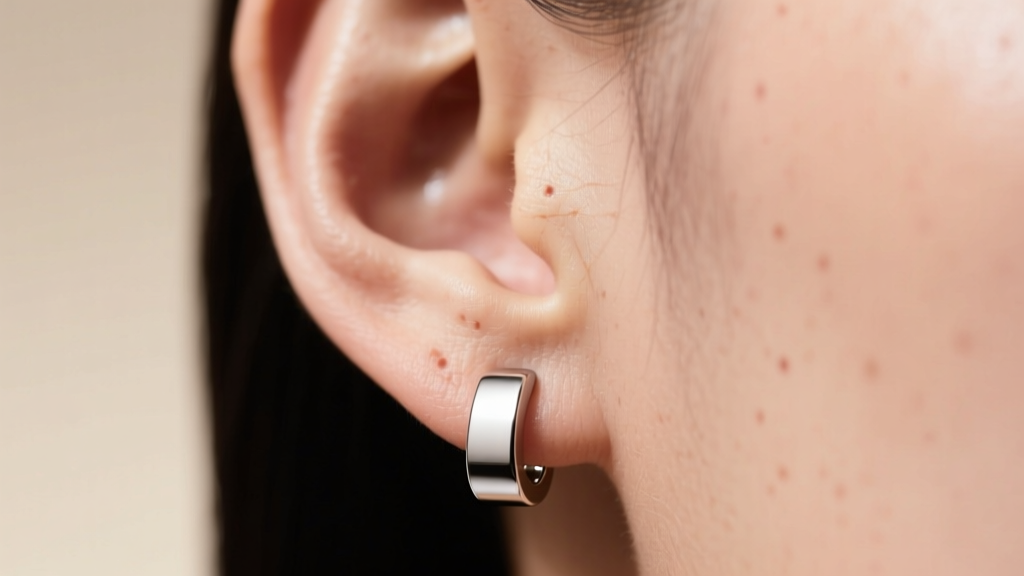
If you notice a small, flesh-colored bump near the exit hole of your left-ear piercing, it is likely an irritation bump, not a keloid. According to the APP Aftercare Guidelines, these are usually caused by moisture buildup, sleeping on the ear, or jewelry that is too long. Switch to a sterile saline spray, ensure the area is dried thoroughly after showering, and book a downsizing appointment with a professional piercer.
Final Thoughts on Left-Ear Curation
The meaning of earring in left ear placements has evolved from ancient sailor superstitions and 20th-century subcultural codes into a modern canvas for high-fashion asymmetry. By prioritizing implant-grade materials like ASTM F-136 titanium, respecting the geometry of your facial features, and adhering to strict, professional aftercare protocols, you can transform a simple piercing into a masterclass of personal style. Whether you opt for a single, striking 18g gold stud or a fully curated helix-to-lobe setup, the left ear remains a powerful focal point for self-expression.


