Find Earrings That Won't Hurt My Ears: Expert Guide
Discover the exact materials, gauge sizes, and backing mechanics for earrings that won't hurt my ears. An expert guide to pain-free, hypoallergenic jewelry.

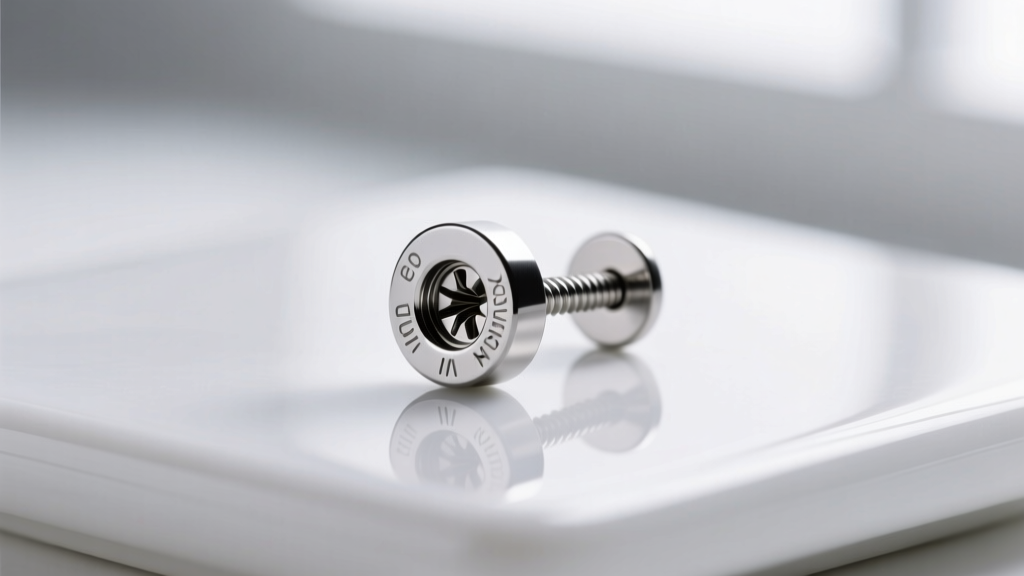
If you have ever found yourself searching for earrings that won't hurt my ears, you are likely dealing with one of three specific mechanical or biochemical failures: allergic contact dermatitis, lobe fatigue from improper weight distribution, or micro-trauma caused by poorly engineered backings. As a jewelry metallurgist and styling expert, I see countless consumers waste money on 'hypoallergenic' marketing buzzwords that fail to address the actual physics and chemistry of ear piercings.
In this expert deep dive, we will bypass the fluff and examine the exact material grades, gauge tolerances, and structural mechanics required to achieve true, pain-free ear styling in 2026.
The Biochemical Trigger: Nickel Release and Alloy Breakdown
The most common reason ears ache, throb, or itch after wearing jewelry is a Type IV delayed hypersensitivity reaction to nickel. However, the term 'nickel-free' is largely a marketing myth. According to the American Academy of Dermatology, up to 18% of adults in North America have a nickel allergy, but the pain is triggered by nickel ion release, not just the presence of the metal in the alloy.
When your skin's natural pH (which is slightly acidic, around 4.5 to 5.5) interacts with sweat and low-grade alloys, it corrodes the metal matrix, releasing nickel salts into the fistula (the piercing tunnel). This causes localized inflammation, swelling, and the sensation that your earrings are 'burning' your ears. To find earrings that won't hurt my ears, you must look for compliance with the EU Nickel Directive, which strictly limits nickel migration to less than 0.5 µg/cm²/week.
Decoding Implant-Grade Materials (The 2026 Standard)
To eliminate biochemical pain, you must upgrade to materials that are biologically inert. Commercial-grade titanium or 'surgical steel' (which often contains 8-12% nickel) will not suffice for highly reactive ears. Below is the technical breakdown of the only materials I recommend for reactive lobes and cartilage.
| Material Grade | ASTM Standard | Nickel Release | Best Use Case |
|---|---|---|---|
| Implant-Grade Titanium | ASTM F136 (Ti-6Al-4V ELI) | Zero / Undetectable | Fresh piercings, severe allergies, cartilage |
| Niobium | Unalloyed (99.9% Pure) | Zero / Undetectable | Heavy statement pieces, anodized color options |
| 14k/18k Palladium Gold | Nickel-Free Alloy | Zero / Undetectable | Everyday luxury studs, huggies, hoops |
| Platinum 950 | 95% Pt, 5% Ru | Zero / Undetectable | Heirloom pieces, high-density weight tolerance |
Always verify that your jeweler references ASTM F136 when selling titanium. Commercial titanium (Grade 2) lacks the specific aluminum and vanadium alloying that provides the mirror-polish finish necessary to prevent microscopic tissue tearing inside the piercing.
The Physics of Lobe Fatigue: Gauge, Friction, and Weight
If your earrings are made of perfect materials but still cause a dull, aching pain by 3:00 PM, you are experiencing mechanical lobe fatigue. The human earlobe is composed of adipose (fat) tissue and dense connective tissue, lacking the structural cartilage found in the upper ear. It is highly susceptible to gravity-induced micro-tearing.
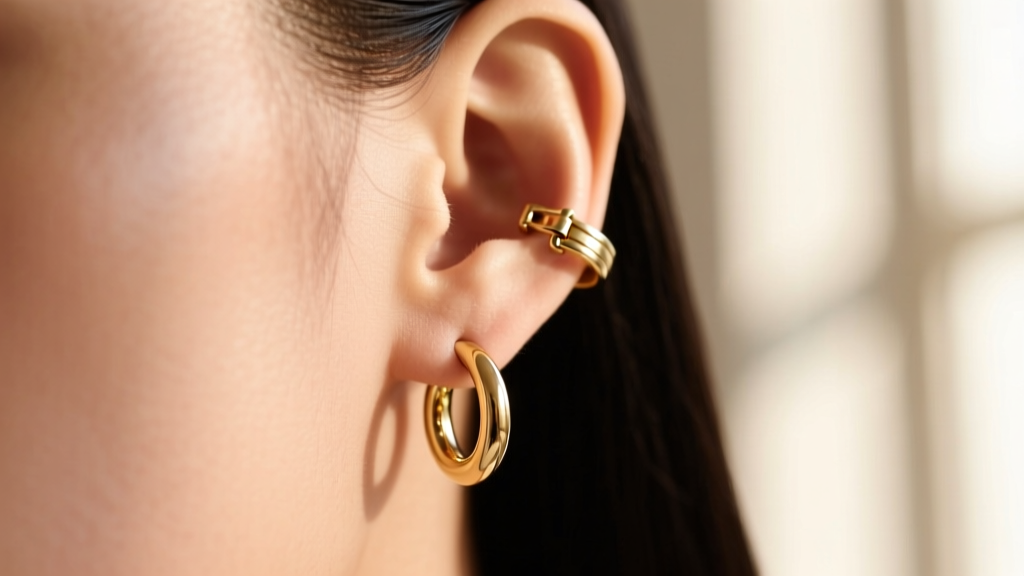
Understanding Gauge Tolerances
Standard ear piercings are typically done at 20-gauge (0.81mm) or 18-gauge (1.02mm). If you attempt to force a 16-gauge (1.29mm) earring post through an 18-gauge fistula, you are actively stretching the tissue. This causes immediate, sharp pain and localized edema (swelling). Always verify the post thickness of your jewelry before purchase, especially when buying from artisan makers who frequently default to thicker 16G or 14G wires for structural integrity.
The Pendulum Effect in Drop Earrings
Weight is only half the equation; leverage is the other. A 5-gram stud earring sits flush against the lobe, distributing its mass evenly. A 5-gram dangle earring, however, acts as a pendulum. Every time you turn your head, the kinetic energy multiplies the downward shear force on the bottom of the fistula. For pain-free wear, keep dangle earrings under 4 grams, and opt for hollow-form construction or lightweight resin accents if you desire larger silhouettes.
Mechanical Backings: Where the Pinch Happens
The backing of an earring is often the primary culprit behind the phrase 'my ears hurt.' Traditional friction backs (butterfly clutches) rely on a tightly coiled spring-metal scroll that grips the post via tension. These present three major failure modes:
- Pressure Necrosis: If pushed too tightly against the lobe, they cut off capillary blood flow, causing a throbbing ache.
- Debris Trapping: The scroll design traps dead skin cells, sebum, and bacteria, leading to localized infections that mimic allergic reactions.
- Tension Loss: Over time, the metal fatigues, causing the earring to droop forward, altering the center of gravity and pulling on the piercing.
The Expert Fix: Transition to flat-back labret studs with internal screw threading. A flat titanium disc rests flush against the back of the ear, distributing pressure across a wide surface area and eliminating the 'pinch' entirely. For hoops, seek out continuous seamless rings or click-hinge huggies that lock into a recessed groove, completely bypassing the need for a back clutch.
Troubleshooting Chart: Diagnosing Your Ear Pain
Use this diagnostic framework to pinpoint exactly why your current jewelry is failing you, and how to engineer a pain-free solution.
| Symptom Profile | Root Cause Analysis | Technical Fix |
|---|---|---|
| Itching, flaking, redness, clear fluid weeping | Type IV Nickel Contact Dermatitis | Switch exclusively to ASTM F136 Titanium or Niobium. Discard all 'surgical steel'. |
| Dull ache, lobe feels 'heavy' or stretched by evening | Gravitational Lobe Fatigue / Pendulum Effect | Limit dangles to <4g. Use flat-back discs to distribute stud weight evenly. |
| Sharp, stinging pain upon insertion or removal | Gauge Mismatch or Micro-Scratches on Post | Measure fistula (likely 18G). Ensure posts are mirror-polished, not matte or textured. |
| Tenderness directly behind the earlobe | Friction Back Compression (Pressure Necrosis) | Replace butterfly clutches with silicone O-rings or internally threaded flat-backs. |
Final Verdict on Pain-Free Jewelry
Finding earrings that won't hurt my ears is not about luck; it is about strict adherence to biocompatible metallurgy and ergonomic engineering. By demanding ASTM F136 titanium, verifying exact gauge tolerances, and abandoning outdated friction backings, you can permanently eliminate the physical toll that jewelry takes on your body. According to the Mayo Clinic, once a contact allergy is developed, it is lifelong—meaning prevention through high-grade material selection is your only viable long-term strategy. Invest in precision-machined, implant-grade jewelry, and your ears will finally tolerate the adornment they deserve.


