How to Style and Choose the Perfect Ring and Earring Set
Learn how to choose a durable, hypoallergenic ring and earring set. Expert tips on metal grades, visual weight, and pricing for beginners.

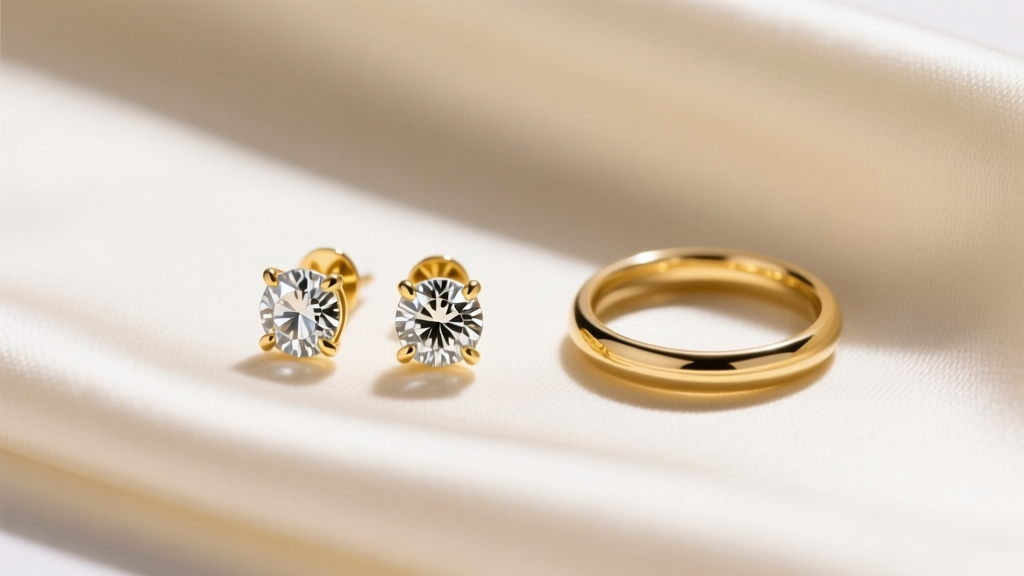
When beginners shop for coordinated jewelry, a pre-packaged ring and earring set often feels like the ultimate shortcut to a polished, put-together look. You open the velvet box, see matching metals and complementary gemstones, and assume the work is done. However, as any seasoned jeweler will tell you, the anatomy of the hand and the anatomy of the ear are vastly different. What survives on a finger will often fail on an earlobe, and what is perfectly safe for a cartilage piercing might cause severe contact dermatitis on a knuckle.
In this beginner-friendly explainer, we are deconstructing the traditional jewelry set. We will cover the exact metal grades you should demand in 2026, how to match visual weight using wire gauges, and why buying separate pieces to create a 'custom set' is often the smarter, more durable investment.
The Durability Trap: Why Ears and Hands Need Different Metals
The most common mistake beginners make when buying a matched set is assuming the metal plating or karat weight will wear identically across both pieces. Your hands encounter friction, harsh soaps, hand sanitizers, and extreme temperature changes daily. Your earlobes, by contrast, experience very little physical abrasion. According to the Gemological Institute of America (GIA), the alloy composition in gold jewelry dictates its hardness and scratch resistance, which is critical when a ring and earring share the same finish.
| Metal Type | Earring Lifespan (Daily Wear) | Ring Lifespan (Daily Wear) | Expert Verdict for Sets |
|---|---|---|---|
| Gold Vermeil (Sterling base) | 2–4 Years | 6–12 Months | Avoid for rings; acceptable for earrings only. |
| Gold Filled (Brass base) | 5+ Years | 1–3 Years | Good budget option, but ring plating will eventually pit. |
| Solid 14k Gold | Lifetime | Lifetime (Minor scratching) | The ideal baseline for a cohesive, lasting set. |
| Solid 18k Gold | Lifetime | Lifetime (Prone to deep dents) | Best for earrings; too soft for thin, daily-wear rings. |
| Platinum 950 | Lifetime | Lifetime (Develops a patina) | Premium choice; heavy weight may stretch delicate earlobes. |
If you are buying a true ring and earring set meant for daily wear, solid 14k gold is the undisputed sweet spot. It contains 58.5% pure gold, offering the rich color of gold with the structural integrity required for a ring band, while remaining light enough not to stretch an earlobe piercing over time.
Proportions and Scale: Matching the Visual Weight
A matching set is not just about color; it is about architectural scale. A massive 4mm signet ring paired with a tiny 3mm micro-stud earring creates a jarring visual imbalance. To achieve harmony, you must understand wire gauges and millimeter widths.
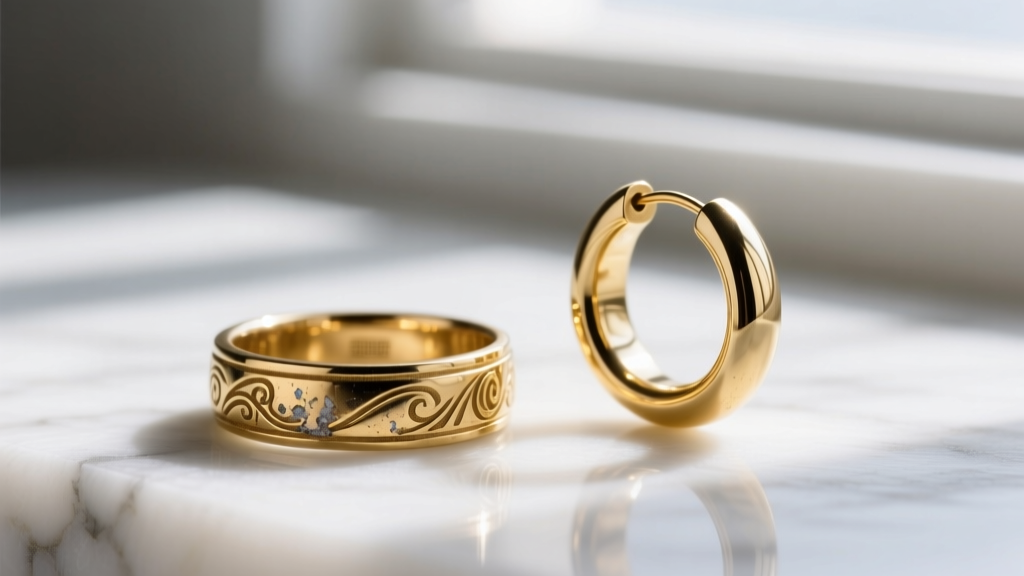
The Gauge-to-Millimeter Translation Guide
Jewelers measure earring wire thickness in gauges (G), while rings are measured in millimeters (mm). To make your set look intentionally designed, match the thickness categories:
- The Delicate Tier: Pair a 1.0mm to 1.5mm ring band with 20-gauge (0.81mm) or 22-gauge (0.64mm) earring posts. This is ideal for minimalist, barely-there aesthetics.
- The Standard Tier: Pair a 2.0mm to 3.0mm ring band with 18-gauge (1.02mm) earring wires or standard 2.5mm tube huggies. This is the most versatile, everyday proportion.
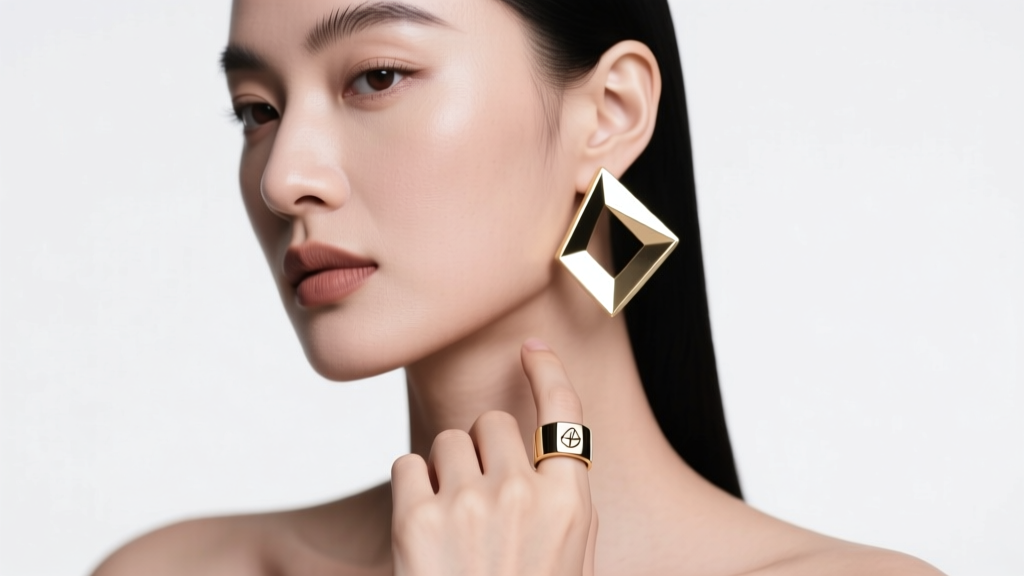
- The Statement Tier: Pair a 4.0mm+ ring band or chunky signet with 14-gauge (1.62mm) ear wires, thick ear cuffs, or large geometric drops.
Hypoallergenic Requirements: Navigating Nickel and Alloys
The skin on your earlobes and cartilage is significantly thinner and more reactive than the skin on your fingers. A ring that causes mild itching on your hand can trigger a weeping, infected contact dermatitis reaction in a fresh or sensitive ear piercing. The American Academy of Dermatology (AAD) notes that nickel is the leading cause of jewelry-related allergic reactions, and it is frequently used as a hardening alloy in lower-quality white gold and sterling silver sets.
Expert Rule of Thumb: Never assume that because a ring is stamped '925' (Sterling Silver), the matching earring posts are safe for sensitive ears. Always verify that the earring post is explicitly stamped as nickel-free, or ideally, crafted from ASTM F138 implant-grade titanium or niobium, even if the decorative front matches a silver or white gold ring.
If you are committed to a white metal ring and earring set, opt for palladium-white gold rather than nickel-white gold. Palladium is a platinum-group metal that provides a bright white finish without the allergenic risks of nickel, and it does not require frequent rhodium plating to maintain its color.
Clasp and Setting Security: Friction Backs vs. Screw Backs
When investing in a coordinated set, the security mechanisms of the earrings are just as important as the structural integrity of the ring shank. Standard 'butterfly' friction backs rely on a tiny groove on the earring post. Over time, the metal fatigues, the back loosens, and you lose your earring—leaving you with a ring and a lonely, mismatched stud.
For high-value sets, demand la pousette (locking) backs or screw-back earrings. Screw backs feature threaded posts that require you to twist the backing on, making them virtually impossible to lose during sleep or physical activity. Furthermore, ensure the gemstones in both the ring and the earrings utilize matching setting styles. If the ring features a bezel setting (where metal completely encircles the gem's girdle for maximum protection), the earrings should also feature bezel or half-bezel settings rather than delicate, snag-prone prongs.
Budgeting for Your Set: Real 2026 Pricing Tiers
Understanding what you should actually pay prevents you from falling for inflated 'matching set' markups often found in mall jewelry stores. Here is a realistic breakdown of what a quality ring and earring set (featuring a simple band and a pair of stud or huggie earrings) should cost in the current market:
- Entry-Level (Gold Vermeil/Sterling): $60 – $130. Best for: Occasional wear, trend-chasing, and those who like to rotate their jewelry frequently. Expect the ring to show wear within a year.
- Mid-Tier (Gold Filled / 10k Solid): $140 – $280. Best for: Budget-conscious buyers who want water-resistant jewelry. 10k gold is highly durable for rings but can look slightly pale in color compared to 14k.
- The Sweet Spot (Solid 14k Gold): $350 – $850. Best for: Daily wear, lifetime investment, and heirloom potential. This tier ensures both the ring and earrings will survive decades of use.
- Premium (Solid 18k / Platinum with Diamonds): $1,200 – $3,500+. Best for: Milestone gifts and luxury collectors. At this price point, ensure the diamonds are ethically sourced and come with proper grading certificates.
The Expert Alternative: Curating a 'Custom' Set
While buying a pre-boxed ring and earring set is convenient, it often forces a compromise. You might love the ring but find the earring posts too thick for your piercing, or you might love the earrings but need a different ring size than the set allows.
The ultimate insider strategy is to curate your own set. Purchase a high-quality solid gold ring from a specialized ring-maker, and buy your earrings from a dedicated piercing studio or ear-curation brand. By matching the metal color (e.g., requesting 'warm yellow gold' from both artisans) and sticking to the visual weight guidelines outlined above, you create a bespoke ring and earring set that fits your unique anatomy perfectly, without sacrificing the specialized engineering required for each individual piece.


