Earring Style Biomechanics: A Technical Guide to Cartilage vs Lobe
Explore the biomechanics of earring style choices. A technical deep dive into gauge sizes, metallurgy, and backing mechanisms for cartilage and lobes.

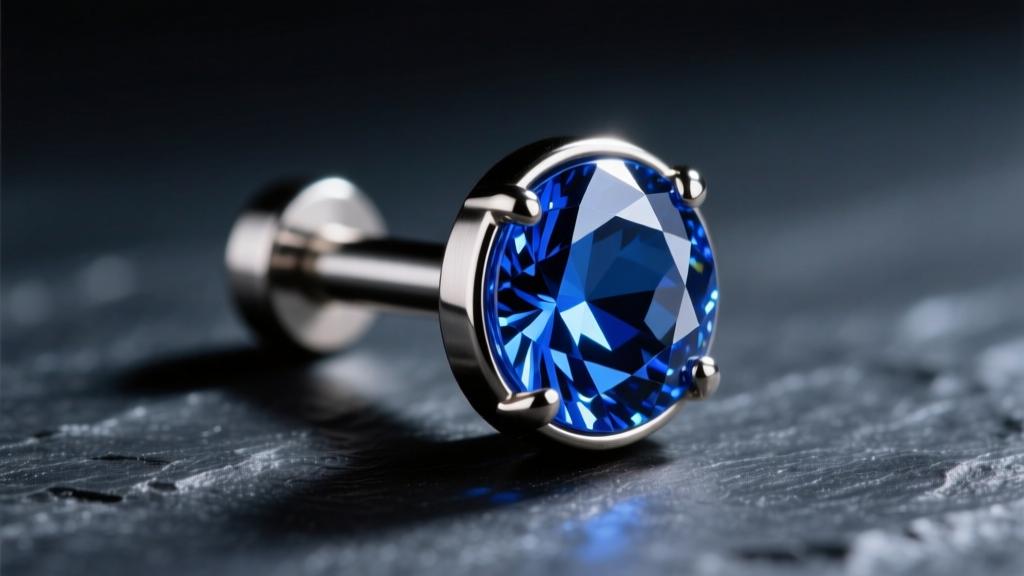
The Intersection of Anatomy and Earring Style
Most consumers select an earring style based purely on aesthetic preferences, ignoring the underlying biomechanical and metallurgical realities of their specific piercing sites. An earlobe is a highly vascular, elastic tissue matrix composed of adipose and connective tissue. In stark contrast, auricular cartilage is a dense, avascular, and rigid structure. Forcing a standardized earring style into incompatible anatomy inevitably leads to migration, embedding, and chronic inflammation. According to the Association of Professional Piercers (APP), understanding the technical specifications of your jewelry is the first line of defense against piercing complications and long-term tissue damage.
This technical deep dive explores the material science, biomechanical load distribution, and mechanical engineering behind modern earring styles, providing a definitive framework for curating a structurally sound ear project.
The Metallurgical Baseline: Why Material Dictates Style Longevity
The foundation of any successful earring style is its elemental composition. The human body is a harsh, saline, and slightly acidic environment. When jewelry is worn continuously, it is subjected to electrolytic reactions that can degrade inferior metals.
ASTM F136 Titanium vs. 316L Surgical Steel
For decades, "surgical steel" (specifically 316L stainless steel) was the industry standard. However, 316L contains between 8% and 10.5% nickel. While the chromium oxide passivation layer on the steel's surface generally prevents corrosion, micro-abrasions from inserting the earring can breach this layer. Once exposed to the chlorides in human sweat, the steel undergoes localized pitting corrosion, leaching nickel ions directly into the fistula. This triggers Type IV hypersensitivity (allergic contact dermatitis), manifesting as localized erythema, pruritus, and sterile pus.
The modern gold standard for cartilage earring styles is ASTM F136 implant-grade titanium. This specific alloy (Ti-6Al-4V ELI) contains zero nickel and boasts a highly stable oxide layer that is entirely biocompatible. Furthermore, titanium's Young's modulus (a measure of stiffness) closely mimics human bone, reducing the micro-movements that cause tissue irritation.
Precious Metal Alloying: The Hidden Nickel Trap
When opting for gold earring styles, the karat and alloy matrix are critical. 14k and 18k solid gold are acceptable, provided they are alloyed with palladium or silver. Many commercial jewelers use nickel to bleach gold alloys for white gold or to increase hardness. According to dermatological studies published via the National Center for Biotechnology Information (NCBI), nickel release from white gold alloys is a primary vector for delayed-onset contact dermatitis in healed piercings.
Biomechanical Load: Gauge Thickness and the "Cheese-Cutter" Effect
The gauge (thickness) of the earring post must be matched to the density and vascularization of the target tissue. A common failure mode in modern ear curation is the use of delicate, high-gauge (thin) wires in dense cartilage.
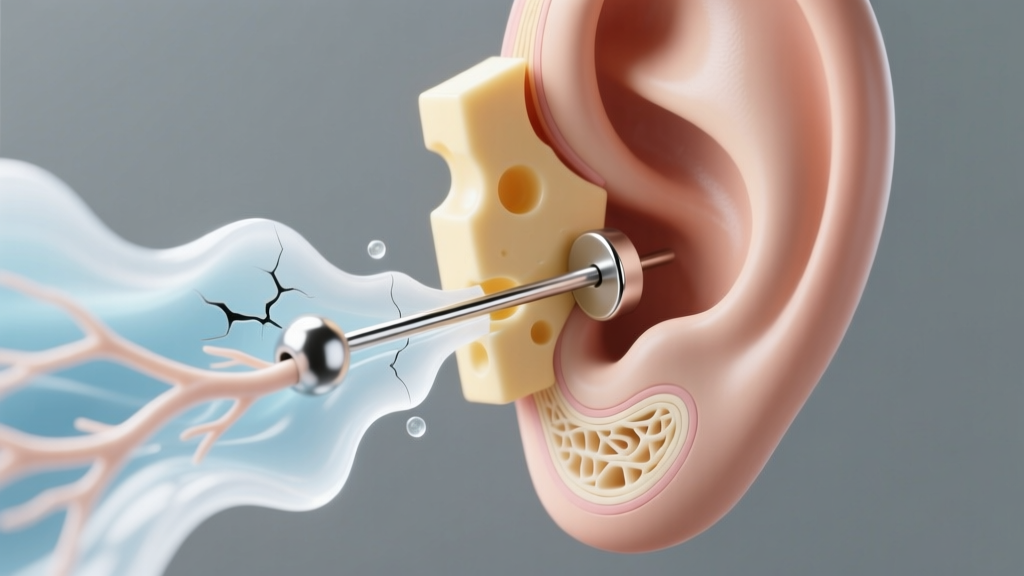
The Cheese-Cutter Effect: When a thin wire (e.g., 20G / 0.81mm) is placed through a thick, rigid cartilage fistula, the sheer force of gravity, combined with accidental snagging, concentrates immense kinetic energy onto a microscopic surface area. Over time, the wire slowly slices through the tissue, causing irreversible migration and scarring.
To prevent this, cartilage earring styles must utilize a thicker post to distribute mechanical load across a wider area of the fistula wall.
| Piercing Site | Tissue Type | Optimal Gauge | Minimum Post Length | Recommended Earring Style |
|---|---|---|---|---|
| Standard Lobe | Vascular, Elastic | 18G - 16G (1.0-1.2mm) | 8mm - 10mm | Butterfly clutch, Hinged hoop |
| Upper Lobe | Semi-Rigid | 16G (1.2mm) | 7mm - 9mm | Flat-back labret, Threadless |
| Helix / Conch | Avascular, Rigid | 16G - 14G (1.2-1.6mm) | 6mm - 8mm | Flat-back labret, Clicker hoop |
| Tragus | Dense Cartilage | 16G (1.2mm) | 6mm - 7mm | Flat-back labret (low profile) |
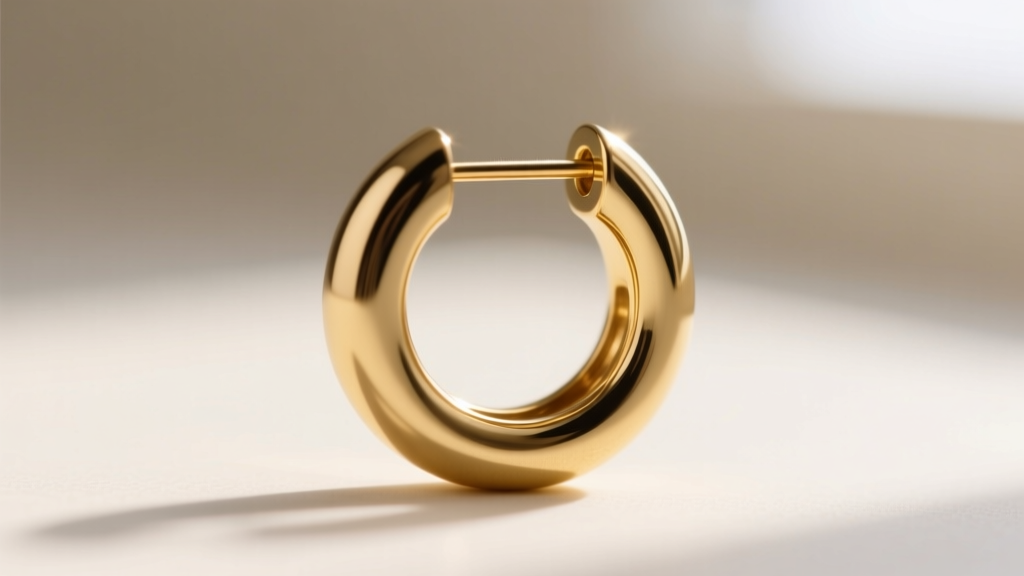
Backing Mechanisms: Flat-Backs vs. Butterfly Clutches
The posterior securing mechanism of an earring style dictates its hygiene profile and pressure distribution. The traditional butterfly clutch, while suitable for standard lobes, is fundamentally flawed for cartilage applications.
The Failure of Butterfly Clutches in Cartilage
Butterfly backs rely on a spring-loaded friction grip. In the rigid environment of a helix or conch piercing, the small surface area of the clutch's prongs concentrates pressure onto the posterior skin, frequently causing pressure necrosis. Furthermore, the intricate scrollwork of a butterfly back harbors Pseudomonas aeruginosa and dead epithelial cells, creating a biofilm that is nearly impossible to clean without removing the jewelry entirely.
The Superiority of the Flat-Back Labret
For any cartilage earring style, the flat-back labret post is the biomechanical ideal. The posterior disc (typically 3mm to 5mm in diameter) distributes pressure evenly across the back of the ear, eliminating localized necrosis. Because the back is completely flush against the skin, it eliminates the "snag hazard" that plagues butterfly backs, drastically reducing the kinetic trauma that leads to irritation bumps (hypertrophic scarring).
Threadless vs. Internally Threaded Connections
Never use externally threaded earring styles. The screw threads on the post act like a rasp, tearing the delicate epithelial lining of the fistula upon every insertion. Instead, utilize internally threaded or threadless systems:
- Internally Threaded: The screw mechanism is housed inside the decorative end, and the post is completely smooth. This requires precise machining (usually M0.9 or M1.2 threading) but offers a secure, permanent hold.
- Threadless (Push-Pin): This system uses mechanical tension. A removable pin (usually 18G or 20G) is inserted into the hollow shaft of the post and given a slight bend. When pushed into the shaft, the metal's memory creates outward spring tension, locking the decorative end in place without any threads crossing the fistula.
Troubleshooting Common Earring Style Failures
Even with premium materials, improper geometry can lead to structural failure of the piercing site. Here is how to diagnose and troubleshoot common technical mismatches.
Angle Mismatch and Persistent Torque
A fistula heals in a specific three-dimensional angle based on the piercer's needle trajectory. If a rigid flat-back earring style is inserted into a fistula pierced at a 45-degree angle, the jewelry will not sit flush against the skin. This creates persistent rotational torque. The body responds to this continuous mechanical stress by forming a granuloma (a localized mass of inflamed tissue) at the exit point. Solution: Have a professional piercer assess the fistula angle and bend the labret post slightly to match the tissue's natural trajectory, or repierce the site at a 90-degree perpendicular angle.
Galvanic Corrosion in Mixed-Metal Curations
If you mix different metals in the same ear—for example, a titanium helix stud resting against a stainless steel conch hoop—the saline environment of the skin acts as an electrolyte. This creates a micro-galvanic cell, accelerating the oxidation and degradation of the less noble metal (the steel). Solution: Maintain metallurgical consistency across your entire ear curation. Stick exclusively to ASTM F136 titanium or solid palladium-alloyed gold.
Post-Length and Swelling Dynamics
Embedding occurs when the tissue swells beyond the physical length of the earring post, causing the skin to engulf the decorative end or the backing. While initial piercings require long posts (10mm+) to accommodate the inflammatory phase, failing to downsize to a fitted post (6mm-8mm) after 4 to 6 weeks leaves excess space. This excess space allows the earring to move laterally, introducing bacteria and delaying the maturation of the collagen matrix. Solution: Schedule a mandatory downsizing appointment with a professional piercer exactly 4 weeks post-procedure.
Conclusion: Engineering Your Ear Curation
Selecting the right earring style is not merely an exercise in fashion; it is an exercise in applied biomechanics and materials science. By prioritizing ASTM F136 titanium, respecting the cheese-cutter effect by adhering to 16G or 14G thicknesses for cartilage, and utilizing flush flat-back labrets, you transition from simply wearing jewelry to engineering a structurally sound, lifelong ear curation. Treat your anatomy with the technical respect it demands, and your piercings will remain stable, healthy, and visually flawless for decades.


