The Ultimate Earring Wire Buying Guide: Types, Gauges & Metals
Discover the ultimate earring wire buying guide. Learn about gauge sizes, hypoallergenic metals, and secure closures for dangles and drops.

Why the Earring Wire is the Backbone of Dangle Jewelry
When shopping for drop earrings, dangles, or chandeliers, most buyers focus entirely on the gemstone, the metal finish, or the overall silhouette. However, the structural foundation of any hanging earring is the earring wire. A poorly constructed wire can lead to lost jewelry, stretched piercings, and severe allergic reactions. Whether you are a collector of fine jewelry, someone with hyper-sensitive earlobes, or a jewelry maker sourcing findings, understanding the anatomy, metallurgy, and gauge of an earring wire is critical for long-term wearability and comfort.
In this comprehensive buying guide, we break down the exact specifications you need to look for in 2026, moving past vague marketing terms like "hypoallergenic" and "surgical steel" to give you actionable, expert-level insights into what actually makes a high-quality ear wire.
Decoding Earring Wire Styles and Closures
The style of the wire dictates both the security of the earring and how it moves against the jawline. Here are the three most common configurations you will encounter when shopping for dangling earrings.
1. The French Wire (Fishhook)
The French wire is the undisputed industry standard for lightweight dangles. It consists of a simple curved hook that passes through the piercing, ending in a small loop where the earring component is attached. While elegant and minimalist, the open back of the French wire makes it prone to falling out during sleep or when removing winter clothing. Buying Tip: Always ensure French wires come with high-quality silicone friction backs or bullet clutches to secure the earring in place.
2. The Leverback
For active lifestyles or heavier gemstone drops, the leverback is superior. This earring wire features a hinged closure that snaps securely into a catch at the back of the ear. Because it forms a closed loop, the risk of losing the earring is near zero. High-end leverbacks often use a tension-based snap mechanism that produces an audible "click" when closed, ensuring peace of mind for the wearer.
3. The Kidney Wire and V-Wire
The kidney wire is a vintage-style security hook. The wire passes through the ear and hooks into a tiny loop on the front of the earring, creating a closed circuit. V-wires (or ear threads) are sharp, straight wires meant for weaving through multiple cartilage piercings. Both require specific manual dexterity to fasten but offer excellent security once locked.
The Gauge Guide: Thickness, Durability, and Piercing Health
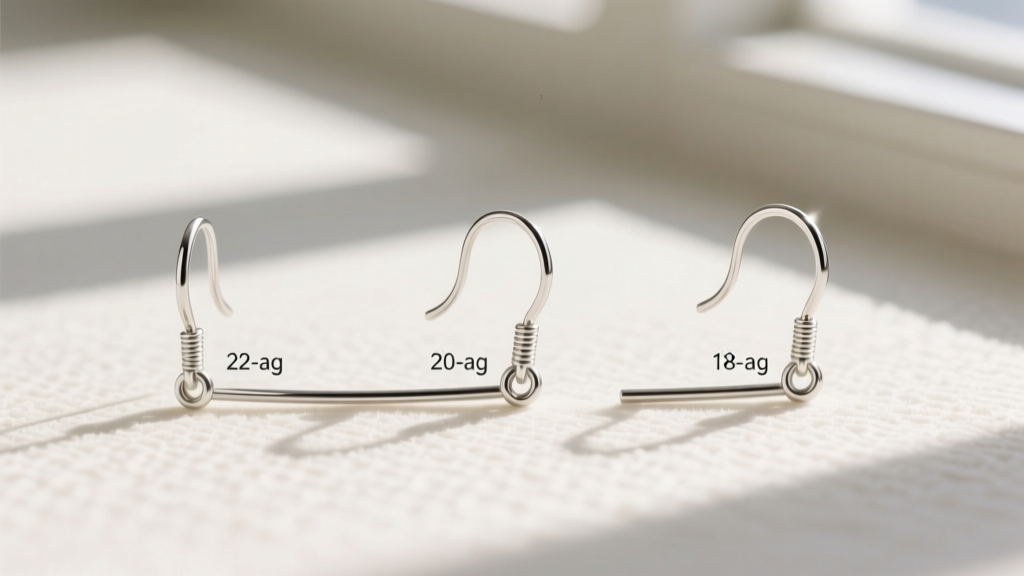
Gauge refers to the thickness of the earring wire. In the wire gauge system, a lower number means a thicker wire. Choosing the wrong gauge is the number one reason dangle earrings bend out of shape or cause piercing irritation. According to the Association of Professional Piercers, standard lobe piercings are typically done at 20g or 18g, while cartilage piercings are usually 16g or 18g.
| Gauge Size | Millimeter (mm) | Best Use Case | Durability Profile |
|---|---|---|---|
| 22-Gauge | 0.64mm | Ultra-lightweight, delicate threader earrings. | Low. Highly prone to bending and metal fatigue. |
| 20-Gauge | 0.81mm | Standard dangles, lightweight gemstone drops. | Medium. The industry standard for fine jewelry. |
| 18-Gauge | 1.02mm | Heavy statement earrings, cartilage conversions. | High. Resists bending, ideal for active wearers. |
| 16-Gauge | 1.29mm | Heavy hoops, industrial cartilage dangles. | Very High. Requires a fully healed, stretched piercing. |
Expert Insight: If you are buying heavy gemstone chandeliers, avoid 22-gauge wires at all costs. The weight of the stones will pull the thin wire downward, stretching the earlobe over time and causing the wire to permanently warp. Always opt for an 18-gauge wire for statement pieces.
Metallurgy 101: Navigating Hypoallergenic Earring Wires
Nickel allergy is the most common contact dermatitis triggered by jewelry, affecting up to 20% of the population. The Gemological Institute of America (GIA) notes that even trace amounts of nickel in base metal alloys can cause severe reactions. When evaluating earring wire materials, ignore the term "surgical steel," which is an unregulated marketing buzzword that often contains nickel. Instead, look for these specific material grades:
Implant-Grade Titanium (ASTM F136)
This is the gold standard for sensitive ears and fresh piercings. ASTM F136 titanium is entirely nickel-free, highly resistant to corrosion, and incredibly lightweight. It is frequently used in medical implants, making it the safest earring wire material for chronic allergy sufferers.
Niobium
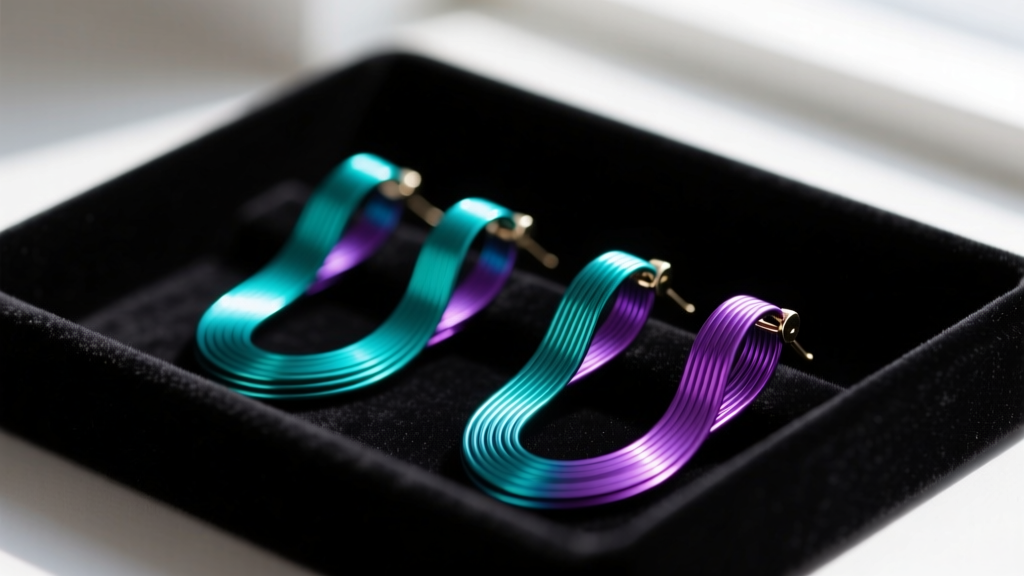
Niobium is a highly reactive, nickel-free elemental metal. Its unique property is its ability to be anodized—meaning it can be electrically treated to produce vibrant, permanent colors like teal, purple, and gold without using toxic dyes or plating. Niobium earring wires are exceptionally safe and popular among independent jewelry makers.
Argentium Silver vs. Standard Sterling
Standard sterling silver (925) contains 7.5% copper, which reacts with sulfur in the air to cause rapid tarnishing. Argentium silver replaces some of that copper with germanium, creating a highly tarnish-resistant alloy that stays bright for years. If you prefer the look of white metal but hate polishing your earring wires, Argentium is a superior investment.
Wire Hardness: A Note for Jewelry Makers and DIYers
If you are sourcing earring wire findings to make your own jewelry, you must pay attention to wire hardness, which dictates how the metal behaves when bent.
- Dead-Soft: Bends effortlessly but will not hold its shape. Unsuitable for French hooks, as the curve will pull straight under the weight of the earring.
- Half-Hard: The ideal choice for earring wires. It offers enough malleability to form the bottom loop for attaching dangles, but possesses the tensile strength to maintain the curved hook that rests in the ear.
- Full-Hard: Extremely stiff and brittle. If you attempt to bend a full-hard wire to adjust the fit, it will likely snap due to metal fatigue.
Troubleshooting Common Earring Wire Failures
Even high-quality earrings can experience mechanical issues. Here is how to troubleshoot the most common earring wire failures:
Problem: The earring wire constantly stretches out of its curved shape, causing the earring to face backward.
Solution: The wire is likely 22-gauge or made from a soft, high-karat gold alloy. Gently squeeze the curve back into place using nylon-jaw pliers to avoid scratching the metal, or upgrade to an 18-gauge half-hard wire.
Problem: The earring hook snaps at the base of the bottom loop.
Solution: This is a classic case of metal fatigue caused by repetitive stress. Ensure the bottom loop is soldered closed rather than just wrapped, or switch to a leverback style that distributes weight more evenly.
Final Verdict: Matching the Wire to the Lifestyle
The perfect earring wire balances security, metallurgical safety, and structural integrity. For everyday, lightweight drops, a 20-gauge Argentium silver French wire with a silicone stopper is unbeatable. For heavy statement pieces or active days, an 18-gauge ASTM F136 titanium leverback provides the ultimate peace of mind. By scrutinizing the gauge and material grade rather than just the aesthetic design, you ensure your favorite dangles remain comfortable, secure, and irritation-free for a lifetime.


