Earrings Back Types Explained: A Beginner's Security Guide
Discover the ultimate guide to earrings back types. Learn which friction, screw, and locking backs offer the best security and comfort for your piercings.

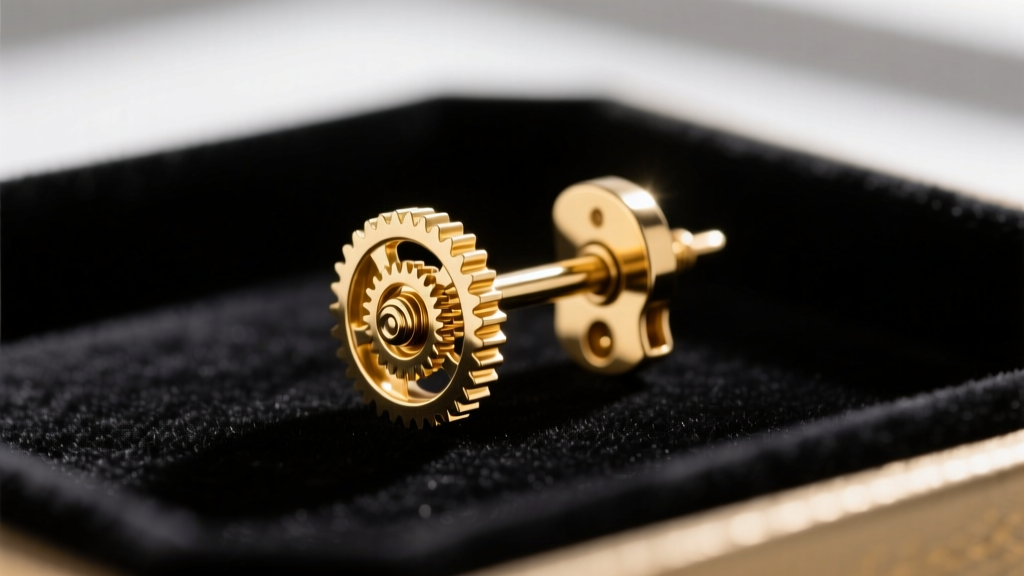
Why Your Choice of Earring Backs Matters More Than You Think
When shopping for new jewelry, most beginners focus entirely on the front-facing design—the gemstone cut, the metal color, or the overall silhouette. However, the true unsung hero of any earring is its closure mechanism. Understanding the various earrings back types is critical not just for preventing the heartbreaking loss of a favorite piece, but also for maintaining piercing health, avoiding allergic reactions, and ensuring all-day comfort. In 2026, professional piercers and jewelers have moved far beyond the basic friction backs of the past, offering specialized closures engineered for specific gauge sizes, tissue types, and lifestyle needs.
Whether you are navigating a fresh cartilage piercing or securing heavy diamond drops for an event, the hardware sitting behind your earlobe dictates the jewelry's performance. Below, we break down the mechanics, failure modes, and ideal use cases for the most common earring closures available today.
The 7 Most Common Earrings Back Types Explained
1. Push Backs (Butterfly / Friction Backs)
The most ubiquitous closure in commercial jewelry, push backs rely on a small metal clutch with a coiled spring inside that grips a notched post. They are typically found on standard 20-gauge (0.81mm) or 18-gauge (1.0mm) lobe studs. While inexpensive and easy to use, their primary failure mode is debris accumulation. The hollow clutch traps sebum, dead skin cells, and hair products, often leading to contact dermatitis or the infamous 'ear cheese' odor. Pro Tip: If you wear push backs daily, remove the clutch weekly and soak it in isopropyl alcohol to dissolve trapped lipids.
2. Screw Backs
Screw backs offer a massive upgrade in security by threading the post directly into the backing. However, not all threads are created equal. Externally threaded backs (where the grooves are on the post) act like a microscopic file, tearing the delicate fistula (the skin tube of the piercing) every time you insert them. According to the Association of Professional Piercers (APP), you should exclusively seek out internally threaded or threadless (press-fit) jewelry, where the post is perfectly smooth and the threading or pin mechanism is housed on the backing or decorative end.
3. La Pousette (Locking) Backs
Originally patented for high-end pearl and diamond studs, La Pousette backs feature a spring-loaded dual-clasp system. You push the backing onto the smooth post until it clicks, and two tiny metal wings snap outward to lock it in place. To remove it, you must pinch the wings inward. They offer near-perfect security against accidental snags, making them a favorite for high-value jewelry, though they come with a premium price tag and require two hands to operate.
4. Flat Backs (Labret Studs)
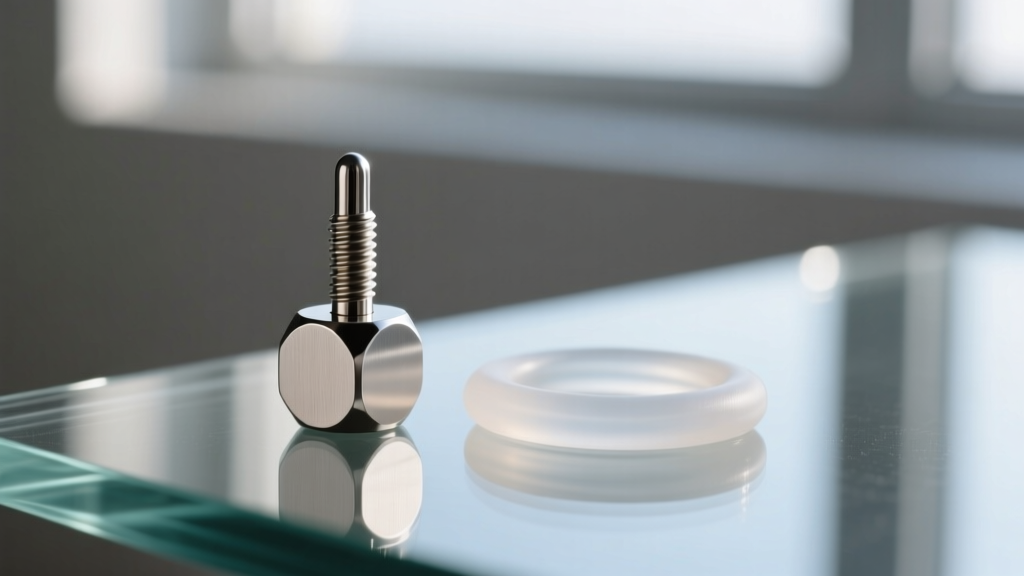
Flat backs feature a low-profile, flat disc that sits flush against the skin. They are the undisputed gold standard for cartilage piercings (helix, tragus, conch, and flat) because they eliminate the sharp post ends that poke the side of your head while sleeping. Usually found in thicker 16-gauge (1.2mm) or 14-gauge (1.6mm) sizes, flat backs distribute pressure evenly across the tissue, reducing the risk of migration and embedding. They are typically secured via internal threading or a threadless tension pin.
5. Leverbacks (French Wire with Latch)
Commonly used for dangle and drop earrings, a leverback consists of a curved wire that passes through the piercing and snaps into a small catch at the back of the earring. The hinged mechanism prevents the earring from sliding forward and drooping awkwardly, which is a common issue with heavy gemstone drops. They are highly secure but can occasionally pinch the skin behind the earlobe if the hinge tension is too tight.
6. Hinged Snap Backs
If you wear huggies or small continuous hoops, you are likely using a hinged snap back. The hoop features a hidden hinge on one side and a snap closure on the other. When closed properly, you will hear and feel a distinct 'click.' This auditory feedback is excellent for beginners, confirming the jewelry is secure without needing a mirror. However, if the hoop is bent out of shape, the snap alignment will fail, causing the earring to pop open unexpectedly.
7. Latch Backs (Saddleback)
Used primarily for medium to large hoops, latch backs feature a hinged post that swings up and clicks into a saddle-shaped wire loop at the top of the hoop. While they provide a seamless, continuous circle aesthetic, the latch mechanism can wear down over time, especially on softer metals like 24k gold or high-purity silver, leading to accidental losses.
Comparison Chart: Security, Gauge, and Pricing
| Back Type | Security Level | Ideal Gauge Size | Best Piercing Location | Avg. Price Range (2026) |
|---|---|---|---|---|
| Push / Butterfly | 2/5 | 20g - 18g | Standard Earlobe | $5 - $50 |
| Internal Screw | 4/5 | 18g - 14g | Lobe & Outer Cartilage | $40 - $150 |
| La Pousette | 5/5 | 18g - 16g | Standard Earlobe | $80 - $300+ |
| Flat Back (Labret) | 5/5 | 16g - 14g | Cartilage / Tragus | $30 - $120 |
| Leverback | 4/5 | 20g - 18g | Earlobe (Dangles) | $25 - $200 |
| Hinged Snap | 3/5 | 18g - 16g | Earlobe / Helix (Huggies) | $30 - $150 |
Material Grades and Allergy Troubleshooting
The security of your earring back is irrelevant if the metal causes your tissue to swell, reject, or become infected. Nickel contact dermatitis affects approximately 15% of the global population, and the backing is often the primary culprit because it sits in constant, tight contact with the skin's moisture barrier. The American Academy of Dermatology strongly advises avoiding 'surgical steel' or 'stainless steel' for sensitive piercings, as these alloys frequently contain nickel to prevent rust.
For beginners with sensitive ears or healing piercings, demand jewelry made from ASTM F136 Implant-Grade Titanium or Niobium. These materials are completely nickel-free and biocompatible. If you prefer precious metals, ensure the earring backs are crafted from 14k or 18k solid gold (yellow or white, provided the white gold is alloyed with palladium rather than nickel). Avoid gold-plated or gold-filled backs, as the friction from pushing a clutch on and off will quickly wear away the microscopic gold layer, exposing the reactive brass or copper base metal underneath.
How to Match the Back to Your Piercing Location
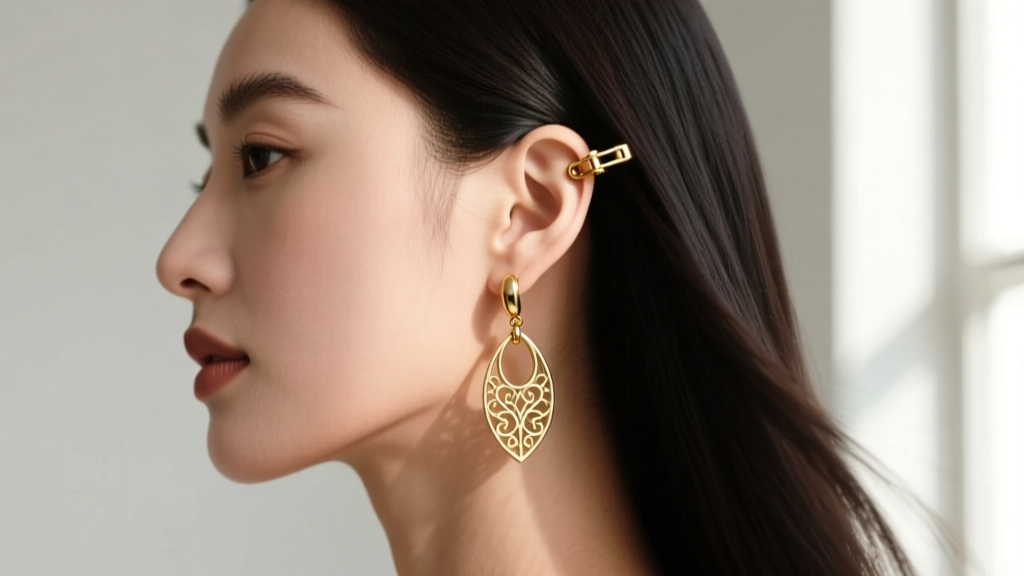
Using the wrong earring back for your specific anatomy is a leading cause of piercing trauma. Here is a quick framework for matching hardware to placement:
- Standard Earlobes: Push backs, La Pousette, and leverbacks work perfectly here. The tissue is soft and thick enough to accommodate the sharp notches of a friction post or the bulk of a locking clutch.
- Upper Lobe & Helix: Transition to flat backs or internal screw backs. The cartilage in these areas is rigid, and a traditional butterfly back will press unevenly, causing the post to tilt and irritate the piercing channel.
- Tragus & Conch: Flat backs are mandatory. The space behind the tragus is incredibly tight, and a standard push back will press painfully into the side of your head or get tangled in your hair.
The 'Cheese-Cutter' Effect: A Warning on Gauge Sizing
Beginners often assume all earring posts are the same thickness. They are not. Standard lobe jewelry is usually 20-gauge (0.81mm). However, many cartilage piercings are done at 16-gauge (1.2mm) or 14-gauge (1.6mm). If you force a thin 20-gauge post into a 16-gauge cartilage hole, the thin wire acts like a cheese cutter under the weight of the jewelry, slowly migrating through the tissue and causing permanent scarring. Always verify the gauge of your piercing before purchasing replacement backs or studs.
Expert Maintenance Tips to Prevent Infection and Loss
Jeweler's Insight: 'I see countless clients who lost expensive diamond studs simply because they never checked the tension on their push backs. The metal fatigues over time, and the clutch loses its grip.' — Master Bench Jeweler
To maximize the lifespan and security of your earrings back types, follow this maintenance protocol:
- The Tug Test: Once a month, gently tug on your friction and snap backs. If a push back slides on and off without resistance, the internal spring is dead. Replace the clutch immediately (they cost pennies at any jeweler).
- Thread Lubrication: For internally threaded screw backs, a microscopic dab of pure jojoba oil on the threads can prevent cross-threading and make insertion smoother, especially for those with limited dexterity.
- Hinge Alignment: If your huggie hoop won't 'click' shut, do not squeeze it harder. Use two pairs of nylon-jaw jewelry pliers to gently realign the snap post with the receiving tube. Metal fatigue from bending it with your bare hands will eventually snap the hinge pin.
By understanding the mechanics behind these earrings back types, you transition from a passive consumer to an informed jewelry enthusiast. Prioritizing internal threading, biocompatible metals, and anatomical fit will ensure your collection remains secure, comfortable, and beautifully displayed for years to come.


