How to Wear a Heavy Big Hoop Earring Without Tearing Lobes
Learn how to wear a heavy big hoop earring safely. Expert troubleshooting for lobe sag, clasp failures, gauge sizing, and snag prevention.

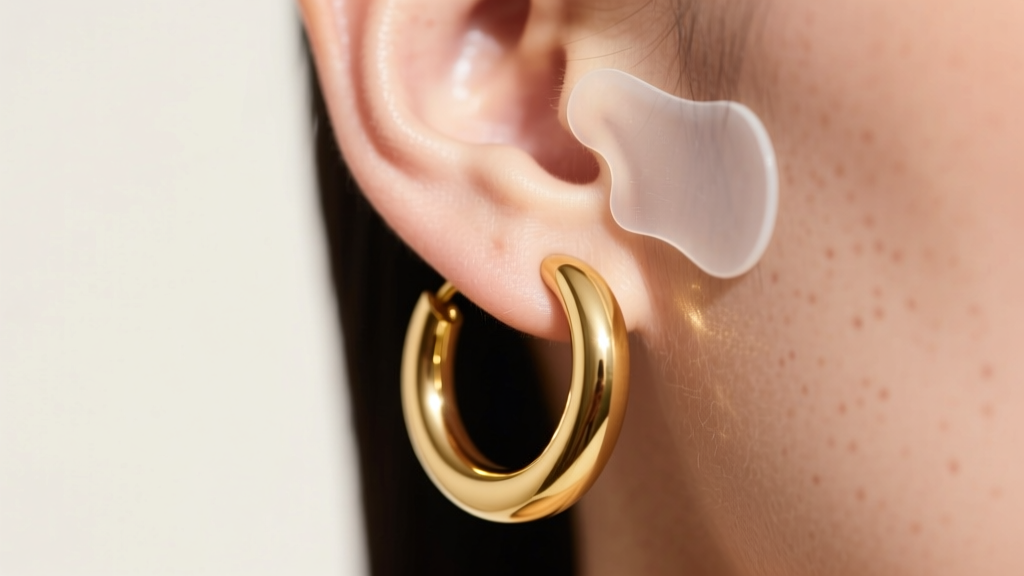
There is undeniable drama and elegance in a beautifully crafted big hoop earring. However, as the diameter increases, so does the physical toll on your earlobes. The auricular lobule contains no cartilage—only fibrofatty tissue and delicate skin—making it highly susceptible to elongation, micro-tearing, and premature sagging when subjected to constant kinetic stress and gravity. If you have ever experienced a sore earlobe after a few hours of wear, or worse, noticed your piercing hole stretching into a slit, you are dealing with a biomechanical mismatch between your jewelry and your anatomy.
In this comprehensive troubleshooting guide, we will diagnose the most common structural and physical failures associated with oversized hoops. From the dreaded cheese-cutter effect to stubborn hinge clasps, here is how to engineer a comfortable, damage-free experience for your heavy statement pieces.
The Physics of a Big Hoop Earring: Weight vs. Gauge
The most frequent cause of earlobe damage is a phenomenon piercers and dermatologists refer to as the "cheese cutter effect." This occurs when a heavy earring rests on a thin wire, concentrating gravitational force onto a microscopic surface area. Over time, this pressure restricts local blood flow, leading to tissue necrosis and gradual migration of the piercing hole downward.
To combat this, you must evaluate both the total weight of the earring and the thickness of the wire (gauge) passing through your ear. Standard fashion earrings are typically 20-gauge (0.81mm). However, a big hoop earring weighing more than 10 grams requires a thicker post to distribute the load safely.
Material Weight and Gauge Thresholds
According to guidelines from the Association of Professional Piercers, thicker jewelry reduces localized tissue pressure. If you are buying or custom-ordering large hoops, refer to this material and weight matrix to assess lobe strain risk:
| Material | Format | Avg Weight (50mm Hoop) | Recommended Gauge | Lobe Strain Risk |
|---|---|---|---|---|
| 14k Yellow Gold | Solid Tubing | 12-15g | 16g (1.29mm) | High (Requires support) |
| 14k Yellow Gold | Hollow Tubing | 4-6g | 18g (1.02mm) | Low (Ideal for daily wear) |
| Grade 23 Titanium | Solid Wire | 7-9g | 18g (1.02mm) | Medium (Strong but light) |
| Sterling Silver | Solid Wire | 10-12g | 16g (1.29mm) | High (Soft metal, prone to bending) |
As noted by the Gemological Institute of America (GIA), gold is a remarkably dense metal. A solid 14k gold hoop over 60mm in diameter will almost certainly cause sagging without intervention. Opting for hollow-tubing (created via electroforming or precision soldered seams) provides the exact same visual impact while reducing the weight by up to 70%.
Troubleshooting Lobe Sag and Preventing Tears
If you already own a heavy solid-metal big hoop earring and refuse to part with it, you must artificially reinforce the earlobe. Relying solely on the skin's natural elasticity is a recipe for permanent stretching.
1. Invisible Earring Support Patches
Adhesive support patches (such as those made by LobeWonder) are thin, medical-grade silicone or polyethylene discs with a central slit. You slide the earring post through the slit, allowing the patch to sit flush against the back of the earlobe. This effectively increases the surface area bearing the earring's weight from a 1mm puncture hole to a 12mm reinforced zone. Replace these patches every 3 to 4 wears, as natural skin oils will degrade the hypoallergenic adhesive over time.
2. Silicone O-Rings and Tension Friction
For hoops that swing excessively and create momentum-based tearing, slide a tiny 3mm silicone O-ring onto the post before securing the backing or clasp. This creates a friction buffer that limits the pendulum swing of the hoop, reducing the kinetic shock transferred to the piercing channel when you turn your head quickly.
Fixing Stubborn Big Hoop Clasps and Hinges
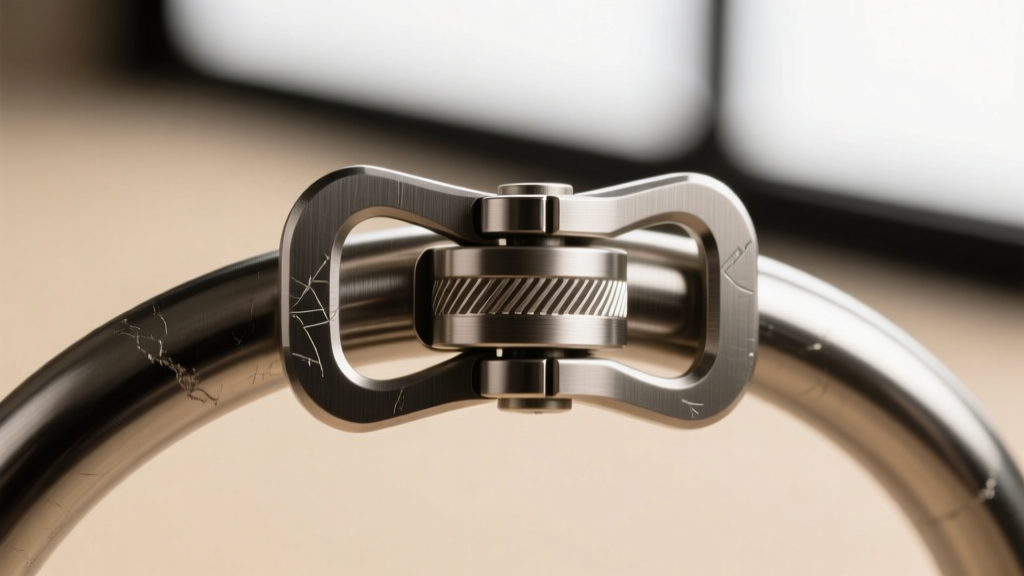
Large hoops endure immense mechanical stress at their closure points. A failing clasp doesn't just risk losing an expensive piece of jewelry; a warped post can easily scrape and infect the piercing channel. Here is how to troubleshoot the three most common clasp failures.
The Saddleback (V-Click) Clasp
The saddleback features a hinged post that snaps into a grooved saddle. If your hoop no longer "clicks" securely, the post has likely bent slightly outward from repeated opening. The Fix: Do not use standard steel pliers, which will mar the gold or titanium. Use nylon jaw pliers to gently squeeze the post inward by a fraction of a millimeter until the tension realigns with the saddle groove.
The Hinge and Snap-Back Latch
If a snap-back latch feels loose or pops open when your hair brushes it, the issue is usually sebum and dead skin buildup inside the catch mechanism, preventing a full seal. The Fix: Soak the clasp area in 91% isopropyl alcohol for five minutes, then agitate with an ultra-soft baby toothbrush. If it still fails to click, the internal tension spring is permanently fatigued, and a jeweler must laser-weld a new catch.
Continuous (Endless) Hoops
Continuous hoops rely on a thin wire post that bends into a hollow tubing receiver. The most common failure is the wire snapping off at the bend due to metal fatigue. The Fix: Never bend the wire back and forth to open the hoop. Instead, use a gentle twisting motion (like opening a bottle cap) to separate the ends. If the wire is already work-hardened and brittle, take it to a bench jeweler to have the post replaced with annealed wire.
Styling and Snag Prevention for Oversized Hoops
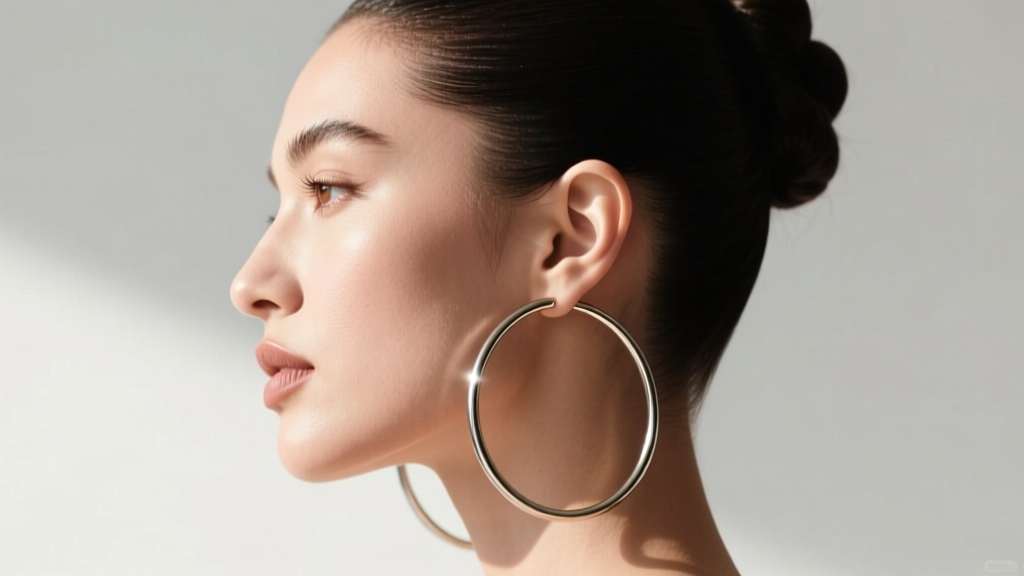
The larger the diameter, the higher the probability of catching on turtlenecks, scarves, or stray hairs. A sudden snag on a 70mm hoop can instantly rip the earlobe. To mitigate this, adopt a few strategic styling habits:
- The Updo Rule: If your hoop's diameter exceeds the distance from your earlobe to your jawline, hair should be worn up or tucked securely behind the ears. Loose, wavy hair is the primary culprit for invisible snags that result in micro-tears.
- Wardrobe Sequencing: Always put your clothes on before inserting your big hoop earrings. Pulling tight-necked garments over your head while wearing large hoops is the leading cause of bent posts and torn lobes.
- Nighttime Removal: Never sleep in large hoops. The pressure of your head against a pillow can bend the metal and torque the post inside your ear, leading to localized contact dermatitis and angled migration of the piercing hole.
When to See a Professional
If you notice that your piercing hole is no longer a perfect circle but resembles a vertical slit, or if the tissue between the hole and the bottom edge of your lobe is less than 3mm thick, stop wearing heavy jewelry immediately. At this stage, adhesive patches will not reverse the damage. Consult a board-certified dermatologist or plastic surgeon regarding an in-office earlobe reconstruction. This minor procedure involves excising the stretched tissue tract and suturing the lobe back together, typically allowing for a fresh, structurally sound piercing after a 6-to-8-week healing period.


