Material Guide to Vintage 1950s Earrings: Metals, Plastics & Stones
Explore the material properties of vintage 1950s earrings, from Aurora Borealis rhinestones and rolled gold to Lucite and paddle clips.

The post-war economic boom of the mid-20th century catalyzed a golden era for jewelry design, characterized by bold silhouettes, optimistic aesthetics, and rapid advancements in material science. When collectors and stylists examine authentic 1950s earrings, they are not just looking at vintage fashion; they are observing a fascinating intersection of metallurgy, early polymer chemistry, and optical engineering. Unlike modern mass-produced accessories, mid-century pieces were constructed using highly specific material grades and manufacturing techniques that have largely been abandoned or heavily regulated today.
Understanding the exact material properties of 1950s earrings is essential for authentication, valuation, and long-term preservation. From the invention of iridescent glass coatings to the widespread adoption of thermoplastic polymers, this guide decodes the physical anatomy of mid-century ear adornments.
The Metallurgy of Mid-Century Glamour: Gold Alloys and Base Metals
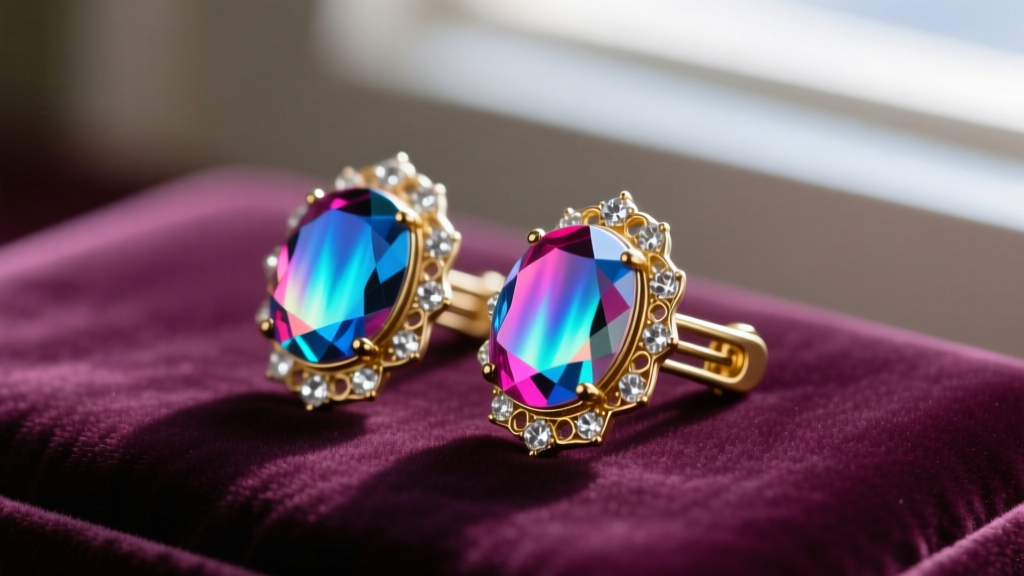
In the 1950s, the high cost of solid gold led to the widespread popularity of gold alternatives that offered the opulent look of karat gold without the prohibitive weight or price. However, the gold plating of the 1950s was vastly superior to the micro-thin electroplating seen in modern fast fashion. The dominant technique for high-end costume earrings was Rolled Gold or Gold-Filled construction.
Rolled gold involves mechanically bonding a sheet of karat gold to a base metal core (usually brass or jeweler's bronze) using heat and immense pressure. The resulting gold layer is substantially thicker than electroplating. Authentic 1950s earrings will frequently bear hallmarks such as '1/20 12K R.G.F.' (Rolled Gold Filled), indicating that 5% of the total weight of the metal is solid 12-karat gold. This thickness provides a durability that allows these pieces to resist tarnishing and wear for over seven decades.
| Technique | Gold Thickness | Common Hallmarks | Durability & Wear Profile |
|---|---|---|---|
| Rolled Gold / Gold-Filled | 5% to 10% of total weight | 1/20 12K RGF, 1/20 14K GF | Exceptional; resists brass rot and flaking if kept dry. |
| Heavy Electroplate | 2 to 5 microns | H.G.E., Electroplate | Moderate; prone to friction wear on high-contact clip areas. |
| Vermeil (Silver base) | 1 to 3 microns over Sterling | Sterling, 925, Vermeil | High; silver base prevents base-metal allergy issues. |
Conversely, base metals like pewter and white brass were frequently used for intricate cast components, often finished with rhodium plating to mimic the highly prized platinum and white gold looks popularized by Christian Dior's 'New Look' aesthetic.
The Rhinestone Revolution: Aurora Borealis and Paste Stones
No discussion of 1950s earrings is complete without addressing the rhinestone revolution. Prior to 1955, rhinestones were primarily faceted lead glass with a simple silver or gold foil backing. However, in 1955, Manfred Swarovski collaborated with Christian Dior to develop the Aurora Borealis (AB) coating. This was a groundbreaking vapor-deposited metallic coating applied to the surface of lead glass stones, creating a mesmerizing, iridescent rainbow effect that mimicked the Northern Lights.
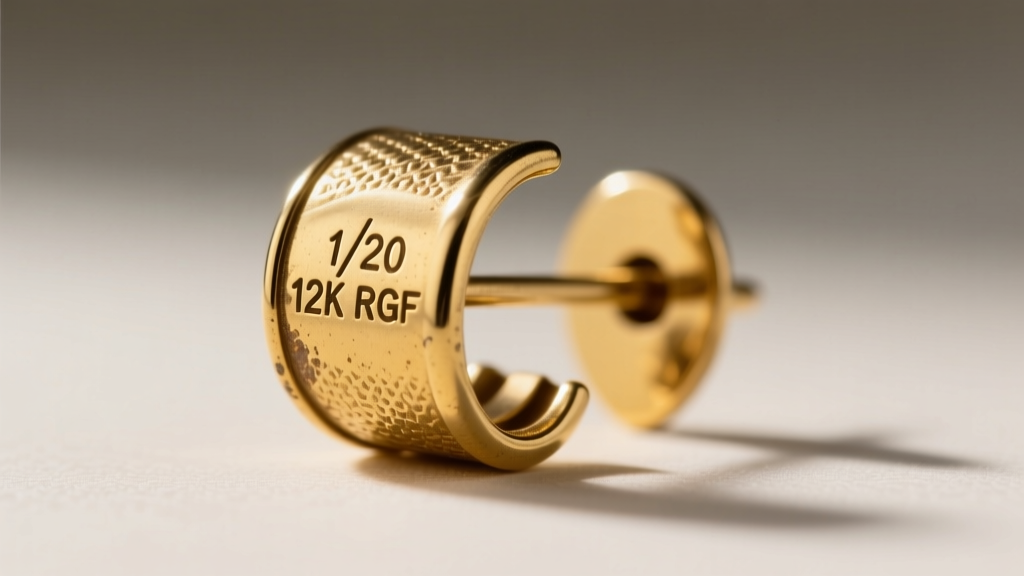
Authentic 1950s AB stones possess a distinct optical property: a high refractive index due to a lead oxide content often exceeding 30%. Modern acrylic or resin rhinestones simply cannot replicate the heavy, prismatic light dispersion of mid-century lead glass. According to historical archives documented by the Metropolitan Museum of Art, the integration of these advanced glass simulants allowed mid-century designers to create massive, chandelier-style clip-on earrings that remained relatively lightweight while delivering unparalleled brilliance.
Collectors must be wary of 'foil rot.' The silver foil glued to the back of non-AB rhinestones in the 1950s is highly susceptible to oxidation. If moisture breaches the stone's setting, the foil turns black or cloudy, a material failure that is virtually impossible to reverse without completely dismantling the earring and replacing the glass.
Plastics and Polymers: The Shift from Bakelite to Lucite
A common misconception in vintage jewelry markets is the assumption that brightly colored plastic earrings from the mid-century are made of Bakelite. In reality, Bakelite (a phenol-formaldehyde resin) was largely phased out of jewelry production by the early 1950s due to its labor-intensive curing process and the toxic nature of its manufacturing.
Instead, the 1950s belonged to Lucite (poly(methyl methacrylate) or PMMA) and other early thermoplastics. Lucite offered unparalleled optical clarity, rivaling glass, but at a fraction of the weight. Designers utilized Lucite to carve intricate floral motifs, geometric shields, and sweeping, sculptural ear cuffs that defined the decade's space-age and atomic design trends. Furthermore, Lucite could be easily embedded with glitter, metallic threads, or reverse-carved and painted from the back to create three-dimensional illusions.
Faux Pearls and Coated Glass
The 1950s also saw the perfection of the faux pearl. Brands like Majorica utilized a secret formula involving 'essence d'orient'—a mixture of guanine crystals derived from fish scales suspended in lacquer—coated over dense glass beads. This material combination provided a luster and weight that closely mimicked natural saltwater pearls, making them a staple in the elegant, understated stud and button earrings worn by mid-century style icons.
Identifying Authentic 1950s Ear Clip Mechanisms
The structural findings of 1950s earrings provide some of the most reliable authentication data. Because pierced earrings were still considered somewhat taboo in certain conservative circles during the early 1950s, the clip-on earring was engineered to perfection.
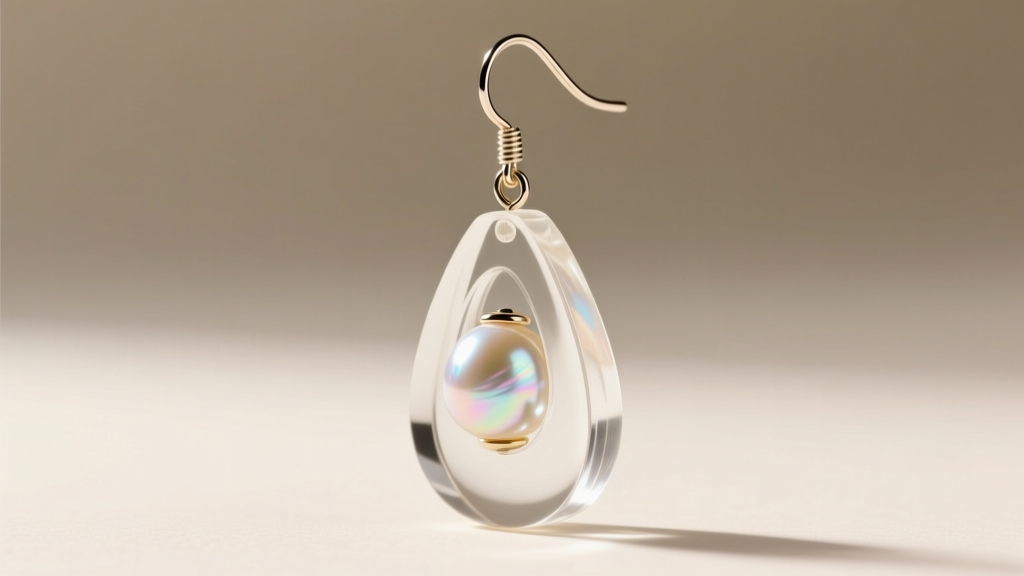
- The Paddle Clip: Introduced in the late 1940s and ubiquitous in the 1950s, this mechanism features a wide, flat, paddle-shaped metal arm attached to a spring-loaded hinge. The wide surface area distributed pressure across the earlobe, preventing the intense pinching associated with older screw-backs.
- Screw-Backs: While still present, adjustable screw-back earrings from the 1950s often feature a distinct 'cup' pad made of early vulcanized rubber or silicone, designed to grip the earlobe without slipping.
- Material Fatigue: The spring steel used in 1950s paddle clips was highly resilient, but after 70 years, the tension often degrades. When evaluating vintage pieces, test the hinge. A genuine 1950s mechanism will still exhibit a firm, snappy closure, whereas modern reproductions often use weaker, stamped alloys that feel loose or flimsy.
Preservation and Material Degradation Framework
Preserving the material integrity of 1950s earrings requires an understanding of their specific chemical vulnerabilities. The Gemological Institute of America (GIA) frequently notes that improper cleaning is the primary cause of value destruction in vintage costume jewelry.
Never use ultrasonic cleaners, silver dip, or ammonia-based solutions on 1950s rhinestone earrings. The high-frequency vibrations will shatter the fragile adhesive bonds holding the glass stones, and the chemicals will instantly strip the delicate Aurora Borealis vapor coating and dissolve the silver foil backing.
For routine maintenance, use a soft, dry microfiber cloth and a clean, dry makeup brush to gently dislodge dust from the prong settings. If the rolled gold brass base has developed verdigris (green corrosion), carefully apply a minimal amount of anhydrous isopropyl alcohol using a cotton swab, ensuring no liquid seeps into the stone settings. Store these pieces in a low-humidity environment with anti-tarnish silica packets to prevent the base metals from oxidizing and the glue from desiccating.
Sourcing and Valuation Insights
When sourcing 1950s earrings, material composition directly dictates the valuation tier. Pieces featuring intact AB Swarovski stones, heavy 1/20 12K rolled gold overlays, and complex, multi-stone pavé settings command premium prices, often ranging from $150 to over $800 for signed pieces by houses like Miriam Haskell, Trifari, or Dior. Conversely, unsigned, mass-produced thermoplastic hoop earrings, while charming, generally reside in the $30 to $60 range. By focusing on the tangible material properties—the weight of the lead glass, the thickness of the gold bond, and the snap of the spring hinge—collectors can accurately navigate the vintage market and preserve these mid-century masterpieces for future generations.


