Troubleshooting Cinnabar Earrings: Toxicity, Fakes & Repairs
Learn how to troubleshoot cinnabar earrings. Discover how to spot toxic fakes, repair chipped lacquer, and prevent lobe tearing from heavy stone drops.

The Hidden Dangers: Mineral vs. Lacquer Cinnabar
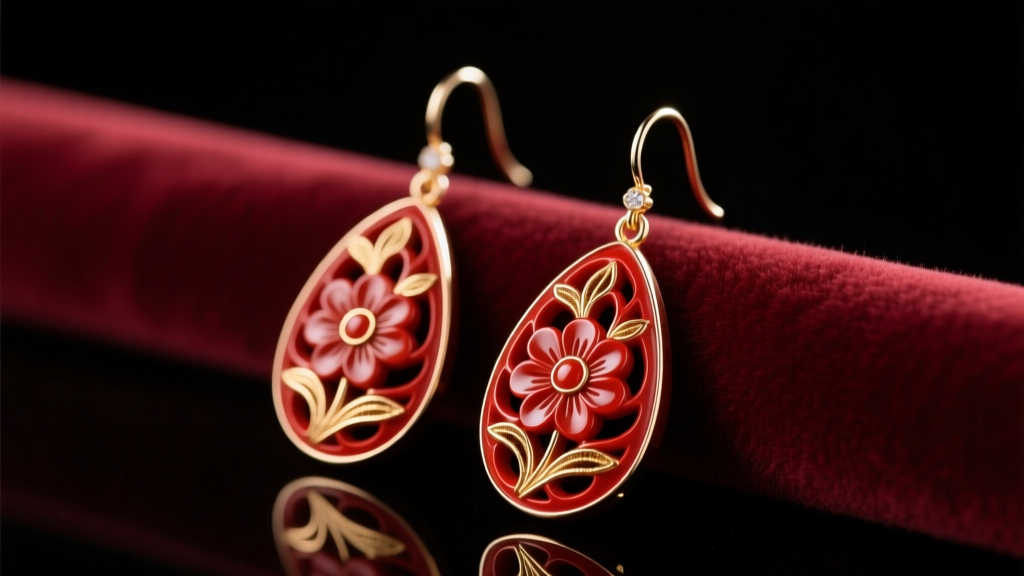
When collectors and vintage jewelry enthusiasts encounter cinnabar earrings, they are often captivated by the deep, oxblood red hues and intricate carvings. However, troubleshooting these pieces requires an immediate understanding of a critical material distinction: true mineral cinnabar versus cinnabar lacquer. The problems you will face—from severe toxicity to structural earlobe damage—depend entirely on which material you are handling.
Toxicity Troubleshooting: Is Your Jewelry Safe?
True mineral cinnabar is mercury(II) sulfide (HgS). According to the Gemological Institute of America (GIA), while solid HgS is relatively stable, it can degrade or release toxic mercury vapor if exposed to high heat, friction, or acidic skin environments. Wearing raw mineral cinnabar against the skin is a severe health hazard. Conversely, vintage 'cinnabar' jewelry is almost exclusively Chinese carved lacquer—a sap derived from the Toxicodendron vernicifluum tree, layered over a wood or resin core and pigmented with vermilion. While the urushiol in raw lacquer causes severe contact dermatitis (similar to poison ivy), fully cured vintage lacquer is generally inert and safe to wear. However, poorly cured modern replicas may still leach uncured urushiol or heavy metal pigments like lead and cadmium.
For absolute certainty without damaging the piece, handheld XRF (X-ray Fluorescence) spectrometers can detect mercury and lead emissions in seconds. Many university gemology labs or antique appraisal events offer XRF scanning for a nominal fee, providing a definitive safety clearance before you wear the earrings.
Diagnostic Smell Test: Never heat mineral cinnabar. If you gently rub a suspected lacquer piece with a warm, damp cloth and it emits a faint, smoky, campfire-like odor, it is likely authentic cured lacquer. A sharp, chemical, or garlic-like sulfur smell indicates dangerous mineral or synthetic degradation.
Structural Failures: Fixing Heavy & Fragile Drops
The most common physical complaint with cinnabar earrings is structural failure, but the root cause differs wildly between stone and lacquer. Mineral cinnabar has a specific gravity of 8.1, making it extraordinarily dense. A modest 20mm mineral drop can weigh over 15 grams. Lacquer, however, has a specific gravity of roughly 1.05, making it feather-light. If your 'cinnabar' earrings are unexpectedly heavy, they are either mineral (toxic) or glass/resin fakes.
The Lobe-Tear Prevention Framework
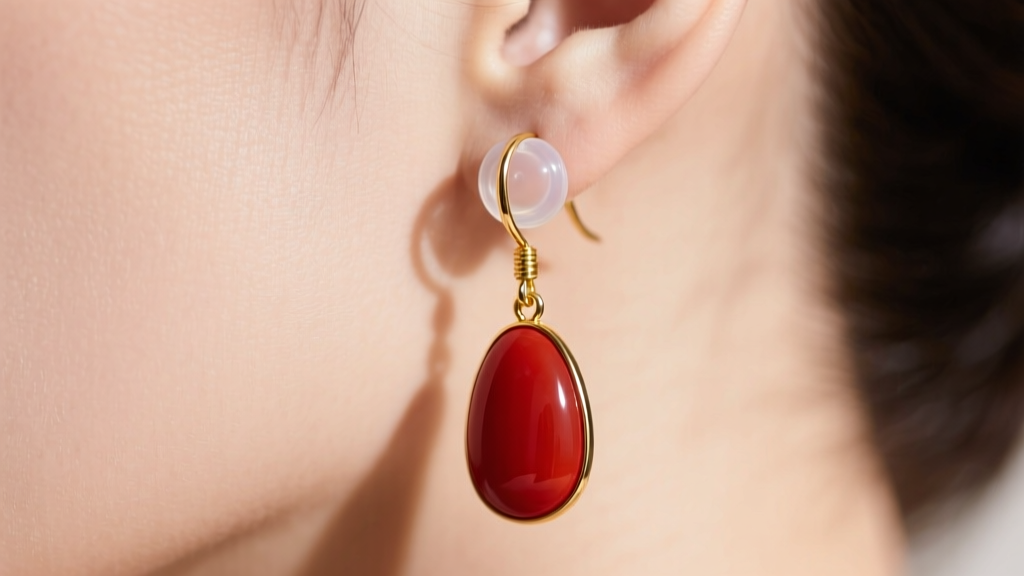
If you are wearing heavy vintage-style drops or glass replicas mimicking the weight of stone, standard 20-gauge (0.81mm) earring wires will eventually bend, causing the earring to slip out or tear the piercing tract. The average earlobe piercing tract is only 8mm to 10mm long. A 15-gram drop exerts continuous shear stress on this small fistula, leading to 'cheese-cutter' syndrome where the jewelry slowly migrates downward through the tissue. To troubleshoot heavy drops:
- Upgrade the Wire: Swap standard hooks for 18-gauge (1.02mm) or 16-gauge (1.29mm) niobium or surgical steel French wires. Thicker wire distributes the gravitational load across a wider surface area of the earlobe.
- Use Silicone Stabilizers: Commercial products like 'Lobe Wonder' patches or heavy-duty silicone O-rings provide a backstop that prevents the wire from slicing through the tissue.
- Chain Supports: For extreme weights, route an ear chain from the earring hook to a secondary helix or cartilage piercing to offload the tension from the lobe entirely.
Authenticity Matrix: Spotting Fakes vs. Real Carved Lacquer
The market is flooded with dyed resin masquerading as antique cinnabar lacquer. Troubleshooting authenticity requires a multi-sensory approach. Avoid the destructive 'hot pin test' often recommended on amateur forums; melting a pin into the piece will permanently scar authentic lacquer and release toxic fumes if the piece is plastic or mineral. Instead, use the diagnostic matrix below, favored by gemologists and antiquities appraisers.
| Material | Specific Gravity | UV (Blacklight) Reaction | Thermal / Friction Reaction |
|---|---|---|---|
| Mineral Cinnabar | 8.1 (Very Heavy) | Inert / No Reaction | Releases toxic SO2 / Hg vapor (Do Not Test) |
| Vintage Lacquer | ~1.05 (Light) | Mild orange/peach glow | Smells like campfire / woodsmoke |
| Dyed Resin (Fake) | ~1.10 (Medium) | Bright chalky blue/white | Melts, smells like burnt plastic |
| Glass Replica | ~2.5 (Heavy) | Inert | Remains hard, no odor |
Furthermore, examine the carving depths. Genuine hand-carved lacquer, as documented by the Metropolitan Museum of Art, features deep, undercut V-shaped channels built up through hundreds of micro-layers. Molded resin fakes often have shallow, U-shaped grooves with uniform, rounded edges and visible seam lines where the silicone mold halves met.
Restoration Guide: Repairing Chips and Cracks
Cinnabar lacquer is highly susceptible to chipping, especially in low-humidity environments where the wooden or fabric core shrinks, causing the rigid lacquer shell to fracture. If your vintage earrings arrive with edge chips, improper repair can destroy their value and structural integrity.
Step-by-Step Lacquer Consolidation
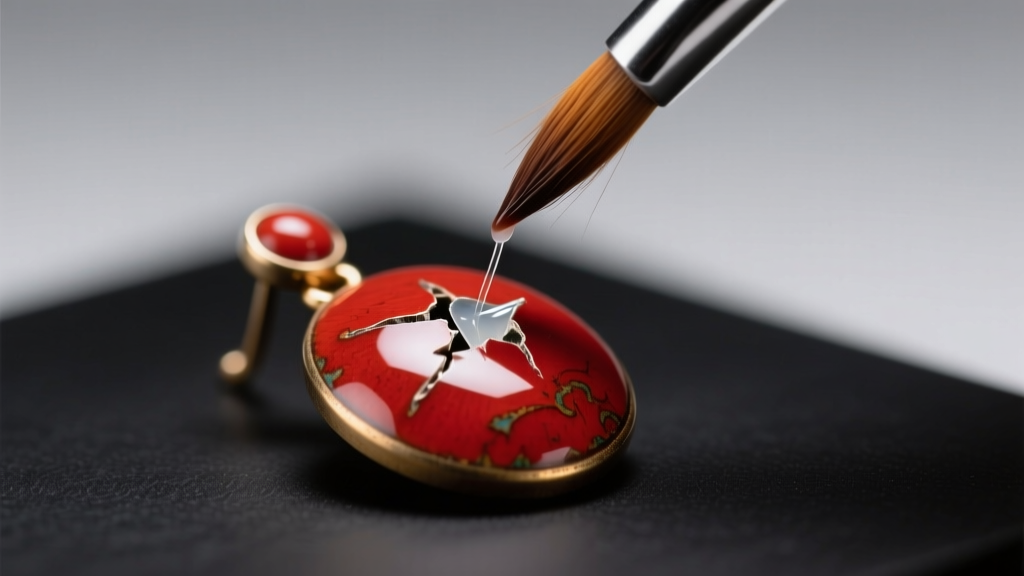
Never use cyanoacrylate (Superglue) on lacquer. It cures with a white 'bloom' that permanently stains the red pigment, and its rigid molecular structure will cause adjacent lacquer layers to crack under thermal expansion. Instead, professional conservators use Paraloid B-72, an ethyl methacrylate copolymer.
- Clean the Area: Gently wipe the chipped area with a cotton swab lightly dampened with mineral spirits to remove skin oils. Do not use alcohol, which can dehydrate the lacquer.
- Prepare the Adhesive: Dissolve Paraloid B-72 pellets in acetone to create a 10% solution. This low-viscosity mixture will wick into microscopic fissures via capillary action.
- Consolidate: Apply the solution using a micro-fine sable brush. Allow the acetone to flash off (evaporate) for 15 minutes. The remaining acrylic resin will bind the flaking layers without altering the refractive index of the original piece.
- Humidity Control: Store repaired lacquer earrings in a microclimate box maintained at 55-60% relative humidity. Fluctuations below 40% will trigger new stress fractures in the organic material.
Expert Sourcing & Safe Alternatives
If the toxicity risks of mineral cinnabar or the fragility of antique lacquer are too high for daily wear, consider modern alternatives that capture the aesthetic without the troubleshooting nightmares. High-end enamel work, specifically plique-à-jour or champlevé techniques using copper oxide pigments, can replicate the deep vermilion tones of cinnabar. Studio enamelists often use 24-karat gold foil backing to give the red enamel a luminous, multidimensional depth that mimics layered lacquer.
Alternatively, ethically sourced red carnelian or high-grade red jasper cabochons offer the visual weight and rich coloration of cinnabar, but with the durability (Mohs hardness 6.5-7) required for secure, lifelong wear in standard earring settings. When sourcing carnelian, look for stones sourced from India or Brazil that have been traditionally heat-treated to enhance the iron oxide inclusions, yielding a deep, opaque crimson that closely mimics the visual density of carved lacquer without the conservation headaches.