The Complete Technical Guide to the 20 Gauge Earring Post
Discover the metallurgy, gauge dimensions, and structural limits of the 20 gauge earring post for optimal lobe healing and long-term wear.

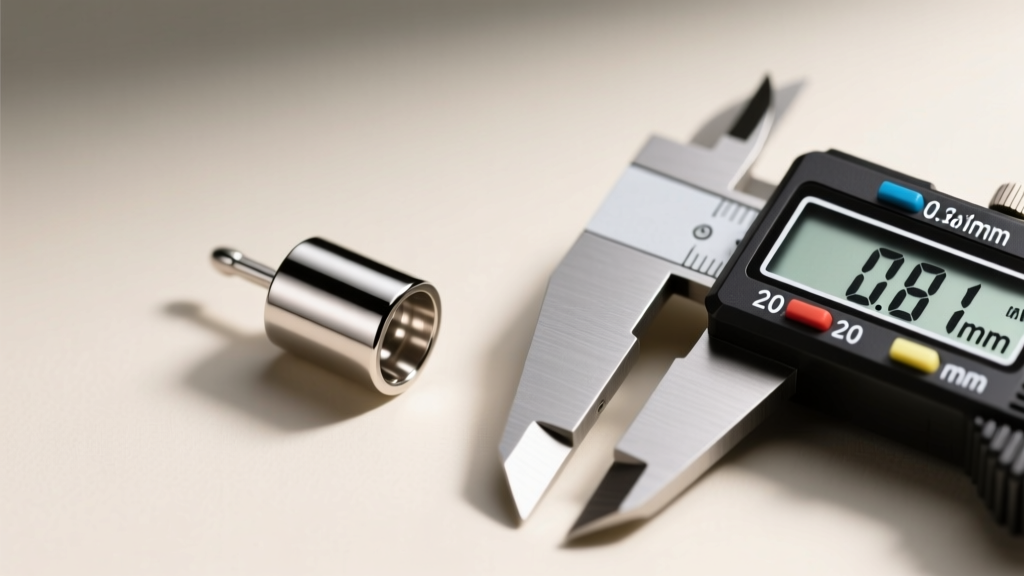
The Exact Dimensions and Tolerances of 20 Gauge Wire
In the jewelry manufacturing sector, the term 'gauge' refers to the American Wire Gauge (AWG) standard, a logarithmic stepped system used to measure the diameter of round, solid, nonferrous, electrically conducting wire. When we discuss a 20 gauge earring post, we are referring to a specific cylindrical diameter of 0.0320 inches, which translates precisely to 0.8128 millimeters. In the body jewelry industry, this is universally rounded to 0.81mm or 0.80mm for consumer-facing specifications.
Understanding this exact dimension is critical because the structural integrity of an earring post drops exponentially as the diameter decreases. The cross-sectional area of a 20 gauge post is approximately 0.518 square millimeters. Compared to an 18 gauge post (1.02mm / 0.823 sq mm), the 20 gauge variant possesses roughly 37% less material mass to resist lateral bending and shear forces. High-precision manufacturers maintain a tolerance of ±0.02mm on their wire drawing dies to ensure that a 20 gauge post will seamlessly interface with standard friction backs and threaded components without excessive wobble or damaging tension.
Metallurgical Grades: Which Alloys Survive at 0.81mm?
Not all metals behave identically when drawn down to a sub-millimeter thickness. The yield strength and fatigue limit of the alloy dictate whether a 20 gauge post will survive daily wear or permanently deform during sleep.
Implant-Grade Titanium (ASTM F136)
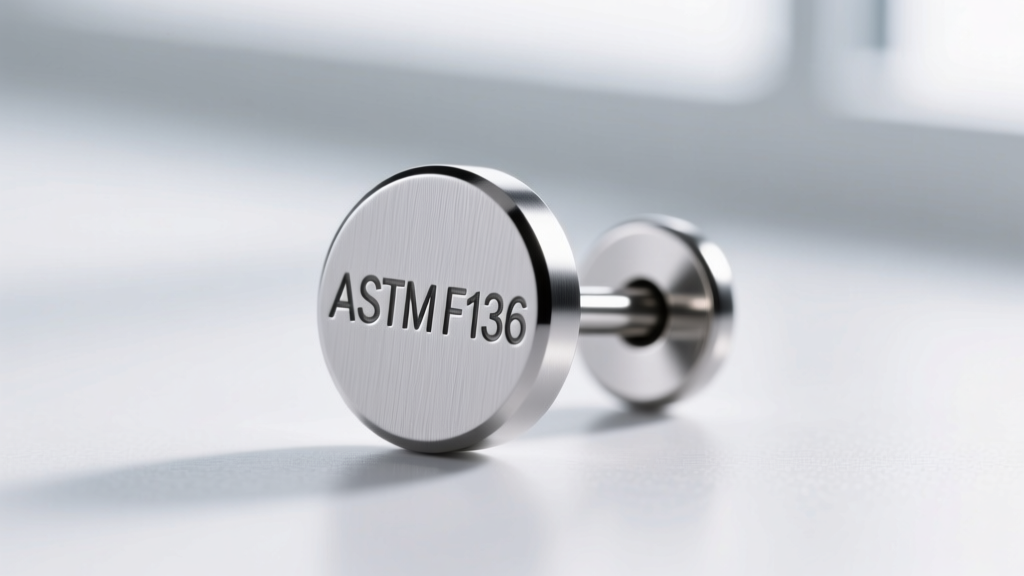
The undisputed gold standard for body jewelry is Ti-6Al-4V ELI (Extra Low Interstitial), designated under ASTM F136. This specific alloy offers an exceptional strength-to-weight ratio and complete biocompatibility. At 0.81mm, an ASTM F136 titanium post exhibits high resistance to bending and is entirely nickel-free, eliminating the risk of contact dermatitis. According to the Association of Professional Piercers (APP), implant-grade titanium is the only recommended material for initial healing piercings, though 20 gauge is generally reserved for standard lobes rather than cartilage.
Niobium and 316L Surgical Steel
Niobium is highly biocompatible but possesses a much lower tensile strength than titanium. A 20 gauge niobium post is exceptionally malleable and will bend under minimal lateral pressure, making it unsuitable for heavy decorative tops. Conversely, 316L surgical steel contains nickel and has a lower fatigue limit; repeated micro-bending during sleep can cause a 20g steel post to snap at the solder joint due to metal fatigue.
Karat Gold Alloys (14k vs. 18k)
Pure 24k gold is far too soft for a 0.81mm post. 18k gold (75% pure gold) is alloyed with silver, copper, or palladium to increase hardness. However, even hardened 18k gold can suffer from 'creep' (slow deformation under constant stress) at this thin gauge. 14k gold (58.5% pure gold) offers superior rigidity for 20 gauge posts, provided it is alloyed without nickel to maintain hypoallergenic properties.
Structural Failure Modes in Thin-Gauge Posts
When engineering a 20 gauge earring post, jewelers must account for specific mechanical failure modes inherent to thin-wire jewelry:
- Solder Joint Shear: The weakest point of any stud earring is the junction where the post meets the decorative head. Traditional torch soldering can anneal (soften) the surrounding wire. Expert manufacturers use precision laser welding to fuse the 0.81mm post to the head without altering the crystalline structure of the wire, preventing snap-failures.
- The Cheese-Cutter Effect: If a 20 gauge post is used to support a heavy dangle or a large, dense gemstone, the downward force concentrates entirely on the 0.518 sq mm surface area resting against the bottom of the piercing fistula. Over time, this localized pressure can cause tissue migration, slowly slicing through the earlobe like a cheese wire.
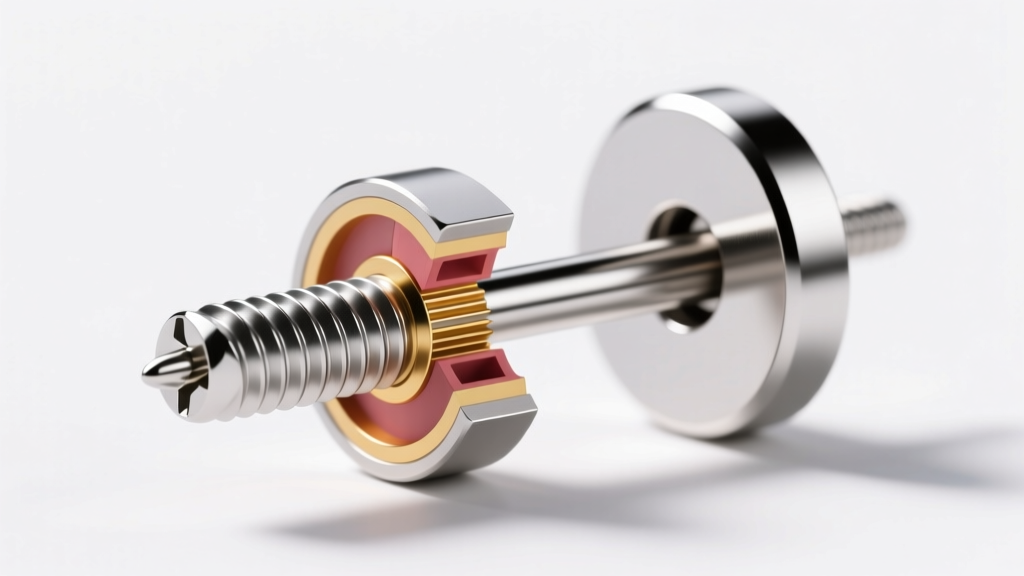
- Thread Stripping: For threaded earrings, cutting threads into a 0.81mm post removes material, reducing the core diameter to roughly 0.65mm. This severely compromises the post. Therefore, internal threading (where the screw is on the backing, and the post has a tapped hole) is preferred, though tapping a 0.81mm titanium post requires extreme precision to avoid stripping the micro-threads.
Backing Mechanics: Friction vs. Threaded vs. Push-Pin
The security of a 20 gauge earring post relies entirely on the backing mechanism. Because the wire is so thin, the tolerances for the backing are incredibly tight.
| Backing Type | Mechanism | Pros for 20g Posts | Cons & Failure Risks |
|---|---|---|---|
| Friction (Butterfly) | Tension-based metal loops gripping the post | Inexpensive, easy to insert | Harbors bacteria, loses tension over time, can scrape the 0.81mm post |
| External Thread | Screw threads cut directly into the post | Secure when new | Destroys post integrity, threads strip easily, tears tissue on insertion |
| Internal Thread | Post features a tapped hole; backing has a screw | Preserves post diameter, smooth insertion | Micro-tapping a 20g post is difficult; screw can snap inside the post |
| Push-Pin (Friction Fit) | Post has a slight taper or bend; pushed into a hollow tube backing | Highly secure, no threads to strip, customizable tension | Requires precise bending by the user, can loosen if bumped |
For high-end 20 gauge gold and titanium jewelry, the push-pin (or press-fit) mechanism has become the industry standard in professional piercing studios. It eliminates the need to cut destructive threads into the delicate 0.81mm wire while providing a secure, customizable fit.
Piercing Compatibility: Lobe vs. Cartilage Dynamics
A common misconception among consumers is that a 20 gauge earring post is universally suitable for all ear piercings. From a physiological and mechanical standpoint, this is incorrect.
Standard Earlobes
The earlobe is composed of soft, vascularized tissue with high elasticity. A 20 gauge post (0.81mm) is the traditional standard for initial lobe piercings performed with a needle, and it is the default size for almost all commercial fashion earrings. The tissue easily accommodates the thin profile, and the risk of migration is low provided the jewelry is lightweight.
Cartilage (Helix, Tragus, Conch)
Cartilage is dense, avascular connective tissue. Piercing cartilage with a 20 gauge needle and inserting a 20 gauge post is strongly discouraged by professional piercers. The thin wire creates a high-pressure point within the rigid cartilage channel, significantly increasing the risk of the 'cheese-cutter' migration effect. Furthermore, cartilage piercings are highly susceptible to swelling and impact; a 0.81mm post can easily bend or snap if bumped during the 6-to-12-month healing period. The APP strictly recommends a minimum of 16 gauge (1.29mm) or 14 gauge (1.63mm) for initial cartilage piercings to ensure structural stability and proper tissue support.
Expert Sourcing and Pricing Benchmarks
When sourcing 20 gauge earring posts, the price discrepancy between mass-market fashion jewelry and professional body jewelry is vast, reflecting the differences in metallurgical verification and manufacturing precision.
- Mass-Market Commercial (e.g., Claire's, Amazon Basics): Typically priced between $5 and $15 per pair. These are often made from unverified 'surgical steel' or brass with thin gold plating. The posts are frequently closer to 21 or 22 gauge to save on material costs, and the friction backs are prone to rapid tension loss.
- Professional Studio Brands (e.g., Intrinsic Body, NeoMetal): Priced between $15 and $45 for implant-grade ASTM F136 titanium. These brands guarantee true 20 gauge (0.81mm) dimensions, utilize internal threading or precision push-pin mechanisms, and offer mirror-finish polishing to prevent microscopic tissue irritation.
- High-End Luxury (e.g., Maria Tash, BVLA): Priced from $80 to over $300 for solid 14k or 18k gold. At this tier, the 20 gauge posts are often laser-welded to intricate diamond or gemstone settings, and the gold alloys are specifically formulated for maximum rigidity at thin gauges.
Expert Takeaway: Never compromise on the metallurgical grade of a 20 gauge post. Because the physical mass of the wire is so small, any impurities, nickel content, or structural weaknesses are magnified. Always demand ASTM F136 titanium or verified nickel-free 14k/18k gold from reputable manufacturers to ensure both the longevity of the jewelry and the health of the piercing fistula.


