Expert Care and Cleaning Tips for a Single One Hoop Earring
Learn expert cleaning and maintenance tips for your favorite one hoop earring. Discover safe methods for gold, titanium, and gemstone hoops.

The Asymmetric Trend: Why Your Single Hoop Needs Special Attention
The asymmetric jewelry movement has firmly cemented the one hoop earring as a staple of modern curated ear aesthetics. Whether you are sporting a solitary 14k gold huggie or a dramatic 16-gauge titanium clicker, wearing a single piece continuously means it endures double the environmental exposure, sebum buildup, and friction compared to a rotated pair. In 2026, jewelry care has evolved beyond simple wiping; it requires an understanding of metallurgy, gemstone porosity, and dermatological hygiene to maintain both the piece and your piercing health.
Because a single hoop is often worn 24/7, the clasp mechanism and the interior wire become magnets for dead skin cells, hair products, and natural oils. Neglecting this maintenance doesn't just dull the metal's shine—it can lead to contact dermatitis or localized piercing irritation. Below, we break down the exact protocols for maintaining your favorite solitary hoop.
Understanding Hoop Anatomy and Gauge-Specific Traps
Before applying any cleaning solution, you must identify the clasp type and wire gauge of your one hoop earring, as these dictate your mechanical cleaning approach.
- Hinged Clickers (16G - 14G): Popular for cartilage and daith piercings. The hinge barrel and the clicking latch are prime traps for keratin and soap residue. A standard cloth cannot reach inside the 1.2mm or 1.6mm wire hinge.
- Continuous / Endless Hoops (20G - 18G): These rely on a thin wire slipping into a hollow tubing latch. Moisture trapped inside the tubing can cause hidden oxidation, especially in sterling silver or lower-karat gold alloys.
- Latch-Back Clasps: The traditional saddle-back or wire-latch design features a crevice where the wire meets the post. This requires targeted brushing to prevent bacterial harboring.
Material-Specific Cleaning Protocols
Not all metals react the same way to cleaning agents. Using the wrong chemical can strip anodized finishes or pit porous alloys.
ASTM F136 Titanium & 316L Surgical Steel
Implant-grade titanium (ASTM F136) is highly biocompatible and resistant to corrosion. However, if your titanium hoop is anodized (colored via voltage-controlled oxidation), you must avoid ultrasonic cleaners and alcohol-based solutions, which can degrade the vibrant oxide layer. Stick to warm water and a mild, fragrance-free dish soap. For 316L surgical steel, which contains trace amounts of nickel, regular cleaning is vital to prevent nickel salts from building up and triggering allergic reactions.
14K and 18K Solid Gold
Gold alloys contain copper, silver, and zinc. 14k gold (58.5% pure gold) is more durable but more prone to tarnishing from sulfur compounds in the air and lotions. 18k gold (75% pure gold) is softer and more susceptible to micro-scratches. Clean gold hoops using a few drops of mild dish detergent (like Dawn) in lukewarm water. Avoid toothpaste or baking soda pastes, as their abrasive particles will create microscopic scratches that dull the mirror finish over time.
Sterling Silver (925)
Silver reacts with hydrogen sulfide in the air to form silver sulfide (tarnish). For a silver one hoop earring, use a dedicated silver polishing cloth impregnated with anti-tarnish agents. Never use liquid silver dips on hoops with gemstone accents, as the harsh thiourea chemicals can permanently cloud porous stones.
Step-by-Step Deep Cleaning Routine
For a thorough monthly deep clean of your daily-wear hoop, follow this professional protocol:
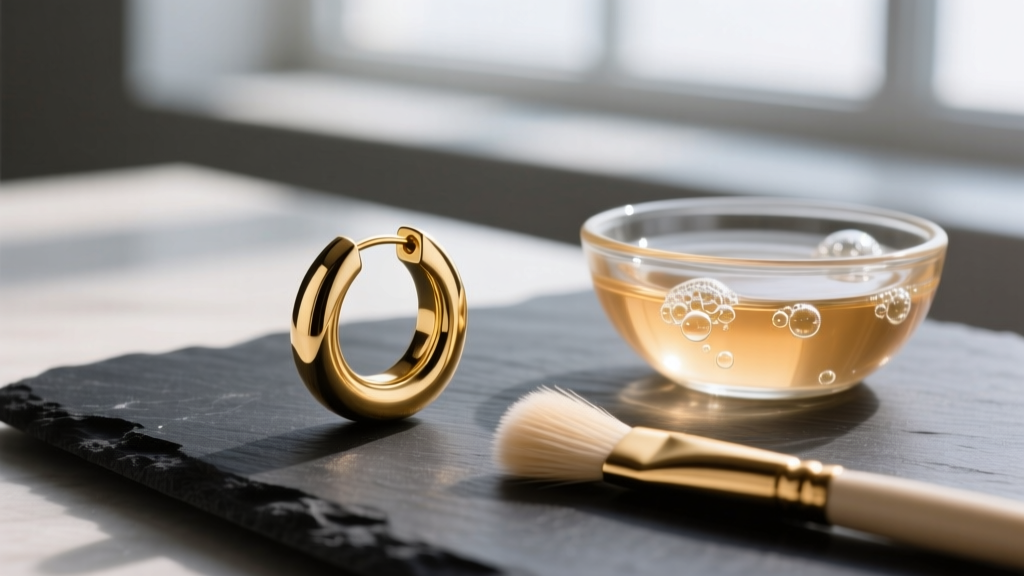
- Prep the Solution: Mix three parts lukewarm water with one part mild, phosphate-free dish soap in a small glass bowl.
- Soak (With Caveats): Submerge plain metal hoops for 5–10 minutes to loosen sebum. Do not soak hoops with opals, pearls, or emeralds, as water can degrade their internal structure or fracture oils.
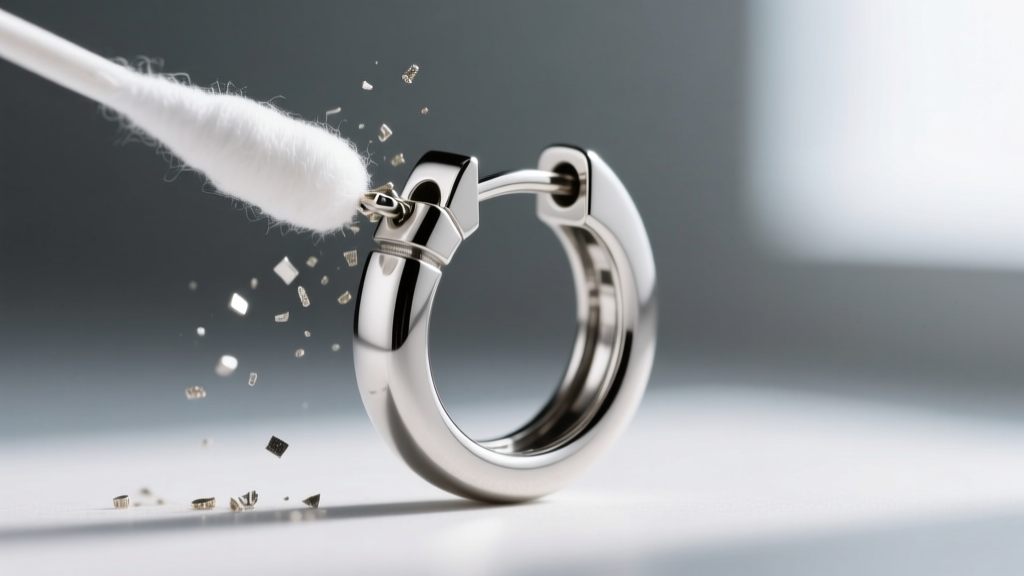
- Agitate the Clasp: Dip a soft-bristled baby toothbrush or an interdental brush into the solution. Gently scrub the hinge barrel, the latch groove, and the interior curve of the wire.
- Rinse Thoroughly: Hold the hoop under a gentle stream of distilled or filtered water. Tap water contains chlorine and minerals that can leave hard water spots on high-polish metals.
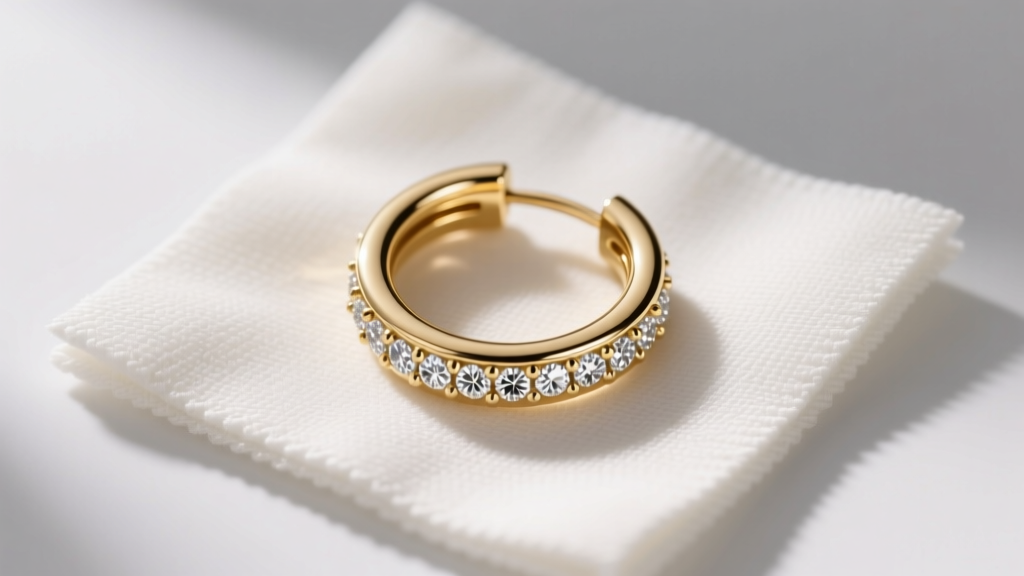
- Dry Completely: Pat dry with a lint-free microfiber cloth. Use a hairdryer on the 'cool' setting to blast moisture out of the hinge mechanism before storing or reinserting.
Pro-Tip from the Experts: According to the Association of Professional Piercers, maintaining strict hygiene around the jewelry and the piercing site is crucial to avoid localized infections. Always ensure your hands are washed with antimicrobial soap before handling your hoop, and avoid rotating the jewelry through the piercing channel while it is dry, which can cause micro-tears in the fistula.
Cleaning Compatibility Matrix
Use this quick-reference table to ensure you never ruin a finish or loosen a stone setting.
| Material / Accent | Mild Soap & Water | Ultrasonic Cleaner | Isopropyl Alcohol | Polishing Cloth |
|---|---|---|---|---|
| Plain Gold / Platinum | Safe | Safe | Safe | Safe |
| Anodized Titanium | Safe | Avoid (Strips color) | Avoid | Use gently |
| Pave Diamonds | Safe | Risk (Loosens glue/prongs) | Safe | Avoid (Snags) |
| Opals / Pearls | Damp wipe only | Never | Never | Never |
| Sterling Silver | Safe (Dry fast) | Safe | Avoid | Highly Recommended |
Gemstone Precautions: Protecting the Accents
If your one hoop earring features gemstones, the cleaning strategy must adapt. The Gemological Institute of America (GIA) emphasizes that while diamonds are incredibly hard and can withstand warm soapy water, they are lipophilic—meaning they attract and hold onto oils and lotions. A buildup of hand cream on the pavilion (underside) of a diamond hoop will completely kill its light return, making it look cloudy and lifeless.
Conversely, porous stones like turquoise, lapis lazuli, and malachite will absorb chemicals and water, leading to discoloration. For these delicate accents, use a barely damp microfiber swab to clean the metal around the stone, carefully avoiding direct contact with the gem itself.
Storage and Maintenance for Longevity
How you store your single hoop when you eventually take it out is just as important as how you clean it. Tossing a solitary hoop into a communal jewelry box invites tangling, scratching, and exposure to ambient humidity.
- Use Anti-Tarnish Strips: Place a 3M anti-tarnish tab in your jewelry box or pouch. These strips absorb sulfur gases and moisture, dramatically slowing the oxidation process for silver and copper-alloyed gold.
- Individual Pouches: Store your one hoop earring in a dedicated, soft flannel or anti-tarnish cloth pouch. This prevents the wire from scratching against harder gemstones from other pieces.
- Clasp Position: Store the hoop with the clasp securely closed. An open latch-back or clicker can easily snag on fabric linings, bending the delicate hinge pin and ruining the mechanical 'click'.
When to See a Professional Jeweler
While at-home maintenance handles 90% of care, certain issues require a professional bench jeweler. If your hinged clicker no longer snaps shut securely, the internal tension spring or latch groove may be worn down. Similarly, if your pave diamonds are catching on your clothing or hair, the micro-prongs have likely lifted. A jeweler can perform a professional ultrasonic steam clean, tighten the prongs under a microscope, and re-polish the metal to remove deeper scratches that home care cannot address. By treating your favorite piece with this level of technical care, you ensure it remains a standout element of your curated ear for years to come.


