Earrings Feathers Trend: 2026 Avant-Garde Style Guide
Explore the 2026 earrings feathers trend, from avant-garde titanium cuts to ethical molting. Discover weight limits, gauge sizes, and styling frameworks.

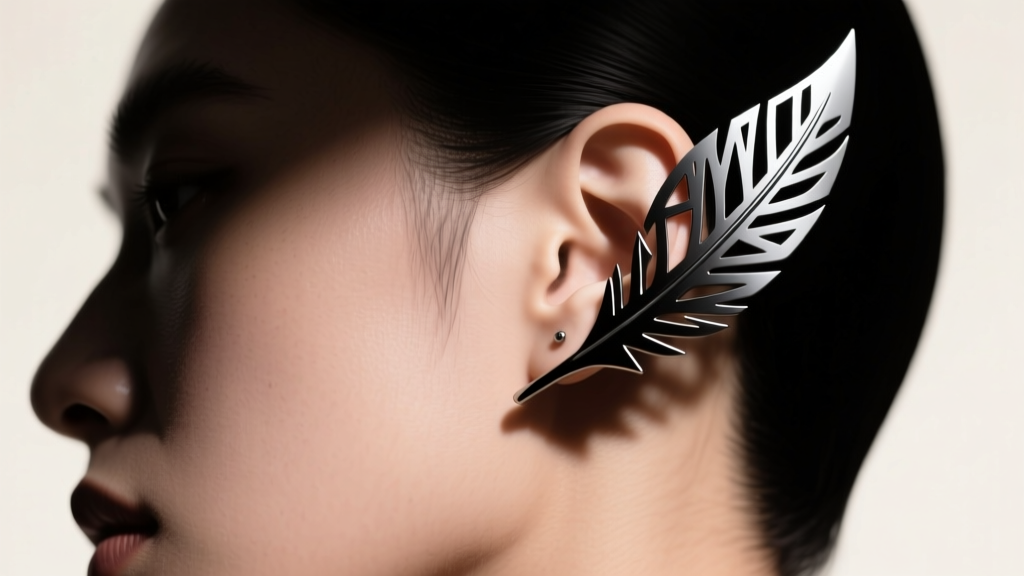
The trajectory of bohemian jewelry has undergone a radical metamorphosis. While the 2010s relegated plumage to festival fast-fashion, the contemporary earrings feathers movement of 2026 is firmly rooted in avant-garde engineering, ethical sourcing, and high-fashion structuralism. Designers are no longer simply gluing craft-store hackles to fishhook wires; they are treating natural and synthetic barbs as architectural elements. This comprehensive trend analysis dissects the material science, hardware requirements, and styling frameworks defining this year's most striking ear adornments.
The 2026 Resurgence: From Festival Fluff to Runway Architecture
The modern iteration of feathered ear styling distances itself entirely from the 'Coachella cliché.' According to recent runway analyses by Vogue, the 2026 spring/summer collections showcased plumage not as a symbol of carefree boho-chic, but as an exercise in texture and kinetic movement. Haute couture houses are utilizing stiff, structural saddle feathers and laser-cut metal alternatives to create ear cuffs and dramatic drops that mimic the aerodynamics of avian flight.
This shift is largely driven by a consumer demand for 'quiet luxury' with a kinetic twist. The focus is on the micro-movements of the barbs as the wearer turns their head, catching light in ways that static gemstones cannot. The trend heavily favors asymmetry, with a single, massive architectural feather piece worn on one ear, balanced by a minimalist metallic stud or huggie on the other.
Material Breakdown: Natural, Vegan, and Metallic
Understanding the material composition of your earrings is critical for both ethical consumption and wearability. The market has bifurcated into three distinct categories, each with unique physical properties.
| Material Type | Weight (per drop) | Durability & Humidity Reaction | Price Range (USD) | Ethical Profile |
|---|---|---|---|---|
| Ethically Molted Natural (Swan/Ostrich) | 4g - 12g | Low; curls in high humidity, barbs split easily | $120 - $450+ | Cruelty-free (gathered post-molt) |
| Bio-Acetate / Cellulose Vegan | 8g - 15g | High; immune to humidity, retains rigid shape | $65 - $180 | Vegan, biodegradable plant-based |
| Laser-Cut 316L Steel / Titanium | 12g - 22g | Extreme; waterproof, hypoallergenic, rigid | $85 - $300 | Vegan, highly sustainable/recyclable |
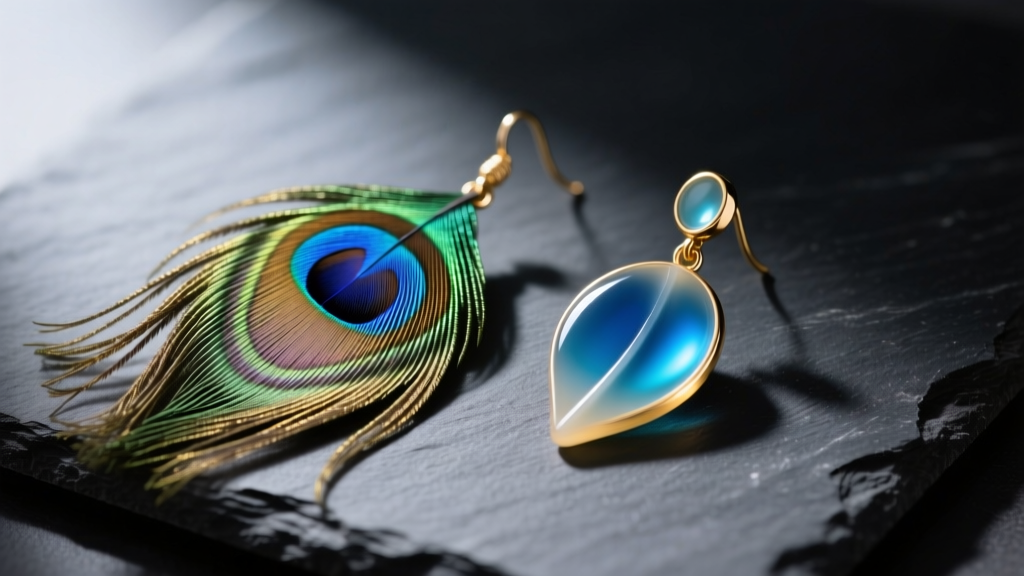
For purists seeking natural earrings feathers, ethical sourcing is non-negotiable. Reputable artisans now provide certificates of cruelty-free molting, ensuring feathers are gathered from the ground after natural shedding cycles, particularly for exotic species like peacocks and pheasants. However, for those in humid climates or seeking zero-maintenance wear, anodized titanium offers a hypoallergenic, feather-weight illusion without the biological fragility. As noted by materials experts at the Gemological Institute of America (GIA), grade 23 titanium (Ti-6Al-4V ELI) is increasingly favored in body jewelry for its superior strength-to-weight ratio, allowing for massive, intricate laser-cut feather designs that won't trigger nickel allergies or drag down the lobe.
Structural Engineering: Gauges, Clasps, and Weight Distribution
The most common failure mode in feathered jewelry is not the degradation of the barb, but the catastrophic failure of the hardware. A large ostrich plume can weigh upwards of 15 grams. Suspending this weight from a standard 22-gauge (0.64mm) fishhook wire will inevitably lead to lobe stretching, tearing, or the wire snapping at the loop.
The Hardware Matrix for Heavy Drops
- 18-Gauge (1.02mm) Leverbacks: The minimum standard for drops exceeding 8 grams. The leverback mechanism secures the earring and prevents the heavy plumage from pulling the wire forward and slipping out of the piercing.
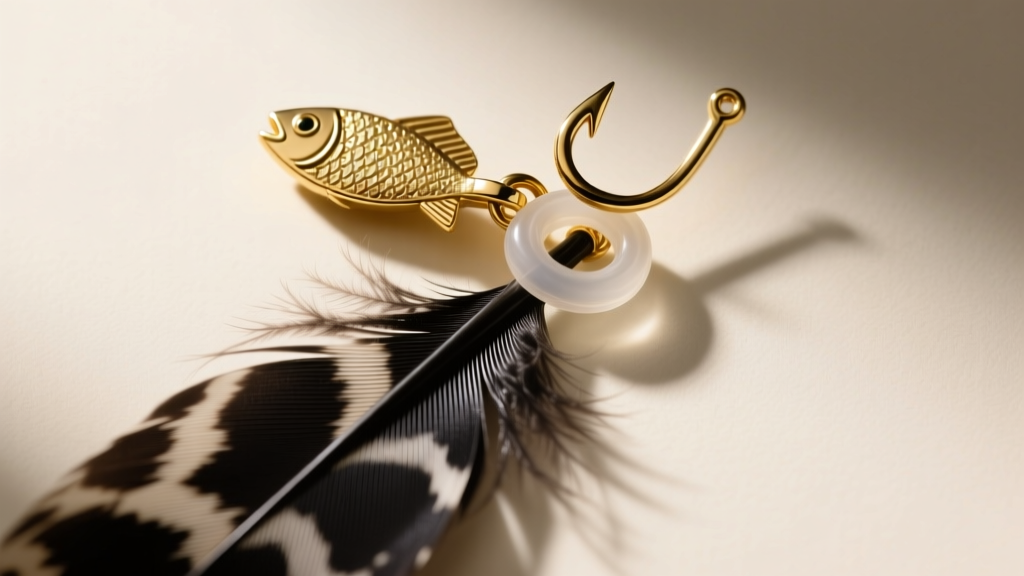
- 16-Gauge (1.29mm) French Wires with O-Rings: For avant-garde pieces weighing 12g+, a thicker 16g wire is required. Jewelers must pair this with a clear silicone O-ring stopper behind the lobe to distribute the sheer force across a wider surface area of the ear tissue.
- Chain-Link Ear Cuffs: To bypass lobe weight limits entirely, 2026's top designers are utilizing tension-based cartilage cuffs connected via delicate 20-gauge chains to the lobe, effectively transferring 60% of the feather's weight to the upper ear cartilage.
Styling Frameworks: Face Shapes and Proportions
Because feathered pieces possess high visual volume and kinetic energy, they must be scaled to the wearer's bone structure. The 'bigger is better' mentality often overwhelms delicate features. Use the following proportional framework to select your silhouette:
The Rule of Kinetic Volume: A feather earring's visual weight is not just its physical mass, but the negative space it occupies when in motion. A 2-inch wide hackle feather commands more visual attention than a 4-inch narrow, stiff plume.
- Round & Heart Face Shapes: Avoid wide, fluffy marabou feathers that add horizontal volume to the cheekbones. Opt for long, narrow, and stiff pheasant tail feathers that drop vertically past the jawline, creating an elongating optical illusion.
- Square & Angular Jawlines: Soften sharp mandibular angles with curved, sweeping ostrich barbs or bio-acetate replicas that mimic a soft, downward crescent shape. Avoid rigid, geometric metal feathers that echo the sharpness of the jaw.
- Oval Face Shapes: Highly versatile. Can carry the 2026 trend of extreme asymmetry—such as a single, ear-to-shoulder architectural metal feather cuff on one side, leaving the opposite ear entirely bare or adorned with a flush-set diamond stud.
Care and Maintenance: Preventing Barb Splitting and Tarnish
Maintaining natural earrings feathers requires an understanding of keratin biology. The barbs of a feather interlock via microscopic hooks called barbules. When an earring is crushed in a jewelry box or exposed to heavy rain, these hooks detach, causing the feather to look 'split' or frayed.
The Steam Restoration Technique
Do not attempt to glue or tape split natural barbs. Instead, utilize the thermal properties of keratin. Hold the frayed earring carefully over the spout of a boiling kettle for 3 to 5 seconds. The gentle, moist heat will cause the microscopic barbules to soften and naturally re-interlock. Gently stroke the feather from the central rachis (spine) outward to the edges with your fingertips while it is still warm and damp. Allow it to air dry completely before storing.
For metallic and bio-acetate alternatives, maintenance is strictly focused on the hardware. Use a microfiber cloth dampened with a mild, ammonia-free jewelry cleaner to wipe down the laser-cut crevices where skin oils and cosmetic powders accumulate. Always store kinetic, three-dimensional pieces in rigid, cylindrical crush-proof tubes rather than flat velvet pouches to preserve their structural integrity and prevent the wire clasps from bending under pressure.


