Cuban Earrings Deep Dive: Gauge, Weight, and Clasp Mechanics
Master the technical specs of Cuban earrings. Explore gauge sizes, weight distribution, clasp mechanics, and metal grades for durable daily wear.

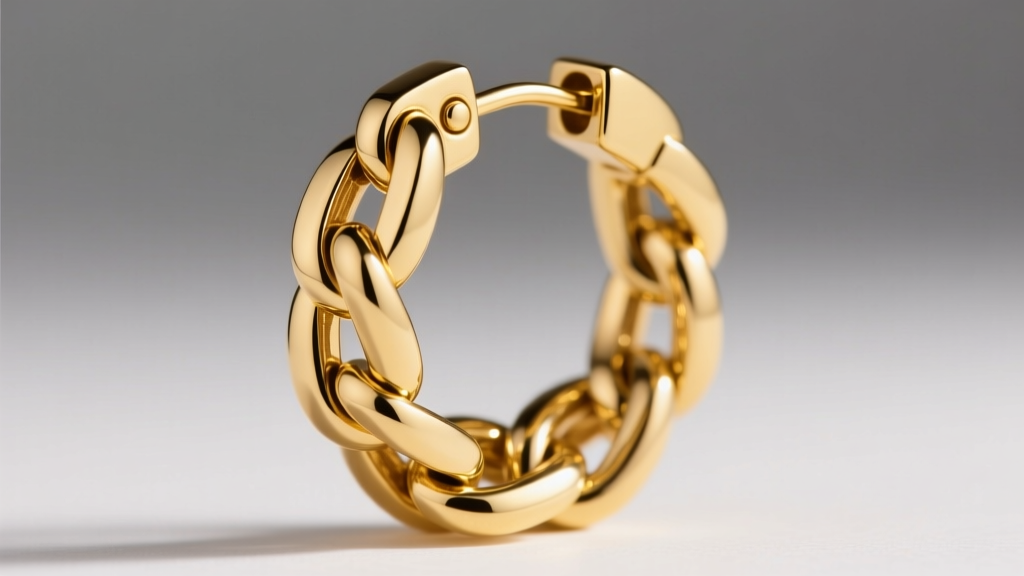
The Anatomy of a Cuban Link Earring
When evaluating Cuban earrings, most consumers focus solely on the aesthetic appeal of the interlocking links. However, from a jewelry engineering perspective, the Cuban link is a complex micro-structure that requires precise metallurgical and mechanical execution. Unlike standard cable chains or simple wire hoops, a true Cuban link begins as a round wire that is drawn, twisted, and then flat-filed on multiple axes. This filing process increases the surface area for light reflection but removes up to 30% of the original wire mass, fundamentally altering the structural integrity and weight-to-volume ratio of the final piece.
For earrings specifically, this geometry presents unique challenges. The flat-filed surfaces must be polished without compromising the tight tolerance of the interlocking joints. If the links are too loose, the earrings will twist and catch on hair; if they are too tight, the friction will cause premature wear at the contact points, eventually leading to link thinning and structural failure.
Metallurgy and Material Grades: What Holds Up?
The longevity of Cuban link hoops and huggies is heavily dictated by the Vickers hardness (HV) and tensile strength of the chosen alloy. Because the interlocking links rely on friction and precise geometry, softer metals will deform under the repetitive stress of daily wear.
| Material Grade | Vickers Hardness (HV) | Tensile Strength | Best Earring Application |
|---|---|---|---|
| 18k Yellow Gold | 120 - 140 HV | Low/Medium | Lightweight huggies, low-impact studs |
| 14k Yellow Gold | 150 - 170 HV | Medium/High | Standard hoops, daily wear Cuban links |
| 10k Yellow Gold | 180 - 210 HV | High | Heavy, oversized hoops requiring rigidity |
| 925 Sterling Silver | 60 - 80 HV | Low | Fashion hoops (requires rhodium plating) |
According to technical data from Rio Grande Jewelry Supply, 14k gold offers the optimal balance of malleability for manufacturing and hardness for long-term wear. 18k gold, while richer in color, is significantly more prone to scratching and link deformation in larger diameter Cuban hoops. For silver options, the inherent softness of fine silver means that 925 sterling silver Cuban earrings will almost certainly require periodic re-rounding of the links and are highly susceptible to tarnish in the recessed, flat-filed crevices.
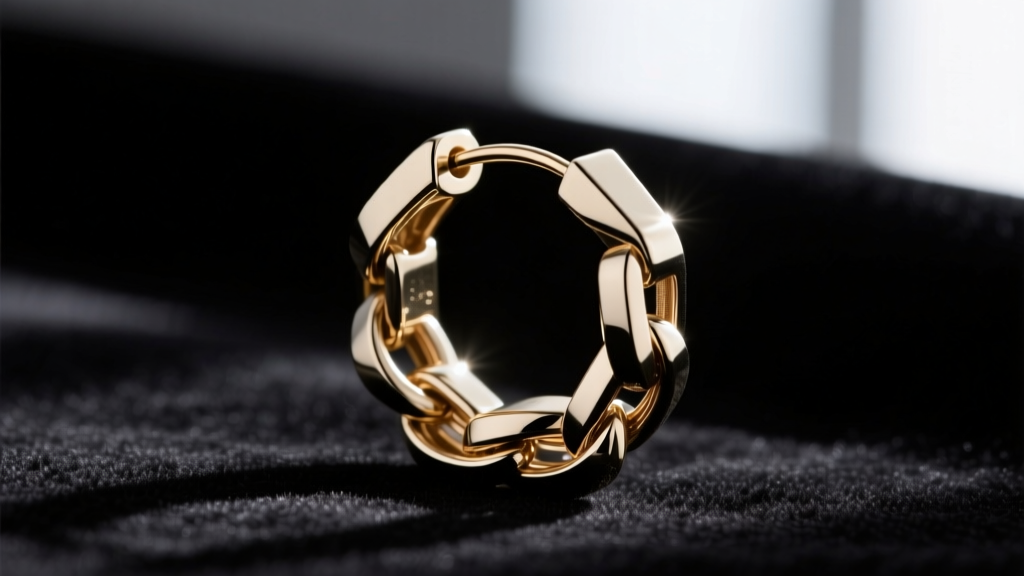
Gauge Thickness and Link Dimensions
Understanding the correlation between link width and the internal wire gauge is critical for assessing the durability of Cuban earrings. The 'width' of a Cuban link refers to the outer measurement across the flattened link, while the 'gauge' refers to the thickness of the wire used before filing.
- 3mm Width (Approx. 18-Gauge Wire): Ideal for small huggies and cartilage piercings. Lightweight, but the internal wire is thin enough that aggressive pulling can warp the link.
- 4mm Width (Approx. 16-Gauge Wire): The industry standard for classic Cuban hoops. Provides excellent structural rigidity while maintaining a comfortable weight for standard lobe piercings.
- 5mm to 8mm Width (14-Gauge to 12-Gauge Wire): Used for statement hoops. The heavy wire core ensures the links will not pull apart, but the overall weight requires specialized clasp engineering and limits wear time.
When shopping, always verify the actual millimeter width rather than relying on terms like 'chunky' or 'thick.' A true 4mm Cuban link earring crafted from solid 14k gold will have a distinct, substantial feel, whereas hollow-core or semi-solid variants will lack the necessary mass to sit correctly on the earlobe.
Weight Distribution and Earlobe Biomechanics
The physics of heavy Cuban link hoops directly impact earlobe health. A solid 14k gold Cuban hoop with a 15mm outer diameter and 4mm link width weighs approximately 4.5 grams per earring. While this seems negligible, the dynamic force exerted on the piercing fistula during movement multiplies this static weight.
'Continuous wear of earrings exceeding 6 grams per ear accelerates earlobe ptosis (sagging) and can cause micro-tears in the fistula tract, especially in older patients with decreased collagen density.' — Principles of Dermatologic Jewelry Allergies and Biomechanics, Gemological Institute of America (GIA) educational archives.
To mitigate lobe fatigue, expert jewelers design heavy Cuban hoops with a slightly thicker post or a specialized 'saddle' that distributes the weight across a wider surface area of the earlobe's back, rather than concentrating the load entirely on the piercing hole.
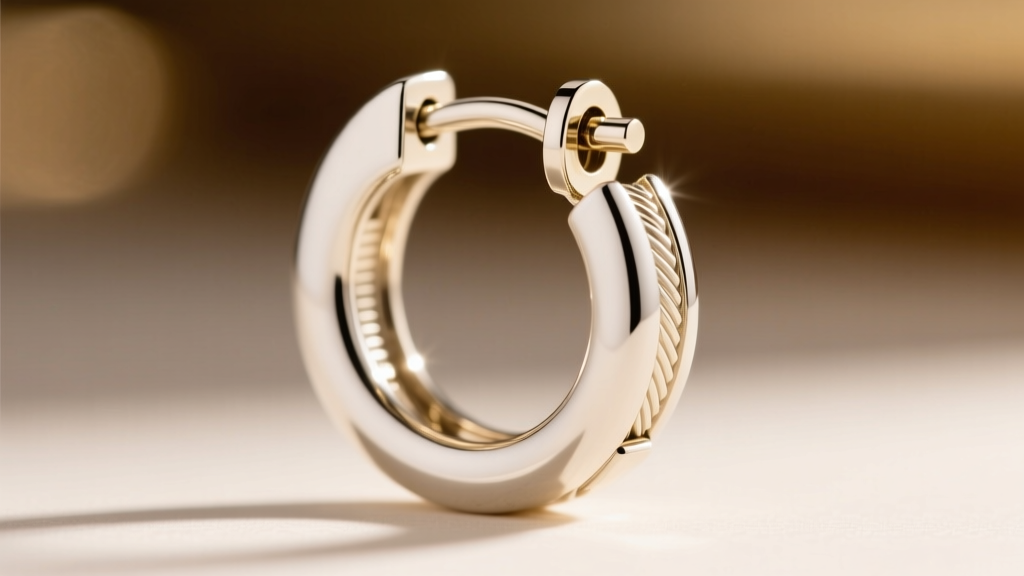
Clasp Engineering: The Weakest Link
The clasp mechanism is the most frequent point of failure in Cuban link hoops. Because the links are rigid and do not flex like a cable chain, the clasp must absorb all the torque applied to the earring.
Hinge and Snap Clasps
Common in medium-to-large Cuban hoops, the hinge and snap clasp utilizes a hollow steel or gold-alloy pin (typically 0.8mm to 1.0mm in diameter) that locks into a catch box. The primary failure mode here is the bending of the hinge pin or the fatigue of the catch box spring. If the catch box is not milled with precise tolerances, the snap closure will loosen over time, leading to lost earrings.
Saddleback and Clicker Mechanisms
For smaller Cuban huggies, the saddleback clasp is the gold standard. This design features a curved wire that snaps into a grooved latch. The friction fit relies on the exact calibration of the groove depth. A high-quality saddleback will produce a distinct, audible 'click' and require a deliberate fingernail pry to open. Avoid huggies where the saddleback wire feels loose or wobbles laterally when closed; this indicates poor milling and imminent failure.
Maintenance and Structural Troubleshooting
Maintaining the structural integrity and finish of Cuban earrings requires specific care protocols. The flat-filed surfaces and tight interlocking gaps are notorious traps for sebum, dead skin cells, and cosmetic residues.
While ultrasonic cleaners are highly effective at removing this debris, they pose a severe risk to 'iced-out' or diamond-set Cuban earrings. The high-frequency vibrations can fracture the tension settings or loosen the prongs holding the pavé diamonds. For solid metal Cuban links, an ultrasonic bath with a mild alkaline jewelry solution is safe and recommended monthly. However, for hollow-core or gemstone-set variants, manual cleaning with a soft-bristled brush and warm soapy water is the only safe method.
Additionally, if your Cuban hoops begin to twist or fail to lay flat against the ear, the links have likely been stretched. A professional jeweler can place the hoop on a specialized mandrel and use a rawhide mallet to gently compress the links back into their original interlocking tolerance, restoring both the geometry and the structural rigidity of the piece.
Final Verdict: Spec Sheet for Buyers
When investing in high-quality Cuban earrings, prioritize structural engineering over sheer size. Opt for 14k gold for the best balance of hardness and longevity, ensure the link width corresponds to a heavy enough internal wire gauge (16-gauge for 4mm widths), and meticulously inspect the clasp mechanism for a secure, wobble-free lock. By understanding these technical specifications, you can secure a pair of Cuban links that will maintain their precise geometry and brilliant finish for decades.


