How to Build an Ear Stack With Earthy Earrings: Step-by-Step
Learn how to curate a grounded ear stack with earthy earrings. This step-by-step guide covers raw metals, uncut stones, gauges, and care.

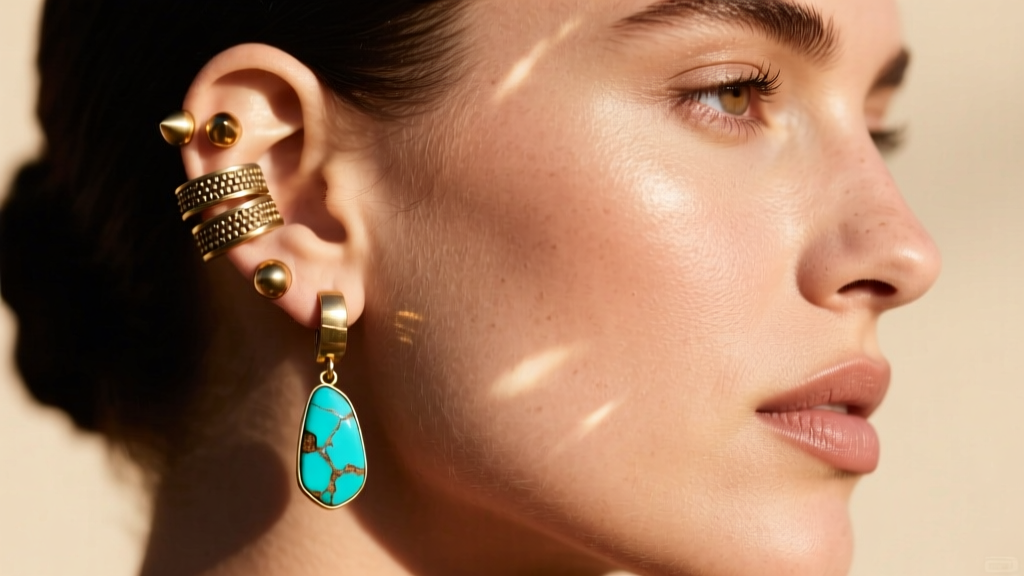
The Appeal of Grounded Aesthetics in Ear Curation
The shift toward organic, grounded aesthetics has made earthy earrings a dominant force in contemporary jewelry styling. Unlike high-polish, machine-stamped pieces, earthy earrings celebrate imperfection. They feature raw, unpolished metals like oxidized sterling silver and unlacquered brass, alongside porous, uncut gemstones such as turquoise, lapis lazuli, and agate. Building a cohesive ear stack with these materials requires more than just picking pretty stones; it demands an understanding of metal alloys, gemstone hardness on the Mohs scale, and precise gauge sizing to ensure the health of your piercings.
This step-by-step guide will walk you through the exact process of curating an earthy ear stack, from mapping your anatomy to maintaining the unique patinas of raw materials. Whether you are working with a standard 20-gauge lobe piercing or a 16-gauge helix, these actionable frameworks will help you achieve a balanced, bohemian look without compromising piercing integrity.
Step 1: Map Your Anatomy and Gauge Requirements
Before purchasing any artisan jewelry, you must verify your piercing gauges. Earthy earrings, particularly those featuring heavy uncut stones or solid raw brass, carry more weight than standard commercial jewelry. Wearing heavy drops in stretched or improperly gauged piercings can lead to lobe migration or cartilage irritation. According to the Association of Professional Piercers (APP), adhering to standard gauge sizes is critical for long-term tissue health, especially when introducing heavier, organic materials.
| Piercing Location | Standard Gauge | Recommended Earthy Material | Weight Limit & Backing |
|---|---|---|---|
| Standard Lobe | 20g or 18g | Uncut Agate, Raw Brass Drops | Up to 12g; use silicone o-rings |
| Helix / Cartilage | 16g or 18g | Oxidized Silver, Sandalwood | Under 5g; flat-back labrets |
| Tragus | 16g | Matte Ceramic, Tiny Raw Gems | Under 3g; snug flat-backs |
| Rook / Daith | 16g | Textured Copper Hoops | Clicker rings with secure latch |
When selecting earthy earrings for the lobes, always opt for pieces that come with wide-disc flat backs or use medical-grade silicone o-rings to distribute the weight of heavy uncut stones across a broader surface area of the earlobe.
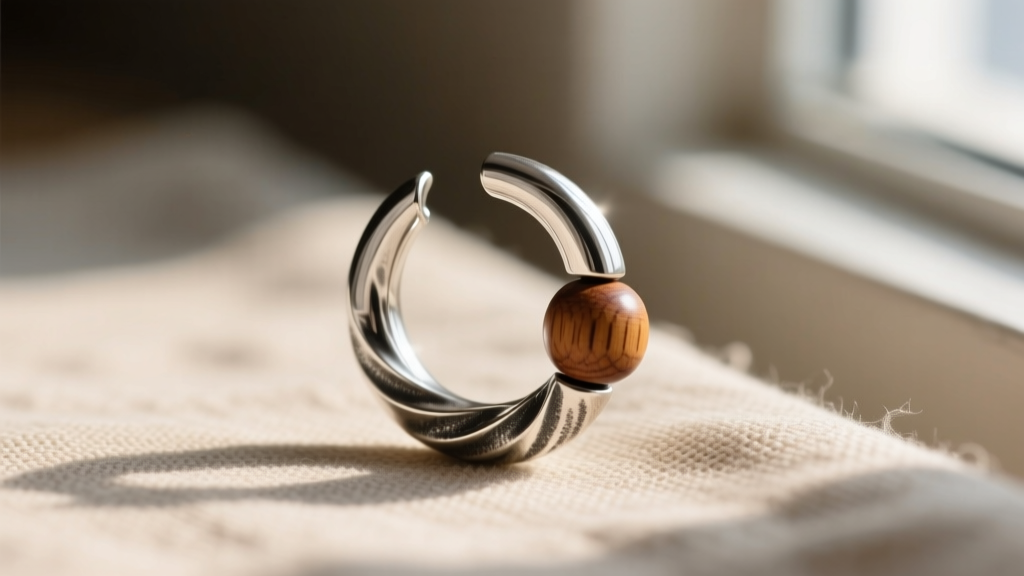
Step 2: Choose an Organic Anchor Piece
Every successful ear stack needs an anchor—the largest piece that dictates the visual weight and color palette of the arrangement. For an earthy stack, your anchor should be a statement drop or a substantial raw stone stud positioned in the primary lobe piercing.
Selecting the Right Stone and Metal
Look for uncut or rough-hewn gemstones. Uncut turquoise (Mohs hardness 5-6) paired with a raw brass (CuZn37 alloy) bezel is a quintessential earthy combination. The porous nature of the turquoise absorbs natural oils over time, deepening its color matrix, while the brass develops a rich, dark patina. Expect to invest between $45 and $110 for a high-quality, artisan-crafted anchor piece featuring genuine, unpolished stones. Avoid dyed howlite masquerading as turquoise; genuine stones will have natural matrix veining and slight temperature variations when touched to the skin.
Step 3: Layer Textures Using the Rule of Three
Once your anchor is set, build upward using the "Rule of Three" to maintain visual balance without overcrowding the ear. The earthy aesthetic relies heavily on contrasting textures rather than sheer sparkle.
- The Mid-Tier (Helix or Upper Lobe): Introduce an oxidized sterling silver huggie or a small hoop. Oxidation is achieved by treating 925 sterling silver with liver of sulfur, darkening the recessed areas while leaving the high points polished. A huggie featuring a sandalwood or ebony inlay ($60-$140) bridges the gap between metal and organic matter beautifully.
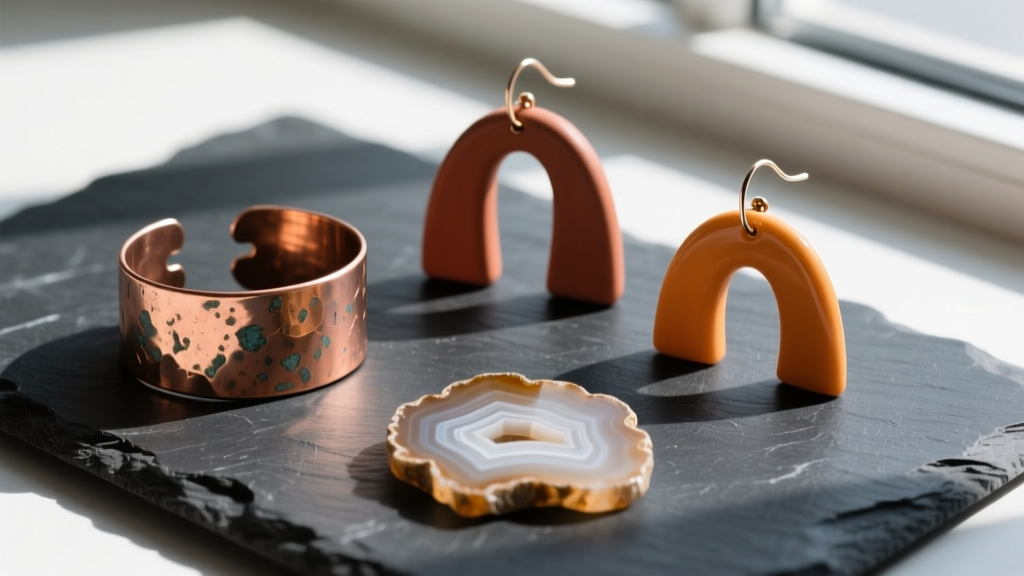
- The Accent (Tragus or Second Hole): Use a minimalist, matte-finished piece. A tiny, 18-gauge raw copper stud or a matte polymer clay arch provides a subtle nod to the earthy theme without competing with the uncut anchor stone.
- The Edge (Ear Cuff or Outer Helix): If you lack the piercings, utilize a raw copper or brass ear cuff. The malleability of raw copper allows you to mold the cuff precisely to the curvature of your cartilage, ensuring a secure fit that mimics a real piercing.
Step 4: Maintain Raw Metals and Porous Stones
The most common mistake consumers make with earthy earrings is applying standard jewelry cleaning methods to organic materials. Ultrasonic cleaners and harsh chemical dips will destroy both raw metals and porous gems.
"Porous gem materials like turquoise, lapis lazuli, and opal can absorb chemicals and even water, leading to discoloration or structural weakening. Always clean these stones with a soft, dry microfiber cloth and avoid prolonged exposure to moisture." — Gemological Institute of America (GIA)
Managing Brass Patina and Skin Reactions
Raw brass and copper are reactive metals. The acids in your skin will naturally accelerate oxidation, sometimes leaving a harmless green tint on the skin. If you prefer the shiny, raw look, you can gently polish the metal with a specialized brass cloth. However, if you experience skin sensitivity or wish to prevent the green tint entirely, apply a micro-thin layer of clear, hypoallergenic nail polish to the post and the back of the earring, or seek out artisans who craft earthy designs using implant-grade titanium that has been PVD-coated to resemble raw brass.
Troubleshooting Common Earthy Stack Issues
Even with careful planning, styling heavy, organic materials can present physical challenges. Here is how to troubleshoot the most frequent issues:
Issue: Heavy Stone Drops Pulling the Lobe
Solution: Uncut agate or jasper slices can be surprisingly dense. If your anchor earring is pulling your piercing downward, swap the standard butterfly backing for a wide silicone earring patch or an O-ring. These accessories act as a shock absorber, distributing the weight across a 10mm surface area rather than a 2mm pinpoint, preventing gradual lobe stretching.
Issue: Cartilage Irritation from Textured Hoops
Solution: Earthy hoops often feature hammered or hammered-like textures. If a hammered 16-gauge helix hoop is causing irritation bumps, the microscopic ridges in the metal may be harboring bacteria or catching on healing tissue. Switch to a high-polish, internally threaded flat-back labret with a single, smooth, matte-finished bead until the cartilage settles, then reintroduce the textured hoop.
Final Thoughts on Grounded Ear Styling
Curating an ear stack with earthy earrings is an exercise in embracing the natural world's beautiful imperfections. By respecting the anatomical limits of your piercings, understanding the metallurgical properties of raw alloys, and properly caring for porous gemstones, you can build a grounded, bohemian aesthetic that is as durable as it is striking. Take your time mapping your ear, invest in artisan-crafted pieces, and let the natural patinas of your jewelry tell a story that evolves with you.


