How to Style and Secure Phoenix Earrings: Step-by-Step
Learn how to style, fit, and care for intricate phoenix earrings and ear cuffs. Step-by-step guide on weight distribution, gauges, and maintenance.

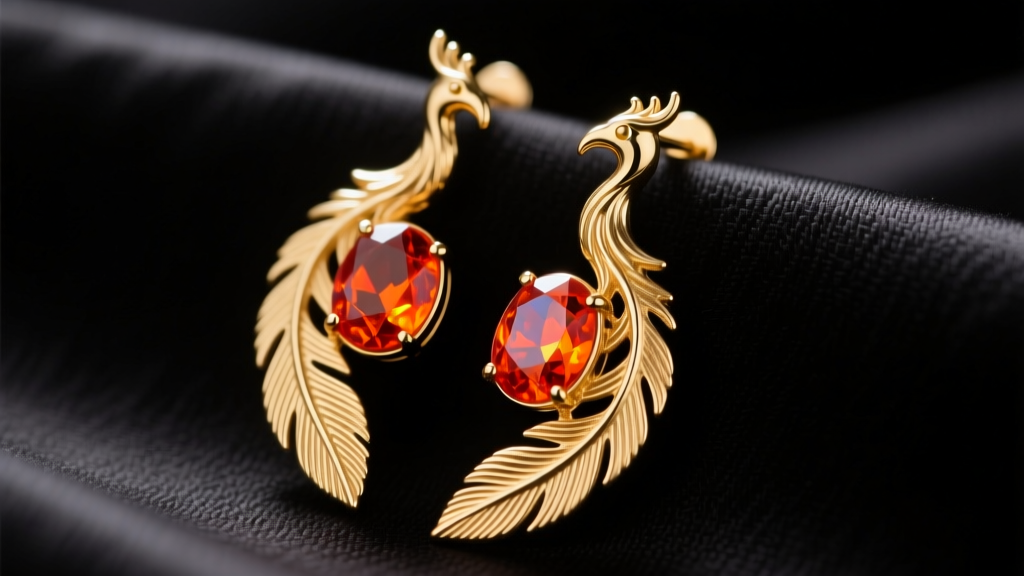
Phoenix earrings—characterized by their sweeping, intricate wing motifs, fiery gemstone accents, and dramatic silhouettes—have evolved from niche fantasy accessories into mainstream high-fashion statements. In 2026, the market offers two distinct variations of this trend: heavy phoenix drop earrings for standard lobe piercings, and structural "phoenix climbers" (ear cuffs) that wrap around the helix and scapha. Because of their complex geometry and top-heavy designs, wearing them requires specific technical knowledge to avoid ear fatigue, metal fatigue, and tissue damage. This step-by-step guide provides actionable frameworks for fitting, styling, and maintaining your phoenix ear jewelry.
The Anatomy of Phoenix Ear Jewelry
Before attempting to wear or adjust these pieces, you must understand their structural demands. Phoenix motifs inherently require wide, sweeping metalwork to mimic feathers and wings. This creates a high center of gravity.
- Lobe Drops: Typically range from 45mm to 80mm in length. They often feature plique-à-jour enamel or bezel-set fire opals to simulate flames.
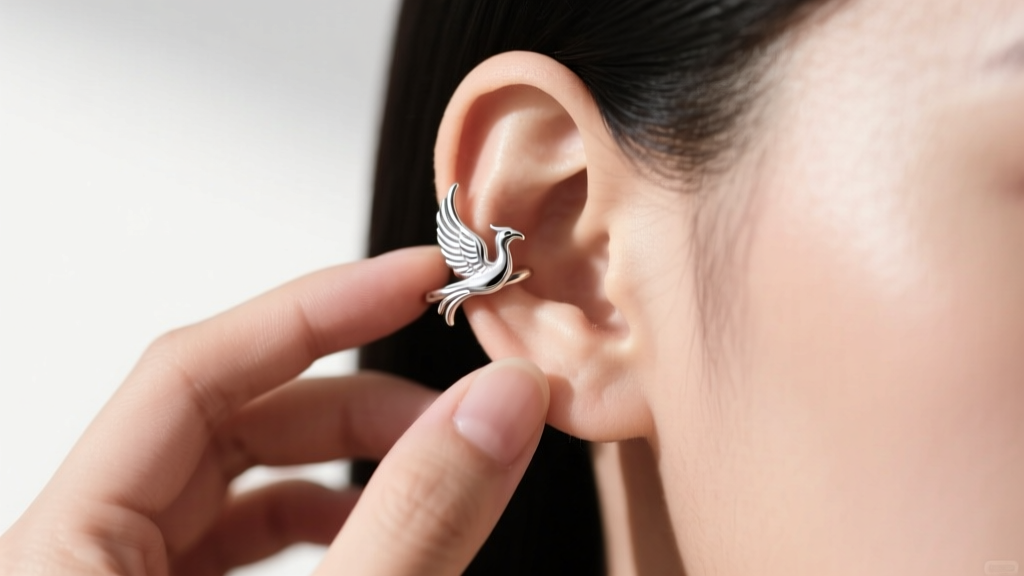
- Helix Climbers (Cuffs):strong> Designed to grip the outer cartilage ridge without a piercing. They rely entirely on tensile pressure, making the metallurgy of the piece critical to its longevity.
Step-by-Step: Fitting a Phoenix Ear Cuff
Fitting a cartilage cuff is not as simple as sliding it on. The cartilage of the ear varies in thickness, and an improper fit will result in the cuff sliding down to the lobe or causing severe pressure necrosis.
Step 1: Locate the Helix Sweet Spot
Run your finger along the outer rim of your ear (the helix). You are looking for the area where the cartilage ridge is thinnest and most pronounced—usually about halfway between the top of the ear and the earlobe. This ridge provides the necessary "shelf" for the cuff to grip.
Step 2: The Slide and Rotate Technique
- Open the cuff slightly wider than your cartilage ridge.
- Slide it over the thinnest part of the helix from the front of the ear.
- Once it is on the ridge, rotate the cuff backward so the decorative phoenix wings lay flat against the side of your head, while the tension band hides behind the ear ridge.
Step 3: Adjusting Tension Without Snapping the Metal
This is where most people ruin their jewelry. The method you use to squeeze the cuff tighter depends entirely on the metal.
| Material | Adjustability | Metallurgical Risk Factor |
|---|---|---|
| 925 Sterling Silver | Low (One-time adjustment) | Silver work-hardens. Bending it back and forth will cause microscopic fractures and eventual snapping. |
| 14k Solid Gold | High (Multiple adjustments) | Highly malleable. Safe to gently squeeze, but can warp out of shape if pulled asymmetrically. |
| Titanium (Grade 23) | None | Cannot be bent by hand. Must be purchased in exact millimeter sizing for your specific ear anatomy. |
Actionable Tip: If you are adjusting a sterling silver phoenix cuff, use nylon-jaw jewelry pliers to apply slow, even pressure. Never use your bare fingers, as the oils and uneven pressure can warp the delicate wing detailing.
Managing Weight in Phoenix Drop Earrings
A detailed 14k gold phoenix drop earring with gemstone accents can easily weigh between 12 and 18 grams per ear. Standard earlobe piercings are typically done at 20-gauge (0.81mm) or 18-gauge (1.02mm). Hanging 15 grams on a 20G wire creates a severe mechanical issue known in the body modification industry as the "cheese cutter effect."
Expert Insight: According to the Association of Professional Piercers, continuous downward pressure from heavy jewelry on a thin gauge wire will slowly migrate the piercing downward, thinning the tissue and eventually causing the earring to tear completely through the lobe.
How to Prevent Lobe Migration
- Upgrade the Wire: When purchasing custom or artisan phoenix drops, request a 16-gauge (1.2mm) or 14-gauge (1.6mm) fishhook wire. This triples the surface area distributing the weight.
- Use Silicone Supports: If your earrings already have thin wires, purchase silicone earring support patches (often called "earlobe support drops" or "Bling Guards"). These adhesive patches feature a rigid plastic core that distributes the weight across a 15mm surface area behind the lobe.
- Limit Wear Time: Heavy statement drops should be worn for a maximum of 4 to 6 hours. Swap to lightweight titanium studs immediately after your event to allow the lobe tissue to rebound.
Maintenance: Cleaning Enamel and Fiery Gemstones
Phoenix designs frequently utilize fire opals, garnets, and vitreous enamel to capture the essence of fire. These materials require highly specific cleaning protocols. In 2026, many consumers mistakenly use ultrasonic jewelry cleaners, which is catastrophic for these specific materials.
The Gemological Reality of Fire Opals
As noted by the Gemological Institute of America (GIA), opals contain up to 20% water. The high-frequency vibrations of an ultrasonic cleaner, combined with heat, will cause fire opals to craze (develop internal micro-fractures) or shatter entirely. Furthermore, ultrasonic waves will strip plique-à-jour enamel right out of its gold settings.
Step-by-Step Safe Cleaning Protocol
- Prepare the Solution: Mix lukewarm (never hot) distilled water with two drops of pH-neutral baby shampoo. Avoid harsh dish soaps, which can strip the natural oils from porous gemstones.
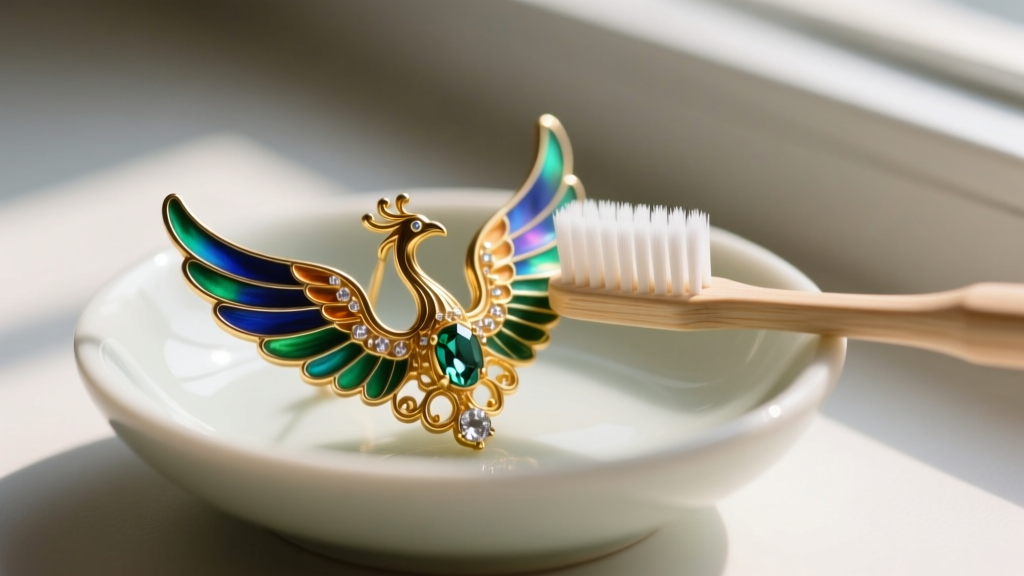
- Agitate Gently: Dip a soft-bristled baby toothbrush into the solution. Gently brush the metalwork around the gemstones, moving in the direction of the metal grain or feather detailing.
- Rinse and Dry: Rinse under a slow stream of lukewarm water. Pat dry with a lint-free microfiber cloth. Do not use a hairdryer, as sudden heat changes can crack enamel.
Styling Framework: Balancing the Silhouette
Because phoenix earrings are visually loud and physically long, they dictate the balance of your entire face and hairstyle. Use this framework to style them effectively:
Face Shape Considerations
- Round and Square Faces: Long, sweeping phoenix drops are highly flattering. The vertical lines elongate the jaw and neck, drawing the eye downward and creating a slimming illusion.
- Long and Oval Faces: Avoid extreme vertical drops. Instead, opt for wide phoenix ear climbers that wrap horizontally across the helix, adding width and balancing the verticality of your face.
Hairstyle Pairings to Prevent Snagging
The intricate, feathered edges of phoenix metalwork are notorious for catching on loose hair. To protect both your jewelry and your hair, pair these earrings with structured updos. A sleek, low chignon or a tightly braided crown keeps the hair entirely clear of the cartilage and lobe, allowing the metallic wings to catch the light without the risk of a sudden, painful snag that could tear your piercing or bend the jewelry.


