Teardrop Silver Earrings: A Technical Guide to Silver Alloys & Fit
Explore the metallurgy, gauge specs, and structural integrity of teardrop silver earrings. Expert guide to sterling vs. Argentium alloys and fit.

The Metallurgy of Silver Alloys in Teardrop Designs
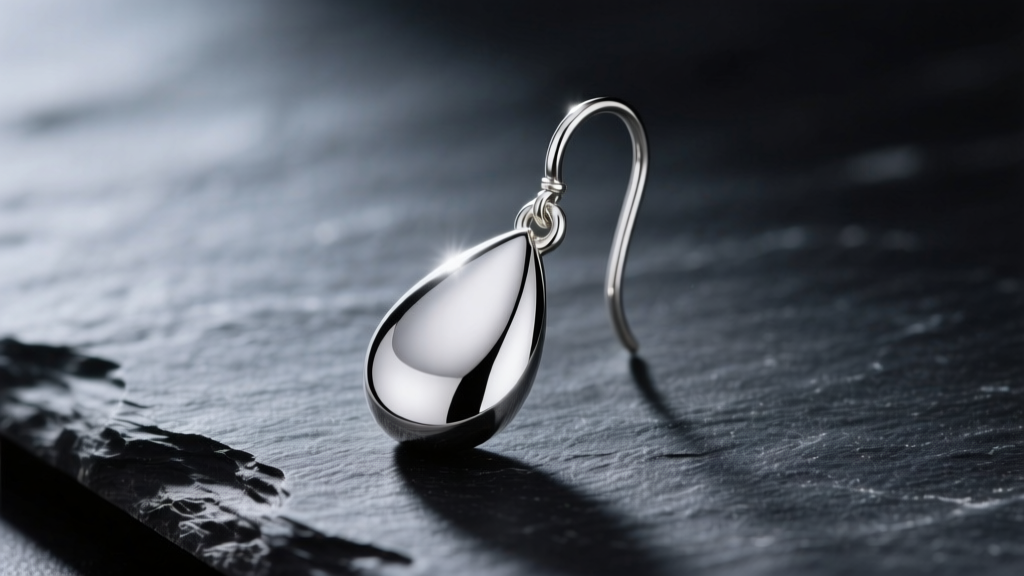
When evaluating teardrop silver earrings, the untrained eye sees only the silhouette. However, from a metallurgical perspective, the specific silver alloy dictates the earring's structural integrity, tarnish resistance, and long-term wearability. Pure silver (Ag) is too malleable for jewelry that must withstand the mechanical stress of a pendulum-shaped drop. Therefore, alloying elements are introduced to alter the crystalline lattice structure.
Sterling Silver (.925) vs. Argentium (.935/.960)
Traditional Sterling silver consists of 92.5% silver and 7.5% copper. While copper increases the Vickers hardness from roughly 25 HV (pure silver) to 65 HV, it introduces a critical flaw: copper is highly reactive. When exposed to sulfur compounds in the atmosphere or skin acidity, the copper forms copper sulfide, manifesting as black tarnish. Furthermore, during the soldering process required to attach the bail to the teardrop body, the copper oxidizes to form cupric oxide, known in the trade as 'firescale,' which can bloom beneath the polished surface over time.
Argentium silver, a modern proprietary alloy, replaces a portion of the copper with germanium. According to the Silver Institute, germanium migrates to the surface of the metal at room temperature, forming a transparent, self-healing layer of germanium dioxide (GeO2). This layer acts as an impermeable barrier against sulfur, rendering Argentium teardrop earrings highly tarnish-resistant and eliminating firescale during manufacturing.
| Alloy Type | Composition | Hardness (Vickers) | Tarnish Resistance | Best Application |
|---|---|---|---|---|
| .999 Fine Silver | 99.9% Ag | ~25 HV | Excellent | Bezel wire, intricate weaving (too soft for drops) |
| .925 Sterling | 92.5% Ag, 7.5% Cu | ~65 HV | Poor (Requires rhodium plating or frequent polishing) | Standard cast or stamped teardrop bodies |
| .935 Argentium | 93.5% Ag, Cu, Ge | ~80 HV (Hardened) | Exceptional | Premium teardrops, ear wires, un-plated high-shine finishes |
Structural Integrity: Casting vs. Die-Stamping
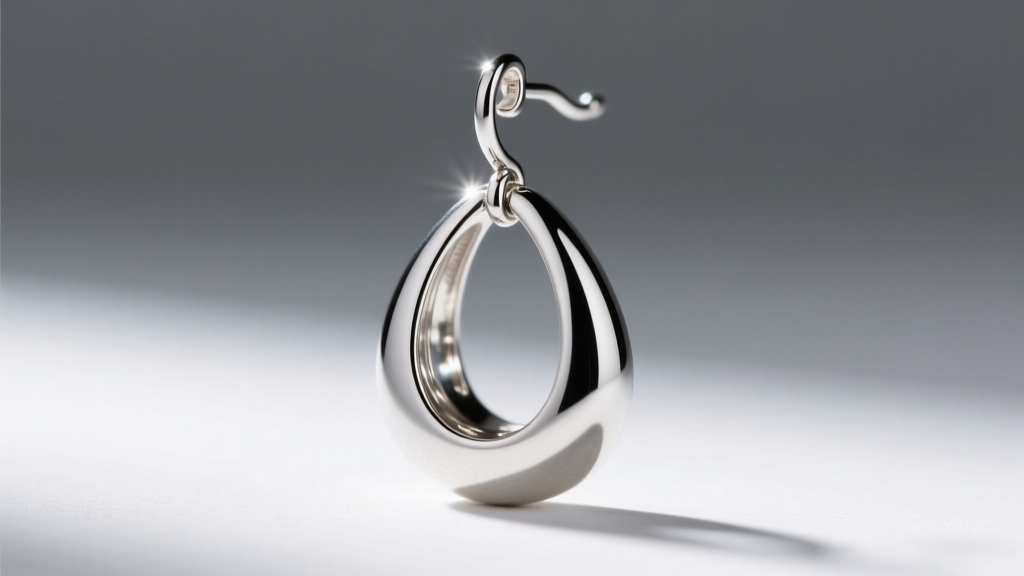
The manufacturing method of the teardrop body fundamentally alters its internal grain structure and failure points. Because teardrop earrings concentrate their mass at the bottom, the bail (the loop connecting the drop to the ear wire) experiences significant shear stress.
Investment Casting and Porosity Risks
Most commercial teardrop silver earrings are produced via lost-wax investment casting. Molten silver is forced into a flask under vacuum or centrifugal force. If the flask temperature or cooling rate is improperly managed, the silver can trap gas bubbles, resulting in microscopic porosity. While invisible on the polished surface, porosity at the solder joint of the bail creates a structural weak point. Over months of pendulum-swinging motion, a cast teardrop with a porous bail joint will eventually suffer a fatigue fracture, snapping off the ear wire.
Die-Stamping and Work Hardening
High-end or mass-market flat teardrop drops are often die-stamped from sheet silver. The immense hydraulic pressure used to stamp the shape compresses the silver's crystalline structure, causing 'work hardening.' A die-stamped teardrop is significantly more rigid and springy than a cast equivalent of the same gauge. For thin, elongated teardrop silhouettes, die-stamping prevents the metal from bending or warping when accidentally dropped or snagged on clothing.
"In drop earring design, the bail is the highest-stress component. A poorly fluxed and overheated solder joint will anneal the surrounding work-hardened silver, creating a localized soft spot that will inevitably fail under the rotational torque of a heavy teardrop." — Master Bench Jeweler Technical Notes.
Biomechanics: Wire Gauge and the Pendulum Effect
The fit of teardrop silver earrings is not merely about comfort; it is a matter of biomechanics and tissue preservation. Unlike a stud, which sits flush against the earlobe and distributes weight evenly across the fistula (the piercing channel), a teardrop acts as a pendulum.
Calculating Rotational Torque
Torque is calculated as Force multiplied by the Distance from the pivot point. A 5-gram teardrop earring that hangs 25mm below the piercing exerts significantly more rotational force on the bottom of the earlobe than a 5-gram stud. This concentrated downward and forward pull can lead to the 'cheese-cutter effect,' where a thin ear wire slowly migrates through the tissue, stretching or tearing the piercing over time.
Gauge Specifications for Teardrop Ear Wires
To counteract this torque, selecting the correct wire gauge for the French wire (shepherd's hook) or leverback is critical. The Gemological Institute of America (GIA) notes that proper jewelry engineering must balance metal strength with tissue compatibility.
- 22-Gauge (0.64mm): Too fragile for teardrops. Prone to bending and causes severe cheese-cutting in heavy drops. Only suitable for micro-teardrops weighing under 1.5 grams.
- 20-Gauge (0.81mm): The industry standard. Provides adequate tensile strength for teardrops weighing between 2 and 6 grams while fitting comfortably through standard 18G or 16G healed piercings.
- 18-Gauge (1.02mm): Required for oversized, heavy teardrop statement pieces (7+ grams). Note that many standard ear piercings are done at 20G or 18G; forcing an 18G wire through a tight 20G fistula will cause micro-tears and inflammation.
Troubleshooting and Advanced Maintenance
Maintaining the optical reflectivity of silver requires understanding the chemistry of tarnish removal. Many consumers ruin the mirror finish of their teardrop silver earrings by using abrasive pastes or harsh chemical dips.
The Electrochemical Reduction Method
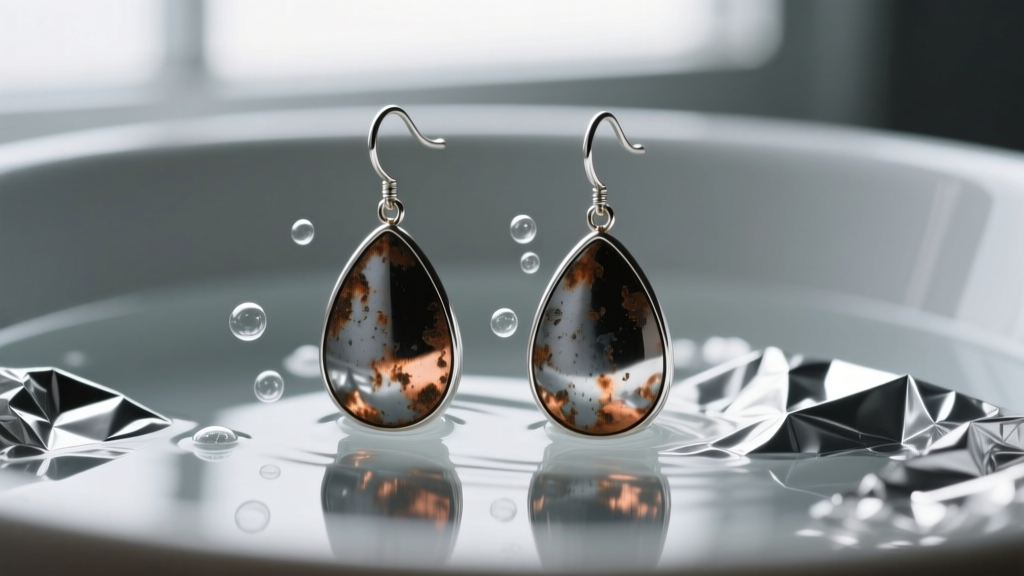
For heavily oxidized sterling silver teardrops, avoid mechanical polishing (which removes microscopic layers of silver and rounds off crisp stamped edges). Instead, utilize electrochemical reduction. By lining a glass bowl with aluminum foil and adding hot water, baking soda (sodium bicarbonate), and salt, you create a galvanic cell. When the tarnished silver touches the aluminum, an ion exchange occurs. The silver sulfide is reduced back to elemental silver, and the sulfur bonds with the aluminum. This method removes tarnish without removing any base silver metal, preserving the exact dimensional tolerances of the earring.
Reshaping Deformed French Wires
Because silver has a relatively low yield strength compared to steel or titanium, 20-gauge French wires frequently bend out of their teardrop-hanging alignment. Do not bend them back with bare fingers, as this creates an irregular, kinked curve. Use nylon-jaw pliers to gently coax the wire back into a perfect 'J' curve, ensuring the teardrop hangs perfectly parallel to the jawline. For persistent deformation, upgrade to Argentium ear wires, which can be heat-hardened in a kiln at 580°F (305°C) for 45 minutes to lock in the spring temper, drastically reducing future bending.
By understanding the metallurgical properties, manufacturing nuances, and biomechanical forces at play, collectors and jewelers can select teardrop silver earrings that are not only visually striking but engineered for lifelong structural integrity. For further reading on precious metal hallmarking and standards, consult the London Assay Office guidelines on silver purity verification.


